 Kate Ceberano Profile
This year, the ARIA Awards are turning 40. Well, to be pedantic, they actually turn 40 in March 2027, but on November 18th of this year, the 40th edition of the awards will take place in Sydney.
With this milestone edition, there is plenty to do to honour the legacy of these awards and the artists who have earned them over the years.
That's where the ARIA Hall Of Fame comes into play. First held as part of the second outing of the awards in 1988, the Hall Of Fame seeks to canonise these artists whose "work has defined generations and contributed to the sound of contemporary Australia."
Since the very first induction, a total of 82 individuals and artists have been inducted, while one influential television program and one non-recording artist (Countdown and its host, Molly Meldrum) has been welcomed into the ranks, while one artist has been removed from the honour roll.
Only three years have not featured inductees (2000, 2021, and 2022), and since 2015, it's been a one-inductee-per-year affair.
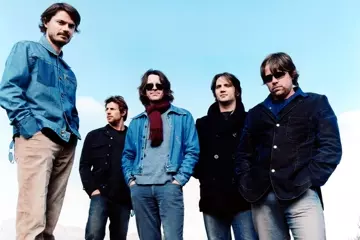
Alongside the induction of You Am I for the 2025 ceremony, it was announced that this year would see a larger list of acts welcomed into the fold part of the 40th edition of the ARIA Awards.
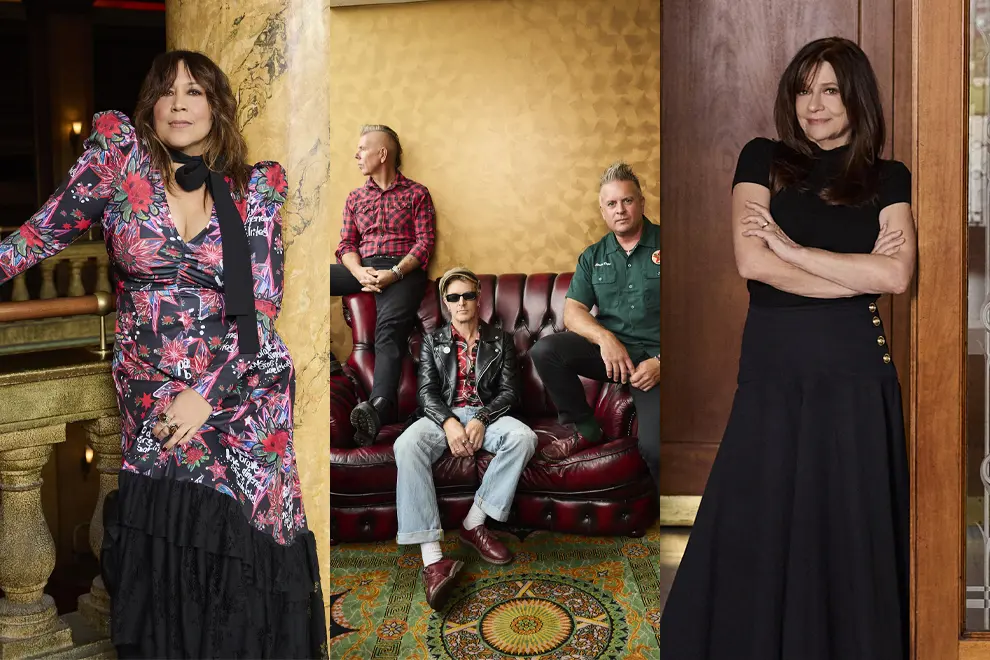
Over the weekend, the full list of inductees that will be welcomed as part of a special standalone event on June 11th at Sydney's Carriageworks was announced, with Kate Ceberano, Spiderbait, The Living End, Vika & Linda Bull, Jenny Morris, and the dearly-departed Gurrumul all making the cut.
With six artists, it's the largest group of inductees since the 2007 event saw a total of seven, and it's the highest number of women inducted in a single year, with five women making up this year's class.
Speaking to The Music, the artists in question are all united in explaining that feelings relating to their inductions are definitely a mix of surprise, honour, and everything in between.
"We're surprised; shocked, really," says Linda Bull. "We've had a long career, we've been in the music industry for over 40 years, and we're still performing, which we very much enjoy.
"We got a bit emotional, to be honest. We've been sort of doing it for a long time, we have just enjoyed the work, and what we really love is singing together, but to be recognised and acknowledged, to stand alongside the people that we really love and have admired for so long…
"To be in that group is kind of a bit unbelievable for us," she adds. "But we're very, very honoured."
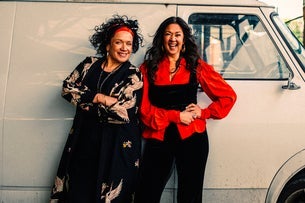
"And being sisters, doing it together, it's really great," echoes Vika. "It's only two of us in the family – mum, dad, me, and Linda – and we managed to stay together and sing together for this long. We're just really happy that we still talk to one another."
It was in the '80s that Vika & Linda made their presence felt in the music industry. While learning to sing as children, Vika kicked off her musical career as a teenager, and after Linda followed suit later in the decade, the pair had become part of The Black Sorrows.
By the mid-'90s, they had formed their eponymous duo, releasing numerous top ten albums over the coming decades, receiving multiple ARIA nominations, and becoming staples of the Australian music scene thanks to their relentless touring schedule, and appearances as backing vocalists for the likes of Paul Kelly and more.
Notably, Vika & Linda are also the first sisters to be inducted into the Hall Of Fame. While brothers have been inducted thanks to the likes of the Bee Gees, INXS, and Jet, and while Little Pattie and the Divinyls' Chrissy Amphlett are cousins, Vika & Linda mark a bit of musical history for the institution.
However, their legacy as sisters are just one part of the impact they hope to have upon the Australian music industry, noting they hope other Polynesian musicians are able to look at them and recognise a highly-respected music career is a possibility.
"For young Polynesian kids that may be watching the ceremony and saying, 'Vika & Linda are getting recognised in the ARIA Hall Of Fame,' we want them to come and tell their stories, to sing, and have successful careers as well," explains Vika.
"It's really important for us that those kids have that representation, because they're shy – Polynesian people are very shy. So it's like us saying, 'Come on kids, get out there and do your thing. We're rooting for you, and don't ever give up."
While both sisters look toward their shared harmony as the reason for what has made them an undeniable force on the Australian music scene, this harmony also lends itself to their shared visions of who should also be inducted at future ARIA Awards ceremonies.
"I think Joy McKean should be inducted into the Hall Of Fame; Slim Dusty's wife," suggests Linda, acknowledging Slim Dusty's induction into the inaugural Hall Of Fame "Great songwriter, stood beside and played in his band. Man, she was like the hit maker, so she should be inducted for sure."
"Getting it posthumously doesn't matter because she's amazing," adds Vika.
"I was thinking how Powderfinger haven't been recognised yet, but also Colin Hay, James Reyne, and Mark Seymour as solo artists outside of their respective bands, because they're such incredible song writers that are still writing music and touring the world," concludes Linda.
This year also sees the first posthumous induction in a number of years, with the late Gurrumul being welcomed into the honour roll.
Born blind in Elcho Island off of Arnhem Land in 1971, Gurrumul began to play music at a young age, going on to join Yothu Yindi in 1989 at the age of 18. Following a six-year stint with Yothu Yindi, Gurrumul went on to co-found the Saltwater Band for a decade.
In 2008, he went solo with his eponymous debut album. The record was a global success, receiving critical acclaim across the board, and even winning Best Independent Release and Best World Music Album from its five ARIA nominations that year.
Following two more albums, Gurrumul would sadly pass away in 2017 at the age of 46. However, his story was far from done.
His first posthumous album, Djarimirri, was released in 2018, resulting in his first chart-topping record, receiving four ARIA Awards, and becoming the first posthumous album to win the Australian Music Prize.
Of course, Gurrumul's legacy is already cemented into Australian history, with Yothu Yindi themselves having been welcomed into the ARIA Hall Of Fame in 2012 – the first and, so far, only Indigenous Australian band to have achieved that honour.
Jenny Morris' induction into the Hall Of Fame is one that has been a long time coming, too – especially given that the New Zealand-born Morris was inducted into the New Zealand Music Hall Of Fame in 2018.
"I think there's so many people worthy of that honour," she says of her long-overdue induction. "It's as simple as that. There's a lot of people, and that's a great thing."
Though she's finally made her way to the top of the list of artists to be recognised, Morris remains excited about the prospect of being added to the national honour roll of musicians.
"It's a really big honour," she enthuses. "To be kind of put in amongst all of the people who've gone before me – and especially with the women and guys and the bands and who've been nominated alongside me – it's actually much more of an honour than I thought it would feel."
Morris initially began her career in New Zealand as a member of The Crocodiles in the late '70s, moving to Australia in 1981, and eventually forming the band QED two years later. Going solo in the mid-'80s, Morris would take out Best Female Artist at the first ARIA Awards in 1987, with numerous albums peppering both her discography and the charts.
In 2015, she announced her retirement from the world of music, citing a diagnosis of spasmodic dysphonia – a rare neurological condition which causes involuntary spasms in the larynx.
Despite this, her legacy is more than assured, though she admits she feels awkward looking back on her list of achievements.
"When I started becoming acknowledged as a singer-songwriter, there weren't a lot of women around doing that; writing their own songs," she explains. "I mean, Kate [Ceberano] was one of them, and I feel very proud of the fact that I was co-producing some of my stuff and that I got recognised for songs.
"One of the things I'm most proud of is a song that I wrote called Little Little, which was never a single. It was written when my boy was in utero, it was just an ode to the unborn child. It was one of the most requested songs at my gigs, and a lot of the time it was requested by men.
"Apparently it struck a chord with just the experience of becoming a parent and the experience of expectation. So that's been a really important song amongst my catalogue."
Morris' status as a woman in this year's list of inductees is not lost on her. She's one of five women being inducted (alongside Kate Ceberano, Vika & Linda Bull, and Spiderbait's Janet English), which is more than the amount of women inducted in the last 15 years combined.
It's this advocacy for women which is something that Morris is also able to look back on with pride.
"It hasn't always been easy and it's not easy now," she explains. "We know that with all the #MeToo campaigning that had to go on.
"I was always advocating for acknowledgement of women in this industry. Acknowledgement that they weren't just there as what they could call 'eye candy', that they were there as serious musicians, writers, and performers. That wasn't always the case, and it's not always the case now."
Composers very often miss out on these accolades, and I do think the ARIA Hall Of Fame is about music," she explains. "There are a lot of composers who are very worthy of recognition in this category. And there's men and women. There's Amanda Brown [who previously served as a member of The Go-Betweens], and there's also Nigel Westlake.
"Amanda, for instance, has got a very long, colourful, and worthy history in music. She's done a lot of things, so I would say, maybe it's time for a composer to make it in."
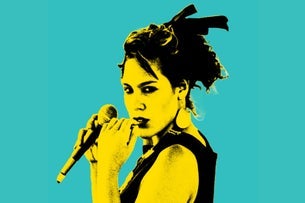
One of this year's other long-serving artists to make it in is Kate Ceberano, a multi-hyphenate artist whose career can be traced back to the early '80s.
Beginning her career with the band I'm Talking, Ceberano has become a prolific artist, releasing 18 solo studio albums across her career, and hitting the top of the charts with the soundtrack to 1992's Australian production of Jesus Christ Superstar.
Myriad charting singles, four ARIA Awards, a Logie Award, and even an induction into the Australian Songwriters Hall Of Fame can be found on her resumé. While many Australian music fans would likely say that it's about time Ceberano was inducted, she notes she's glad more acts are able to be welcomed into the Hall Of Fame with this year's larger class of inductees.
"I'm glad that they're doing it this year in a way that honours a multitude of different artists," she notes. "The way it was headed, I thought I was probably going to be dead before they got round to me.
"Whilst you don't have the aspirations as a young musician to be awarded for being a musician – you don't start your career going, 'Oh, yeah, one day I'm going to get the whatever Award' – it's a deep privilege and an honour."
With so many awards that have fallen by the wayside over the years, Ceberano notes that the continual nature of the ARIA Awards and the associated Hall Of Fame is a new positive for the local industry – even though she admits music itself is not a direct competition.
"We did lose a lot of awards," she reflects. "In my early 20s there were multiple awards events. There was Countdown, and there were other awards that were popular voted awards that weren't the Logies, including the Mo Awards and others.
"So you got to feel that your work was at least getting marked over periods of time of having delivered something along the way, whether it was sales, whether it was popularity, whether it was just the fact of you staying in the business, lifetime achievements – all of these things.
"And I don't think music should ever feel like a competition, but when you feel that you're not making the grade, it can end up feeling like it's a competition," she adds.
Of course, while some artists might be eager to simply bask in the glory, take centre stage, and reflect on the fact that they're being spotlighted in a major way, Ceberano is quick to admit that it's not all about her. Rather, such an induction is a testament to the hard-working team behind her at all times.
"I've got to be honest, this induction has more to do with everyone who's helped me to sustain a career in this business," she explains. "I would hope that it's more about their choices, their casting me in their lives – the audiences, stagehands, management, record companies, and people who've done marketing and publicity for me over the years.
"You kind of half hope that it's a measure of their work as well as it is yours. If you think about anyone who's ever been inducted into a Hall Of Fame, their lifetime careers are spent collaborating with hundreds of different communities. Collaborations should have some measure of success, and one would hope that something like this would be their measure of success."
As she reflects on the innumerable career achievements, Ceberano thinks of all the people who have helped her along the way.
She turns her attention to her previous manager, the late Ken West; the Divinyls' Chrissy Amphlett ("we were sparring partners," she notes); and even multiple journalists who have supported her career, before adding that it's the detractors who have inspired her the most.
"There's the ones that love, but equally, just as equally more important, the ones that hate you, that vilify you, that put out false information – they're the ones that you live to prove wrong," she explains. "You sing them out of your system, and you take on board their criticisms, whether you like to think you do or not.
"I find that in the end, I have needed all of them to love and hate me in equal measure, and then, I made up my own mind about who I actually really was. And now finally I'm at peace, and I probably will end up making my most happiest creative work in the next third of my life."
While Ceberano is a big supporter of those unsung heroes, when it comes to those still yet to be inducted into the Hall Of Fame, she doesn't have to think too hard about who should receive the same recognition as her.
"I always go for the singers' singers, right?" she begins. "Even when I was an Artistic Director in Adelaide for a festival, my only criteria was that I just wanted to hear that sort of brilliance in a voice.
"I'm always chasing the diva, and I think Vanessa Amorosi is one of the greatest singers in the world. She's stunning, whether you love or hate the music produced. And she's a polymath when it comes to music production. She was doing remixes for INXS and other artists – this was ages ago.
"Her life is complex for different reasons," she adds. "And unfortunately – I think this is true with a lot of us – too much attention gets put onto people's personal life, and we forget to hear that she's the greatest fucking singer in the world. I've never known a person who could produce those sounds."
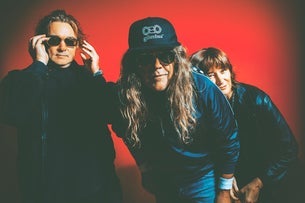
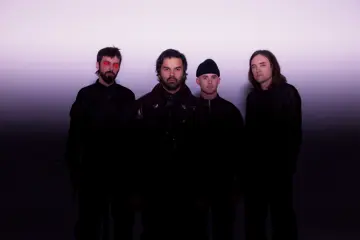
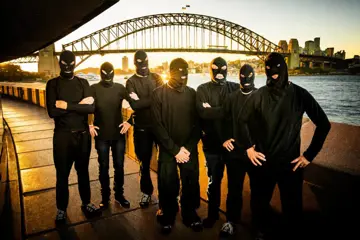
The final woman being inducted into the Hall Of Fame this year is Janet English, who joins the list of honourees alongside her Spiderbait bandmates Mark 'Kram' Maher and Damian 'Whitt' Whitty.
The three musicians came together in the southern New South Wales town of Finley in the late '80s, moving to Melbourne at the start of the '90s and beginning their trajectory to wider fame.
They received a top 20 showing with 1995's The Unfinished Spanish Galleon Of Finley Lake, before 1996's Ivy And The Big Apples and 1999's Grand Slam both reached No. 3 on the ARIA charts.
Also in 1996, the group made history by becoming the first local act to top triple j's then-burgeoning Hottest 100 countdown, with Buy Me A Pony outranking acts like Tool and the Ben Folds Five.
Spiderbait have continued to write, record, and tour, with their Hall Of Fame announcement being followed by a 30th anniversary tour in honour of Ivy And The Big Apples.
Admitting that "it's nice to be part of that posse" of artists whose legacies are being immortalised, they explain it feels a little bit familiar.
"There's an element of pride attached to it, and there's sort of similar feelings to when we won the Hottest 100," explains Kram. "We're celebrating it, but we feel pretty humbled by the whole thing as well. It's a nice sense of achievement for all three of us."
"It just feels weird," adds English.
"More than weird, it feels a bit surreal," adds Kram. "When our manager, Fiona [Duncan], told us that we were getting inducted, she was so excited and so emotional and we all were just like, 'Oh, wow, that's amazing,' but we were sort of trying to process what it all means."
"We're just weirdly lucky," adds English. "We're just weirdly lucky. We've just lucked out all our lives."
"It's been a nice moment to just reflect and think about how long we've been doing it," adds Whitt. "It's just nice to be recognised and it's certainly been nice for our families as well."
Spiderbait are one of the two musical acts being inducted this year whose stories originate after the formation of the ARIA Hall Of Fame. As a result, their entire career has existed alongside this honour roll, serving as not exactly something to strive for, but this higher echelon of recognition which can be achieved if their music resonates on a widespread level.
Given the group's evolving sound from a thrashy punk sound to a more alternative rock vibe, could the Spiderbait of the early '90s have ever predicted such an honour coming their way?
"The word 'unthinkable' comes to mind for me," says Kram. "When we won our first ARIA, we didn't turn up to the ARIAs – the whole thing was very uncomfortable for us. We felt like we were in a place where we belonged musically, but it took us a while to get used to it, I guess."
"It felt like the establishment, and the whole point of what we were doing in the punk scene was kicking against that," adds English. "It just felt all a bit too grown up."
"It was just a bit too much, I found it hard to understand," offers Kram. "I don't know if it's irony or not, but to win the Hottest 100 with Buy Me A Pony, which is a scathing rebuke of the music business or just fame and fortune and the fickleness of those parameters in general is a bizarre thing.
"But at the same time, I'm really proud of this, and I'm really happy that ARIA are recognising us," he adds. "We feel proud of that, and feel like it's well deserved in a way too, so it's sweet."
Though Spiderbait might have missed their first ARIA Awards (where they beat out current Hall Of Famer Nick Cave and bound-to-be-future-inductees Powderfinger, The Fauves, and Dirty Three), they promise they'll be at the ceremony in November.
But who would they also like to see darkening the stage at future Hall Of Fame inductions?
"Cosmic Psychos, the Meanies and the Hard-Ons," English swiftly lists, before Kram jumps in to add Tumbleweed.
"It's like going through the list of many groups that have inspired you and that you love, and you always end up forgetting someone."
"I would always like to say someone like Front End Loader as well," offers Whitt. "I think them and us are the only two bands in Australia who started with the same original line-up and have continued to play for more than 35 years without any line-up changes.
"So if we're talking about contribut- contributions to Australian music and longevity and a lifetime's worth of doing that stuff, throw their name in there as well."
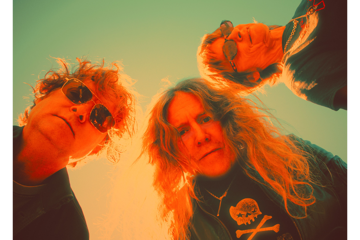
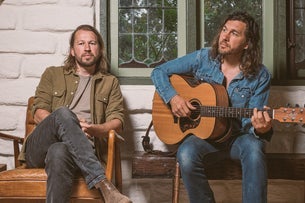
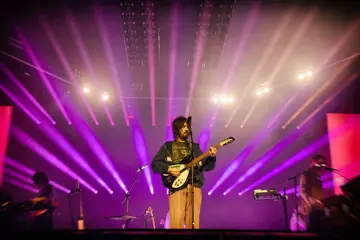
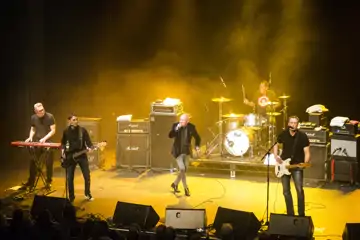
The other act being inducted this year that was formed after the Hall Of Fame's creation is The Living End. Formed in 1994, founding members Chris Cheney (guitar, vocals) and Scott Owen (double bass) have remained the sole constants, though drummer Andy Strachan has sat behind the kit since 2002 now.
Their auspicious start in the industry began when their Second Solution/Prisoner Of Society release became the highest-selling local single of the '90s. Since then, every album has debuted in the ARIA top ten (with two topping the charts), and six ARIA Awards sit on their shelves.
Needless to say, their induction was probably expected by everyone except the band themselves.
"Every artist probably says, 'Oh, we didn't expect that to happen,' but we really didn't expect that to happen," explains Cheney. "But we didn't expect to win an ARIA or do half the stuff that we've done.
"Coming from the scene that we came from, it was a very small Melbourne subculture of punks and rockers, and people that were into country music and ska. It was not mainstream, you know? The ARIA Awards were not something that was on our radar at all.
"So this is a cool thing," he adds. "It's a cool thing to be acknowledged and to be seen as worthy of an award like this. We accept it."
Admitting that, to this day, he still finds it wild to think the band that began in his garage has slipped those suburban bonds and become a global institution, Cheney explains that the group are proud of the fact they've maintained a sense of integrity to their craft over their three-decade career.
"Whenever we work on a song or an idea or whatever it is, we try to please ourselves first," he explains. "We've always sort of done that. We haven't gone, 'Oh yeah, that'll sell.' That just goes completely against the world that we came from.
"But at the same time, from the word go, we did want to appeal to people far and wide. We felt like what we were doing deserved to be heard, and the idea of having songs that were on the radio and in the charts and stuff like that, that was kinda cool to us.
"Because, you know, we grew up in the '80s, we watched Countdown, and we wanted to be one of those bands as long as we didn't sacrifice [our integrity] and not sell out, man," he adds with a laugh.
As they reflect on the fact that The Living End always felt somewhat out of place due to their rockabilly roots, and the fact that their early would see them playing music influenced by the likes of Buddy Holly And The Crickets while their contemporaries would be playing music inspired by Cold Chisel and Australian Crawl, the band explain they find it somewhat surreal to now be welcomed into the same honour roll that inducted their heroes.
Most notably, they're unsure if they're quite worthy of the same veneration.
"I remember the early days of finding = yourself in a room with those sorts of people, whether it's backstage somewhere or at an awards show, and it was weird," Cheney remembers.
"We're more used to it now because it's happened a lot and we're further down the track, but I always feel very appreciative of it. You still point someone out and you go, 'Oh, there's blah, blah, blah' but I don't know whether we feel kind of worthy of it.
"I mean, what we do is valid and it, and it has an appeal that's proven, but I still kind of feel like I'm…" he trails off as Owen suggests he feels like "an imposter."
"I know some of our fans will come up to us, and the coolest thing is they go, 'Your music got me through high school,' or, 'That song changed my life,' or whatever, and that's just incredible," Cheney continues.
"But we get it, because we remember what it was like meeting those sorts of people, meeting the Oils, meeting AC/DC, meeting Jimmy Barnes and the guys in Chisel. We were fans, so we never lost sight of that."
The ARIA Hall Of Fame induction will take place on June 11th at Sydney's Carriageworks.
This piece of content has been assisted by the Australian Government through Music Australia and Creative Australia, its arts funding and advisory body