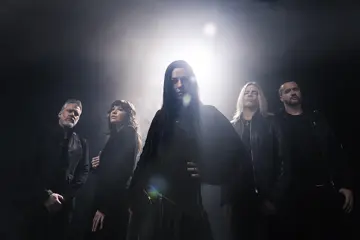
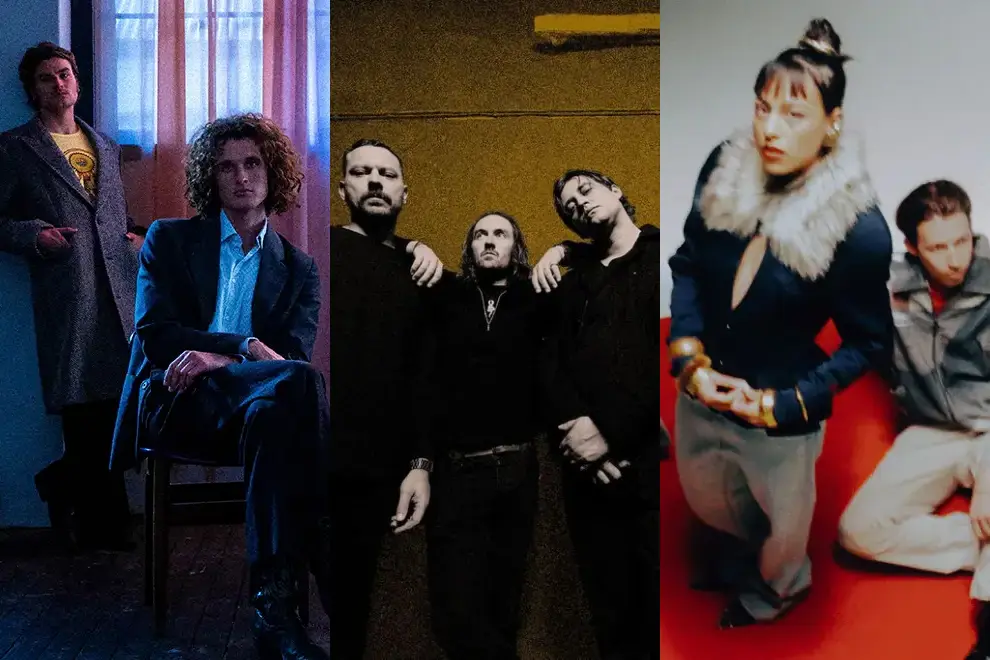
 Hands Like Houses
A gift from a flower to a garden. Folk singer Donovan summed it up during flower power in 1967 “summer of love”.
Musicians use flowers as powerful symbols, representing beauty, death, loss and renewal.
This week’s ARIA Charts are stamped all over with references. Canberra band Hands Like Houses’ Lótus arrives on two charts. Ella Langley’s sophomore Dandelion climbs up to #6.
Oasis’ (What’s The Story) Morning Glory, which stayed at #1 for five weeks in early 1996, is now climbing to #44 in the Replay Albums.
In Australian Replay Singles, Cold Chisel’s Flame Trees and RÜFÜS DU SOL’s Innerbloom are in the mid-30s. The first Savage Garden album (1997) is on the Australian Replay Albums at #14.
FIVE SCENTED AUSSIE ALBUMS
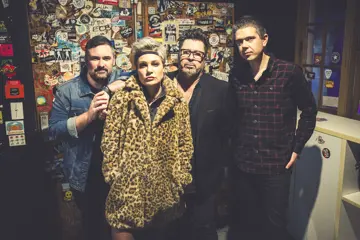
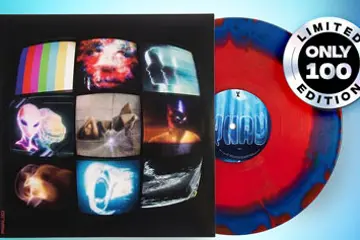
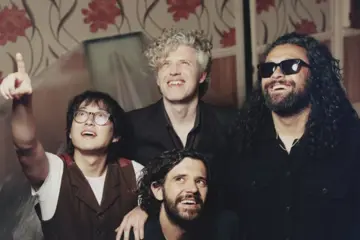
Hands Like Houses – Lótus (2026)
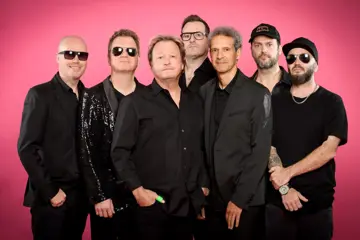
Hands Like Houses are into their sixth album Lótus, with the title track and one called Flowers. They reached #51 in 2023 with Unimagine, #7 in 2016 with Dissonants, #4 in 2018 with Anon, and #36 last year with Atmospherics.
Don't miss a beat with our FREE daily newsletter
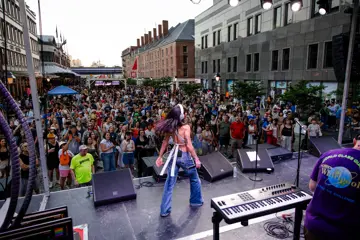
On their recent Australia and European/UK run, the band displayed their strong bond with their crowd whom they described as those “sailing in the same dream boat.” When they took to social media to ask fans who should open for them in Australia, 300 bands were suggested.
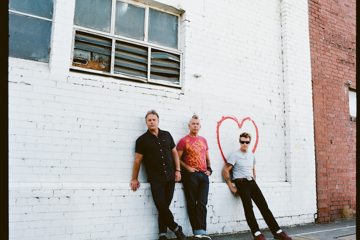
Pacific Avenue – Flowers (2023)
With Crowded House, Black Sabbath, Oasis, and Silverchair on rotation in the NSW South Coast surfers’ tour van, it was not surprising their debut album ticked the right boxes to end up at #3 on the ARIA chart. It was nominated for Best Rock Album at the 2023 ARIA Awards.
Flowers – Icehouse (1980)
The classically trained Iva Davies started his music career playing oboe in an orchestra. In the late ‘70s, new wave hit Sydney and he saw the “rock” door creaking open.
He was a cleaner in a gym owned by bassist Keith Welsh’s mum. They bought guitars and leather coats, and practised their glares. The first band was a glam-punk jukebox playing the Sex Pistols, David Bowie, Lou Reed, and T-Rex.
They chose the name Flowers as the dead opposite to their in-your-face sound and look.
Flowers’ first album was called Icehouse, after a song about the old unheated share-house Davies lived in at 18 Tryon Road, Lindfield. It was also inspired by a run-down place opposite with lights on all hours and people wandering in and out. He later discovered it was a half-way house for psychiatric and drug rehab patients.
But when the Flowers album started to pick up business abroad, it was discovered a post-punk Scottish band who delivered feminist lyrics and eleven singles over two years, had the rights to the name. So Flowers switched to Icehouse.
The younger Davies had never written a song or been in a pub. That changed after a record deal. He noted, “the songs which get the girls dancing, also attract the guys.”
Hence came Can’t Help Myself, We Can Get Together, and Walls, and sales of 200,000. The Flowers album reached #4 on the Kent Music Report, #2 in New Zealand, and #82 in the US.
The Avalanches – Wildflower (2016)
After making a mark with 2000’s Since I Left You and each one of its 3,500 obscure samples, the Melbourne outfit returned after a 16-year hiatus with one of the most anticipated records ever. The heavy samples and psychedelia sounds saw Wildflower hit #1 locally and a UK Top 10.
Telelova – Time Is A Flower (2024)
Singer, writer, and filmmaker Angeline Armstrong, and multi-instrumentalists and producers Edward Quinn and Joshua Moriarty met at a songwriter camp. Telenova formed in Melbourne in 2020.
After two acclaimed EPs of cinematic pop, Time Is A Flower was their debut album, reaching up to #23. However, it brought some dark moments within the band’s ranks, they told The Music earlier this year. But 2026 sees a second album The Warning (described by them as “glimpses of God in a godless world of anxiety and noise”), a short film on its making, and overseas dates.
18 SONGS THAT BLOOMED
Miley Cyrus – Flowers (2023)
Miley Cyrus’ post-breakup Flowers started life as a self-pitying ballad. As she told Glamour, “The chorus was originally: ‘I can buy myself flowers, write my name in the sand, but I can’t love me better than you can.’ It used to be more, like, 1950s. The saddest song. Like: ‘Sure, I can be my own lover, but you’re so much better.’”
Then it flipped into an uptempo R&B romp with a moderate tempo of 118 beats per minute and lyrical up-yours, about independence and self-assertion. "I can buy myself flowers... I can take myself dancing, and I can hold my own hand.”
Cyrus won’t discuss the meaning of the lyrics. But it’s obviously about the collapse of her marriage to actor Liam Hemsworth. The song is a response to Bruno Mars’ When I Was Your Man which Hemsworth once dedicated to her.
Fans also point out the song was released on the actor’s birthday, and she’s wearing his old tuxedo jacket in the music video. The line “Built a home and watched it burn” references the 2018 fire which destroyed their Malibu house.
Flowers globally received 7.7 million Spotify plays on its first day. It broke Australia’s first-week record with 5 million first week. It was her first Australian #1, staying in top for 12 weeks.
Seal – Kiss From A Rose (1994)
Long before Seal’s stint on The Voice displayed a cool detachment and fingernails obviously painted in the dark, the British singer-songwriter had made a strong debut album.
Kiss From A Rose was written for that first album. But he felt “embarrassed” by it and “threw it in a corner”. It was dug up seven years later for the Batman Forever movie, with producer Trevor Horn giving it an awesome use of harmonies. It was #1 in Australia, the US and the UK, and Top 5 in Europe and sold 8 million.
The Beatles – Strawberry Fields Forever (1967)
Strawberry Fields was a Salvation Army children’s home near John Lennon’s home in Liverpool where he played as a child.
Inspired by the beginning of psychedelia and Lennon’s copious intake of LSD, he wrote Strawberry Fields Forever as a confused conversation. Its complexity took the band 45 hours to create over three studios.
It was released as a double-A side, with Penny Lane, Paul McCartney’s similar memories of growing up in Liverpool. It was #1 in Australia.
The Foundations – Build Me Up Buttercup (1968)
The way the song by the British band The Foundations contrasted a strong melody with words about unfulfilled love saw Build Me Up Buttercup become a worldwide hit, including #1 in Australia.
Decades later it continues to be used in jingles and movies as There's Something About Mary and The Kissing Booth, as well as in TV series as Full House, spy drama Alias, and detective series Elementary.
It’s played at home games by the Wisconsin Badgers football team and, previously, the LA Angels. It is the club anthem of the Shamrock Rovers soccer team in Ireland.
Ween – Push Th’ Little Daisies (1993)
Reviews of this single from Ween’s Pure Guava album ranged from “alt-rock novelty ode to flowers” to “irritating” to comparing the vocals to "a 13-year-old love-obsessed creep over a tinny backing of guitar and drum machine."
It was only a hit in Australia. It spent 13 weeks on the ARIA Singles chart peaking at #18 (it also sneaked into US Modern Rock Tracks to #21) and ranked 40th on triple j’s Hottest 100.
At the time, the duo revealed, “We usually don’t even play that song, ever. We have a billion other songs that are better, and a lot of the other songs just work better live.”
When they split, magazines delightedly announced the news with “Ween Pushing Up Daisies”.
Radiohead – Lotus Flower (2011)
An ethereal track that drew you in with its message of loving music so much that it opened up petals to reveal your soul, Lotus Flower was never a single. But it was nominated for three Grammys, and its parent album The King Of Limbs made it to #2 on the Australian chart.
Ariana Grande – Dandelion (2025)
You traditionally make a wish on a dandelion so your dreams come true. In this song, Ariana Grande metaphorically blows a wish on the dandelion to make a relationship last through honesty, intimacy and fulfilling desires.
Grande wrote and produced it with Max Martin and Ilya Salmanzadeh, giving the track a jazz-trap flavour which made it stand aside from the rest of the Eternal Sunshine Deluxe: Brighter Days Ahead album.
Poison – Every Rose Has Its Thorn (1988)
It’s hard for a big hair metal band to look tough and sing about flowers. But Every Rose Has A Thorn struck a chord (#16 in Australia) when fans discovered the inspiration for the song.
Singer Bret Michaels was on tour in Dallas, Texas, and in a laundromat. While waiting for the clothes to dry, he slipped out to find a payphone to ring his girlfriend. While they spoke, he heard a male voice in the background. Devastated, he returned to the laundromat and wrote the song.
It became Poison’s signature song, their only US #1 and is regularly in ‘80s Power Ballads lists.
Lotus – Lotus One (1970)
Lotus formed in Sydney in 1970, part of the heavy rock/hippie scene of that time. They lived on a farm and grew their own food.
They then moved to Melbourne and recorded their only single Lotus One through EMI. A cool see-ya-babe track, it was originally titled I’ll Be Gone. But it had to be changed when Spectrum came out with their song of the same name.
Lotus One charted at #3 in Adelaide, #19 in Brisbane and #15 in Melbourne, and peaked at # 33 on the Go-Set National Top 60. They tried another stint at living together on a farm, this time in Myponga in South Australia. This time they got on each others’ nerves and split.
Barbra Streisand & Neil Diamond – You Don’t Bring Me Flowers (1978)
Rather than a plan to bring two superstars together with a song tailor-made for their voices, You Don’t Bring Me Flowers cam from a series of happy accidents, according to American Songwriter.
Neil Diamond wrote it as a 45-second snippet with songwriting team Marilyn and Alan Bergman as the theme for new TV spoof show All That Glitters. But the show’s premise changed before shooting began, and the song became irrelevant.
Diamond did a longer version for his 1977 album I’m Glad You’re Here With Me Tonight. At the same time, Barbra Streisand cut one for her Songbird album. She was initially drawn to the song as the Bergmans had written her hit The Way We Were.
It was about a couple whose bed had gone cold – “You don’t bring me flowers/You don’t sing me love songs/You hardly talk to me any more”.
Streisand recorded hers in the same key as Diamond’s, which proved lucky for the next step.
Around that time, the program director of Louisville, Kentucky station WAKY was going through a divorce. He spliced the two versions together to play on air as a “present” for her.
Listener request phone lines lit up, and other stations followed. Diamond and Streisand then hightailed it into the studio and cut a proper duet, which topped the charts around the world.
Diamond and Streisand performed it at the Grammys. There was talk of them starring in a movie based on the song. But Diamond landed the lead role in a remake of The Jazz Singer. It demonstrated his limited abilities as an actor.
The Rolling Stones – Dead Flowers (1970)
Dead Flowers was The Rolling Stones’ excursion into country music on Sticky Fingers, a by-product of Keith Richards’ close friendship with alt-country hero Gram Parsons.
Inspired by how a fan sent Mick Jagger a bunch of dead flowers, the break-up lyrics are about the guy ending up poor (“I’ll be in my basement room with a needle and a spoon”) while the ex is living it up as a socialite, riding in limos, and hanging out with horse betting fast-laners.
They decide to call time on their relationship: “Say it with dead flowers at my wedding/And I won’t forget to put roses on your grave.”
It was covered heavily by country acts. Sticky Fingers sold 22 million worldwide, reaching top spot in eleven places including Australia.
Nikki Webster – Strawberry Kisses (2001)
Nikki Webster became the most famous 13-year old due to the Sydney Olympics, lifted above the stadium as “Hero Girl” and singing Under Southern Skies, and then We'll Be One at the closing ceremony.
She was quickly signed to Gotham/BMG. Her first single Strawberry Kisses was a boppy singalong effort, with a video featuring her in a spaceship with a computer generated robot called Digital Jimmy. It went to #2 in Australia, and also charted in the UK and New Zealand.
Some radio stations were hesitant about a kissing song by an early teen. A 2009 poll by the Herald Sun ranked Strawberry Kisses fifth-worst Australian song of all time. In a 2023 radio interview, Webster stated she made very little money from the single because all profits went to recoup the cost of “the most expensive video in Australia at the time.”
The Move – Flowers In The Rain (1967)
John Lennon regarded The Move’s songwriter Roy Wood as among the best in Britain. But their antics overshadowed the music.
Manager Tony Secunda – one time wrestling promoter – had them dressing as gangsters, smashing up TV sets and Hitler photos onstage, destroying a car while strippers took their clothes off while in a bag (to denote violence was more alluring than sex) and signed their record deal which was printed on the body of a nude model.
But the worst came when The Move released Flowers In The Rain, an ode to the flower power movement. In the song the character wakes at 4am to “yellow roses scattered all around” and “saw marigolds upon my eiderdown.”
It’s either an acid trip or a fairy tale of a magic garden, where “I heard the flowers in the breeze/Make conversation with the trees/Relieved to leave reality behind me” and “I'm just sitting watching flowers in the rain/Feel the power of the rain making the garden grow.”
Wood had written a book on fairy tales while at art school, and this probably came from there. The distinctive instrumental arrangement used oboe, clarinet, cor anglais, and French horn.
To promote the song, without telling the band, Secunda sent around scurrilous postcards featuring a cartoon of Prime Minister Harold Wilson naked in bed with his assistant.
Wilson sued. As part of the settlement, all royalties forever from Flowers In The Rain went to charities.
Flowers In The Rain was a huge smash (#6 in Australia) and continues to be discovered by new generations. Wood has groaned that he has lost at least £1 million (AU$1.87 million) in songwriting royalties. Some members of The Move went on to form Electric Light Orchestra.
Courtney Barnett – Small Poppies (2015)
Found nestled in Courtney Barnett’s debut album Sometimes I Sit And Think, And Sometimes I Just Sit – the one that was nominated for a Grammy – Small Poppies is not about the little red flowers sold on Anzac Day.
She explained to Offkey Magazine, “Cutting down [successful people], bringing them down to your level. It’s a well-known Australian expression: If someone is doing really well, you tell them they suck to bring them back down to Earth. The song just deals with people having strong opinions about things.”
Sometimes I Sit And Think, And Sometimes I Just Sit charted in ten countries. It included #4 in Australia, #20 in the US and #16 in the UK.
Ed Sheeran – Supermarket Flowers (2017)
Off the Divide album, Ed Sheeran explained, “My gran passed away and I was clearing out her hospital room and taking the supermarket flowers to the window. [It was about] having that moment.”
Sheeran was making the album at the time, and he’d pop in to the hospital as much as he could. He was in the studio when she passed. Sheeran had a tendency to reach for his guitar when something good or bad happens in his life. The song was “supposed to make you cry”.
His father suggested he play Supermarket Flowers at her funeral. After he did, his grandfather insisted, “You have to put that out, that has to go on the record. It's such a good memory.”
Tiny Tim – Tiptoe Through The Tulips (1968)
New York-born Herbert Butros Khaury was a songwriter and musician who was discovered on the Laugh In TV comedy show.
He became known for his falsetto, unruly hair, his ukulele which he kept in a paper bag, and bathing eight times a day. He called his first wife Miss Vicki, and married her on The Tonight Show Starring Johnny Carson before a viewing audience estimated to be 35 million.
His Tiptoe Through The Tulips from the 1929 musical Gold Diggers Of Broadway, gave him a hit. But the fad soon passed. In 1989 he ran for Mayor of New York on the New Age Party ticket but quit shortly after, saying, “It never seemed to catch fire.”
Scott McKenzie – San Francisco (Be Sure To Wear Flowers In Your Hair) (1967)
San Francisco (Be Sure To Wear Flowers In Your Hair) was the unofficial anthem of the Summer of Love, an ode to the hippies heading to San Francisco (“gentle people, with flowers in their hair”) for love-ins.
It was written in 20 minutes by John Phillips of The Mamas & The Papas who helped put together International Monterey Pop in California that June, the first rock festival.
“All across the nation/Such a strange vibration/People in motion”. The San Francisco vibrations not went around the US where it reached #4, but also to the UK and Germany (#1), Australia (#2) and New Zealand (five weeks at #1).
The song’s been covered on stage by everyone from Led Zeppelin to Bono, and from New Order to Rufus Wainwright.
The Sound Of Music Soundtrack – Edelweiss (1965)
Included in The Sound Of Music soundtrack, it’s a misconception that Edelweiss, about the white flower found in the Austrian Alps, is an old folk song. Wrapped in sentiments of home and patriotism, it certainly suggests it.
But it was written in 1959 by Americans Richard Rodgers and Oscar Hammerstein II for The Sound Of Music musical on Broadway, as a song for the character of Captain Georg von Trapp.
In the 1965 film adaption, the song took on a greater impact in the concert sequence when Von Trapp encouraged the audience to sing along in defiance of German soldiers and Nazi officials at the auditorium.
Edelweiss was not a single but gained household status as the soundtrack album – which has sold 20 million worldwide – remained at #1 in Australia for 76 weeks, and its best selling album for 1965 and 1966, and third highest for 1967.