 Telenova Profile
When the first five years of your band were “super easy”, how do you respond when things get hard?
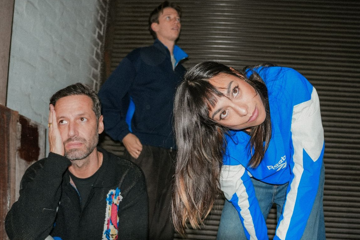
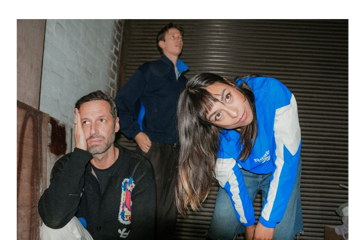
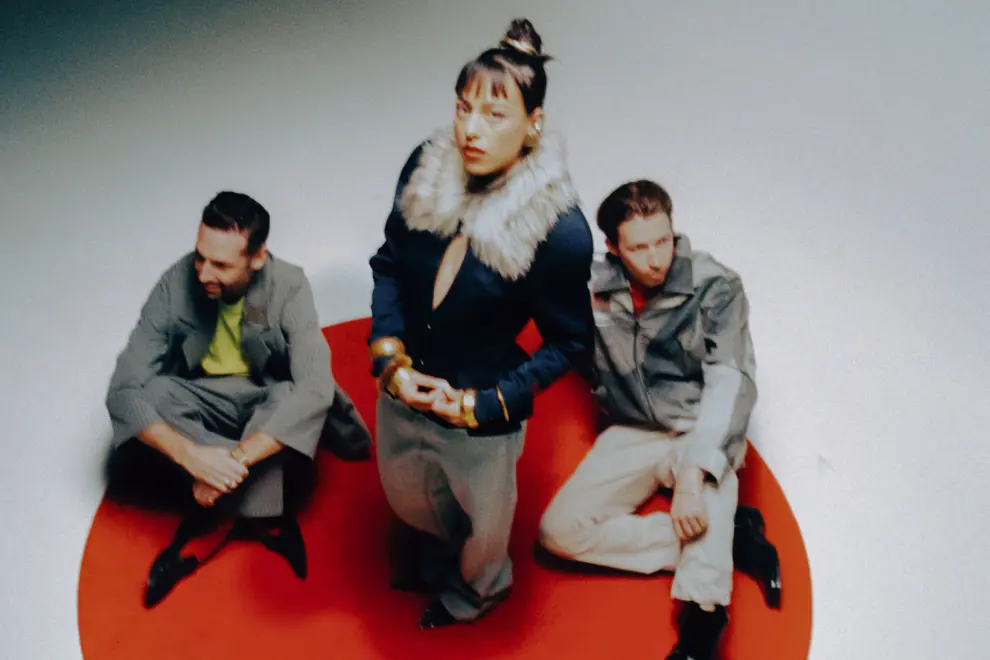
This is the challenge that greeted Telenova during the making of their second album, The Warning. The Melbourne trio – Angeline Armstrong, Joshua Moriarty, and Edward Quinn – famously met at an APRA AMCOS SongHubs camp in early 2020, brought together under the watchful eye of producer (and former Death Cab For Cutie member) Chris Walla.
Since the release of their first single, Bones, in 2021, Telenova have been on a rapid, serendipitous ascent. Two hugely-promising EPs, 2021’s Tranquilize and 2022’s Stained Glass Love, led to a beloved debut album, Time Is A Flower. Tours across the world beckoned. Things were going great. Until they weren’t.
“We felt like there was a lot of momentum from our first album. As soon as we got back from touring Europe, we were back in the studio recording,” recounts Armstrong, the band’s vocalist. “We just wanted to keep going while the energy was there.”
But then “everything fell off”, and a tumultuous, “pressure-cooker time” threatened to derail what Telenova had built.
“Josh had been sober for about ten years, and then he just did a complete 180. He was spiralling pretty bad,” Armstrong recounts. “Josh was in a really dark place. And his personal [decisions] were pulling us all with him. When you’re a close friend that’s walking beside someone going through that, you inevitably go through that with them.”
In an expansive conversation at a Melbourne café, Armstrong opens up about all the challenges of that time: trying to help a bandmate who wasn’t always receptive to it, trying to work on new music when the dynamic was under threat, and even wondering if Telenova was going to continue.
“There were times when Ed and I were contemplating whether we wanted to stay in the band, whether it was worth living through the experience of it,” Armstrong admits. “Lots of bands go through phases where they want to quit, but it was definitely a serious point.”
Going through that experience, Armstrong drew on faith, both in the strength that they had built as a band and in a higher power.
“Around that dark time that we were going through, there was also a real spiritual faith-seeking time going on,” she explains. “I go to church, I’m a Christian. Josh would literally come to church with me sometimes. It felt like something he really needed, to step out of his everyday life. But then, the next week, he’d be off on a four-day bender, cancelling sessions, being seen out in the street. I’d see people and they’d [say to me]: ‘I saw Josh… is he alright?’
“It was this complete flip-flop between these two extremes, to the point that it was almost stereotypical: the white, holy, bright church and the darkness of being up at 3 am on your own, doing blow in your room. But that really was our reality during the vast majority of [the time] when the lyrics were written.
“He was really struggling, really seeking and asking these big questions, wrestling with the idea of a higher power,” she adds. “And that’s one of the most prominent things that we talked about through the lyric-writing, but that we weren’t just saying to each other in conversation.”
When Telenova began, the trio “barely knew each other”. They weren’t friends who started a band as a natural growth of their social dynamic. They had fallen in together due to luck, maybe fate, and definitely out of feeling unsatisfied.
The three of them “had all come from projects that were either fizzling out or weren’t scratching that creative itch” – Armstrong with Beachwood, Moriarty with Miami Horror, and Quinn with Slum Sociable.
“It was a perfect time-and-place thing,” Armstrong offers. “And everyone was on their best behaviour for the first year or two, being real polite and lovely. We were all trying to impress each other.”
That politeness and the fact that they weren’t friends meant that a lot of the time, things were being left unsaid. “We didn’t have that vulnerability of being able to come into the studio and say: ‘This is what I’m feeling, this is where I’m at in life, I really want to express that in a song’,” Armstrong explains. “It wasn’t natural, because we didn’t know each other.”
So, she and Moriarty found themselves communicating with – and coming to understand – each other through song.
“We developed this pattern where we spoke more through the music, through the creative process, even the lyric-writing,” says Armstrong. “I often feel like Josh and I are having a conversation through the lyrics that we’ve never named out loud.”
That meant, as they worked on their second album, that they would be addressing the effects Moriarty’s personal struggles were having on them, as individuals and as a trio. And that a musical process that once felt effortless felt difficult.
“There was a general heaviness coming home from the sessions,” Armstrong says. “Even though it’s therapeutic and you’re able to purge, whatever the song was written about was usually an ongoing circumstance.
“We were still working through it, still in it. Even if we finished a song, we weren’t finished with the feelings… Some days it was a real uphill trudge. It was a real heavy time, the heaviest time we’ve had.”
The title of the resulting record, The Warning, is a totem for the experiences and emotions that birthed it; the set of songs features recurring themes that fit this motif.
“There’s a lot about warnings and alarm bells, spiralling in different ways, finding yourself in a dark place,” Armstrong says, “offset by these real glimpses of hope and goodness.”
“In our own way, we were processing that time and living through the music,” she continues. “[That time] did make its way into the music, but we didn’t really realise that until afterwards. I remember, once we had the demos locked in, our manager said to us: ‘I really love how there’s this real sonic thread of alarms! All those pulsing synths, it feels really anxious.’”
“It wasn’t like we were saying: ‘Let’s put all our anxiety into this drum beat’. But listening through, in retrospect, so much of that stress and anxiety and pressure is there. That feeling of red flags fluttering and alarm bells ringing had made its way into the music.”
“We were really gravitating towards more industrial sounds, sampling things that aren’t percussion and turning them into percussion sounds, chopping them up,” Armstrong adds.
Whilst that was a response to the emotions they were working through, it also intersected with a desire the band had to “intentionally try to push away” from the sweetness of Time Is A Flower, and from the rep that Telenova had developed.
“We were often confused by being labelled as a pop band [at the beginning],” Armstrong says. “Pop is not a dirty word, pop music is great – but none of us have ever been going for a straight mainstream pop thing at any point of our careers. That’s not what brings us satisfaction.
“I find it funny anytime anyone says something like ‘absolute pop smash, a banger that makes you want to dance’ about any of our songs. I mean, I’m glad if people want to dance to it, but I probably wouldn’t.”
With the release of Tranquilize, what Telenova were called most was ‘trip-hop’; even though Armstrong was unfamiliar with that term as a genre signifier. When they first met, at that fortuitous workshop, they had thrown out Danger Mouse as a producer whom they admired, and a desire to make atmospheric, dramatic music.
“Pretty early on, the word ‘cinematic’ was thrown around,” Armstrong recounts. “We all gravitated towards these dark, swelling string sounds; sweeping landscapes and a bit of melodrama. Narratives that felt a little bit more heightened than ‘girl on a bus going through a break-up’.”
‘Cinematic’ was a loaded signifier given that Armstrong had grown up with being dreams of being a filmmaker. Amongst other things. “When I was in high school, I wanted to be a writer, a screenwriter, a filmmaker, an actor, a voice-over artist, a singer, a dancer – I wanted to be everything,” she laughs.
Telenova has been a vehicle to realise so many of those ambitions: from songwriting and performing to directing or co-directing all the band’s music videos. These days, she’s “glad [she] didn’t become an actor”, but has used her acting training as an audiobook narrator, where she’s performed books like Naima Brown’s Mother Tongue and Jane Harper’s Last One Out.
“I’ll do a test recording, and if the publisher and author like my voice, I go in and read a book on a microphone for four days straight,” Armstrong shrugs. “There’s intentional stuff that you learn as an actor, that influence how a line feels emotionally: the pacing and pitch of your voice, rhythm, tone and timbre. [Both delivering lines and singing] involve channelling emotions through your voice to try and get an audience to feel that emotion.”
That side-gig is, Armstrong says, “one of many random things that I chip away at throughout the year to supplement the music income.” That’s the reality of being in a band that, whilst successful in so many measures (Time Is A Flower debuted at #23 on the ARIA Albums Chart, for starters), isn’t about to take her to superstardom. And accepting that has been part of Telenova’s journey.
“All the promises that everyone tells you when you’re releasing your first song, it doesn’t always [turn out] like that. To survive as an artist, I’ve had to curb my tendency to compare the stats,” she says. “You get told a lot early in your career: ‘you’re gonna be massive!’ But not everyone gets to be massive.
“And, after a while, you just have to come back to why you’re doing it. We’re doing it because we love music, and we’re interested in pursuing the different creative pathways that open up. You don’t really know what your music is going to do success-wise.”
Those thoughts were a part of the making of The Warning; they were there in those conversations about where the band was at, what they were going through, and how they wanted the project to continue. “Ultimately, we wanted to make something that we all would feel proud of musically, and not think too much about how accessible or mainstream it [would] be,” Armstrong says.
Coming out the other side of this “dark tunnel”, the band that started as a kind of blind date now find themselves closer than they’ve ever been.
“We’re a lot closer friends now than we were at the start,” Armstrong offers. “We’re all involved more in each other’s lives, and then that’s spilled [over] into the band. After all we went through [making] this album, the friendships were forced to get deeper.”
Telenova’s The Warning releases Friday, February 27th. Tickets to their upcoming album launch tour are also on sale now.
Telenova – The Warning Album Tour
Friday, April 10th – Lion Arts Factory, Adelaide, SA (AA)
Saturday, Apr 11th – Rosemount Hotel, Perth, WA
Friday, April 17th – Liberty Hall, Sydney, NSW (AA)
Saturday, April 18th – Brightside Outdoors, Brisbane, QLD
Saturday, May 2nd – Forum II, Melbourne, VIC (Matinee/AA)
Saturday, May 2nd – Forum Melbourne, VIC