 PNAU Profile
Nick Littlemore has always known just what a dance floor needs: he has spent his life soundtracking clubs and raves, scoring sweating cosmic bliss.
He and his bandmate Peter Mayes first formed the electronic project PNAU when they were still in secondary school, and now, decades later, they are gearing up to release their seventh studio album, AHHCADE. The music has spanned eras.
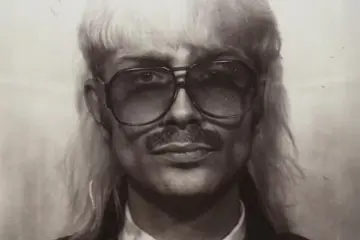
On Zoom, framed by perfectly coiffed arctic-white hair, Littlemore complains about how cold it currently is in Australia. He has become used to the beaming Los Angeles sun, but an impending tour of his home nation has forced him to experience winter again (which does actually seem fitting, given that his features are slightly reminiscent of Jack Frost).
“Electronic music needs a voice, in my opinion,” he says when discussing PNAU’s latest single, featuring Georgia-bred London-based musician Maleigh Zan, Crash. “Largely, electronic music has these voices that are overly tuned and it sounds robotic but not in a cool way. So we really prefer a person that has character.
“Some dance music is so heavy and loud, it can be hard to find the right voice to place within that.”
He believes collaboration is – generally-speaking – a necessity when it comes to electronic music, which means that Littlemore is constantly working with other musicians. Has he learned yet how to make sure that everyone in the room feels heard, but that he is still emerging with a product that he is proud of?
“You don’t always win on that front,” he admits. “And it is somewhat of a negotiation. For me, music is a conversation. You can’t have it on your own, so I like to work with other people because it presents a challenge. You’re trying to fit two ideologies or artistic expressions into one thing.”
The process is often exhausting. “You’re giving a lot and culling parts of yourself in the process, and I often wonder what it is about the work that remains feeling genuine to me. It’s always difficult. But I think that it elevates the experience to have new and different people.”
Though it is clear that Littlemore finds elements of music-making rather draining, it hasn’t stopped him from being extremely prolific: on top of PNAU’s constant output, he is known as being part of the art rock band Teenager and one half of the iconic Aussie duo Empire Of The Sun.
All three projects render him in a state of constant creation, but he is far from concerned about running out of ideas. The answer to a drying well? LSD.
“I started taking LSD when I was really young, like 12, 13,” he says. “I find that having a psychedelic perspective means that you’re sort of never really going to run out of things to write about. And nature is infinitely fascinating. We can’t see the wind, but we can see the effect of it. The clouds are changing constantly. They can mirror your emotions.”
It possibly helps that Littlemore isn’t a perfectionist. “I find I would be happy to share anything, in a way. I’ve always considered the listener, I think that’s part of the reason I’ve been able to have a fairly long career. I want to serve that imaginary audience more than I want to serve myself.
“Music is not for the creative, it’s for the listener.”
Or maybe his output is so constant because he is literally incapable of not making music. “I don’t think that making music or making art or whatever is necessarily a choice,” he suggests. “I have longed to have something that is less draining emotionally, have a job that you can clock out of. There’s no end-game with music…You never really finish, you’ve just got to put it out at some point.”
He specifies, however, that he still sees creating art for people as a privilege, and adds, “I think I’m happy with some things I’ve done, but they’re generally not the ones that have reached a critical mass, or have been, quote unquote, successful. But I just keep doing it.” He can’t imagine a different route for himself.
Though most musicians certainly would be, Littlemore isn’t nervous during the lead-up to the release of AHHCADE. “I don’t really care,” he says. Once the record comes out I just don’t listen to it… Once it’s done, I pretty much check out, and I want to move on and let my imagination be captivated by something else. Those records, they’re no longer in my control.”
When AHHCADE comes out on July 31st, the songs Change and So Alive will initially only be available on the album’s vinyl release – with an exclusive 100-copy variant of a ‘red/blue blast’ limited edition for sale only through The Music – before they are made available on streaming platforms.
“It’s kind of cool. It’s got a little bit of mystery about it,” Littlemore says of the choice to prioritise these songs for physical media enthusiasts. “Not that many people are going to have the vinyl, because we’re only doing a small run.”
He describes the current ubiquity of streaming platforms as, simply, “weird.” He continues, “I don’t like that you have to be online all the time. Inevitably, you end up going to other places online, rather than just streaming. And I always seem to lose my headphones… But I like that you can find so many things on there.”
PNAU are known for their dance music – and Littlemore definitely draws on past experiences at the club to assist in the creation of the music – but he reveals that he hasn’t been to a night club in quite some time. “No one wants to see someone my age in a nightclub.”
He clearly already has enough of a trove of club anecdotes to draw on. “If you don’t want to be in a club, it’s like the worst place to be,” he explains. “I definitely fell asleep in night clubs a few times and had bouncers pick me up.
“I had a TV fall on my head once. I got in trouble for it – how does that work? It’s weird, the club experience.”
He still maintains an utter disdain for bouncers and security guards. “I never particularly liked that you would have these gatekeepers in the form of bouncers. They always scared the crap out of me. And people generally are quite vulnerable in clubs, not only emotionally, but maybe you’ve had a substance or something which makes you even more vulnerable.
“And then you’ve got these police-like presences there, and they exude a kind of aggression which seems so opposite to the musical experience.”
That kind of hostility is totally at odds with how he experiences music, and how he chooses to create music. “PNAU has a warmth to it, that’s part of the feeling of it.” Even though the group’s intention with AHHCADE was to create a “darker” record, he says, “Inevitably it ended up having more light.”
Even the best laid plans can go awry in the studio. “I don’t think the creator is necessarily in control of what happens,” he muses. “Certainly I’m not. Even less so with a collaboration. But the music kind of tells you what to do. I’m not going to discipline myself to write or create in a way that feels disingenuous.”
He starts to squint and scowl, clearly at odds with having to put the abstract nature of the musical process into words. “It’s so weird,” he sighs. “Music’s weird. I was tripping the other day, and the entity or whatever told me that music is a demonic art form. And I was like, okay, what does it mean if I’m good at demonic shit?”
So follow his spinning ruminations on the universe. “Are demons evil, or is everything kind of a bit ambivalent?... Is music even real? Is anything real? Oh my God, we could get really weird now.”
He stares into the middle-distance and mutters, “Maybe the music-makers are the dreamers of dreams, and without them reality doesn’t really exist.”
He cites the composer John Cage, who once said that everything is sound. “You can’t ever actually get away from sound.” The thought, to him, is suffocating. “That’s actually a recurring nightmare I keep having: the sound of a shovel on asphalt getting louder and louder and coming towards me and then it becomes the loudest thing ever.”
Psychedelia seems to be a key part of Littlemore’s creative process. But that doesn’t mean he believes LSD is for everyone. “If you’re scared of it, maybe don’t do it. I’ve just found it therapeutic. I don’t do it very often any more. But it’s just something that seems to agree with me.” The Australian cold, however, is not currently agreeing with him.
Littlemore originally left Australia behind primarily because he was overseeing a show opening in New York – another example of an Australian leaving the continent to pursue bigger things. As kids, the Australian music industry to Littlemore and Mayes felt isolated, and nowhere near big enough.
“And we started pretty young,” he explains. “I feel now actually, coming back to the streaming thing, that you can reach people all over the world. Back in the day you had to have music pressed on vinyl, and you had to get it overseas, and then you somehow had to get overseas.
“So there were a lot of barriers both physically and culturally.”
Added to that, he felt that there was a lack of transparency among fellow musicians. “People who were having success in the dance world, they were kind of mysteries. It’s not like they’d be giving up their contacts when you met them. I steadfastly disagree with that and I try to demystify things for young people.”
He mentions that he just spent a week with three young indigenous producers, trying to impart all the information he could. “I think this idea of gatekeeping is so ugly, and I see it everywhere.”
Now, he calls the City of Angels home, and he has just moved into a studio on a lot which was built by Charlie Chaplin in 1917. “It’s an odd place,” he says of LA. “But it is probably the epicentre of creative people, certainly in music, so that’s thrilling for me.”
Living in this epicentre, apparently he always feels like an imposter. “And probably quite rightly.”
But Nick Littlemore of PNAU is undoubtedly the real deal, the king of the most demonic art form of all: dance music.
PNAU’s AHHCade arrives on July 31st, with vinyl pre-orders available now. Tickets to their impending regional tour of Australia are on sale now.
PNAU – Nirvana Regional Tour
Saturday, June 27th – The Powerhouse, Toowoomba, QLD (18+)
Sunday, June 28th – Beach Hotel, Byron Bay, NSW (18+)
Wednesday, July 1st – Hoey Moey, Coffs Harbour, NSW (18+)
Thursday, July 2nd – Shoal Bay Country Club, Shoal Bay, NSW (18+)
Friday, July 3rd – King Street Hotel, Newcastle, NSW (18+)
Saturday, July 4th – Woodport Hotel, Erina, NSW (18+)
This piece of content has been assisted by the Australian Government through Music Australia and Creative Australia, its arts funding and advisory body