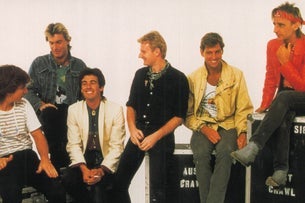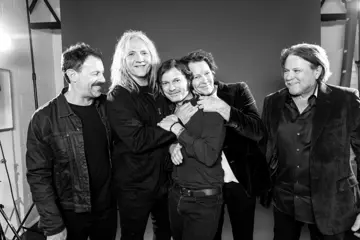
 Australian Crawl Profile
Jeff Apter’s Reckless: The Saga Of Australian Crawl is a highly detailed look at how one of Australia’s biggest bands disintegrated into in-fighting and missed chances.
Things are so bitter that 40 years after they broke up, a court case is currently clarifying ownership of the name.
But at the same time, the excitement around three original members reuniting for the Red Hot Summer tour shows Crawl still have appeal and pulling power.
“For the majority of the guys in Australian Crawl, the band was their dream, their passion, their one real shot at success,” Apter sums up.
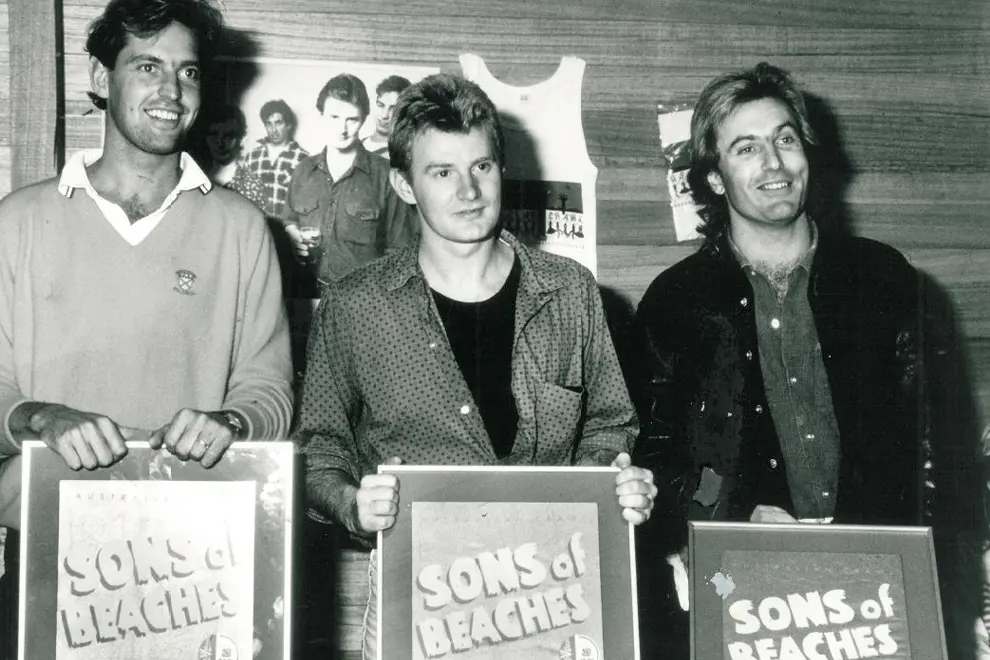
“(But) by the time of the third album Sons Of Beaches, it became increasingly clear that James Reyne was working towards a solo career.
“He was speculating about the end of the band during interviews; and by taking the role in the TV mini-series Return To Eden, he was clearly looking at other ways to further his career.
“For most of them it ended very badly — (bassist) Paul Williams and guitarist Simon Binks quit abruptly during the making of their last album. (Drummer) Bill McDonough had already been fired. His brother Guy (guitarist) was dead. It was very sad and really messy.”
In 1979, Apter was “a kid from Western Sydney, lucky enough to reach drinking age during a great time in Oz music, when there were pubs with live music seemingly on every street corner.”
Opening that year for US band The Knack at Sydney’s Hordern Pavilion, were an outfit from Melbourne’s surf coast who looked impossibly good looking, healthy and fit. The singer had both hands in plaster.
“I was impressed by the band — they were energetic, the songs were really good, they had great presence — but I came away from the gig thinking, ‘Now that’s a weird gimmick.’ I was wrong, of course, James really had broken both his wrists.”
A few days before recording their breakthrough debut single Beautiful People, Reyne had been hit by a car on Melbourne’s Swanston Street. Crawl wrote Indisposed about it, and made their debut on ABC-TV’s Countdown doing Beautiful People with their singer in a cast.
The first album The Boys Light Up (1980) reached #4, while Sirocco (1981) and Sons Of Beaches (1982) hit top spot. Within seven years, Crawl sold a million records.
Their lyrics, with clever turns of phrases, covered everything from uber-groovy clubbers to masturbating socialites to hero-worshiping Hollywood reprobate Errol Flynn and yearning for Bali when a love affair started to collapse.
Crawl had their detractors: their private school backgrounds leading to hostility from the likes of Cold Chisel and The Models.
Reyne, an articulate and witty interviewee, had a prickly love-hate relationship with some of the music press. On one East Coast run, he would introduce Unpublished Critics with a swipe, “Anyone who writes for Juke’s a jerk.”
Riot
Reckless recounts on-the-road stories as the time Crawl were playing a gig in Newcastle in 1979. Down the street, the infamous Star Hotel riot broke out, and Crawl were told by cops to pack their gear and flee.
Paul Williams had two experiences at the Sydney celebrity hang-out, the Sebel Town House. While at the urinal, he turned to see Mark Knopfler doing the same. He was so distracted that he forgot to aim straight and ended up splashing the Dire Straits frontman’s shoes.
Another time, US actor Jim Nabors of TV’s Gomer Pyle invited Williams back to his suite. “Williams politely declined but couldn’t work out why his bandmates found it all so funny when he told them. ‘He’s gay,’ they finally said. ‘Didn’t you know?’”
While in the UK opening for Duran Duran, the van caught fire on the way to a gig. Most musicians would have scrambled to save their instruments. Not guitarist Brad Robinson. “Oh no!” he cried. “My new Adidas!”
Within three years after their first hit, rifts began over personality clashes and some members demanded they get more credit for songwriting.
“Paul pointed out to me that in almost every band photo he was either up the back or on the fringes, never at the centre, which was telling in its own way.
“Bill quite freely admitted he was ‘not a James Reyne yes man,’ which meant that, as he discovered, his time in the band was limited, particularly as Reyne became the focal point of Australian Crawl.”
A year later, Guy McDonough died from viral pneumonia after a stint in rehab. It was a traumatic moment for the rest of the band – one which they never recovered from.
In fact, Guy’s death indirectly affected Crawl’s chances in the United States.
By 1983, they were being managed by Glenn Wheatley, whose success with Little River Band opened doors in that country. Crawl signed a record deal with Geffen, and re-recorded some of their local hits for that market.
Uber-manager Tommy Mottola (Mariah Carey, Hall & Oates, Marc Anthony) agreed to handle them Stateside. They were locked in to an 80-date US tour with Duran Duran which was set to make inroads for them into the biggest music market in the world.
Apter follows the narrative: “But then Guy McDonough got ill and died, the band went into mourning, and by the time they returned to the road, the lines to both their US label and management had gone dead.
“None of the band was ever able to learn exactly why this happened, but I suspect that Australian Crawl were one of many acts that Geffen and Mottola were working with at the time, and they simply missed the boat.
“But Guy’s death proved to be a terrible tragedy for the band, on a personal and career level.”
Expensive
1985’s Between A Rock And A Hard Place, made up for an expensive $400,000, had disappointing sales, and Crawl split up a year later.
Most haven’t spoken to each other since except through lawyers.
McDonough started his own building company and wrote a book Sons Of Beaches mostly about his life with Guy. Williams moved up to Far North Queensland with his daughters after re-bonding with his lost father.
Simon Binks was involved in a car crash in Sydney in 2005 which left him with slight brain damage and restrictions of his right hand, but continues to write music. James Reyne has a flourishing solo career.
Crawl were inducted into the ARIA Hall of Fame in 1996 at the Sydney Convention Centre. Robinson, one of the nicest guys in the music world, wasn’t there.
“Brad can’t be with us tonight,” Reyne told guests. “He’s at home but I know he’ll be watching. Braddy, how are you?”
Robinson died two weeks later, aged 38.
When Apter began work on Reckless in 2021, it was as a fan who thought them a great band. He didn't know the members personally, although he interviewed Reyne as a solo artist while he was Editor at Rolling Stone Australia.
“During the five years of researching and writing Reckless, I learned a lot. Like some other books I’ve written — Chasing The Dragon, my bio of Marc Hunter, comes to mind — I almost feel like I learned too much about the dynamics of a band, how money and success and stardom can derail friendships and really drive a group into the ground.
“The Australian Crawl story is among the most tragic. Yet I struggle to think of a day when I’ve been in the mall, or in the car, or having a coffee somewhere and haven’t heard Errol or Oh No Not You Again or Reckless or some other Oz Crawl song.
“Their music hasn’t faded away, not by any means.”
Reckless: The Saga Of Australian Crawl by Jeff Apter is released via Allen & Unwin on August 4th.
This piece of content has been assisted by the Australian Government through Music Australia and Creative Australia, its arts funding and advisory body