
 Nick Cave Profile
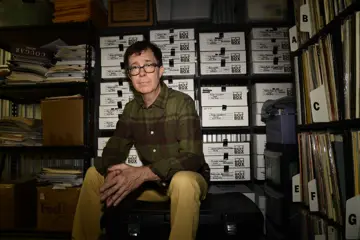
Nick Cave has answered two questions submitted to his Red Hand Files website: one about separating the art from the artist and another on his views about artificial intelligence.
After saying he doesn’t believe humans can separate art from artists, “for they are as inseparable as the waves from the sea they rise from,” Cave conceded that the same outlook doesn’t apply to generative AI and platforms that let people make music with AI, such as Suno.
“With the advent of song generation platforms, the thorny issue has been upended,” he wrote.
“At last, the artist can be separated from the art. Not just that, the artist – that flawed, messy, broken, woeful, joyful problem – can be removed from the equation altogether, like so much dross.”
He continued, “Suno, the Great Cancellator, which has never loved or laughed or grieved, never experienced joy or loss or heartbreak, never felt boredom or its adjacent epiphany, produces an imitation of the soul – a song – in fifteen seconds flat. This is an affront to any songwriter who has lived and struggled in this world and earned the right to create a song.”
Adding that he’s unsure whether artificial intelligence will “save the world, annihilate it, or do something in between,” Cave seemed confident when he said song-generator platforms are “indicators of this nascent technology’s demonic potential to hollow out human endeavour and sever our connection to the divine.
“They mock creation itself by rendering humanity unnecessary, taking the fruits of human striving and reducing them to mere products. It is, perhaps, our final, most soul-destroying humiliation,” Cave wrote.
He concluded, “For those eager to rid the world of problematic artists – for these censorious forces remain persistent – it is surely cause for celebration, as these platforms promise to rid the world of artists altogether.”
In July, it was reported that Suno scraped Deezer, YouTube Music, and more to train its AI models.
News of the data scraping arrived just weeks after it was revealed that thousands of songs by Australian artists were among millions stolen for use in AI datasets.
The claims came from The Atlantic reporter Alex Reisner, whose ongoing investigations into AI training data uncovered massive song datasets reportedly being shared within the AI development community.
According to Reisner, one of the four datasets uncovered included 12 million songs, another held nine million, while two others included more than 100,000 songs. The dataset included tracks by local artists such as AC/DC, Midnight Oil, Crowded House, Sia, Yothu Yindi, and others, as well as songs by international acts like The Beatles, Nirvana, Taylor Swift, and Madonna.
This week, Jimmy Barnes said AI companies “should go and fuck themselves” amid fears that the Federal government will weaken copyright laws, impacting all Australian creatives in the age of generative AI.