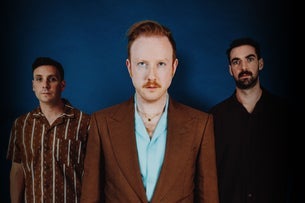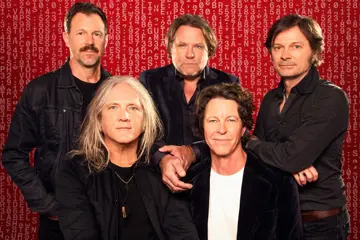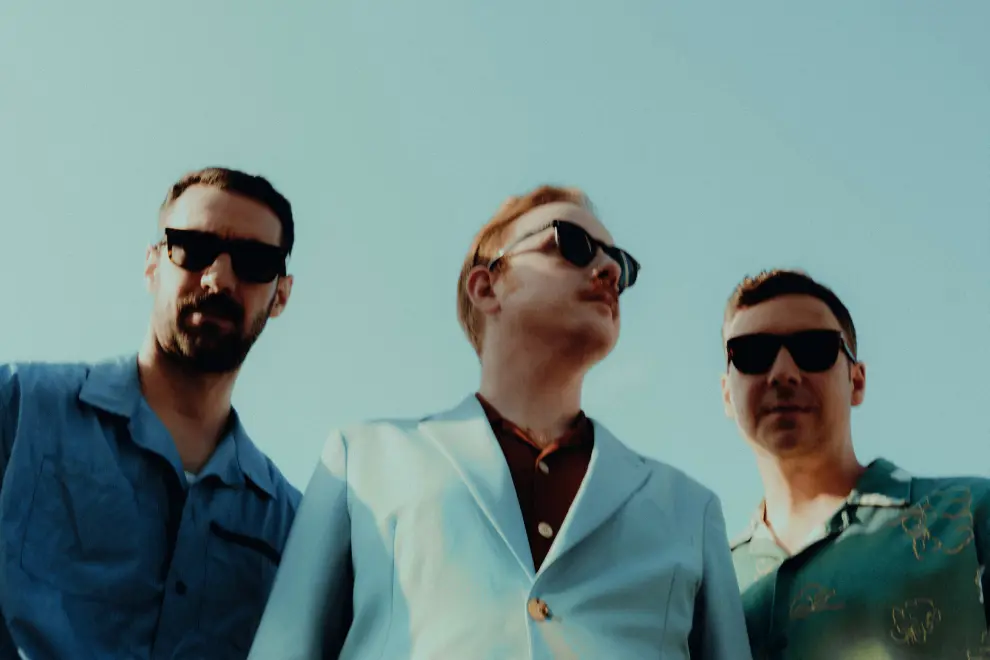
 Two Door Cinema Club Profile
“My camera’s off because I rolled out of bed about 15 minutes ago, and it’s 6 am, so, yeah,” Two Door Cinema Club’s Kevin Baird (bass/synth/BVs) explains why we’re staring at a black screen, followed by a cheeky chuckle. Not a morning person, then? “No, I normally am!” he protests, speaking to The Music from his London home.
“I've got young kids, so I get up every morning at 6:30. But when you suddenly mess with that routine – [waking up] an hour earlier – then, yeah... So I’m really hoping I don’t hear the pitter-patter of feet coming and then, ‘What are you doing in there?’”
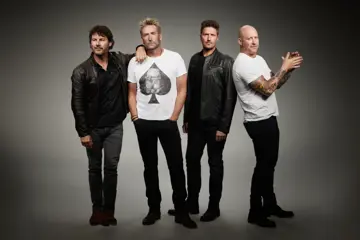
Two Door Cinema Club’s all-killer-no-filler debut album, Tourist History – featuring an agog tabby cat on the cover – is high on fun: music for dancing on tables or weaving through festival crowds, becoming a link in an ecstatic human chain.
What an incredible time for guitar music that bands like The Vaccines and Two Door Cinema Club were one and two on the album chart!
Can you believe Tourist History was released 16 years ago? Nor us. First released in Japan on 17 February 2010, Australian fans had to wait with bated breath until the 26th of the month.
To celebrate, County Down’s finest exports are heading out on the Tourist History 15th Anniversary tour, during which they’ll perform their cracking debut in full. The shows have been met with phenomenal demand, with an extra show at Sydney’s Hordern Pavilion already announced.
Back in late 2012/early 2013, TDCC toured Australia to promote their second record, Beams, with The Vaccines in tow. Now this pairing will return to our shores, with The Vaccines also playing their debut set – 2011’s What Did You Expect From The Vaccines? – in full.
“We’ve known [The Vaccines] for a long time, and they're really lovely people,” Baird enthuses of Two Door’s tried-and-tested tour buddies, “and we really love it when we get to play on the same bill as them, ‘cause we’ll always have a beer and a chat. We're really excited to have them out with us. It should be a nice night.”
NME “tried to manufacture an Oasis/Blur beef” between TDCC and The Vaccines
“It’s quite funny, because around our second album – I think it was the NME – tried to manufacture an Oasis/Blur rivalry… A beef, yeah, which is so funny because I think if you knew them or you knew us…” Baird dissolves into hysterics before adding, “We’re not the type for that. But it was quite funny. I mean, they got the number one album in the end, and we got number two. And I always think, what an incredible time for guitar music that bands like The Vaccines and Two Door Cinema Club were one and two on the album chart! I don’t think anything like that would happen today.”
Prioritising songwriting sessions over hitting the pub with “other friends”
“We were three best friends, teenagers, writing songs, and I think we loved it so much that we would have chosen to do that rather than go to the pub with our other friends at times, which is quite a big commitment when you're a teenager,” Baird reflects on creating Tourist History. “So we didn't perceive it as writing an album, we were teenagers, and we were just writing songs together… It just happened very organically.
“We had a bulk of songs that we’d put out before, maybe five or six songs, which we released as an EP – just in Ireland. We found those songs, and we found a lot of old demos a couple of years ago, but most of the time we were like, ‘If this is a no, then it's just gonna be a no, and we’ve gotta forget it and move on.’
“I feel like we loved writing songs so much that we were like, ‘Well, what’s the point in wasting time on something? Let’s just get excited about something new.’ And then when you get older, and you've been a band for so long, you’re like, ‘Oh, God – wish we could pull some of those [discarded] ones out’.”
Undercover Martyn: “More castanets!”
“I think Undercover Martyn was the third song we ever wrote together. So that was one of the first songs we wrote that ended up on the album, whereas, say, What You Know – that came quite a bit later; it was towards the end, almost missed the cut-off to be on the album, I would say.
“Back then – well, we still don’t have a writing member of the band who is a drummer. We have Ben [Thompson], who’s played with us since 2009, I think it was, but just live.
“So back then, when we wrote the first album, it was just the three of us [Baird, frontman Alex Trimble and guitarist b] writing in a garage in Ireland. And none of us were drummers, so we used to program these beats on a laptop, and we were always searching for ways to make it more interesting. I think it was a classic, non-drummer thing to do, of like, ‘Oh, I’m so bored with kicks there, hi-hats and cymbals and some toms – let’s do something else.’ And then we’d be constantly looking to other bits of percussion and things.
“So, I mean, [utilising castanets in Undercover Martyn] was probably Alex’s idea, ‘cause he would be the one programming the beats. And, yeah, I can remember playing it to our management, and all the feedback was always, ‘More castanets!’ So we would just be constantly pushing up the volume of the castanets – that was quite a recognisable bit of that song.”
Please tell us said castanet parts will be played live during Two Door’s upcoming Australian tour? “Um, no, we have no live castanet player.” Say, what? “I know! It’s been 16 years, you’d think by now we’d have figured out a way to do this – castanets are really hard to play. One of us could certainly mime doing it… You’d need some sort of dummy castanets. They probably make them for TV.”
“Something happened over that summer”
When asked whether milestones like Tourist History’s 15th lap around the sun make him reflect on the band’s trajectory, Baird reveals, “The story that has been written about the band – and I guess a lot of it is reality – feels very different to how we felt about things at the time. You know, we put out the album, we did an album launch – in, like, a 500-cap room in Belfast – and I don't think it sold out, I don’t even remember.
“But things weren’t really going that well for us at the time, and I think in our heads we kind of thought, ‘Right, well we’ll get the album out and we’ve got some summer festivals’ – I think we were playing some good festivals, but not great slots and we were just like, ‘Get the album out and we’ll get through the summer and then we’ll do another album’ – I think that was probably our thought process.
“And then something happened over that summer. We played a couple of great gigs at some of those festivals. We played a lot around Europe, and I think we had a bit more of a focus in our head around places like France, because the label we were on [Kitsuné Maison] were French and it seemed to be working there, and, yeah! We came to Australia, to Splendour In The Grass.”
Hold up. So Tourist History dropped here on 26 February, then by the end of July that same year – less than six months later! – The Northern Irish band played arguably Australia’s hippest destination festival? “Yeah, I know,” Baird marvels at this bucket-list booking – which eluded so many enduring bands – that TDCC managed to tick off straight out the gate. “It was a weird thing, I think; we were very excited about it.
“As I said, it was working in some places and not really in others. And then it just took off over that summer at those summer festivals. Then we started to get playlisted on the radio in the UK and triple j and things like that, and then it just kind of took off from there.
“So I guess what I'm saying is: February 2010, it was a little bit muted. It didn't just suddenly go, ‘Here we are and here’s our album!’ and then it went from there,” Baird reiterates, laughing. “It took a couple of months before things really got going.”
“The fanbase was there the whole time”
“The fanbase was there the whole time. I just think industry, radio stations, magazines and people like that – at the time – couldn't really figure out who we were, like, were we a straight down the middle, four-piece guitar band? No. But were we more electronic, like a Justice or something? No, we weren't that. So it was kind of like, ‘What are these guys?’ And I think people in Australia, in Ireland, in the UK and America actually liked it, and it was growing that way, mainly, through the live shows.
“So it maybe reached a tipping point where it was sort of unignorable, I guess, and, yeah, then I think that is the sort of thing where getting on some TV shows, getting on some radio playlists pushed it to the next level.”
“How do these people know about us?”
“Back then was when Facebook was starting to become the main place, and I do remember it was around that time – the first album – we were suddenly getting a flood of messages of, ‘Come to Brisbane’, ‘Come to Sydney’ and we were like, ‘Oh my God, this is so weird,’ like, ‘How do these people know about us?’”
“People were a bit like, ‘Oh well, you can't wear that!’”
“I don't think we've ever really consciously thought about what we looked like. I look back at some photographs and wish we’d been more conscious of our image,” Baird confesses, laughing heartily.
“But, I dunno, I think we thought we were cool… Because the three of us lived in each other's pockets so much, we were very cohesive – at least in the early days. You accidentally become a little gang and just sort of share your clothes and dress like each other and cut each other's hair and all that kind of stuff. Then I think as we started to get a little bit more attention and we got signed and things, people were a bit like, ‘Oh well, you can’t wear that!’
“Then I think it helped that the record company we were signed to, Maison Kitsuné, were also a fashion label who did clothes. So they would’ve decked us out in a lot of their things, which fitted in our style – slightly smarter than we would’ve been before, but it worked.”
“Why the hell are we paying rent?”
“We moved to London – it must’ve been 2008 or something – to record our first album. So we rented a house in Whitechapel, a very, very, very, very nasty house. It was disgusting. Then we did the album and just started going on tour.
“And then I think maybe about six months into it, we were having conversations with our management and being like, ‘So can you see the diary of, like, what's coming up?’ and we were like, ‘Why the hell are we paying rent? We're literally back in London for two weeks of this year, and then we'd probably wanna go back to Ireland anyway.’ So there was probably about a year, a year and a half, where we had no fixed abode, and we just sent our post to the management office.
“It was exciting, because we were probably, like, 20, 21 years old and who needs roots when you’re 20 years old? All we wanted to do was be on tour, so yeah, it was the best.”
The importance of mental health check-ins while touring
“It’s hard, because I think everyone approaches touring slightly differently, you know. And this is probably just an example of life and personalities, but some people distract themselves from the hard bits by going out more and drinking and partying, and some people retreat more.
“When you’re a band our size, for example, you get lots of dressing rooms, so then the opportunity to be on your own is there, more so. I think it's harder for me to give advice for when you’re all sitting in the same room, ‘cause I guess we haven't been doing that in a while. But I would say the thing to look out for, and I guess it’s the same in life generally, is a change in behaviour – you know, you start to notice someone not wanting to come out as much, retreating a bit more and spending more time alone.
“Also, [with] touring, everyone is so involved and engrossed in this really specific thing that’s happening – that day, on this tour or whatever – and it’s very easy to forget sometimes that life continues outside of the tour.
“So, yeah, I think just have a normal conversation with someone about something that’s not ticket figures or last night’s gig or, ‘What are we gonna have for dinner?’ I always encourage people to go out, and if you have a friend in that city or whatever, who’s normal [laughs] – like, not part of the tour – just go and have a normal conversation.
“It’s strange to say, but [touring can be] a bit of a lonely place, even though there’s lots of people around… When you have friends or industry people that you work with come to the show, it’s very much, ‘That’s amazing!’ like, ‘Woooooaaaah!’ – there's pressure to always be loving it.
“And I don’t wanna be like, ‘Oh, boohoo me for doing this incredible job’,” Baird stresses, laughing self-consciously, “but there is a bit of pressure to be so upbeat and grateful all the time. And don't get me wrong, I’m incredibly grateful for everything that we have, but we’re human – everyone’s human – and sometimes it’s hard. So, yeah, surround yourself with good people who get it.”
New TDCC material incoming
“We have new material, yes; we’re working on things. We’ve got a couple of things that are finished, we’ve got, like, five, six, seven more things in progress, and yeah! We’re sort of working out what it’s gonna be, you know?
“Because we’re doing this anniversary tour, I guess we are a little bit less under pressure to figure it out. So we’re just finishing it off and seeing what happens. But, yeah, we have new stuff, for sure.”
Is there a chance Australian audiences might score previews of these new tracks during Two Door Cinema Club’s upcoming tour, then? “We might,” Baird teases. “I could maybe see that happening, if we pull our finger out.”
Two Door Cinema Club will tour Australia in November 2026 with special guests The Vaccines. Tickets are now available.
TWO DOOR CINEMA CLUB
2026 AUSTRALIAN TOUR
with special guest The Vaccines
Sunday 15 November - Perth HPC
Wednesday 18 November – Adelaide Entertainment Centre Theatre, Adelaide
Friday 20 November - John Cain Arena, Melbourne
Saturday 21 November - Hordern Pavilion, Sydney – SOLD OUT
Sunday 22 November - Hordern Pavilion, Sydney – NEW SHOW
Wednesday 25 November - Riverstage, Brisbane
Friday 27 November – Spark Arena, Auckland