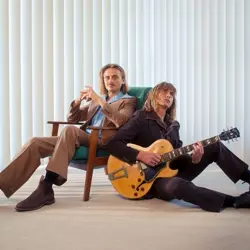
 Lime Cordiale Profile
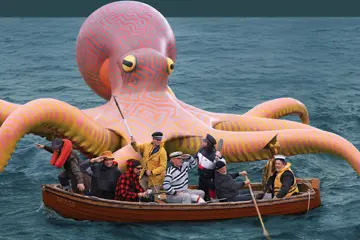
Disaster reigns in the waters South Australia.
Karenia cristata, a rare and toxic type of algae, is currently choking the South Australian coastline. What experts have called the largest and most destructive algal bloom in Australia’s history is persisting well after a year from when it was first detected in March 2025.
It has affected 20,000 square kilometres of coast, and has been deadly to marine life, killing millions of sea creatures. Several species are now at risk of extinction. Though the current affected area is roughly the size of the State of Mexico, little action has been taken.
Indeed, according to the ABC, recent reports reveal that the South Australian government after discovering that a potentially dangerous compound, known as brevetoxin, had been found in animals, refused to update its health advice or tell the public for four months.
At a media conference in October, SA Premier Peter Malinauskas stated, “The reality of the algal bloom sometimes isn’t nearly as bad as people’s perception of it.” Malinauskas, reportedly, did not want to “scare 1.7 million South Australians from visiting the beach.”
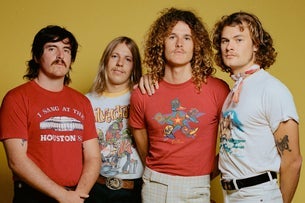
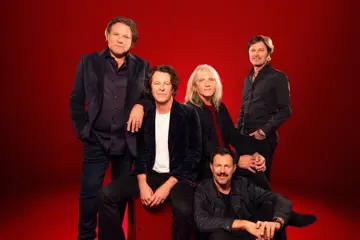
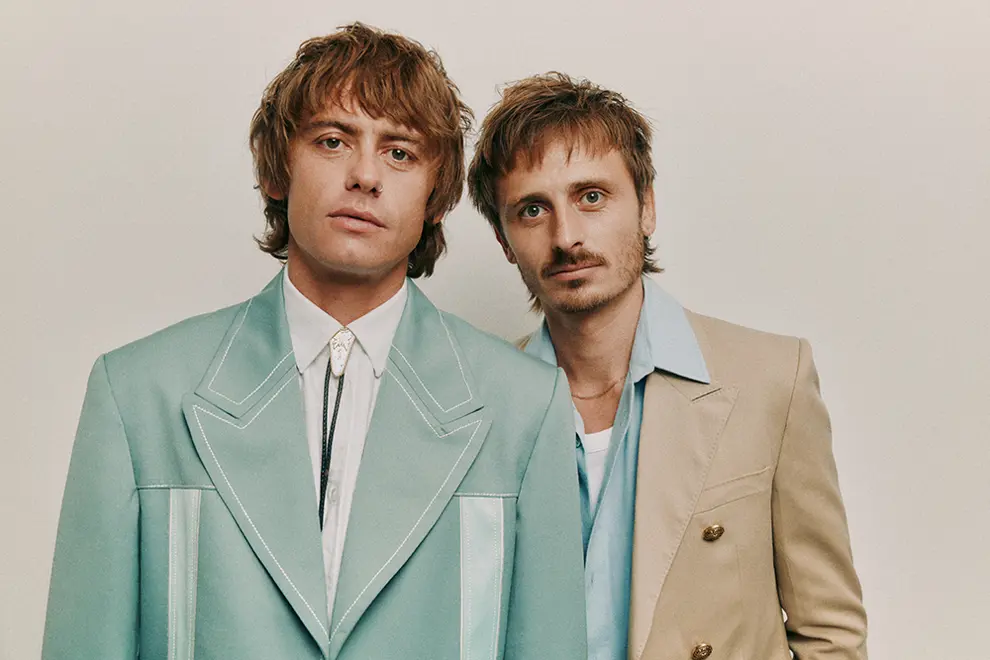
Suffice it to say, the state of affairs when it comes to the climate crisis – both nationally and internationally – is concerning. So it is no surprise that Lime Cordiale (the pop rock outfit consisting of brothers Oliver and Louis Leimbach) are desperate to do something about it.
The loveable sibling duo are passionate about two things first and foremost: live music and the environment. Their brand-new initiative, Lime Green Festival, combines these two passions.
The festival, set to take place in Adelaide on April 18th at the Adelaide University Cloisters (moving from its original location of Sempahore’s Point Malcolm Reserve), is designed to be a 100% off-grid event. It is a bold experiment in what the future of live music could look like.
Featuring a whopping line-up of Lime Cordiale, The Dreggs, aleksiah, PASH, TONIX, former Greens leader DJ Adam Bandt, and a triple j Unearthed artist still to be announced, the festival also offers a program of inspiring talks, interactive workshops and community focused activations.
Presented by triple j and partnered with Chugg Music and Aggreko, the festival will be raising money to support a community-led response to the South Australian algal blooms.
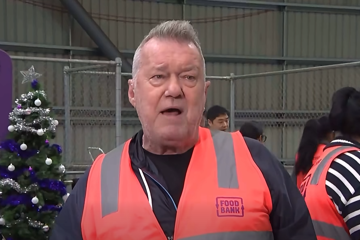
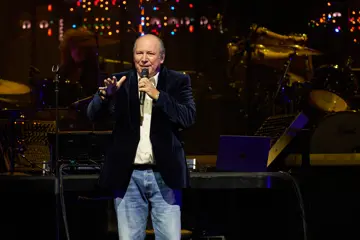
In the lobby of the Sofitel Adelaide, Michael Chugg – founder of Frontier Touring and Michael Chugg Entertainment – discusses his admiration for Lime Cordiale’s green reputation.
“I travel the world a lot, and I spend a lot of time everywhere,” Chugg says. “Climate change is such a disaster. When I was a kid reading science fiction books about the 21st century, it had us living in domes because of the atmosphere.
“I worry about climate change, I worry about the future of our children. And for the boys to really be so passionate, it’s great. Any way we can influence people’s thinking is important.”
He adds, “Musicians, for better or worse sometimes, can be very influential. The honesty and passion that Oli and Louis have is inspirational.”
At the mention of the South Australian government’s response to the algal bloom crisis, Chugg says, “I’m not really across it, I don’t live here, I only see headlines and bits and pieces, but it’s a worry… I don’t want to really get into fossil fuels and all that, but it’s time to change.”
On a more positive note, what is Chugg most excited to experience at Lime Green Festival?
“Selling it out,” he answers gruffly with his trademark honesty and humour.
On a Zoom interview, Oliver Leimbach discusses what initially drew him and his brother to environmental activism.
“We grew up on the coast, on the northern beaches of Sydney,” he begins. “Most people in Australia live around the coast, so I think most people have a pretty strong connection to the ocean.
“As surfers as well, we just loved the ocean so much and we hated plastic on the beaches and we hated whaling and overfishing and things like that, so that’s what we first got involved. I guess we just got passionate from our love of nature.”
He admits that, as they attempted to first expand their career they “took a step back” from environmental activism.
“You know, when you’re trying to grow a band, it’s so hard, you’ve got to hustle, you got to almost be a bit selfish in the way and have kind of tunnel vision, so it wasn’t until a bit later on – maybe 2020 – where we went, ‘Why are we trying to be successful in the first place?’ We felt like we needed to show our beliefs a bit more.”
Have they ever experienced pushback for their staunch values?
“Yeah, sometimes,” he says. He mentions recently helping Green Peace activists clip themselves with abseiling ropes to the side of a coal ship in Newcastle – one of the major coal companies reposted footage of their involvement.
“That was almost hilarious, because it was just boomers going nuts… When you do get hate, you really think about it. You can have one hundred nice comments and then one negative one, and that’s the one that sticks with you. But I don’t really care any more.”
The idea for Lime Green Festival first came after COVID restrictions were removed. During the pandemic, Oliver and his brother were a “lot more domesticated,” doing small farm-work and “very aware” of their carbon footprint.
“When COVID lifted we had to make up for all of this lost time and tour heaps, so we were on planes all the time and on buses,” he recalls. “We just felt like massive hypocrites. We went, ‘Oh shit, we can’t call ourselves environmentalist and be touring artists.’ So we started questioning it, we started questioning whether we could be carbon neutral.
“We spoke to a lot of people, and we’ve been filming our journey as well, and making a documentary about it. And largely the advice we’ve gotten is, you can’t just stop doing what you’re doing, you need to change what you’re doing.
“So that’s kind of the advice that we put out to everyone: try and see where you can change or question what could be different,” he adds. “We decided we needed to get in there and make our own festival to show that it is possible.”
Climate action, he says, should be “up to everyone.” He cites how BP, the multinational oil and gas company, coined the term ‘carbon footprint.’
“It was a way of putting it onto the individual,” Oliver notes. “But it shouldn’t be on the individual as much, it should be on these massive corporations that have huge footprints.
“But,” he shrugs, “consumer demand. If we all change, these big corporations will change. And musicians have always been at the forefront of stuff.
“Musicians speak out. You look at the Grammys and how political that was. But it kind of sucks that you’re speaking to a brick wall sometimes. It’s totally up to the government and these big corporations but they have no empathy, no feelings when it comes to the climate crisis, so you have to go about it a different way. You have to monetise it somehow and consider consumer demand.”
He describes Adelaide as one of the “leading cities” when it comes to climate action.
“A lot of the climate advisors that we talk to seem to come from Adelaide. And SA SA has the most renewable energy in Australia,” he says. “It’s not one of the main cities, so it’s always cool to organise a festival that’s not in Sydney or in Melbourne.”
Being so involved with activists from South Australia, is, he feels, potentially the “only” reason he had heard of the algal bloom in the first place.
“Some people are comparing to this issue to the bush fires, but it’s hidden beautifully under the surface of the water. You’re not really seeing this firsthand unless you’re on a beach in South Australia. It’s hectic. It’s super devastating. We wanted to highlight that, start talking about it.”
But Oliver is feeling hopeful, and enthusiastic about the upcoming festival. “I’m excited for it to go well so we can potentially do it again next year. I’m excited to show people how easy it is to just run a festival on batteries.”
He wants to express, however, that these initiatives are often not perfect. “There will be some sort of footprint on this festival in some way,” he concedes.
“There’s going to be people driving or flying to the festival, and that’s fine. I’m not saying people can’t do this stuff, you should be able to. I don’t think things should be so black and white. It scares people off trying to do the good thing. It’s just the main thing that people come at you with, that if you’re not absolutely perfect you shouldn’t do anything at all.”
His nose wrinkles. “Such a stupid and weird theory. It should just be an open and friendly space.”
Environmental activism, he specifies, should be for all – as should live music.
The Lime Green Festival takes place at the Adelaide University Cloisters on April 18th, with tickets on sale now.
LIME GREEN FESTIVAL
Lime Cordiale
The Dreggs
aleksiah
PASH
TONIX
Sticky Beak
DJ Adam Bandt
Plus triple j Unearthed Winner
Saturday 18 April - Adelaide University Cloisters, Adelaide, SA
This piece of content has been assisted by the Australian Government through Music Australia and Creative Australia, its arts funding and advisory body