And yet 49 years of festivals is nothing in comparison to the story and kinship upheld by the traditional owners, the Pyipgil Gundidj clans of the Peek Whurrong people.
Their entanglement with the land dates back tens of thousands of years, and without the honouring of that, Port Fairy Folk Festival wouldn’t be what it is.
It’s also important to note the hostility, violence, and ongoing affect of colonisation continue to reek an injustice on the First Nations people of this land. But, concurrently culture is strong, particularly in Pyipgil and this was made evident in the Marrang tent.
Marrang is a Kirrae Whurrong/Peek Whurrong word meaning meeting place, and the tent was rightly named such by Revered Peek Whurrong elder Uncle Rob Lowe. Over the course of the weekend various offerings celebrated Blak excellence all the while acknowledging the legacy of the Archie Roach Foundation Stage.
It was here that Carla Lauch taught festival goers traditional Kirrae Whurrong basket weaving in honouring of her great grandmother. Paul Wright led a recounting of dreaming stories about the emu, kangaroo, and Bundjil the eagle, all the while much more afforded punters an opportunity to engage with far more expansive story than that of the colonial narrative.
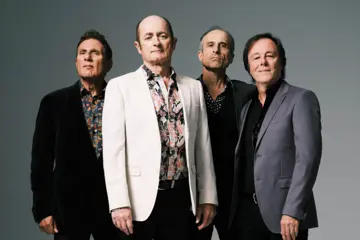
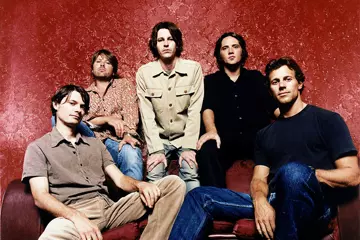
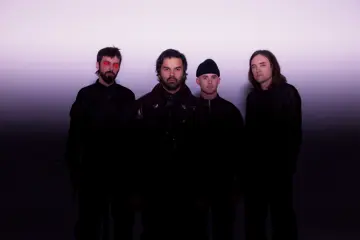
Across the other stages and venues a suite of musicians showcased their unique expressions of folk music which stretched from widely acclaimed international acts like Fantastic Negrito and Jeffrey Martin, to local legends by the likes of Liz Stringer and Emma Donovan, and the emerging flock of artists in Rupert Bullard, Mia Kelly, and Caisha Sprout.
The festival, Folkie as it has come to be endearingly named, had so much music on offer it was hard to see it all, but one must try their absolute best.
Friday night acted as a taster of what was to come for the rest of the festival with Walmatjarri elder, teacher and blues artist Kankawa Nagarra stirring the crowd towards a sunset with her jangly and driving expression of the blues.
From there artists spread across the four main stages titled River, Pyipgil Gundidj, Island and Shebeen powered into the night. But it was Noongar woman and now Naarm/Melbourne-based Bumpy that captivated the audience in the Pyipgil Gundidj tent with her celestial and mesmerising performance that intersected songs in ode to Noongar sunsets and influences of modern jazz and soul.
Longstanding Australian folk icon Kasey Chambers drew the first night of the festival to a close in her polished and refined manner, followed by Willie Watson serenading audiences in his rambling and reverberating fashion.
Satiated by the initial proceedings I chugged back to the Port Fairy Showgrounds where droves of caravans, camper vans and tents had packed out the circular lawn.
Saturday began suddenly wherein the Marrang Tent Gunditjmara and Kirrae Whurrong – Bundjalung man Lionel Lauch led people through a yidaki driven meditation and yarn. Shortly after, Future Folk in the round saw 6 young folk musicians share their original songs and talk about their process – this program having become a fundamental part of the festival.
In years gone by, Future Folk has platformed young artists providing them the opportunity to connect with crowds and further progress their musical career.
Kaurna Cronin shared tales of fatherhood and the relevance of reading Robert Macfarlane’s book Landmarks, a call to recgonise and engage with the significance of language and how that informs our relationship to the world around us.
Emerging Naarm/Melbourne based songwriter Caisha Sprout roused punters into a toe-tapping frenzy with her mélange of blues, soul and folk. Her voice as brilliant and endless as the Southern Ocean thrashing away in the on-shore winds of the day.
An attempt to see the enchanting Nordic-folk four-piece Åkervinda failed as the Reardon Theatre had reached its capacity well before the show started, a nod of affirmation to the mysticism and power of such a group.
Canadian youngster Mia Kelly filled the pews of St John’s Church as the stained glass windows cast a kaleidoscope of technicolour onto the space, illuminating her soaring voice. This ceremony of sorts boasted tales of her journeying to the Congo to represent Canada in Francophone multi-disciplinary competition. She might just be a modern-day troubadour.
Legend of music, Liz Stringer captivated Shebeen tent-goers with the authenticity and conviction we’ve come to know of her. She shared songs and stories from her 20-year discography melded with tales of her extended period of sobriety and her commitment to social justice.
Wandering back up the main street, from whence I’d seen Kelly earlier I found myself seated in the Lecture Hall, adjacent to the Fiddler’s Green. Low lighting, plush red velvety seats, and an elevated timber stage paid homage to the name of the venue, although a performance theatre seemed a more suitable use for the space.
And so The Lecture Hall became just that, intimately so as Chloe Foy, a Devon, UK local’s angelic vocals caught flight as she accompanied her equally strong and delicate guitar work, supported by another musician on violin. Sinking deeper into the cinema style seating, at least sensorially, at the hands of the sonic atmosphere I was convinced I may be levitating.
Following on from the ethereal timbre of Foy brought forth The Ocelots – a brotherly duo hailing from Ireland. Their wit, cheekiness and eccentricity were unadulterated in the moments that threaded together the music. But it was when they began playing their assortment of instruments, that spanned from banjo to flute to keyboard, a sincerity and pure beauty took over.
One that obfuscated the absurdity of the lyricism about being Frank Sinatra for a night, the recitation of dreams about pigs flying, or the love story of Alice in Wonderland and the giant from Jack and the beanstalk. They maintained an ever-entertaining balance of hilarity and polished musicianship, a near perfect dance along some sort of spectrum.
High energy duo the Pierce Brothers had garnered a mass of jumping punters as I loped into the perimeter of the Shebeen tent. Their ferocity in performance blazing as bright as it ever has as whilst they circulated between instruments layering a wall of sound. Mentee, friend and Folk Festival alumni Flynn Gurry joined for the final song that nearly brought the tent to the ground.
Thankfully the team at Port Fairy have been fortifying the OH&S regime for 49 years now and there was never any risk of danger, bar one of the crowd losing their voice from howling along with the Pierce Brothers.
Rounding out the night was Jeffrey Martin – a poet/artist by nature, not just by profession.
As he warmed up to the crowd, and into a cold, gusty evening, he sipped from a takeaway coffee cup, lid off, my mind wandering to what liquid might be housed in the confines of its cylindrical walls. His lyricism was, well, poetic, but his voice carried a depth that plumbed you to a place you may not have known yourself capable of venturing to.
However, during his performance of the song Quiet Man, a crescendoing and stirring number, it was the forgetting of the lyrics that acted as a reminder, to those aware of it, that we do indeed sometimes forget the words to our own poems – a phenomenon housed in a broader web of metaphor that Martin’s music manages to imbue.
Sunday morning brought with it even more wildly charging Southern Ocean swell, smashed in a collision with strong on-shore winds, almost as if the sea itself were singing a song. An ancient shanty proclaiming its power and vastness.
The scent of, and eventual taste of coffee propelled my feet towards Sackville Street to witness Mia Kelly perform some of her songs in the slow emerging light and subsequent warmth of the midday sun. Singalongs, and feet tapping percussive accompaniments summarised the set, as the throb of being amongst the crowd moved the day forward.
She is certainly one to watch, and will be for many ages. It seemed fitting that Future Folk on the green took over from Kelly, as we experienced another taste of the talent that the local youth are so capable of.
Wandering back to the main site, the streets laden with market stalls and buskers of all ages, mainly children having a hand at becoming musicians themselves. It became evident in this moment that Port Fairy Folk Festival is more than just about music on stages. It’s become an aspect of the culture there, a true representation of folk.
Emily Wurramurra and her band setup at the Island Stage and what ensued was an incredible display of storytelling, refined artistry all woven together by an urgent call to treat water, as well as land as kin. It was this set that seemed to encapsulate the relevance of the festival, as well as evoke the most human of responses.
Fast emerging lutruwita/Tasmanian raised Rupert Bullard followed up shortly after. Recently he’s been catching many eyes and ears with his music – an amalgamation of an upbringing informed by land, sea, love and the raw quaking of folk music gone by. His stories are steeped in all of this, and although he may not yet now it, have the power to determine culture moving forward.
Iron & Wine, Irish Mythen, and Jim Lauderdale rolled the day into evening where Emma Donovan and her project Take Me To The River played an assortment of covers and originals on the Shebeen stage. Donovan’s voice calls forth a largeness that beckons in a more holistic observation of all things. The theme of the set meandering through music that has shaped her, coalescing with the influence bodies of fresh water have had on her.
Music by Sons Of The East and Fantastic Negrito, straddled by a big, near-full moon rode the night out. And then as quickly as Monday came around, it disappeared with performances by Mary Coughlan and Claymore drawing Port Fairy Folk 2026 to a close.
As I tangled along the roads back east my mind wandering to the rippling affect that Port Fairy Folk has on the immediate and broader communities. Ever-present, much like the persistently energetic Southern Ocean – an entity that acts as the town’s keeper of time.
This piece of content has been assisted by the Australian Government through Music Australia and Creative Australia, its arts funding and advisory body