 Deftones Profile
Albums get shelved for a number of reasons. The act changed music direction midway during the sessions, split after tensions between members, had a meltdown and turned on the record, a medical reason came up, or the record company refused to release it.
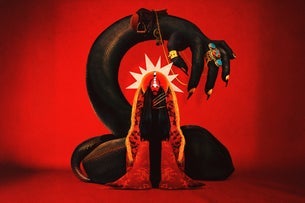
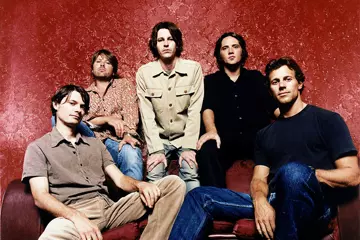
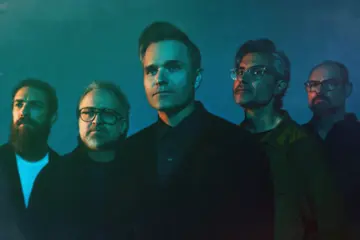
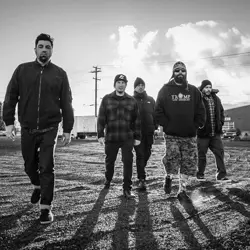
These “lost” albums came back in the spotlight last week when, as The Music reported that Deftones’ Eros was apparently leaked. Recorded in 2008, it was shelved after bassist Chi Cheng was in a long-term coma following a car accident.
Here we look at 10 great “lost” albums.
Empire Of The Sun – The Tokyo Sessions (2016)
Luke Steele and Nick Littlemore headed to Tokyo to shoot a video for Way To Go. They were so entranced by the city’s techno sounds that they booked for two weeks into Studio Sunshine, “right in the middle of the chaotic bit of Tokyo," according to Littlemore on triple j.
However the results were not techno but “mournful, Zen songs.” A day was spent with a traditional koto player to test its opportunities. They did four tracks in Tokyo before exhaustion kicked in. Two of these survived on to the Ask That God album, serving as its final two cuts.
The 6-minute, 17-second Rhapsodize was an ode to Japanese technological gadgets, bringing in voice actor André Sogliuzzo teaching the toys to speak in the human language.
The ballad Friends I Know was created with the visual of “a tiny whisky bar with Luke swooning in and regaling all the stony-faced drunks to the point of tears.”
Icehouse – Bi-Polar Poems (2001)
Icehouse has not released fresh band studio material since 1993’s Big Wheel because leader Iva Davies isn't motivated to write any more. However there is an entire album Davies began working on from 2001 called Bi-Polar Poems, which he describes as “probably my best one.”
Some tracks like Your God Not Mine have been posted on the Icehouse website. But the entire album remains locked in the vaults. Davies has stipulated in his will it not see the light of day until his death.
The Beatles – Get Back Glyn Johns Remix (1969)
By 1969’s Get Back/Let It Be sessions, John Lennon, George Harrison, and Ringo Starr were well and truly over “being” The Beatles.
George and Ringo had quit at different times over perceived slights by the others but were coaxed back.
None could be bothered going through the tapes to make an album. Lennon would tell Rolling Stone that the tapes were “the shittiest load of badly recorded shit – and with a lousy feeling to it – ever.”
Only Paul McCartney tried to steer the ship on. After the studio trickery of Sgt. Pepper and Magical Mystery Tour, there was a move back to a simple warts-and-all approach. This was what Macca conveyed to engineer Glyn Johns, asking him to pull the Get Back album (as it was called then) together.
Johns took this brief on two sets of Get Back, one made in May/June 1969, and the other in January 1970. But these were rejected by Johngeorgeringo as being sloppy and not up to the Beatles mark.
Johns recalled: “It wasn't that they didn't enjoy it. It was just that they didn't see it as being what they were trying to achieve.
“To be honest, I didn't expect them to go, 'Oh, what a great idea,' but I thought I'd run it by them just in case. It was an option, if you like."
Eventually they brought in US producer Phil Spector in March 1970, who proceeded to smother some songs with lavish production.
The Johns mixes included tracks such as Teddy Boy and Save The Last Dance For Me.
Lennon’s Across The Universe began with John asking Ringo “Are you alright Richard?”. The Beatles backing vocals and those by two of the fans who hung around outside the Abbey Road Studios (and affectionately dubbed “apple scruffs” by the band) were edited out. Johns faded it early and segued it into the Get Back reprise.
The Johns mixes were leaked in 1969, resulting in the Kum Back bootleg. It got an official release in the 50th anniversary box set in 2021.
Pink Floyd – Household Objects (1974)
After creating a monster with 1973’s Dark Side Of The Moon – at last count, global sales were between 45 million and 50 million – Pink Floyd were clearly more paralysed than inventive.
One idea for their ninth studio album was to do away with traditional music instruments and make sounds with household items.
They trooped into Abbey Road Studios in London with producer Alan Parsons, and spent a few weeks tapping beer bottles to make up chords, rolling up newspapers for drum sounds, and letting off aerosol cans to get a hi-hat sound.
Rubber bands were stretched between matchsticks and plucked as bass lines. Wine glasses filled with water were tapped to different tunes. Brooms were scraped on the floor.
But there was a change of plan, and their ninth record became Wish You Were Here (1975) with acoustic guitars, synths, sax, and violin virtuoso Stéphane Grappelli. It sold 20 million worldwide.
Household Objects was forgotten about. But The Hard Way with newspaper drums and rubber band basslines eventually peeked its head above the wall on the Immersive box set of The Dark Side Of The Moon.
The sound of wine glasses was used on the opening of Shine On You Crazy Diamond, their tribute to original and brilliant leader David “Syd” Barrett on Wish You Were Here.
The full glass track was included in the Experience and Immersion edition of Wish You Were Here.
There are still fans who wish Floyd had stuck to the household sounds idea. Among them are producer Parsons and Roger Waters, who said, “It seemed like a good idea at the time.”
The Avalanches – Zomba Promo (2000)
Zomba Promo was what fans dubbed The Avalanches’ pre-clearance unedited version of their 2000 sample-blueprint Since I Left You. Obsessed with sounds and soundbites, Robbie Chater estimated they came up with 3,500 samples. These were sourced in $1 basement bins in record stores around Melbourne.
Initially The Avalanches’ attitude was, “No-one’s going to listen to (the samples) anyway.” But Modular Recordings, who helped fund their hardware, insisted everything had to be cleared.
A full-time executive was put in charge of legalising these. With My Baby and Younger Than Springtime were dropped from the final cut, while Radio had a different intro. While the Zomba Promo version has leaked and remains a preferred version by some fans, it’s yet to – if ever – receive an official release.
In the 16 years between the first and second album, The Avalanches worked on a series of projects, some abandoned and taken on mythical status among fans.
These included a version described in 2005 as “ambient world Music”, and an unfinished project called “the hip hop Yellow Submarine”, of The Beatles animated film.
Prince – Camille (1986)
In his golden period of the mid-1980s, Prince came up with the concept of a record made as his female alter-ego Camille. The eight tracks were the most experimental he’d done.
But weeks before a confirmed release date, Prince pulled it. But Rebirth Of The Flesh, Housequake, Strange Relationship, Feel U Up and Shockadelica found their way into Sign O’ The Times and assorted B-sides.
Jack White’s Third Man Records announced plans for an official release of the record in 2022 after approval from the Purple One’s estate, but no updates have arrived since.
AC/DC – High Voltage With Dave Evans (1974)
AC/DC started recording their first album, High Voltage, with original singer Dave Evans.
But five tracks in, as they moved from glam-rock to harder R&B, they decided in October 1974 that the swaggering and rough’n’ready Bon Scott would be a better fit.
Welsh-born Evans was on lead mic duties on first single, Can I Sit Next To You Girl and Rockin’ In The Parlour, written by Malcolm and Angus Young, and which reached #50 on the charts. Evans is not sure if those early tracks were wiped or in the vaults of their record label Albert Productions.
Scott re-recorded some of the Evans tracks like Little Lover, Soul Stripper, and Rock And Roll Singer for the official version of High Voltage, released on February 17, 1975, and rewrote some of the lyrics.
Evans, who maintained the Youngs were jealous of him, later joined Newcastle hard rock band Rabbit (their second album Too Much Rock’n’Roll was released in Japan and Europe) before fronting Dave Evans & Hot Cockerel and Dave Evans And Thunder Down Under.
Green Day – Cigarettes And Valentines (2003)
After the folk-rock bent of 2000’s Warning, Green Day decided to return to their upbeat bratty punk-rock roots. and folk punk genres, respectively. "We've had a nice break from making hard and fast music and it's made us want to do it again,” bassist Mike Dirnt said.
They worked on Cigarettes And Valentines over six months, looking at a 2003 issue. 16 songs were baked, with two set aside to finish up. The title track, Dropout, Sleepyhead, and Walk Away were among those recorded.
Then “tragedy” struck. According to the band, the master tapes were stolen from their Jingletown Studio in Oakland in San Francisco.
People were sceptical about this. But the narrative went, that rather than re-record the album, they saw it as a sign from the universe, and decided to go another direction.
They came up with American Idiot, which charged their career and kicked them into the stadium league. On their last Australian visit, The Saviors Tour in 2025, they played to 135,000 fans over three massive shows. Globally the tour shifted 2.5 million tickets over 106 shows.
Only the track Cigarettes And Valentines came into the light as fully finished and a live version released on the Awesome As Fuck (2011) live album as a single. It wasn’t exactly Green Day at their best.
In a piece in UK hard rock magazine Kerrang!, their producer Rob Cavallo recalled visiting frontman Billie Joe Armstrong at his home.
He found him somewhat pensive, in his custom-built Tudor mansion in Piedmont, overlooking Oakland Bay, with its own recording studio and a wall of one of the five bathrooms decked in early GD gig flyers.
Surrounded by such luxury (he’s now worth $75 million), he had asked, “What right do I have as a punk rocker to sing about what’s going on?”
Cavallo’s response was, “Your fans want to know how you feel, so you’ve got to write about whatever it is you’re feeling. As long as it’s real and true, I think people are gonna respect it, and I think they’re gonna like it.”
Skyhooks/Daddy Cool – Joint Effort/Lost Album (1994)
The paths of Melbourne ‘70s phenomenon bands Skyhooks and Daddy Cool criss-crossed many times.
Most notably DC’s Ross Wilson discovered them, signed the ‘Hooks bassist Greg Macainsh to a publishing deal, and produced their early albums.
In 1994, the two reunited bands mused a joint tour and a collaboration eight-track album to be called Joint Effort.
A double-A single consisting of DC’s The Ballad Of Oz and Skyhooks’ You Just Like Me (‘Cos I’m Good In Bed) (Safe Sex Mix) was issued in mid-1994 with an accompanying release of Jeff Jenkins’ book Ego Is Not A Dirty Word and museum memorabilia exhibit, also under that name, which drew 12,000 visitors.
However there was little support at radio, and the single peaked at #35.
Alarmed that the reunion was not going further afield than original hardcore fans, Mushroom first downsized the tour to pubs, and then axed the tour and plans for a full-blown ‘Hooks album.
Guitarist Red Symons, announcing this news, commented, “Why wait until Christmas, let’s hate (Mushroom boss) Michael Gudinski now!”
In 1999, Mushroom released a 19-track hits record called The Collection. The Joint Effort tracks made with producers Ross Fraser and Mark Moffatt was released as a bonus disc titled The Lost Album.
The 11 tracks included ‘90s tracks such as Jukebox In Siberia, Happy Hippy Hut, Tall Timber, and Kooyong Dollar.
The Beach Boys – Smile (1967)
The Beach Boys’ Smile is the holy grail of lost albums, abandoned at its peak of leader Brian Wilson’s vision. In 1967, it stood at the gate of changing the sound of rock music forever.
In the early ‘60s, The Beach Boys made their mark with a teen soundtrack of surfing, girls and custom cars.
By 1966, Wilson’s genius had kicked in, and he had come up with the remarkable goalpost-pushing Pet Sounds.
He now wanted to build on the orchestral sounds in his head. “A teenage symphony to God,” he called the record.
For inspiration, he looked at the forms of classical music rather than rock. Technology at that time couldn’t capture what he wanted exactly. His approach then was modular, recording snippets in different studios to tap into their varying sounds and paste them together.
He installed a sandbox in his living room, so he could rub his toes in the sand when he composed, to evoke the innocence of childhood.
While recording the “Fire” segment of the Elements suite, he handed out plastic fireman helmets to the orchestra and burned wood in a barrel in the studio. Around the time, fires broke out in California, and a spooked Wilson burned some of the tapes.
For the track Vegetables, he got musicians to crunch raw celery as a percussion tool.
To match the surrealism of the music, he brought in avant garde poet Van Dyke Parks to create lyrics about California’s reality. Heroes And Villains was how it treated its immigrants.
Already suffering mental health worsened by his copious intake of LSD, Wilson was under a lot of stress. Although the first taste of the album’s vision, Good Vibrations, was their first million-seller, the rest of the band were confrontational about this move into dark art and for which they had no creative input.
Even worse, Wilson felt he needed another year to complete the album. But the band’s record label Capitol insisted on an immediate deadline.
Finally, Wilson abandoned Smile. They rushed out a low-budget version called Smiley Smile which was a commercial disaster.
In 2004, Wilson revisited Smile as a solo artist, first issuing Brian Wilson Presents Smile.
In 2011, the exhaustive Smile Sessions let the world hear the original. The question was: how would Smile have changed music if it had been released in 1967? Wilson died in June 2025.