The Sound Of My Voice, the first feature-length collaboration between director Zal Batmanglij and writer/star Brit Marling, was an intriguing American-indie picture; a portrait of a pair of journalists going 'under cover' to write a story on clandestine cult centred around a leader who claimed to have arrived in contemporary Los Angeles from the future. Made on a micro-budget, it was a passion-project that used reductionist logistics to artistic ends: managing to make the feeling of being trapped in a room claustrophobic, rich with tension. Following the success of their prior picture, Batmanglij (yes, the brother of the bro from Vampire Weekend) and Marling have collaborated, again, on another portrait of going deep under cover inside a mysterious band-apart: The East starring Marling as a private-security-company's operative, out to infiltrate the titular eco-terrorist outfit. Only, this time, the increased profile, budget, and need for commercial-appeal has made the pair turn their back on everything that made The Sound Of My Voice interesting. Last time, they created tension by sitting in a room, and marinating in all that unease contained within four walls; this time they create tension with pounding kettle drums, jittery cameras, and chase scenes; mining action-thriller clichés as they make a clichéd action-thriller.
The East's spiritual predecessors are those endless films about cops under cover in the mafia; tales which depict a kind of professional Stockholm Syndrome, where leads soon identify more with the lives they're pretending to lead, rather than the ones they've left behind. Both are about the fraternity, togetherness, and belonging that can be found when living a life beyond the law, but where those in bed with the mafia can also be seduced by power, lucre, and vice, here Marling is changed through asceticism, denial, unbaggaging. When she's first on the road, in pre-worn-in Birkenstocks and backpack, she retires to her motel at night to greedily gorge on French-fries, but soon after life 'aboveground' reeks to her of comfort, decadence, and emptiness. She may be a snitch, but she's a snitch with a conscience; something that's bound to bring her up against her delightfully cold, Shakespearean-matriarch boss, Patricia Clarkson, who cares not about civilian casualties unless they're clients.
All this would be more charming - a '70s corridors-of-power thriller crossed with the romanticised dissidence of Dances With Wolves (minus the white-apologist's air, of course) - save for numerous troubling details, from the minor to the major. Beginning with the horrendous wigs and beard-pieces worn by Alexander Skarsgård and Toby Kebbell, which give the undeniable, embarrassing feeling of this being a game of Hollywood dress-ups; celebrity actors trying on the costume of radical dissidents. The narrative of a faceless group of domestic terrorists detonating attacks on culpable corporate criminals is also, somehow, deemed insufficiently dramatic. So, eye-rolling 'This Time, It's Personal!' angles are added; none more noxious than when it turns out Ellen Page's suspicious sourpuss is actually the daughter of a mining magnate dumping toxic metals into waterways. When she confronts dad on the eve of an attack, he's at first wonderfully dismissive - “is this part of some rehab or something?” - but soon the unrepentant-corporate-stooge recants with teary flip-flop; wailing “I love you Katie!” with embarrassing, unintentionally-hilarious theatricality.
In the end, of course - oh, and, spoilers, if you've really read this far and actually plan to see this crashing disappointment - everyone ends up getting punished: both the corporate crooks of multinational pharmaceuticals, and the bewigged young-Hollywood rebels out to enact their own righteous vengeance; this another action-thriller where everyone bar hero and love-interest ends up dead or handcuffed. The reason this is so unsatisfying is that the dramatic possibilities for the moral-handwringing of its main character - not to mention an exploration of eco-polluters and eco-terrorists as mirroring lunatic fringe; separated only by billions of dollars and corporate might - are so profound. And, yet, The East turns out to be the opposite of profound: a piece of silly time-killery that, in the space of two hours, turns Batmanglij from director-to-watch to director-to-be-suspicious-of.
Israeli filmmaker Dror Moreh was inspired to make The Gatekeepers - his Academy-Award-winning documentary that sits down, in conversation, the six men who've served as head of Israeli state intelligence agency Shin Bet - after watching Errol Morris's much-acclaimed The Fog of War: Eleven Lessons from the Life of Robert S. McNamara. Morris's film, and Ra'anan Alexandrowicz's The Law In These Parts (another collaterally-minded interview-piece, this time with those men charged with creating and upholding law in the Occupied Territories), serve as spiritual antecedents to Moreh's picture; a portrait of moral conflict embodied in the form of six men with heavy-hanging heads - and blood on their hands - from the years in which they wore the Shin Bet crown. Knowingly, Moreh uses lots of surveillance footage from drone-strikes from upon-high; the God's Eye viewpoint literalising the theme of Playing God; of holding the fates of other in your hands. “What's unnatural is the power that you have,” says Yuval Diskin, “to take three people, terrorists, and take their lives in an instant.” At first, Moreh seems like a combative interlocutor, pressing each of the men on past decisions; their responses a mix of defiance, remorse, and left-open philosophical questions. But as The Gatekeepers progresses, any possible black-and-white stance - by subject, interviewer, or viewer - is washed away to so many ever-muddier greys; the discussion soon bogged down in the moral swamp and inextricable stuck-in-the-mud standoffs that define the political morass in the Middle East.
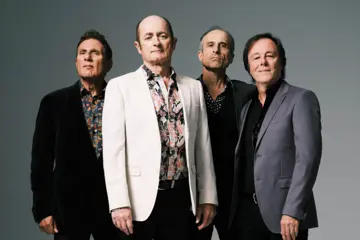
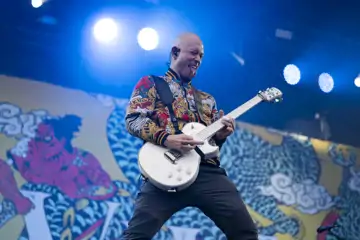
The Stone Roses: Made Of Stone begins with this unwavering tenet: the Mancunian quartet were, at their 1989 peak, the greatest band in the world. It's the position of director Shane Meadows - the mediocre English filmmaker whose insanely-overrated filmography has roughly proceeded as an unbroken collection of stock direction and Midlands cliché - whose observationist neutrality is so absent that the only possible response is to turn him into a character in the movie: the slavering fanboy who lets loose an awestruck “fookin'ell” every time Ian Brown blows his nose, living out an adolescent dream of getting to make a movie about his “all-time favourite band”. The worst moments of The Stone Roses: Made Of Stone come when Meadows is utterly enraptured with the banal, so reeling at the idea of the Roses in the one room again that he just shoots them, making middle-aged-ribbin' smalltalk, as if this is a piece of profound world history, and not just business as music-industry usual. In this era of mass reformation, it feels like roughly two bands of equivalent size/influence - The Smiths and The Jam - have held out, denying cashing in on retromania and summer-festival glut. So, as much as Meadows stares in disbelief at this particular band-back-together, that element is neither surprising not interesting; especially given that the Stone Roses' discography comes with in-built resurrection imagery aplenty.
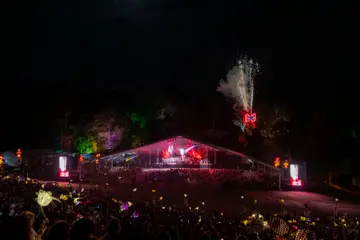
As it's made by a fan, so is it largely for fans only: a portrait of a reformation in which the reformation is the least interesting dramatic element. The band's history is far more worth the curiosity; even if it's routinely turned into rapidfire, televisual montages of blaring NME headlines set to old songs. The blurry super-8 footage of their gaunt teenage bodies carries great weight when juxtaposed against their weightier 30-years-later selves; one 1989 TV interview with a mumbling Brown and silent John Squires is a piece of passive-aggressiveness bordering on performance-art; and the utter arrogance of the band at their peak is pitched perfectly between the ridiculous and the sublime. The picture's best moment of structural intrigue comes when the past is properly unpacked, and history repeats: when drummer Reni (singular, like a Brazilian footballer) walks off the European tour, calling the whole reformation into question, Meadows uses that 'down' moment to explore the melancholy making of unloved-second-album The Second Coming, in which the band, after years of contractual wrangling and court hearings, joylessly functions with a perfunctory sense of business-driven duty. It's a poignant bit of filmmaking, but by the time The Stone Roses: Made Of Stone ends with a big concert-spectacular production of Fool's Gold played live in a heroic homecoming, it's almost instantly forgotten; a casualty of a largely-forgettable documentary.