 Marlon Williams Profile
Swooping down into Taronga’s Twilight Sessions from the bus stop is a therapeutic experience.
You wipe off all of the chaos of the city, the torpor of a sweltering day, the traffic of Military Road. It’s forest bathing with a difference. The zoo is closed to animal enthusiasts but open to music lovers. You descend down and down, the sweet and sultry sounds of Kee’ahn - who takes her name from the Wik word 'kee'an' meaning to dance, and to play - floating up to you in a green dream.
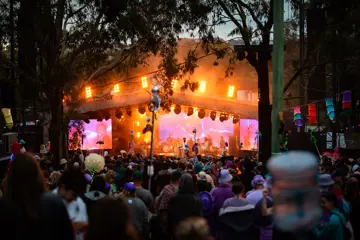
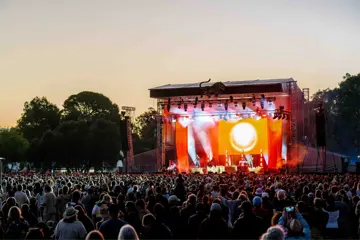
Then, as you round a verdant corner, the whole world opens up. A quaint little scene - picnic blankets, laissez-faire revellers, the city unfurling in the evening light, and Kee’ahn - her presence bold and undeniable. Her voice is soulful and her lyrics simple but wisdom-unearthing.
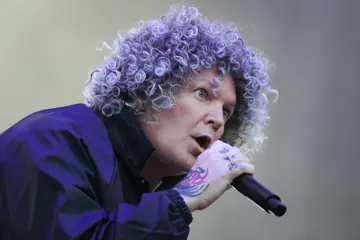
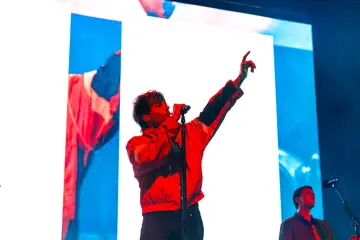
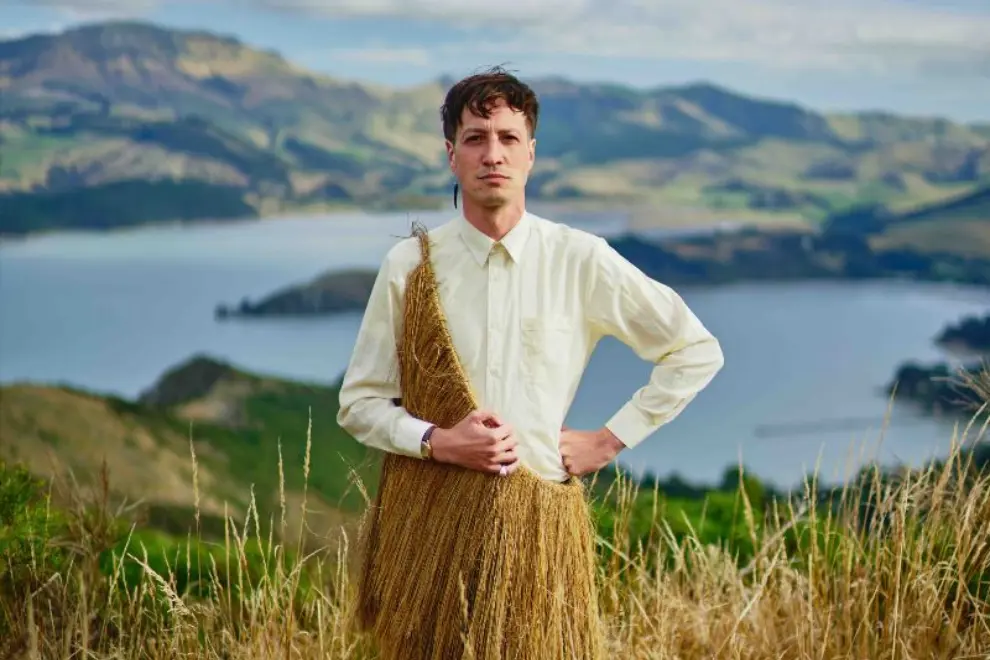
Marlon Williams has this easy power of making you feel living-room-comfortable while also lifting you suddenly out of the quotidian into a soaring, wondrous space of reverie. “You look a bit sinister to be honest,” he says to one contingent of the crowd. “A bit cultish. You look like tree people.”
His easy charm comes from his playful candour, as he states, “I’ve already made two errors, and we’ve only played two songs.” He has the ability to bridge two worlds, as his recent documentary - Ngā Ao E Rua - Two Worlds - revealed.
His most recent album, Te Whare Tīwekaweka (House of Disarray), which is completely in te reo Māori, is further testament of that. While Williams hasn’t been speaking his entire life, he’s been singing it his entire life - so it feels natural.
That naturalness complements the surroundings perfectly. Sun spreading its last rays over the city, the city slowly silhouetted, electric lights coming into focus and shining like stars as the darkness takes hold, all sorts of animals making themselves known with their night calls. This is Taronga Zoo as part of the Twilight at Taronga series, which has been running for almost 30 years.
Tracks like My Boy (the titular track from his 2022 album) have a raucous fun that’s difficult to find in the most recent album (for the casual listener at least). It is instantly joyous, signalled by the doowops which start early and return to you, imploring you to sing along throughout. This tune is the perfect accompaniment to an evening spritz in the coattails of a humid summer with its effervescence and its playful tenderness.
This enlivens him and the crowd - “Now we’re rolling. We’re gonna be alright.”
Me Uaua Kē (It’s a seldom thing to see) - like most of the album - speaks to a heritage with a wavy flow of instrumentation that lets the lyric sit on top and float with a catchy refrain and bridge with interesting flourishes from a slide guitar before moving into a more choral outpouring.
“Oh yeah, we’re gonna keep them coming for ya.”
This led into Aua Atu Rā, with soaring vocals and a smooth, nostalgic rhythm, as if the golden age of music had been time-machined into the leafy present, in a song about a purgatorial place.
As the evening cools, Williams glances upward and offers a simple benediction: “It’s cooled down. Thank god.” The moment captures the mood of the whole performance: relaxed, intimate and lightly self-aware.
He moves fluidly between languages and moods. Introducing Ngā Ara Aroha, a gentle piano ballad, he lingers on the image at its centre: “Sometimes you’re like a bell, you are ringing me all the time.” The song drifts into Come to Me, though not without a small slip. A wrong minor note lands; Williams shakes his head and smiles. “Shame. Always shame.” The crowd laughs, and the spell remains intact.
Throughout the set, he frames songs with small, revealing asides. Hirini Melbourne’s Rongomai, about Halley’s Comet, arrives with a quiet reflection on learning and inheritance. “When I was young, I studied those ways.” Later, he confesses, with a grin, that emotional authenticity isn’t always a prerequisite for songwriting. “This is a bit of a break-up song. I wasn’t going through a break-up at the time. I’d just become a sociopath so I could write songs about anything.”
Familiar songs still anchor the night. Nobody Gets What They Want Anymore and Vampire Again are greeted warmly. Yet some of the most affecting moments come from elsewhere. One rarely played song, about the endangered yellow-eyed penguin, the hoiho, is introduced simply as a gesture toward environmental care “writ large”. It becomes one of the quiet highlights of the evening.
There are also moments where Williams simply shares his perspective on the road ahead. “You might’ve heard I’ll be taking a break from playing after a wee bit. It’s not because I don’t like playing. It’s because I do like playing and I want to do this for a long time.”
By the time the Melbourne-based Māori group Ngā Mātai Pūrua join him, culminating in Pōkaia rā te Marama, the night feels less like a setlist than a gathering. Music passes between people, between languages, and out into the darkened harbour where the animals continue their calls.
“I’m ready to go tonight. I could go all night. But the animals need to sleep, and so do I.”