 Record Store Day Profile
This coming Saturday – the 18th of April – is officially Record Store Day, the day to celebrate the beloved independent retailers who facilitate the discovery of great music, and allow music-lovers to create lasting relationships with beautiful pieces of physical media.
In the age of near-ubiquitous digital streaming platforms, record stores are a haven of organic exploration and tactile art. Attending them is also one of the best ways to support artists. (As of 2026, Spotify is paying artists $0.003 to $0.005 per stream, which means that 10,000 streams of a song would earn an artist $50 at most.)
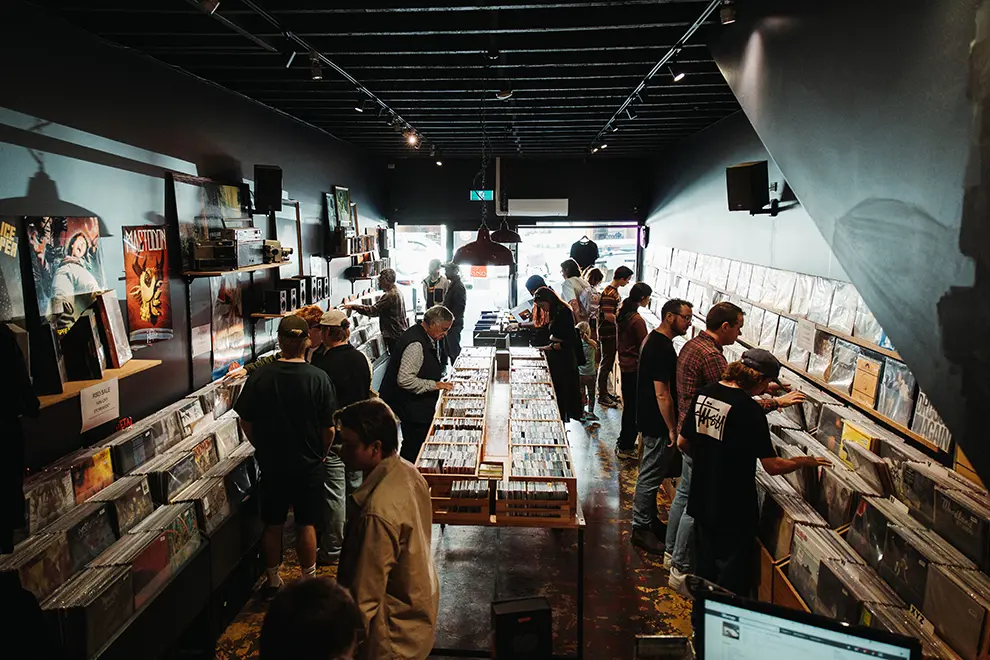
And it seems that, in this day and age, people are craving this hallowed notion of the record store more than ever: people want a place to be able to touch art, to browse through stacks of LPs, to ask questions about an artist, to sell their own albums, to play gigs at. Digital media has so far not been an adequate replacement.
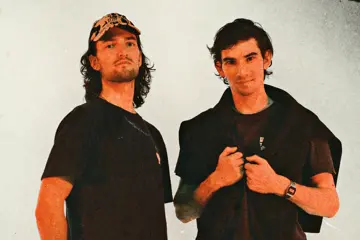
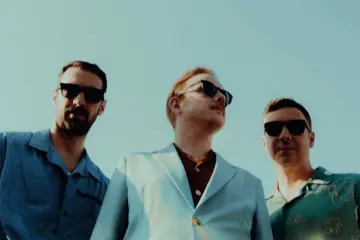
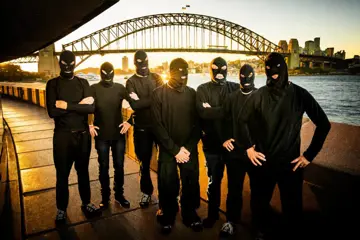
On Record Store Day, there is much to look forward to. In support of their upcoming album EIGHT, Aussie hip hop duo Hermitude will be visiting eight record stores from the top of the Blue Mountains to Bondi on Sydney's coast over 24 hours in celebration of Record Store Day.
They will be making stops at Hat Hill Records, Beatdisc, Crosstalk Records, DaddyRich Records, Fanatico Records, HUM, The Record Store, and Bondi Records. Some stores will feature the boys performing live, others will be unveiling limited edition lathe cut vinyl raffles.
“We were going for the Guinness World Record or something,” jokes Hermitude’s Luke Dubber. “A giant pilgrimage… We’re pretty excited. It’s a really fun idea, trying to embody the vibe of this album and just have heaps of fun with it.”
“It’s a beautiful thing,” adds Angus Stuart. “It’s so nice because a) literally the day after the album comes out is Record Store Day, and b) we love vinyl, we pressed all our releases on vinyl.
“We love physical media, we love record stores, we dig for samples all the time. It just feels like this beautiful thing. We’ll have a good time, chat with people, play the new music, and look at other records.”
Record Store culture does indeed facilitate a “good time” – as Jeff Harrison can attest to. Harrison was the long-time owner and Managing Director of the iconic Gaslight Records, located on Bourke Street until its untimely closure in 2005.
When asked what inspired him to open a record store, he says, “Well, I was a long-haired hippie at Monash University studying law, believe it or not.”
He used to watch a man sell flowers by the box-load every afternoon by the union building, and it dawned on him that he could do the same with records. Because, after all, as he says, “If I had a middle name it would be music.”
Though Gaslight is unfortunately no longer with us, Harrison is still a big believer in the wonders of physical media.
“I think things that are tactile and also wonderful to look at as well as touch are positive,” he notes. “Being in a record shop, if it’s really doing its job, your brain goes to another place. Because then there’s a connection to everything that you listen to – here it is in front of you.
“It’s just a great connecting point. It’s good to see it, but then actually handling it and taking it home and putting it on the shelf, pulling it out of the sleeve…” Well, there is nothing like it.
“It was a moment in time,” he adds. “Great people worked with me at the store. Gaslight was sort of one of those places you visited and you wanted to hang out in. That was your day out. It was everything you ever needed, if you were into music.”
Harrison is a true veteran of the in-store scene. “Back in the 70s, we were smoking and drinking and doing all sorts of stuff. Really, the record shop was all about making sure people knew about the new records coming out.
“And we had lots of bands play in the store all the time. Hundreds and hundreds of bands. Nearly every week.” Acts such as Hole, Jeff Buckley, and members of The Doors either did instore signings or performances at Gaslight.
“There was a funny little beer rack underneath the counter,” he adds, trying to paint a picture of the vibe. “We didn’t smoke in the shop, we smoked out the back – had to protect the vinyl. We were open at 9am until midnight, seven days a week. Pretty amazing times.
“And every local band who ever wanted to play there could play there. That was a guarantee. People still come up to me and say, ‘Are you the Gaslight guy? I spent all my money at your shop!’ I chuckle and give them a hug.”
Matt ‘Footy’ Horvath – the owner of Adelaide’s beloved Clarity Records – says, “From a very young age music has been a huge passion of mine. Although I don't come from a ‘musical family,’ records and a record player were always at arms reach and I was constantly experimenting and discovering all different types of music.”
As his passion grew, he started amassing a large collection of records and CDs, which eventually led him to a five-year stint working at independent record store Big Star before its closure.
“When that closed it just seemed like a natural progression for me to put all my knowledge and experience into opening a store of my own,” he explains. “I play in bands, run a record label and book shows/tours, which has all become a big part of my music journey. Then in 2010, my wife Laura and I opened Clarity Records.”
He reminisces on a time before the digital age. “The ‘90s, early ‘00s (pre-downloading) was a great time to be a music consumer. I remember as a young teenager I would catch the bus into the city with every single cent that I earned at my job stacking shelves at the local supermarket that week.
“I would start at one side of the city and walk to the other, stopping at every shop that stocked CDs and records along the way – from memory there were about 10 stores in total, all gone now – then jump on the bus home looking through the stack of music I just bought, excited to get home and listen to them,” he says.
“I hope I have contributed to giving someone else that same joy that I had when I was a kid.
“Your local record store is more than just a retail store,” he continues. “It's a community hub where you can discover new music, meet like-minded people and find out about what's happening around your town at a local level. It's important that places like these are supported and protected as they are an essential part of what keeps the heart of a city beating.
“They are your centres for community and culture. Thankfully, with the rise of physical media sales record stores continue to prosper.”
Horvath loves to interact with his customers. “We meet so many lovely people every day,” he enthuses. “We have also made life long friends through the store. We also love being able to support our local music community and offering a space for bands to stock their music and promote their shows.”
The hardest thing about owning a record store is, he says, “The tax bill, as all small business owners would experience. Also the constant battle of just keeping on top of business and dealing with landlords and real estate agents. Although the local government says that they support small businesses, the reality is, they don't!”
Lauren Carter, her husband and their three daughters run a Hobart-based environmentally-friendly record store that celebrates female artists: Suffragette Records.
“I had been thinking about the political landscape of the world and the need to amplify women's voices,” Carter says of her decision to start the record shop. “At the same time, I was reading about the continuing inequality and sexism in the music industry, and thinking about the power music has always had to shift and connect hearts and minds.
“I had been pretty much exclusively listening to music by women since early 2020, and found it tricky getting my hands on records by all my favourite artists, locally. I started imagining what it would be like to have a space where all the records were by women and how that might tell the story of modern music differently.
“One morning, my husband Oberon and I were chatting and I just blurted out the idea of running a record store celebrating music by women. And immediately he said yes! Our daughters jumped on board too and a few months later we opened Suffragette Records.”
Lauren grew up in a musical family. “Dad was a ‘60s pop singer and managed loads of big ‘80s bands. I spent a lot of time around music and in record stores as a kid growing up in Melbourne. I bought my first cassette from Pet Sounds in Malvern. When I was at uni, I'd usually stop in at Gaslight Records to listen to CDs before spending most of my money I earned selling merch at shows on them.
“When Oberon and I met, we'd spend ages trawling around record stores and travelling between our favourites - Polyester, Au Go Go, and Greville Records, getting great recommendations and expanding our collection. It was always all about the music for us.”
Like Matt, Lauren prizes being able to interact with the local community. “Sometimes we talk about the planet and politics, but mostly about things that people love,” she explains. “They share their memories about certain artists or albums they find on the shelves, tell us what they're listening to now, and ask us what we think they might also like.
“We get to bring people together in our tiny space to hear artists perform intimate sets live. And we get to introduce people to artists they may not have heard of otherwise. There's a sense of slowing down and honouring the music that comes with physical media that you really just can't convey with a shared playlist.
“We see record stores (like book stores) as spaces that welcome the community in and allow these connections in a really valuable way.”
Lauren cites the hardest thing about running a record shop as “the cost of living pressures excluding more and more folks from purchasing their favourite records, and the knock-on effect that has for keeping a tiny shop like ours running.”
“We're very grateful for the people who have supported what we're doing in all the ways,” she continues. “Whether it's buying a record every now and then, popping in every Record Store Day for their favourite release, donating records they no longer want, telling their mates about us, and especially the artists who have come and played music on our couch. It makes the hard times feel worth it.”
On Record Store Day, it feels important, now more than ever, to remember what Jeff Harrison said – that the right record store can bring your mind to another dimension. Let’s all dust off our turntables and celebrate that capability.
Record Store Day takes place on Saturday, April 18th, with stores across the country taking part, hosting instore performances, and getting involved in some capacity. Check out the Record Store Day Australia website for full details.
This piece of content has been assisted by the Australian Government through Music Australia and Creative Australia, its arts funding and advisory body