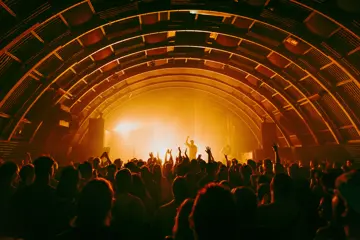
When Groovin The Moo was cancelled in 2024, Australia was devastated.
Since its inception in 2005, Groovin The Moo has boasted a platform for both international and Aussie artists such as Billie Eilish, Hilltop Hoods, Ball Park Music, and more. Most importantly, the festival focused on centring regional areas—facilitating the performances of major acts in cities that are usually not privy to them, and supporting the live music ecosystems in those areas.
The loss of Groovin The Moo—due, reportedly, to insufficient ticket sales—seemed to epitomise the ways in which the Australian live music industry was floundering amidst mounting economic pressures. 2024 also saw the cancellations of Splendour in the Grass, Coastal Jam, Tent Pole, Now & Again, Wanderer, and Fairbridge. For the last couple of years, the state of the Australian music industry, suffice it to say, has been looking pretty grim.
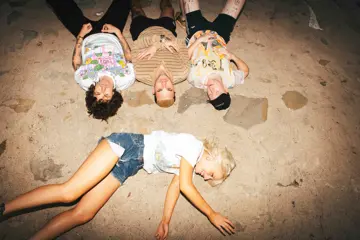
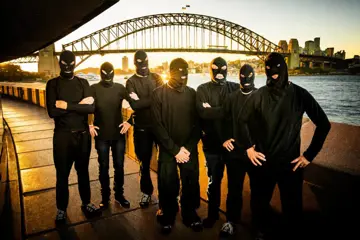
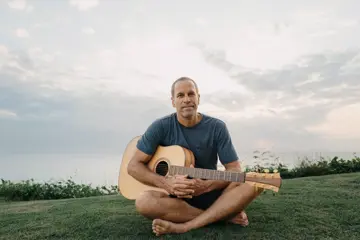
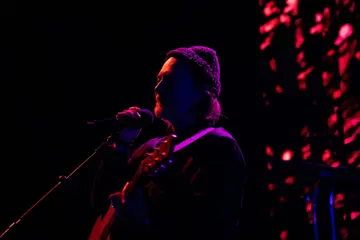
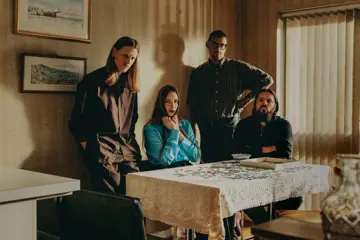
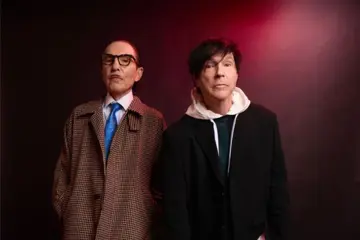
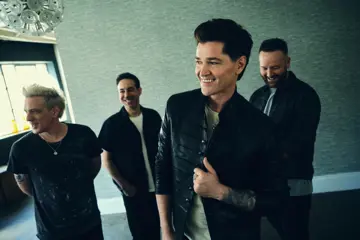
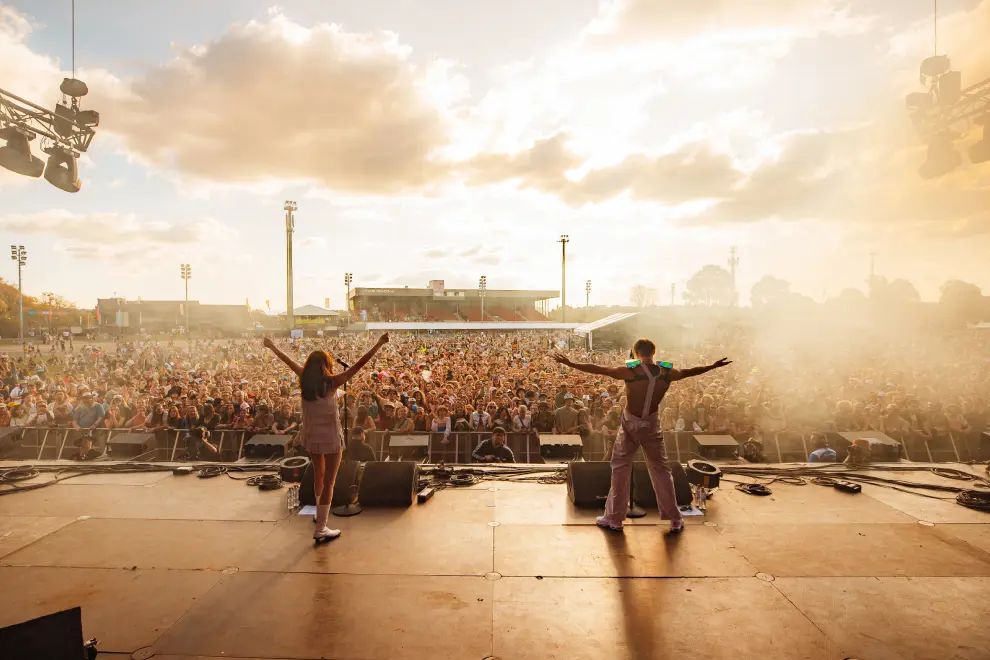
This is why the news that Groovin The Moo would return as a one-off event in Lismore this May is so deeply thrilling. The all-ages, all-day event is presented by Great Southern Nights with the support of the NSW Government through Destination NSW and in partnership with ARIA. It features a stacked line-up, including the likes of Baker Boy, Denzel Curry, Dope Lemon, Ninajirachi, Tones and I, The Chats, Matt Corby, and more.
Chatting over the phone, Managing Director of Fuzzy Operations, Adelle Robinson, explains, “For a while, we had been thinking through different ways to reimagine the Moo and bring it back in a way that’s sustainable, in a way that would allow us to rebuild it in a meaningful way.
Don't miss a beat with our FREE daily newsletter
“A really important part of the Groovin The Moo DNA is about going to regions that are often overlooked. So it was important that we stayed true to that DNA.”
When Robinson saw that Great Southern Nights had put out an expression of interest for events, she thought to herself, “This could be a really good opportunity to bring back Groovin The Moo, to scale it down into a one-stage show, and to look at making it more family-friendly.”
The festival was traditionally a 16+ event, but this particular iteration is all-ages, with those under 12 able to attend for free with a Mini Moo ticket. “I think with everything the music industry has been through since COVID, we actually need to be building people up who are younger than sixteen, and making it a real family experience.”
Robinson describes having to cancel Groovin The Moo in 2024 as “one of the hardest” decisions she has ever had to make across the full span of her career. “There was a lot of grief, especially because once we cancelled that, Splendour In The Grass was the next thing to go. It felt really terrible. But I think that, sometimes, setbacks make you stronger.”
Robinson sees this particular setback as perhaps having allowed them to reimagine what Groovin The Moo could really be. “What I think we’re doing now is actually more true to the GTM ethos, and I think it’s actually going to make it more sustainable long-term.”
She goes on to unpack the decision to hold this iteration of GTM in Lismore, a city located in the Northern Rivers region of New South Wales.
“Lismore is such a unique community, it’s a place that’s super resilient, that has had a lot of hardship, has a really strong sense of community and a really strong music scene, but it’s never had a big festival there,” she says.
“It was just one of those things where everything fell into place. As someone who’s a promoter who’s been doing shows for 25 years, when everything feels right - the venue, the community, the line-up, the date - it’s usually a sign that you should go ahead with it.”
Properly involving the Lismore community has been crucial to the organisation of this event. “I think it’s really important, especially as a Sydney-based promoter who largely does shows in capital cities, to not act like or be perceived as the big promoter coming into town and doing things their way,” Robinson explains.
“I’m very aware that there are lots of talented people in the region. There are a lot of people who are putting community first in the region, which is a really different way to how most big cities operate. So I think tapping into those things as much as possible and making the community feel real ownership of the event is so important.”
She cites the fact that they ensured that there was a high amount of Northern Rivers representation on the festival line-up. In fact, the hours of the show have even been extended to allow for a Homegrown Heroes slot (to be eligible, bands applying have to have at least one band member with a Lismore post-code).
“It’s basically like a band competition,” she explains. “I think we had almost forty applications from local bands. The winner will get the opening slot at the show. And that’s been a real collaboration. That’s an example of listening to the community and coming up with something that works for the show but also works for the community as well. It’s been really fun.”
Over the past few years, reports have indicated a mental health crisis in rural and remote areas across Australia. Indeed, rates of suicide and self-harm increase with remoteness. The issue is exacerbated by the fact that access to mental health services in regional areas is substantially more limited than in major cities.
Some suggest that live music could be somewhat of an antidote to these rising rates of mental illness. For example, the Caltowie Chilled Up ‘n’ Fired Up Music Festival has placed a special emphasis on raising funds for mental health initiatives within the local region, whilst promoting awareness for mental health and wellbeing.
“I’m certainly not an expert in that area, but I think that anything where people are feeling part of something, having IRL experiences, feeling a sense of pride and feeling a sense of community, all help with mental health,” Robinson says. “Like I said before, we’ve made a real focus on this thing being available to all demographics, and we’ve had an amazing uptake.”
The Youth Ticket - slightly cheaper than the standard ticket - has made up a quarter of the festival’s ticket sales this year. “I think that’s showing that teenagers - who are often at risk of mental illness - are really looking for something like this. We’re hoping that we can make it feel exciting for all demographics.”
She mentions the inclusion of a kids’ zone, called Mini Moo Land. “It’s all a learning experience, so it won’t be perfect, but we’re really trying to think about how we can offer something to a whole family that comes, which could include grandparents, parents, teenagers, and little kids experiencing something together.”
When it comes to environmental conservation, music festivals are generally classified as high-impact events, causing large amounts of non-recyclable waste, extensive plastic use, and heavy logistics tied to the travel of audiences, artists, and crews. In regional Australia, it is especially important that these areas are properly preserved.
“We’re not doing dedicated offsetting,” Robinson says, but explains that they are working closely with the Lismore City Council, who are running the cleaning footprint and recycling programs. “Their focus is obviously on making sure that there’s not a waste impact on the greater community after the show.”
Robinson acknowledges that, in general, it is a fraught time for the Australian music industry. “It’s tricky to make money anywhere, let alone in the country, not to mention regional areas that have a smaller population.
“But I think if you’re smart - and there are a lot of promoters who know this - there are growing regional centres with a youth demographic that is crying out for shows. So, I think there’s clever ways that you can activate the audiences while making tours and shows economically sustainable.”
The industry is not without its challenges, but the return of Groovin The Moo is certainly a cause for hope.
“In an ideal world, we’d build up Groovin The Moo so that we were doing multiple shows again. Since we announced Lismore, we’ve had multiple regions reach out to us. But, again, we have to be really mindful that we’re making sure it’s sustainable.
“I don’t want to build something up in Lismore and then do another show, which will wipe out the Lismore success. I’m totally open to expanding it to other regions, but it’s got to work from the region’s perspective, it’s got to work from the perspective of the community that’s there, and it’s obviously got to work from a financial perspective,” Robinson states firmly.
She concludes with a further glimmer of hope. “I guess what I’m saying is nothing’s off the table.”
Groovin The Moo 2026 will take place at the Oakes Oval in Lismore, NSW, on Saturday, 9 May. Tickets are available here.