 Moby Profile
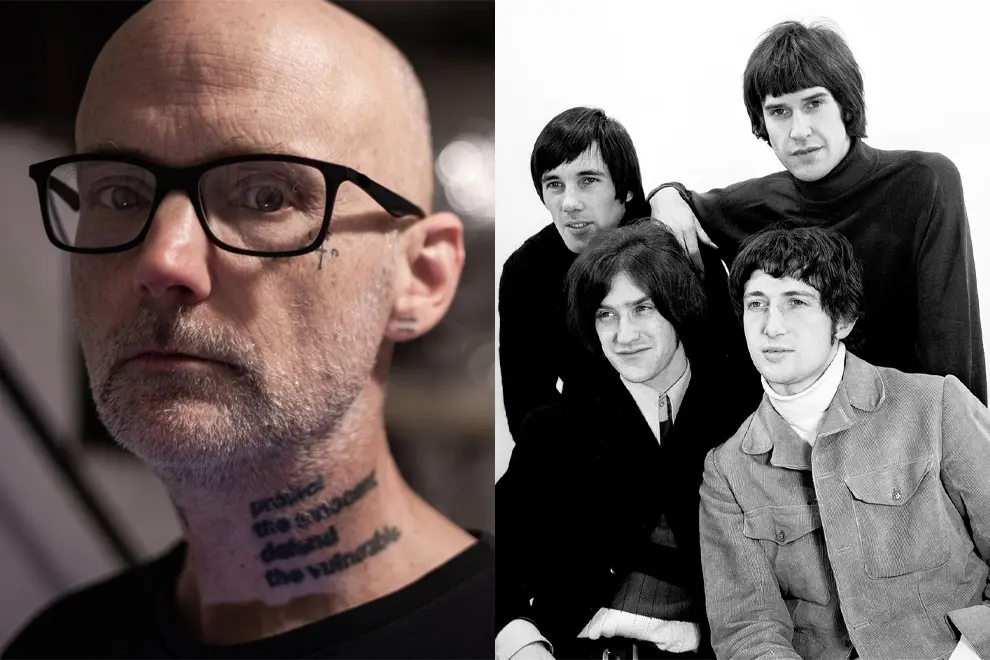
The Kinks have been forced to respond to allegations of transphobia levelled against them by US musician Moby regarding the lyrics to their track Lola.
The song – originally released in 1970 as the first single from their eighth record Lola Versus Powerman And The Moneygoround, Part One – has long been regarded as a somewhat progressive track for its lyrical focus, which focuses on a narrator’s encounter with the titular character – who is implied to be a transgender woman.
The track was deemed controversial at the time of its release, with some stations removing the song from their playlist, or simply editing out the line, “I'm glad I'm a man and so's Lola.”
Further controversy came from the tune’s name-checking of Coca-Cola in the lyrics, though that dispute has largely been lost to time.
“It really doesn't matter what sex Lola is, I think she's all right,” responded songwriter and vocalist Ray Davies when pressed about the controversy.
In a recent interview with The Guardian, however, famed musician and producer Moby reflected on a number of songs, including his first single purchase, his go-to karaoke choice, and others. When it came to the topic of “the song I can no longer listen to,” it was Lola that made the cut.
“Lola by the Kinks came up on a Spotify playlist, and I thought the lyrics were gross and transphobic,” he told the publication. “I like their early music, but I was really taken aback at how unevolved the lyrics are.”
to @thelittleidiot Moby’s criticism of our song LOLA these are the words sent to me and Ray from our dear friend trans icon @jaynecounty27 #JayneCounty. I am highly insulted that MOBY would accuse my brother of being ‘unevolved’ or transphobic in any way. https://t.co/hBFmLPdMKH pic.twitter.com/qYcxoMc03d
— Dave Davies (@davedavieskinks) March 22, 2026
In a post on X (formerly Twitter), Davies’ brother and bandmate Dave stated he is “highly insulted that MOBY would accuse my brother of being ‘unevolved’ or transphobic in any way,” while sharing comments made by “our dear friend [and] trans icon”, musician Jayne County.
“When I heard the song I was both thrilled and amazed that the Kinks would be singing a song about a trans person and wondered if anyone else had picked up on it,” County noted.
“Lola will always be one of those songs that for me 'broke the ice' so to speak! A song that breaks down barriers and brings a used to be, hush, hush subject to the forefront and makes it sound perfectly natural to be singing a song about a 'girl' named Lola! I don't think the radio stations picked up on the subject matter but a lot of the fans did and that's what really matters!”
“Lola broke down the doors of narrow mindedness and I will always be grateful and happy that The Kinks gave me this incredible song with such a great story!” she added. “Being Trans myself this will always be a very special song for me.”
Dave also spoke to Rolling Stone about the controversy, telling the publication he had just spoken to his brother following Moby’s comments.
“Ray said to me, ‘Who the fuck is Moby?’” Dave explained. “I said, ‘He’s someone who does quite well. I don’t know anything about the guy.’”
“I don’t like to criticise anybody,” Dave continued after listening to Moby’s South Side. “But I didn’t particularly like his music. And I don’t like him because he’s throwing all this shit up about something that shouldn’t bother him.
“I don’t think we should make a fuss about it … I do love animals. I appreciate Moby’s work for animals. But he’s misinterpreting us, really.”
In the years since the release of Lola, The Kinks have largely been championed as being trailblazers in terms of putting their support behind transgender individuals.
“It was lifesaving,” transgender rights activist Mara Keisling told NBC in 2020. “It made me realise I wasn’t absolutely the only person in the world living with what was then a shameful secret.”
“That sounds odd, but when you’re a kid and that alone, and you have that kind of thing weighing on you, and you can’t talk to anybody about it, a song like Lola becomes so important,” Keisling added.
“This is one of the first cracks in the gender revolution,” echoed Natalie Egan to the publication. “It presented us in a way that was not negative. It’s truly pioneering, and it’s remarkable that the Kinks found the courage to put it out.”
That same year, Ray Davies floated the idea of reviving the Lola character for a West End musical. Speaking in regard to whether the lyrics of the track should be changed, Davies remained defiant.
“I wouldn’t change a word,” he stated. “Even though I had to fly back from the USA to change Coca to ‘cherry-Cola’ before the record was released.”