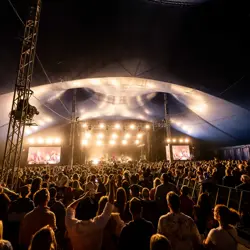
 Bluesfest Profile
Alongside today’s unexpected announcement regarding the cancellation of Bluesfest, it has also now been confirmed that the Byron Bay festival has entered liquidation.
In the official media statement issued on the afternoon of Friday, March 13th, it was outlined that Worrells has been appointed as liquidator to manage all of Bluesfest’s financial matters, including their obligations to vendors and partners.
The official statement notes:
Ticket holders, including parking pass customers and campers, will be contacted directly by the appointed liquidator with further information regarding the process for submitting claims and any potential refund arrangements.
Further information for vendors, suppliers and partners will be communicated directly to the relevant stakeholders. Matters relating to vendors, suppliers and other stakeholders will be managed through the appropriate financial administration processes.
The statement’s contents are confirmed by a Notification Of Resolution - Voluntary Winding Up document which was lodged with the Australian Securities and Investments Commission (ASIC) by Bluesfest Enterprises PTY LTD on March 13th, and sighted by The Music. The document also confirms the appointment of Jason Bettles as liquidator.
As The Courier Mail reports, the company reportedly owes more than $23m to ticketholders alone.
Four-day entry tickets had been sold for $686.40 plus booking fee, with the publication noting that a 510-page report which will be lodged with ASIC outlines the figures owed by the festival, with some audience members paying up to $15,000.
The publication also noted that $5.7m was owed to payments platforms such as Stripe and PayPal, with “unspecified tax and supplier debts” accompanying the report’s revelation that the company’s bank accounts contained around $28,000, with no property holdings.
Bettles wrote in a message to ticketholders – including those with parking and camping passes – that they have the option to lodge a claim with the company as an unsecured creditor, though their success rate may vary.
“At this stage it seems unlikely that you will be refunded from the liquidation any money, but we will notify you if the position changes,” Bettles stated.
Alongside these reported figures, the AFR also reports that the NSW Government will be seeking to recoup the $500,000 it invested in the festival as part of its Contemporary Music Festival Viability Fund – funds that were vital in bringing Bluesfest back from its planned demise following its 2025 event.
A spokesperson for the NSW government labelled Bluesfest’s cancellation as “deeply disappointing”.
“The NSW Government takes these matters seriously,” the statement said. “We are currently undertaking an inquiry into the State of Live Music and festivals like Bluesfest, because we know viability for music festivals in particular is an ongoing problem.”
In their own statement, Bluesfest pointed out their historical impact to the local economy, citing the generation of “approximately $65 million in indirect tourism spending for Byron Bay, $130 million across the Northern Rivers region, and around $230 million in economic activity across New South Wales.”
Additionally, they noted that the festival has “supported local businesses, tourism operators, hospitality venues, suppliers and the broader creative community.”
Ultimately, the decision to pull the pin of 2026’s event comes following “extensive consideration of the current operating environment for major live music events,” with specific mention of “rising production, logistics, insurance and touring costs, combined with softer ticket demand and international uncertainties” as to why it is “impossible to proceed with the festival in 2026.”
“For more than three decades, Bluesfest has brought extraordinary artists and audiences together in Byron Bay while also driving significant tourism and economic activity for the Northern Rivers and New South Wales,” said Festival Director Peter Noble OAM.
“This makes the decision incredibly difficult. After careful consideration, we concluded we could not proceed in a way that would meet the standard our audiences, artists and partners expect.”