 Sunnyboys Profile
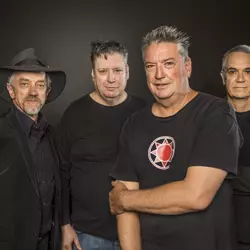
In early-2023 Australian rock legends Sunnyboys conducted an eight-date Australian tour that they dubbed The Last Dance, winding their way around the coast playing to packed houses of ravenous devotees delighted at the chance to properly farewell their heroes.
It put a full-stop on the incredible second career-phase that Sunnyboys had enjoyed since their return to the fray in 2012, at the time ending a decades-long hiatus that had started when the original four-piece called time on their initial tenure way back in 1984.
Though the core of the band originated in the northern NSW town of Kingscliff, Sunnyboys had started out in Sydney in 1979, immediately dragging a solid fanbase into their orbit courtesy their undeniable live chemistry and the seemingly endless supply of catchy pop bangers penned by their then-teenaged frontman Jeremy Oxley.
In 1981 they released their acclaimed self-titled debut album – today considered not only one of the finest opening gambits by an Aussie band but one of the best records to ever emanate from our shores – following this with two more strong albums before imploding in mid-1984 whilst still at the top of their collective game.
At the heart of the split was Oxley’s at the time undiagnosed battle with mental illness – a debilitating affliction that he would fight forlornly for decades away from the public eye – and it was only when he began receiving proper treatment that the band could even consider getting back on the horse.
Kicking off with that first supposedly one-off reunion of the original line-up back in 2012 – performing at Hoodoo Gurus’ Dig It Up shindig in Sydney, billed as Kids In Dust to take the pressure off their return – Sunnyboys enjoyed the next decade reacquainting themselves with their rabid fanbase, touring regularly to remind why they’re rightfully considered one of Australia’s finest ever rock’n’roll outfits.
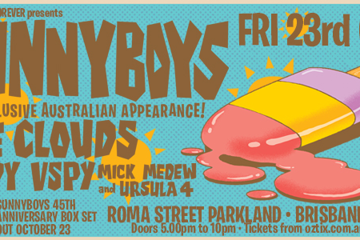
Now, excitingly, they’re planning one final hurrah in Brisbane as part of community radio station 4ZZZ’s ZED51 bash: in part to help celebrate the 45th anniversary of their lauded debut Sunnyboys and its deluxe 4xLP boxset reissue, and in part just because it was too good an opportunity to let slip.
“We didn't really have a plan to play again, but we were always open to opportunities if something just sort of turned up like this show,” explains founding bassist/vocalist (and Jeremy’s older brother) Peter Oxley.
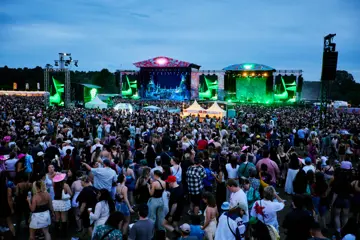
“We were approached about this show and we just said, ‘Yep!’ straight because it’s just a really great event. I'd been part of it last year [as part of The Saints ’73-’78] and I knew how great the venue was with the hill and that really cool sort of concrete stage. It's fantastic.
“And it was perfect for it to be in Brisbane, too. We've always had a soft spot for Brisbane, because we grew up in Kingscliff and Brisbane was the place we'd always go to to see all the international bands.
“We'd come up from Kingscliff to go to Festival Hall – and I remember I saw Thin Lizzy in the Botanic Gardens there when they did outside shows, 1978 I think that was, that was amazing – so when we were offered this show we thought, ‘Okay, that'll be great’.
“The other thing is that we did a couple of shows for 4ZZZ in the early-‘80s too. I remember one show we did for Triple Z at Festival Hall with The Screaming Tribesmen in 1981 or ‘82, I’ve even still got the shirt!”
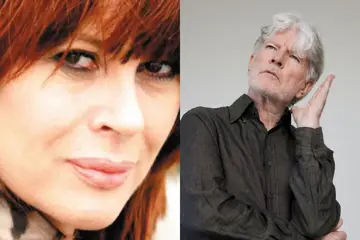
Which is perfect given that the frontman for The Screaming Tribesmen’s current outfit Mick Medew & Ursula 4 are also playing the Friday night of the Zed51 bash opening for Sunnyboys, alongside fellow Australian rock luminaries The Clouds and vSpy vSpy.
“It’s such a great line-up,” Oxley enthuses. “The Spies were a pretty amazing group, I've gotta say. My youngest brother Damien used to do lights for them in their heyday, and I remember going to see them at Parramatta Leagues Club, which was on the third floor.
“There was a sprung dance floor in the Leagues Club, and there were like 1,200 people in there and it was just like bouncing like a trampoline and the band were incredible! This was just one particular gig I recall, I saw them a number of times, but they were so good in the flesh. They’re a pretty good group.”
The Sunnyboys 45th Anniversary boxset – which lands the same day as ZED51 – digs deep into the classic album, augmenting it with the band’s original eponymous EP that was released in 1980 on Phantom Records, as well as the 17-track album demo session and a full 1981 live performance recorded at Sydney venue Governor’s Pleasure.
Oxley explains that the band’s natural chemistry was so tight from the get-go because three-quarters of the band – he, his brother, and drummer Bil Bilson – had been playing together in bands since high school.
“We were pretty good live – we were really tight, really powerful, and played quite loudly,” he remembers. “But we’d had a lot of practice because Jeremy, myself and Bil grew up together in Kingscliff and we formed our first band together when Jeremy was 14 or 15 and I was 15 or 16, and same with Bil.
“So we played in groups all the way through high school and we practiced a lot so we were pretty tight. And we knew what to do when we played, we knew that you had to get some sort of energy across and you had to sweat to make it look like it was real.”
The band’s other quarter – guitarist Richard Burgman – originally hailed from Wagga Wagga but had played alongside Peter Oxley in Sydney outfit Shy Imposters, whose sudden demise in 1980 set in motion the Sunnyboys’ formation.
“One of the reasons why the Sunnyboys worked so well from the outset was because Pete and I had already been playing together for a year,” Burgman explains. “And Pete and Bil and Jeremy had been playing together since they were 14 and 15 in high school, so when we got together in the same room – the four of us – everything fitted nicely and clicked.
“We found a Sunnyboys sound straight away too, because we weren't trying to be like anyone in particular – we were just trying to be like ourselves. We weren’t trying to be anything other than just ourselves, because we're good enough musicians to play the songs we had really well, and good enough to be able to craft them, work out the details and the nuances and the dynamics of them. But we weren't trying to be like any other band, we were just doing what we did.
“Jeremy had really good songs, everyone plays well, and when we played the songs it felt really good in the rehearsal room down at Day Street in Sydney, it just felt amazing. We'd learn a new song and then we'd go through it two or three times to get it all ironed out and then go, ‘Oh, that's not bad. That's really good!’ That was the feeling in the room, so we knew we had something.
“Now, there's no guarantee that that feeling in the room is going to translate to an audience onstage, that punters are going to feel about the songs the way you do. There's a thousand bands that have felt really good about their own stuff and gone out there and people look at them and go, ‘Yeah, I don't care’.
“But we were lucky enough that when we did go out and play people actually liked the songs as well – and they liked the way the band played, and they liked the energy we brought, and they liked the look, and they liked the sound – the whole thing just all fell together nicely. There's a really good chemistry between the four of us, and that's a really important part of it.
“The only one of us who's really gifted is Jeremy. Pete, me, and Bil are good, but Jeremy had and has that special magic that separates him from the crowd, so we were lucky to have him too.”
The strength of Sunnyboys lies in the fact that its timeless singles – classic tracks Alone With You and Happy Man – are matched in quality throughout the album by songs like Let You Go, Tunnel Of Love, My Only Friend, Trouble In My Brain, I Can’t Talk To You, Liar… truth told, there’s nary a dud track to be heard.
Oxley remembers songs pouring out of his brother like water from a tap in his heady early years.
“Jeremy would have songs all the time, it was amazing really,” he marvels. “I remember once during his first year in Sydney – we were living together in Newtown and I was off at uni studying architecture and Jeremy was at art school – but I got home from uni one day and he'd written My Only Friend and he said, ‘Oh, I just wrote this song, I'm really not sure about it’.
“And he played it to me and I just went, ‘Oh man, that's unreal!’ It was a real clear memory of mine, I just went, 'How does he do it, the little bugger?’
“We were so young and his lyrical content was already incredible – he’s really deep and it’s abstract as well. You can take his lyrics in different ways depending on how you’re feeling yourself – you’re never quite sure if it’s a light sort of line in a song or whether there’s some darkness in there as well – it’s pretty incredible what he was able to do.”
With the band’s star on the ascent having staked their claim on the uncompromising pub circuit, their debut EP on Phantom Records fared well enough for them to sign with Melbourne stalwart Mushroom Records – the label’s first Sydney signing – and start work on their soon-to-be-classic debut long-player.
They were at the time being managed by Australian rock veteran Lobby Loyde – the Brisbane rock legend who’d played with the Purple Hearts, The Aztecs, and Coloured Balls among many fine rock outfits – who also took the reins in the studio and produced the sessions which culminated in Sunnyboys.
“We recorded the album at Alberts Studios in King Street in Sydney,“ Burgman tells. “It was quite a good studio. Col Freeman was the engineer and Lobby was the producer, and we just got in there and we played the songs the best we could.
“We had done some demos prior to that at EMI Studios 301 down on Elizabeth Street, which were really good. We were really happy with the way they sounded, so we got into the album proper. The idea was to clean it up and make it sparkly and make it a proper album as opposed to just a bunch of rough demos, and I think we did a good job.
“It was the first time we'd been in that environment, too, and being a bunch of clueless 20-somethings we had no idea really what we were doing. We just knew we had to play the songs, we knew the songs we wanted to play, though we had to pick just 10 – it was hard to leave some out but that’s just the way it goes. So it was a real learning curve – a steep one.
“Lobby mostly left things alone. He was there and he was listening, but he mostly let us play the song and he tried to get us to make a good take – getting a ‘good take’ was what was important, because we played the songs together live in the studio, in the big room. And so you’ve got the bass and the drums and the two guitars playing together and the idea is to get the feel right, to get the tempo right, and to get the energy right, if you can.
“Because you can capture that stuff, and when things are working really well, you can feel it – you know it's working properly when you can feel that it's working properly. We needed Lobby out in the control room to be objective about that and say, ‘No, that was pretty good, but I've heard you play it better’, that sort of thing.
“We didn't drive him into the ground. We didn't do any song too many times because that just wears you out – it’s often best to get an early take because that's where the energy is. After a while you start thinking about it and when you start thinking about things your spontaneity and energy goes out the window.
“But he was definitely there and he was trying to get us to do the best we could. He was trying to get us to do a good take of these songs and it worked, I think.”
Oxley also remembers Loyde being mostly a ‘hands off’ type of producer – until he wasn’t.
“He was mainly trying to capture our sound,” the bassist reflects. “He didn't really interfere a lot with anything as all the arrangements were essentially done. One thing I do remember – and he probably had similar ideas with a few more songs – but on I Can't Talk To You, the opening song on the debut, there wasn't originally a guitar solo in the middle of that song.
“Lobby suggested to Jeremy that he should just go ahead and play one, and he did, and it was just like, ‘Whoa!’, it’s just such a killer solo. So I imagine that there would have been moments like that through the whole recording, you know, but otherwise he let us be.”
Oxley explains that at the end of the sessions the mates thought they’d done an okay job, but had no inkling they’d just recorded an album which would reverberate through the ages.
“We just thought, ‘Oh yeah, we did alright, that’s really great to be able to record an album’,” he laughs. “We had no idea whether people would like it or if it was going to be successful or anything. It was funny, you never thought – well we never ever thought – that you could play music and it could be some sort of career for 10 years or whatever. So there was never any thought that this is something that you could make a living out of.
“Other groups at the time like INXS, they were managed by more… professional’s not the right word, but more career-oriented people. They sort of had that attitude ‘Let's take on the world, let's go and get them, let's get number one!’, but there was never really any talk about that sort of thing when we were playing. It was just to make the music and go and have some food, have some dinner, or go to the pub and have a game of pool.
“But musically we fit together beautifully. Richard’s jagged guitar playing complements Jeremy's sort of smooth Stratocaster lines – there’s two different sounds with Richard using a Gibson with that heavier bottom-endy sound, and Jeremy using Stratocasters with that beautiful ringing sound of the Strat – so they fit together really beautifully. And we used to like to sing too – we thought we could sing just like The Beatles! We had to practice a lot doing that.”
Sadly Bilson has declared himself unavailable for the impending reunion show – to be replaced behind the kit by fellow Australian rock stalwart Paul Larsen (The Celibate Rifles, The New Christs, The Aints) – with the founding drummer gladly giving his blessings for his bandmates to forge onwards in his absence.
“First of all, Bil was happy for us to do the show and he's happy for Paul to play, so that's all fine,” Burgman smiles. “He just said, 'Nah, I don't want to play anymore’. He's done, and that’s fine. He's hung up his sticks and he's happy, which is really good. It's good to know there's no sort of hidden agendas, no rancour, no distrust. We're not misusing his legacy or trampling over anybody, it’s all actually okay.
“The second thing is Paul Larsen – he’s just a joy to play with. I play with him in a band currently, we’re called The Hovering Spooks. He’s great and I can’t wait to play these songs with him.”
“We've had rehearsals with Paul and he's got it already,” Oxley continues. “Paul's got a great story because he said when he was learning how to drum, he used to drum to the Sunnyboys’ first album, so he knew all the songs – he used to come home from school and he had a cassette of the record and he used to put it on and he drummed to the songs. Which makes this sort of a really nice circle, I suppose.
“The best part is that Jeremy's so excited to play again. Ever since we finished in 2023, every couple of months Jay will say, ‘Well, when's the next show?’ So he's really excited to get out there one more time and face the fans.”
As he prepares to farewell Sunnyboys for presumably the last time, Oxley is extremely thankful that the four mates got this second opportunity to present their music to the world, a full decade of shows which nailed the band’s legacy down in the most perfect way possible.
“It’s been pretty incredible,” he marvels. “We'd have to acknowledge Tim Pittman in all of this. I've been friends with Tim for a long time – he's been around the industry for years, he's managed a lot of great bands and he’s looking after us now – but he wanted to put together a Sunnyboys compilation, which became the This Is Real compilation which came out in 2004.
“So the impetus sort of started then, although we couldn't really do much until Jeremy was able to feel a little bit more back to normal. Eventually he got the right medication for him to help with his struggles, his illness, and as soon as he was sort of back in our world he said, ‘So Pete, when are we gonna put the band back together?’ and I said, ‘Well okay, let’s just see what we can do’.
“So luckily Tim said, ‘Do you want to play a 45 minute set at Dig It Up? You can play under a different name so you protect yourself – we won't say it's Sunnyboys’, and we just went, ‘Okay, guys, who wants to do it?’ and we all said, ‘Yeah, okay, let's give it a go’.
“So we rehearsed and it worked out all right. But we didn't know if people would remember us, or if we still had any sort of fanbase or fans anywhere, and that show was really great – incredible really, the outpouring of love was amazing. And we all just said, ‘Well, should we play again?’ It was really up in the air, we didn't know, but we said, ‘Well okay, let's give it a go, see what happens’.
“But we were quite humbled by the fact that we were able to play quite a lot of shows and to realise that we had a lot of people who wanted to come and see us – that was a genuinely sort of humbling experience. It really was. And we're just so lucky that Jeremy was feeling good and that we could all play together, and play well’.
“If we felt that we weren't playing well, if it wasn't good, we wouldn't do it – we wouldn't be able to do it. But I think we've played pretty well – and are playing pretty well – even with slightly more swagger than the early days!”
Tickets to the ZED51 celebration at Brisbane's Roma Street Parkland on Saturday, October 24th are on sale now.
This piece of content has been assisted by the Australian Government through Music Australia and Creative Australia, its arts funding and advisory body