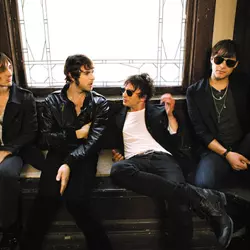
 Jet Profile
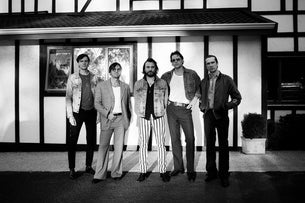
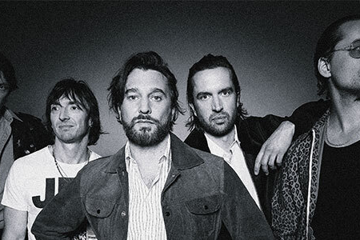
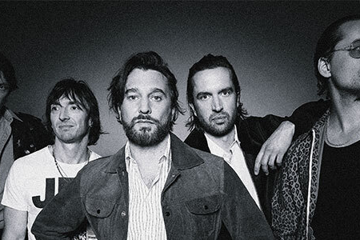
Twenty years ago today, Jet released their second album, Shine On.
After the band’s 2003 debut, Get Born, sold more than four million copies worldwide, the follow-up definitely fell into the eagerly anticipated category.
And then the Pitchfork review landed.
The website reviewed Shine On without any words. Instead, they posted a nine-second video showing a chimp urinating in its own mouth.
Later, the site added a rating to the review: 0.0.
Three years later, I mentioned the Pitchfork piss-take to Jet’s frontman Nic Cester. It still rankled. “They say opinions are like arseholes: everyone’s got one,” he snapped. “But that’s not true – at least everyone’s only got one arsehole; people have too many fucking opinions.”
Guitarist Cam Muncey chimed in: “If you’re selling records and get bad reviews, who cares? But if you’re not selling records and you get bad reviews, it’s like kicking me while I’m down.
“But we’re tougher than maybe what you think.”
The Shine On review was credited to “Ray Suzuki”.
Eighteen years later, Scott Plagenhoef revealed he was one of the three Pitchfork staffers who conceived the review, which was attributed to a pseudonym.
“We were talking about the central problem as we saw it with the record, how the Return to Rock trend that started with The Strokes, White Stripes, and Yeah Yeah Yeahs – and really rock in general – had curdled into a set of lazy signifiers and poses,” Plagenhoef told The Ringer.
“When the point or driver of what you’re doing is reclamation, it’s inherently limiting and resistant to new ideas. It’s a creative cul-de-sac.
“Progression – whether it was in hip-hop, pop, guitar music, electronic music –was important to us at the time. Seeing mainstream rock music, which of course most of us had grown up with a fondness for, become so knuckle-dragging and Xeroxed was disappointing.”
The Pitchfork roasting was a YouTube clip tagged: “Funny monkey peeing in his own mouth EPIC”. It was Jet’s real-life version of Spinal Tap’s Shark Sandwich, which was summed up in just two words: “Shit sandwich”.
Of course, not everyone agreed with the Pitchfork takedown. One of Australia’s foremost critics, Bernard Zuel, concluded – in his much more considered assessment – in the Sydney Morning Herald:
“If you’re ready to bury Jet as revivers of a kind of bonehead rock made for prison mullets and spray-on jeans, you’ll find some evidence for it on Shine On. However, you won’t be able to escape the strong evidence that there is a lot more to Jet than that.”
Just getting a review in the mainstream media is a rare occurrence in the modern world. A little while back, I noticed that a legendary Australian band had received an album review in that weekend’s paper. Knowing that not many people pick up a paper these days, I forwarded it to the band.
“I’ve always hated reviews and only read this because you sent it,” the guitarist replied.
“Always some condescending egotist telling you what you’ve done wrong, how it should be done, and at the same time giving you a good old pat on the back.”
The noted Melbourne chef Ben Shewry took a shot at food critics in his 2024 book Uses For Obsession, which may or may not be relevant to the music world.
“Experience and insight are almost non-existent,” was Shewry’s review of the reviewers. “To those writing, it often seems like a game.
“Here’s the thing, dear reader,” he continued, “and I’ve known this for as long as I’ve been cooking: restaurant reviewers really aren’t any better at judging restaurants than you are.
“The majority of food critics don’t have a better palate than you, are no more an ‘expert’ than you are. How could they be? They don’t actually make anything, can’t hack it in other forms of journalism.”
Some reviews remain embedded in an artist’s mind. The late James Freud could recite one critique of Models’ Out Of Mind Out Of Sight, which called it, “A bloated bag of pop clichés in praise of aerobics and feeling horny.”
Nowadays, everyone’s a critic.
In the old days, before the internet age, reviews really did matter. They could make – or break – a career. And some of them just infuriated the artist.
Here are 18 disses that have become part of music folklore.
Bob Dylan – Self Portrait (1970)
Bob Dylan’s second double album was a confusing collection of covers, live recordings and a few new originals.
Greil Marcus started his Rolling Stone review with one simple sentence:
“What is this shit?”
Paul & Linda McCartney – Ram (1971)
Jon Landau is responsible for perhaps rock’s most famous rave: “I saw rock and roll future, and its name is Bruce Springsteen.”
But Landau – who became Springsteen’s manager – was not afraid of the occasional rant. In Rolling Stone’s very first issue, he suggested that Jimi Hendrix was “neither a great songwriter nor an extraordinary vocalist”.
And Landau later took aim at Paul McCartney. “Ram represents the nadir in the decomposition of Sixties rock thus far,” Landau started his adverse assessment.
“For some, including myself, [Dylan’s] Self Portrait had been secure in that position, but at least Self Portrait was an album that you could hate, a record you could feel something over, even if it were nothing but regret. Ram is so incredibly inconsequential and so monumentally irrelevant you can’t even do that with it.”
John Lennon – Mind Games (1973)
Jon Landau struggled with the Beatles’ solo work. He declared that John Lennon’s fourth solo album contained his “worst writing yet”, with the artist “helplessly trying to impose his own gargantuan ego upon an audience that has already absorbed his insights and is now waiting hopefully for him to chart a new course.
“But then, perhaps, Lennon’s didacticism, preaching and banality are part of the mind game of the album’s title, yet another attempt to push his luck to the brink of self-annihilation.”
MC5 – Kick Out The Jams (1969)
Paul Nelson – himself a remarkable rock writer – called Lester Bangs “as important and influential a rock critic as John Lennon was a rock & roll musician”.
Bangs’ first published review was a searing exposition of the MC5’s Kick Out The Jams, which he called “this ridiculous, overbearing, pretentious album; and maybe that’s the idea, isn’t it?
“Musically the group is intentionally crude and aggressively raw. Which can make for powerful music except when it is used to conceal a paucity of ideas, as it is here.”
Bangs claimed “more death threats came in after that review than any other save Jann Wenner’s Wheels of Fire massacre [where the Rolling Stone publisher opined, “Cream is good at a number of things; unfortunately, songwriting and recording are not among them”].
“To compound the irony,” Bangs later revealed, “Kick Out The Jams has been my favourite album, or at least one of the two or three most played, for about three months now.”
Neil Young – After The Gold Rush (1970)
“Neil Young devotees will probably spend the next few weeks trying desperately to convince themselves that After The Gold Rush is good music. But they’ll be kidding themselves.”
So started the Rolling Stone review of Neil Young’s third solo album, where “none of the songs here rise above the uniformly dull surface”.
Five years later, the magazine would call the album a “masterpiece”.
The Byrds – Byrdmaniax (1971)
The Byrds’ 10th album was “increments of pus”, according to Richard Meltzer, who called the band “a boring dead group” in Rolling Stone.
AC/DC – High Voltage (1976)
Fifty years ago, AC/DC released their first international album, which featured tracks from their first two Australian albums, High Voltage and T.N.T.
Rolling Stone’s reviewer, Billy Altman, didn’t like it.
“Those concerned with the future of hard rock may take solace in knowing that with the release of the first US album by these Australian gross-out champions, the genre has unquestionably hit its all-time low. Things can only get better (at least I hope so).”
According to Altman, the band had “nothing to say musically … Lead singer Bon Scott spits out his vocals with a truly annoying aggression which, I suppose, is the only way to do it when all you seem to care about is being a star so that you can get laid every night.
“And that, friends, comprises the sum total of themes discussed on this record. Stupidity bothers me. Calculated stupidity offends me.”
Foreigner – Foreigner (1977)
Robert Christgau is known as “the Dean of American rock critics”, noted for his work at The Village Voice.
His take on Foreigner’s self-titled debut?
“You’ve heard of Beatlemania? I propose Xenophobia.”
The following year, Lou Reed immortalised Christgau on his live album Take No Prisoners. During a 17-minute version of Walk On The Wild Side, Lou pondered: “What does Robert Christgau do in bed? You know, is he a toe fucker? ... Can you imagine working for a fucking year, and you get a B+ from an asshole in The Village Voice?”
Christgau gave the live album a C+ and remarked, “I thank Lou for pronouncing my name right.”
Queen – Jazz (1978)
The great American rock writer Dave Marsh died in August this year, aged 76. He championed many artists, particularly Bruce Springsteen. But he didn’t dig the Grateful Dead – “the worst band in creation” – nor Kiss (“Kiss is not a great band. Kiss was never a great band. Kiss never will be a great band”).
Marsh described Kate Bush’s voice as sounding “like the consequences of mating Patti Smith with a Hoover vacuum cleaner”.
And the critic was not particularly fond of Australia’s own Air Supply, “the most calculated and soulless pseudo-group of its kind, which is saying something”.
Arguably, Marsh’s most infamous review was his take on Queen’s seventh album, Jazz.
“There’s no jazz on Queen’s new album, in case fans of either were worried about the defilement of an icon.
“Queen hasn’t the imagination to play jazz – Queen hasn’t the imagination, for that matter, to play rock & roll.”
Dave’s diatribe concluded: “Queen may be the first truly fascist rock band. The whole thing makes me wonder why anyone would indulge these creeps and their polluting ideas.”
Joy Division – Unknown Pleasures (1979)
Joy Division’s debut was so consequential, even Albo has the T-shirt. But in 1979, Mary Harron (who went on to direct American Psycho) slammed it in Melody Maker, saying: “I found at least half of it to be turgid and monotonous, and the vocals heavy and melodramatic – Jim Morrison without flair.”
J.D. Souther – You’re Only Lonely (1979)
J.D. Souther was like an unofficial member of the Eagles, co-writing Best Of My Love, Heartache Tonight and New Kid In Town.
His biggest solo album, 1979’s You’re Only Lonely, peaked at number 41 in the US, despite Paul Nelson’s panning in the pages of Rolling Stone.
“If narcissism paid two bucks an hour, J.D. Souther would be a billionaire … this very spoiled and unfunny valentine wears his heart on his sleeve only so he can see it reflected in the mirror.
“Like Patti Smith, he’s his own greatest fan, just doing us a favour by existing.”
From listening to the record, Nelson gleaned the fact that J.D. was “mildly annoyed because his Perrier is getting warm”.
J.D.’s buddy Don Henley was so incensed, he fired off a letter to the editor. “Paul Nelson’s blade seems to be getting too big for him to carry,” Henley seethed. “He’s so busy being cute and is such an obviously biased little prick, he invalidates his own reviews.”
The letter concluded: “The fortunate thing for all of us is that Mr Nelson’s opinion makes very little difference, if any at all.
“He should go try to write the Great American Novel or something, because he surely must get awfully weary carrying that big hatchet around all the time.”
John Cougar – American Fool (1982)
“John ‘Cougar’ Mellencamp can’t help it,” started the Rolling Stone review of his fifth album. “All he has to do is open his mouth and out oozes insincerity, the snake oil of patent imitations of Bruce Springsteen and Bob Seger.”
But Mellencamp had the last laugh – the album spent nine weeks at number one in the US.
Duran Duran – Seven And The Ragged Tiger (1983)
Many Aussies feel an affinity with Duran Duran’s third album as they recorded some of it in Sydney (with recording engineer Phil Thornalley, who would later co-write Natalie Imbruglia’s Torn) and the album cover was shot at the State Library of NSW.
But the overseas critics weren’t so kind.
Robert Christgau said that “as public figures and maybe as people, these imperialist wimps are the most deplorable pop stars of the post-punk if not post-Presley era”.
And Jim Reid in the UK’s Record Mirror didn’t disguise his disdain. “I played it three times,” he started his withering review. “I read all the lyrics. I studied the sleeve in detail. Then I laughed. Then I cried.
“Seven And The Ragged Tiger is bad. Not bad as in naughty and nasty, but bad as in pathetic, useless, no good. It’s pretentious, pompous and possibly the first chapter in their decline.”
Reid concluded his rant: “Take it away and bury it deep.”
Seven And The Ragged Tiger became Duran’s first number one album in the UK. And the Nile Rodgers remix of the opening track, The Reflex, became the band’s first number one single in the US.
INXS – Listen Like Thieves (1985)
Reviewing records was a bloodsport in the UK, particularly in the pages of NME and Melody Maker.
INXS’s fifth album was their breakthrough internationally, becoming their first Top 40 album in the US. But NME didn’t dig it, dismissing it as “INXS-cusable”.
GTR – GTR (1986)
GTR was an English supergroup featuring Steve Howe from Yes and Asia, and former Genesis guitarist Steve Hackett.
Their self-titled set was their one and only album. GTR was an abbreviation for “guitar”.
J.D. Considine also used an abbreviation for his one-word review in Musician magazine:
SHT.
[Considine also delivered a dose of myxomatosis to Jive Bunny’s The Album: “History, it is said, repeats itself: first as tragedy, then as farce. But in the case of Jive Bunny and the Mastermixers, history repeats like a bad Mexican dinner.”]
Nelson – Because They Can (1995)
The second album for the Nelson twins had a difficult genesis. Their 1990 debut, After The Rain, had been a huge seller, but then grunge hit, and the duo struggled to reinvent themselves.
Matthew and Gunnar’s second set finally arrived five years later. The People review was succinct and savage:
“Nelson: Because They Can? Maybe they shouldn’t.”
Radiohead – Kid A (2000)
When it comes to this century, few albums have polarised the critics quite like Radiohead’s fourth offering.
Pitchfork gave it a perfect 10 and said it was the greatest album of the 2000s.
Mojo’s verdict? “Upon first listen, Kid A is just awful.”
Melody Maker called it, “tubby, ostentatious, self-congratulatory, look-ma-I-can-suck-my-own-cock whiny old rubbish.”
“Time will judge it,” NME concluded. “But right now, Kid A has the ring of a lengthy, over-analysed mistake.”
The Vines – Melodia (2008)
Jet weren’t the only Aussie “New Rock” band to raise the ire of the international critics.
In their trashing of The Vines’ fourth album, NME retrospectively apologised for proclaiming the Sydney band as “the de facto saviour of rock ’n’ roll” when they released their debut in 2002.
Reflecting on the band’s success, which saw them land on the cover of the American edition of Rolling Stone, Barry Nicolson wrote: “We certainly played our part. And for that we’re sorry. But nobody deserved Melodia.”