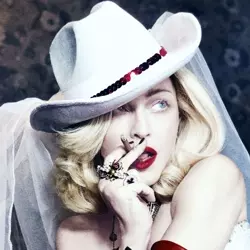
 Madonna Profile
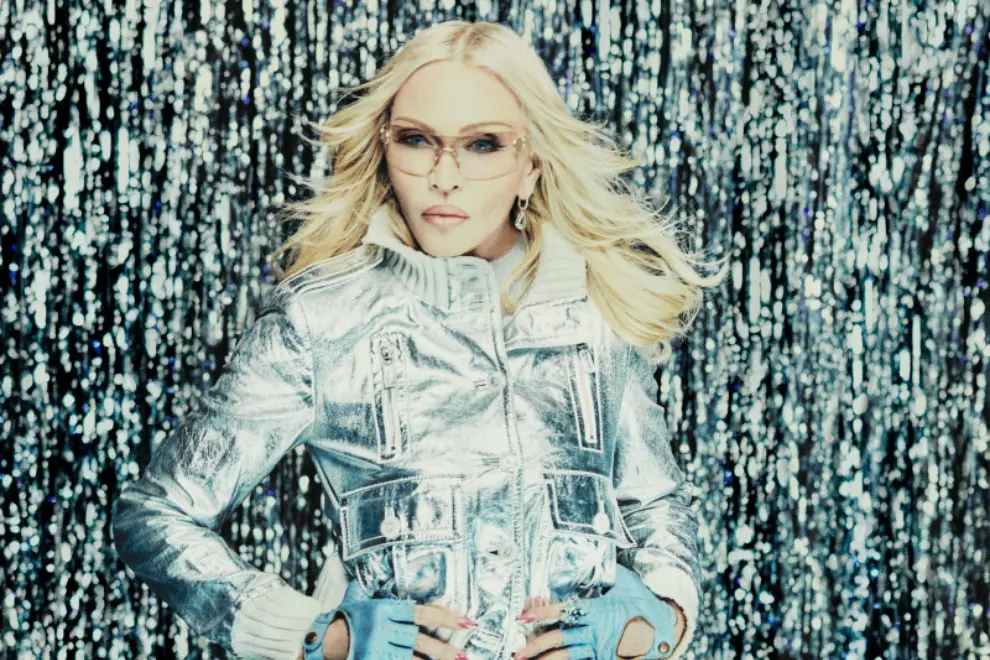
Madonna Ciccone has always been a dance music artist, whatever social media pundits claim, with all their hot takes, ahistoricity and fragmented narratives, as she rolls out the sequel to 2005's acclaimed Confessions On A Dance Floor. CONFESSIONS II, again recorded with Brit DJ/producer Stuart Price, is an inclusive album that revels in escapism, belonging, possibility, salvation and utopia.
Unfortunately, the discourse has centred on Madonna's relevancy over longevity – and her age. But, in 2026, she's less about 'eras' or phases than Zeitgeist. "I thought the world is in a very dark place and people need to dance," Madonna declared to Mel Ottenberg in a tangential conversation for Interview magazine. CONFESSIONS II promises to be her most self-referential – and reminiscent – work.
This Used To Be My Playground
The Queen Of Pop has a little-known connection to Detroit techno. Born into a modest Italian-American family in Bay City, Michigan, and growing up in suburban Detroit, Madonna attended dance classes with the late Laura Gavoor. The Armenian Gavoor went on to be a pivotal figure in the male-dominated Detroit electronic dance music scene, running Derrick May's Transmat Records and booking the Motor nightclub before starting her own management company.
She established Moodymann as a global house superstar. Gavoor even cut vocal tracks with Eddie "Flashin'" Fowlkes plus Chicago's Ron Trent and Chez Damier (Love Is The Message (For Those That Didn't Hear It). Meanwhile, in the late '70s, an ambitious Madonna moved to the Big Apple to pursue modern ballet, enrolling in the Martha Graham School of Contemporary Dance.
It's symbolic, then, that Bring Your Love, Madonna's duet with the Gen Z Sabrina Carpenter, the official lead single from CONFESSIONS II, samples a Detroit classic – Inner City's '80s Good Life, Kevin Saunderson, one of the Detroit techno 'godfathers'. And, with the romantic CONFESSIONS II, Madonna might be arriving full circle.
The uninhibited Detroiter launched her solo music career in nightclubs. Indeed, Madonna's first single, the 1982 Everybody, was produced by Danceteria DJ Mark Kamins.
The rising sensation subsequently teamed with the Nuyorican DJ John "Jellybean" Benitez, hot property in New York's party subculture as resident of the mythic Manhattan club The Fun House, for 1983's eponymous debut on Seymour Stein's Sire Records – a post-disco hybrid of dance-pop, R&B and the emerging Latin freestyle. Benitez, already remixing, helmed Madonna's international break-out Holiday and the glorious Borderline.
That year, NME jointly profiled Madonna and another Motor City luminary, R&B singer Oliver Cheatham, blowing up with Get Down Saturday Night.
"My inspiration is simply that I love to dance," she flexed. "All I wanted to do was make a record that I would want to dance to – and I did." Even early, Madonna was cognisant of her iconography – her gaze radically fixed on the viewer in the Burning Up video.
Something To Remember
Madonna succeeded those icons Diana Ross, Donna Summer, Grace Jones and Blondie's Deborah Harry. But she branded herself as a self-actualiser, serial reinventor and transgressive. In this way, Madonna redefined the female artist in popdom. Still, exploring gender, sexuality and religion, she's consistently segued through heterogeneous styles of electronic dance music.
Next, Madonna worked with Chic's Nile Rodgers, off the back of David Bowie's Let's Dance, on 1984's US chart-topper Like A Virgin – its title-track deconstructing that patriarchal binarism of the virgin/whore.
She'd become ever more a provocateur, facing moral outrage from conservatives. Madonna closed the decade with the revelatory Like A Prayer – the purifying titular gospel banger often spun by Germany's Mousse T., who's reimagined it for his Revival House Project. Between albums, she maintained her club affinities with a trailblazing remix compilation, You Can Dance.
In 1992, the Material Girl inaugurated a multimedia entertainment company, Maverick, releasing the decadent Erotica in tandem with a soft-porn coffee table book, Sex – the risqué visuals to the antecedent Justify My Love notably banned by MTV.
As 'Mistress Dita', Madonna asserted her sexual agency and exemplified a postmodern corporeal feminism. But, defying too many taboos, the Bad Girl experienced a huge public backlash to her 'hypersexual' image. Second-Wave feminists censured her for objectifying women and commodifying female pleasure. Nevertheless, Madonna influenced everyone from Janet Jackson to future dirty rappers Lil' Kim and Cardi B.
Anything but intemperate, Erotica affirmed Madonna's credentials as an LGBTQIA+ ally, offering empowering commentary on sexual expression during the AIDS crisis and fostering community. Following 1990's queer club anthem Vogue, Madonna further delved into deep house, liaising with Shep Pettibone – the New Jersey DJ an in-demand remixer in the '80s – and the unsung André Betts. In the interim, the omnipresent disruptor developed Maverick Records into a powerhouse, winning a US bidding war to sign The Prodigy, having hung out with them in NY.
Madonna had ventured into trip hop on 1994's understated Bedtime Stories, the title-track a Björk co-write and guided by Nellee Hooper. For Ray Of Light four years later, she linked with English producer/remixer William Orbit and immersed herself in ambi-house – introducing her 'Veronica Electronica' alias and thematising New Age spirituality and motherhood.
Led by Frozen, Ray Of Light was universally praised and nominated for 'Album Of The Year' at the Grammy Awards (Madonna took home 'Best Pop Album'). She commissioned a 'pure' techno remix; British innovator Luke Slater subverting the elegant ballad The Power Of Good-Bye. Madonna landed on the cover of Mixmag.
In another aesthetic departure, Madonna sought the enigmatic Parisian Mirwais Ahmadzaï for 2000's Music – albeit more folktronica than French house – and flipped electroclash on 2003's socio-political American Life.
Fully re-embracing club culture, Madonna's next opus would be Confessions On A Dance Floor – disco-house heralded by the ABBA-sampling Hung Up and conceived as a continuous DJ mix. She had reached out to Price to collaborate.
The now super-producer had long promoted himself in electronic dance circles with his Les Rythmes Digitales, Jacques Lu Cont and band Zoot Woman, variously manoeuvring around French touch, big beat and electroclash. In addition to remixing Madonna, and co-writing on American Life, he'd also served as music director for her concert tours. The partnership clicked, and Madonna scooped the Grammy for 'Best Electronic/Dance Album'.
Hung Up
Beginning in the late 2000s, Madonna seemingly latched onto trends rather than curating or personalising them – Hard Candy stacked with names from R&B, hip hop and the then 'urban' world: Timbaland, The Neptunes and Kanye West. Only the music sounded unconvincing – and inorganic.
Though the best-selling female music artist of all time, Madonna's self-confidence wavered amid pop culture's pernicious gendered ageism – and she addressed that invalidation in 2016 when accepting Billboard's 'Woman Of The Year' award. "You will be criticised, you will be vilified, and you will definitely not be played on the radio," Madonna said. "People say I'm controversial. But I think the most controversial thing I have ever done is to stick around."
Yet, engendering cross-generational exchange, Madonna threw herself into collabs – her earliest official 'feature' on Britney Spears' 2003 Me Against The Music. Recently, she joined Missy Elliott on a remix of Dua Lipa's Price-stamped Levitating off The Blessed Madonna's remix album-cum-mixtape Club Future Nostalgia and then Beyoncé Knowles on the "QUEENS" remix of BREAK MY SOUL and The Weeknd (and Playboi Carti) on the hit Popular.
Madonna's last cult album, 2019's Madame X, was underrated. The genesis was her temporary relocation to Lisbon, Portugal, where she discovered Iberian genres such as fado and the Angolan kuduro – the single Medellín again co-produced by Ahmadzaï and featuring Colombian reggaeton phenom Maluma.
However, Madame X's narrative is inherently meta, Madonna assuming the guise of the mysterious 'Madame X': "A secret agent. Travelling around the world. Changing identities. Fighting for freedom. Bringing light to dark places." Curiously, 'Madame X' was a nickname Graham coined for her. Coincidentally, Miami DJ Tracy Young, an old Madonna associate, became the first woman to score a Grammy for a progressive house remix of I Rise.
I Feel So Free
Four decades on from Everybody, Madonna returned to Warner Records. Her recent output has been largely archival – 2022's remix comp Finally Enough Love: 50 Number Ones celebrating her 40 years in the biz and succession of Billboard Dance Club Songs chart-toppers that regrettably didn't impact like 1990's 'greatest hits' The Immaculate Collection.
An album artist, Madonna commenced her 15th foray after a widely publicised bio-pic with Universal Studios fell through. "I was like, 'Good thing I have another job because I need to work, I need to create,'" she told Interview. "I need to do what I was put on this earth to do."
No mere companion to Confessions On A Dance Floor, CONFESSIONS II has a biographical dimension – Madonna losing family members, enduring fractured relationships and reflecting on "trauma". "The past is such an important part of my life – not to dwell in, but to learn from and share with other people," Madonna explained. "I referenced a lot of my past throughout the record, even with actual lyrics." She set out to deliver "inspirational dance music."
Madonna pulled off a surprise appearance alongside Carpenter at Coachella (or 'Sabchella') – the former Disney Channel progeny herself igniting controversy with 2025's Man's Best Friend because of the submissive imagery on the cover. Initially, Madonna aired the promotional single I Feel So Free – disco house sampling Chicago DJ/producer Lil' Louis' French Kiss, a track issued the same year as Like A Prayer and blacklisted by the BBC for its carnal moans. She recruited South Korean celebrity DJ Peggy Gou of (It Goes Like) Nanana fame to remix it.
In a star-studded short film premiered at the Tribeca Festival, Madonna teased more songs – one entitled Danceteria, aka "The Bathroom Song", a homage to her formative days (among those cameoing is Chicago's charismatic DJ Honey Dijon). She performed a pop-up show in Times Square with Price as DJ for Pride Month, sponsored by Grindr. Latterly, Madonna unveiled the "joyful" Love Sensation. "In fact, I curated the record based on how much it made me move," she stated to Interview.
When Charli xcx unleashed her post-BRAT comeback Rock Music, she proclaimed, "I think the dancefloor is dead/So now we're making rock music." Madonna slyly responded on Instagram, "If your dancefloor feels dead, maybe you're playing the wrong music."
But, averting a micro-feud, the pair bonded at a Saint Laurent fashion show in Paris and partied together, sharing their cultural capital. And CONFESSIONS II is therapeutic. Madonna penned The Test with her daughter Lourdes "Lola" Leon, who's quietly dabbled in pop since 2022. (She divulged to Ottenberg, "She approached me about writing a song together as a way to heal our relationship.")
Live To Tell
At 67, Madonna continues to confront misogyny for being visible as an older woman. She went viral when spotted dancing wildly at Coachella to Anyma dropping an unreleased remix of The Prodigy's early '90s No Good (Start The Dance), prompting memes but also negative comments inevitably obsessing over age-appropriateness.
Madonna's affiliation with dance music is all the more significant as she challenges age-discrimination and toxic generationalism. A Black music form, house is perceived as simultaneously ephemeral and atemporal, but lineage is key – the movement cyclically preserving history through sampling, remixing and reproduction, the DJ a custodian.
Today, dance music culture actually transcends generation. In 2013, the septuagenarian disco 'godfather' Giorgio Moroder debuted as a DJ; pioneering Detroit turntablists like Jeff Mills (age 63) are playing to all-ages, and the garage diva Candi Staton is still active at 86. To an extent, the nostalgia boom has been driven by its maturing 'day ones' – but rock's reductive 'heritage' descriptor for seasoned acts is rarely used as it's superfluous.
In unpacking the intersection between age and gender as a dance progenitor, Madonna is leading the way. A 2025 study from the University of Leeds published in the journal Psychology of Music, "Age Is Just A Number: Persistent Participation in Electronic Dance Music by Women Over 40," examines the benefits of clubbing for an older demographic relating to physical health, mental wellbeing and social connectedness.
The authors observe that the same cohort must navigate traditional social expectations and encounters prejudice and exclusion because of age. But, as Madonna declared to Interview, "I always push through, and I'm a survivor."
Regardless, the local marketing for CONFESSIONS II contradicts Madonna's communal ethos and new interest in documentation and honouring collective memory. The megastar is beloved in Australia – finally returning in 2016 after two decades with the Rebel Heart Tour and her exclusive cabaret Tears Of A Clown (which she eccentrically described as encompassing "performance art, comedy, storytelling and music of course!") at Naarm/Melbourne's Forum Theatre.
Aussie acts, too, are fans. Famously, The Avalanches sampled Holiday on 2000's plunderphonics classic Since I Left You (putatively the first occasion Madonna granted permission) and Pond covered Ray Of Light for triple j's Like A Version – the station ironically unlikely to program Madonna now due to demographic targeting.
This year, the shadowy DJ Josh Fawaz has enjoyed a smash with his remake of Like A Prayer, speculated to be AI. But, though online content creators are considered increasingly passé, Warner is ostensibly cultivating random influencers over chroniclers for the CONFESSIONS II release party, presented by Amazon Music. Yet Madonna's message is clear: don't erase, don't decontextualise.
Confessions II will be released on Friday, 3 July, via Warner Records.