 Bluesfest Profile
The air in Byron Bay doesn’t just carry the scent of salt spray and eucalyptus; for five days every Easter for over three decades, it has carried the soul of the delta, the twang of a slide guitar, and the collective heartbeat of thousands.
To understand the Byron Bay Bluesfest, you have to understand that it wasn't just a music festival—it was a 36-year love letter to the roots of modern music.
From its humble beginnings as a local "blues and roots" gathering to its status as a global pilgrimage site, the history of Bluesfest was a story of resilience, cultural preservation and the infectious power of a good groove.
It all started in 1990 at the Arts Factory Lodge (known as ‘the piggery’ by locals because it used to be a pork slaughterhouse) in Byron Bay as the East Coast Blues Festival. The vision was simple: create a space for music that had "dirt under its fingernails."
The first year saw a modest crowd of about 6,000 people over four days. There were no massive LED screens or high-tech wristbands—just a few tents, a lot of mud, and a line-up that featured legends like Charlie Musselwhite and Canned Heat.
By 1994, the festival had outgrown its backyard roots. Peter Noble, the man whose name is now synonymous with the event, took the reins as Festival Director. Under his guidance, the festival began to expand its definition of "Blues." It wasn't just about 12-bar shuffles; it was about the roots of music. This meant bringing in folk, soul, reggae, and world music.
In 1991 the festival had outgrown its home, moving to Belongil Fields, opening the doors to rapid growth and a commitment to musical discovery. Fans could wander into a tent to escape the rain and walk out having discovered their new favourite artist from Mali or Mississippi.
The festival also rode the wave of ‘new’ blues/folk, with Ben Harper’s debut in 1996 seen as a key point in the opening of a revitalised genre, opening the door for artists like Jack Johnson in Australia.
As the new millennium rolled around, Bluesfest wasn't just a regional secret any more; it was an international heavyweight. The festival moved again, this time to Red Devil Park, closer to the centre of Byron. The 2000s were the years of the big names. The festival began attracting artists that many thought would never travel to a coastal town in Australia. Icons like Bob Dylan, BB King, James Brown, and Buddy Guy.
Despite the big ticket headliners, the festival never lost its soul. It became a rite of passage for Australian artists. This was the era where John Butler Trio, The Cat Empire, and Xavier Rudd became household names, often graduating from the small side stages to the massive Mojo tent within a few short years.
Bluesfest is the only festival where the audience listens as hard as the band plays. — Buddy Guy
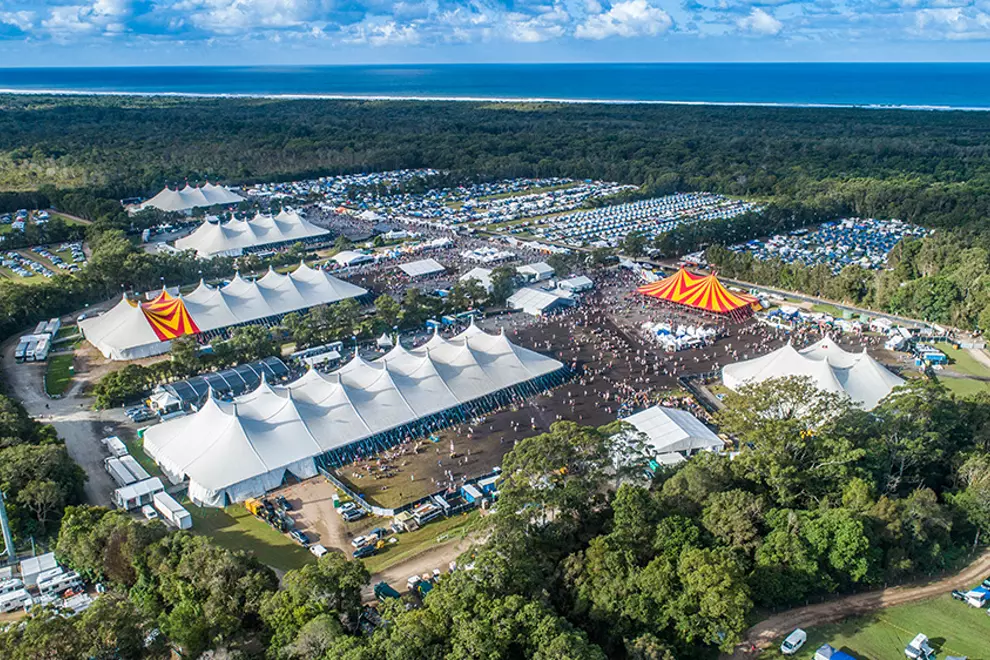
In 2010, Bluesfest finally found its permanent home: Tyagarah Tea Tree Farm. This 120-hectare site changed everything. No longer at the mercy of short-term leases, the festival could invest in infrastructure.
The "muddy" reputation of the past was replaced by professional drainage, permanent stages, and five-star camping facilities.
This decade cemented Bluesfest’s reputation for musical diversity. While blues remained the foundation, the festival welcomed artists as diverse as Kendrick Lamar, Iggy Pop, and Grace Jones, raising the eyebrows of some traditionalists, but opening up the audience to even more diverse sections of music fandom.
Perhaps the most culturally impactful evolution during this time was the Boomerang Festival. Held as a stand-alone festival in 2013, the event was integrated into Bluesfest in selected subsequent years, becoming a dedicated space for Indigenous Australian music, dance, and discussion, ensuring that the "roots" of the festival extended deep into the land it sat upon.
For Bluesfest, an existential crisis came in 2020, when just days before the gates were set to open, the COVID-19 pandemic forced a total shutdown. In 2021, a last-minute local outbreak forced a second cancellation just 24 hours before the first note tearing a hole in both the budget and spirits of the beloved event.
Many festivals would have folded. But the Bluesfest spirit was a stubborn thing, as was its director. In 2022, the festival returned with a triumphant Aussie-heavy line-up, proving that the local industry was more than capable of carrying the torch.
The sight of Midnight Oil playing under the Byron stars after two years of silence was, for many, a spiritual experience. The outspoken Peter Noble rallied the industry, vocally calling for more government assistance to save the festival industry and holding the torch for the plight of Australian live music through this difficult time.
The event sparked controversy in 2023 when Noble booked controversial act Sticky Fingers, causing a public fracture. The band had been mired in controversy for years, with lead singer Dylan Frost facing allegations of inappropriate behaviour. The swift backlash cause a rare back-down after high-profile acts King Gizzard & The Lizard Wizard and Sampa The Great withdrawing from the line-up in protest, with the band being removed from the line-up.
Noble announced that the 2025 was to be Bluesfest’s final edition after a wobbly 2024 event and continued uncertainty in the festival sector. The curtain call extracted great community support and sadness as fans piled in to soak up the Bluesfest atmosphere for one last time. The event was a massive success, becoming one of the biggest events ever, prompting Noble to announce that the event would return after all.
There was controversy over the return, with some punters accusing Noble of misleading them over the festival concluding, but the definant director battled foward. The 2025 bump was short-lived however, with signs of the events’ ultimate struggle beginning with the 2026 edition’s artist announcement coming late late out of the blocks, announcing its line-up in November last year.
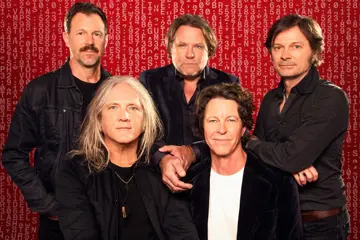
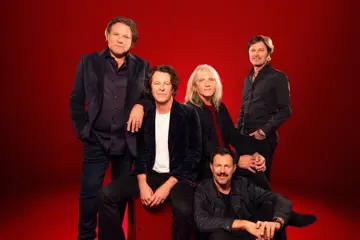
The announcement was criticised for the lack of female representation, but featured a much-loved reunion show for Split Enz. The event attracted further controversy with its second announcement, with metal band Parkway Drive confusing many traditional Bluesfest punters, prompting Noble to release a statement that “Bluesfest has always been about great music – not genres”.
This week, it was announced that the hurdles that Bluesfest had faced in its 37th edition were insurmountable, with the appointment of an administrator and cancellation of the event, just three weeks out.
What made Bluesfest truly special isn't the data or the ticket sales; it was the community. It was one of the few festivals in the world where you will see three generations of a family dancing together: the boomers were there for Santana or Bonnie Raitt, the gen-Xers were there for the ‘90s indie roots revivalists, while there was always something for gens Y and Z with Noble’s knack of picking the next big thing in neo soul or folk.
The festival has won nearly every award in the book, including multiple Helpmann Awards and being named one of the Top 10 Festivals in the World by Pollstar. But if you ask Peter Noble, he’d likely say the greatest achievement is the fact that the "vibe" is still true to the event’s founding. It is still a place of peace, love, and world-class musicianship.
As it turns out, last years’ edition truly was the final curtain call on the great event. The ignominious end for Bluesfest is not befitting of the cultural legacy it leaves behind. For the bitter taste left for those suppliers and ticket-holders faced with little hope of recovering money owed, perhaps the history book on Bluesfest is best seen as closed in 2025.
It would have gone out on a high and once the dust settles, it is hoped that the Bluesfest legacy can be viewed with leaves of gratitude rather than anger and sadness. Bluesfest and its leader Peter Noble were not perfect, but neither is great music.
Bluesfest spent over three decades providing a platform for voices that matter. It has survived floods, pandemics, and the changing whims of the music industry, but while it could no longer weather the economic storm, it reminds us that the music always lives on.
The history of Bluesfest shows us that while genres may evolve and locations may change, the human need for soulful, authentic connection through music remains constant. While the final guitar solo has rung out over the Tyagarah Tea Tree Farm, it will now be up to someone else to pick up the baton and create a new vehicle to remind us of the part music plays in our humanity.