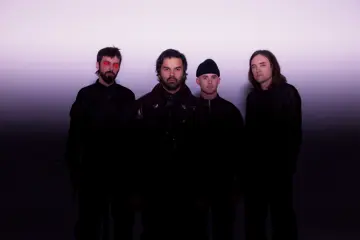
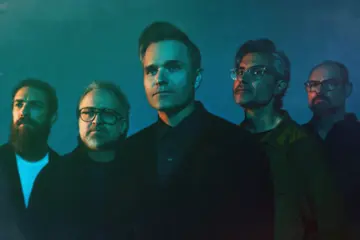
 Shapeshifter Profile
Throughout Shapeshifter's storied career, there's often been suggestions of a much broader musical tapestry. Their typical output has hardly been monotonous. A highly influential blend of modern soul, drum'n'bass and dub-reggae, Shapeshifter's pioneering template has been embraced the world over – recent UK crossovers Rudimental but one of many examples of their disciples. Still, there have always been hints of something weirder.
From the outset, they've shown a proclivity for genre-hopping. Their founding membership comprised graduates of metal bands, jazz schools and dub-reggae outfits and their output has reflected it. Debut album Real Time (2001) had borderline-jazz cuts like Inertia. Soulstice (2006) boasted experiments in hip hop (Southern Lights) and rave (Electric Dream). Shapeshifter Live (2007) was a full-fledged orchestral collaboration.
“I think when we started we probably wanted to play a bit of modern music and just do gigs, really. Gigs in a couple of different places. It's always been a very gradual thing for us. Doing whatever worked best for us at the time,” bassist, keyboardist and producer Nick Robinson says. “All we really wanted to do when we started was play around Auckland and, maybe, as a distant dream, one day make it over to Australia.”
With new album Delta, they appear to have finally brought that broader tapestry into the foreground. The band's fifth studio album ditches the distilled and immediate live band approach of 2009's The System Is A Vampire in pursuit of rampant neon eclecticism. Wild electric guitar leads crash into dubstep breaks, new wave melodies bounce into electro bass drops and drum'n'bass becomes a mere component of a much larger machine.
“At the moment, it's probably the sound of the new Shapeshifter,” Robinson says, before laughing. “But, looking back at the last five albums, they've all been quite different. So, if I was a betting man, I'd bet that the next album will be as different again. There's always a similar identity under everything, though. I just think it's good to grow and challenge yourself and challenge your audience.”
It's an incredibly controversial move for the band. One of the most well-regarded drum'n'bass acts in the world, Shapeshifter's latest evolution follows what is commonly regarded as their definitive album. Recorded with strictly live instrumentation, The System Is A Vampire marked Shapeshifter's only successful attempt to date at marrying their sleek drum'n'bass production with their unstoppable live show.
It coincided with some of their greatest successes. The album was shortlisted for the inaugural Taite Music Prize in 2010 and led to sell-out tours around their native New Zealand. Most significantly, it saw the band signed to UK's prestigious drum'n'bass label Hospital Records – winner of the Best Label title at 2011's Drum and Bass Arena Awards. Robinson is still shocked.
“It was definitely a massive pat on the back. We've always been fans of Hospital. We went over there and did a couple of gigs with Hospital line-ups, like Netsky and Danny Byrd. People who, you know, I love their music. We've listened to their music forever,” the bassist enthuses. “It was definitely an amazing development for the band and we were very honoured to have been signed.
“You know, I'm still surprised we have such an international following,” Robinson says candidly. “I mean, we've played quite a few places around the world where we didn't grab more than 20 people – but then we play somewhere like the Czech Republic and just pack out the place with people singing along. We thought there were just a lot of backpackers, but then we realised they couldn't speak any English.”
Delta sounds nothing like The System Is A Vampire. In a way, it seems like a very strong reaction to it. Whereas System was the product of a strictly limited sonic palette, Delta was designed to be limitless in its potential sounds. The only ruling was that the album wouldn't necessarily feature live drums – Delta becoming the only Shapeshifter album to date to not include one of their most celebrated stylistic trademarks.
“It wasn't intended to be a really experimental album. It just kind of came out like that,” Robinson says. “You know, whenever we get together to make an album, we stockpile a lot of tunes and try to work on them all. The ones we like tend to come to the top. From there, we try and piece the album together. It tends to get difficult if we try and guide the process too much. It works best when it's just a breakdown of what we like.”
It's been a polarising release for the band. Some fans have embraced the changes, others have been highly critical. The band's Facebook profile is rife with strongly worded opinions from both sides of the equation. Shapeshifter's recent affiliates at Hospital Records, meanwhile, actually opted not to release the album at all – the band once again independently releasing via their Truetone Recordings imprint in New Zealand (and varying labels abroad).
“Oh, there was no animosity with Hospital,” Robinson clarifies. “There was very clear communication throughout. Hospital are a label with a very particular style of music and that's why people like them. They know that. So, when we were writing, they thought some of it worked for them and some of it didn't. They told us that it'd have to be Hospital. And we just kind of went – 'well, that's the album, for better or worse'. It was all very clear.”
“There was never any trepidation about releasing the album, though. You know, we released Diamond Trade, which was one of the lead singles, and, you go on YouTube and there's all these negative comments. I was like 'wow, that's kind of... good',” he laughs. “When the album dropped, I went online to have a look at what people were saying and there were a lot of people complimenting us on just having the guts to put it out.”
Robinson remains philosophical throughout. It's unsurprising, really. Having foreshadowed such a massive change for the majority of their career, Shapeshifter are amply prepared to deal with backlash. They've had it for every release they've delivered since their debut. Whether it be for implementing guitars or even just adding a vocalist to the fray, they've been criticised for it – but still they maintain.
“Like I said, I think it's a good thing to grow and experiment as an artist,” Robinson says. “You know, if you look at all of our favourite artists, they've always grown and explored new ideas with every release. They always sound like a bit of a different band with each album. I think it's great if we can challenge ourselves and challenge our audience with our albums. It's something that's really important to us as a band.”