Tropical Fuck Storm Profile
Gareth Liddiard and the Coen brothers are artists whose work oscillates between humour and horror. They have predilections for some implacable time in the past and combine incongruous influences into a new, utterly distinct vision. They work on varied projects, often with the same collaborators - including their wives. They are quite a pairing for this, the latest in Hear My Eyes’ series of musicians performing live, original scores at film screenings.
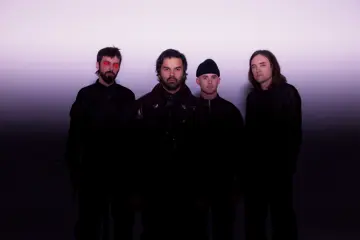
Liddiard leads Tropical Fuck Storm through a foreboding overture before the No Country For Old Men’s opening credits. There is a hint of Western weariness amid the discord, recalling the early days of The Drones. As the film begins, Tropical Fuck Storm maintain a sense of creeping dread. Picks scrape down guitar strings. Eerily grim synth sounds gurgle. During suspenseful scenes, Liddiard and guitarist Erica Dunn bend notes and slowly pick pensive chords. They wisely leave plenty of space unfilled. Amps buzz in the quiet scenes, adding to their barely tolerable tension.
Other times they get loud. Llewelyn Moss is chased by a car across desert plains to a cascade of booming tom-toms and calamitous cymbals. Drum machine beats that sound like sampled gunshots clatter and bang. A brutal car crash evokes a cacophonous explosion of sound. Tropical Fuck Storm’s score may be best described by a despairing character in the film: “It’s the tide. It’s the dismal tide. It is not the one thing.”
No Country For Old Men is a film of restraint. It’s about wide open spaces and what we don’t see. Its brand of bleak nihilism doesn’t play particularly well with others. It is a bold move to alter or reinterpret a film whose central thesis is about the folly of fighting the inevitable. You can try to change it – each generation does – but it’s no use. You can’t stop what’s coming.
Ultimately, what’s coming is silence. The film’s ending is muted, sudden, contemplative. The band playing over the closing credits deprives the final scene of some of its quiet power, drawing our attention when we’d rather sit in stunned silence. Like Tommy Lee Jones’ sheriff character, they make an admirable effort and do about as well as anyone could. But this terse, perfect film is inhospitable to collaborators. There’s little to be done in the face of such a harsh and uncompromising force.