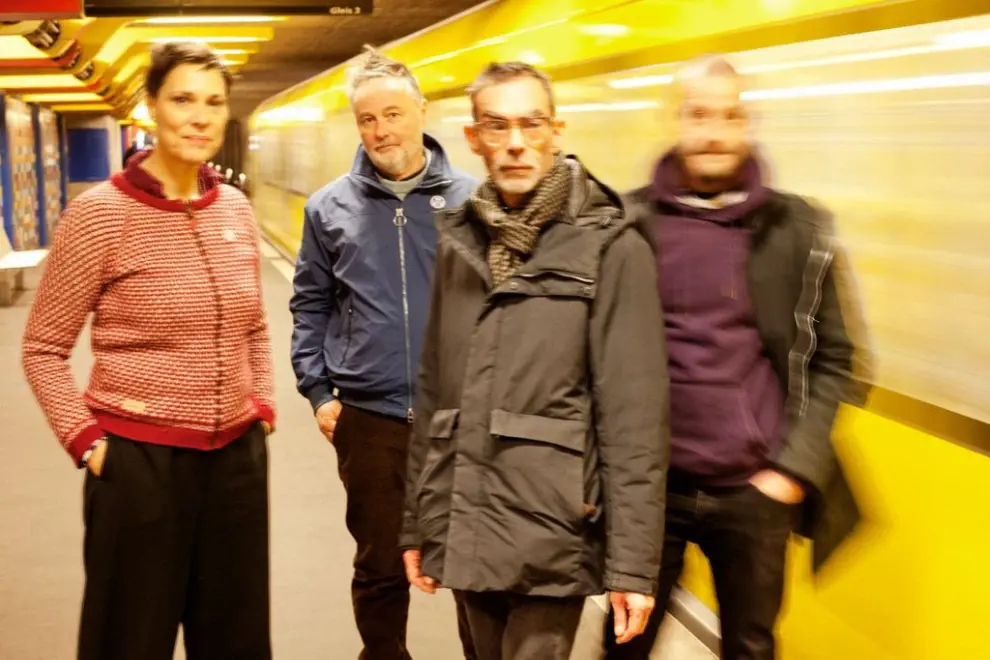
 Stereolab Profile
“There should be a word for the musical subculture of bands influenced by Stereolab,” a friend mentioned offhand last year. He’s not wrong. “Labphonica?” In the 36 years since Stereolab, or “The Groop” played their first show, dozens of artists have drawn from the band’s immediately identifiable combination of krautrock, lounge music and vintage electronica.
Stereolab still sound recognisably indebted to Neu!, The United States of America and Astrud Gilberto, but their synthesis has become a genre unto itself. Bands like Broadcast, Electralane, Melody's Echo Chamber and Vanishing Twin no doubt tired of having journalists invoke the name Stereolab to describe their music.
Any band with a legacy like this could rest on their laurels. For the French-British quintet, that could mean hiring some vintage synthesisers to poke and stare at while letting a psychedelic light show do the work. Instead, the Groop have released their first album in 15 years, Instant Holograms on Metal Film, and they’re here to play it.
Tonight’s concert sold out months ago, and ticket reselling website Tixel has had a waiting list long enough to suggest they could have done it again. Unlike a lot of bands who had their greatest success in the mid to late 1990s, those names belong to a surprisingly diverse group of music fans, and most of the staff of the city’s record stores.
To begin the occasion of the band’s first Melbourne show in seven years, Mick Harvey opens proceedings. Harvey is joined by drummer, keyboardist and one-time Devastation Hugo Cran and bassist and guitarist Glenn Lewis. “I’m going to play two songs, and then Amanda will come out, so don’t fear, someone younger and more beautiful will be here soon. Appropriately,” he continues, “this first song is called When We Were Beautiful and Young.”
The trio begin a melodic, bluesy lament and what turns out to be a surprisingly low-energy set. Harvey, remaining under a beret and behind dark glasses throughout, soothingly intones in a manner more befitting a late-night bar or small theatre. Amanda Acevedo arrives dressed in a gold dress and toting a gold tote, a sartorial choice Harvey tells us was inspired by the venue.
After playing two songs from last year’s Gold Mirrors album, the pair play The Greatest Delight and Perfect Storm, from their forthcoming album, Psychedelia in White, due in September. Both are moody incantations built around cyclical motifs, lyrics that – at least in this room tonight – are most indiscernible and have little sense of form or melody.
A cover of Serge Gainsbourg’s Bonnie and Clyde wakes the room up with some levity and a chance for Acevedo's auric temptress persona to hang on an established character; it’s great fun and shows, again, what a great match Harvey is for Gainsbourg. Their set closes with a song the one-time Bad Seed wrote for PJ Harvey, Slow-Motion-Movie-Star, which becomes the highlight of the set and gives Cran and Lewis something to dig into.
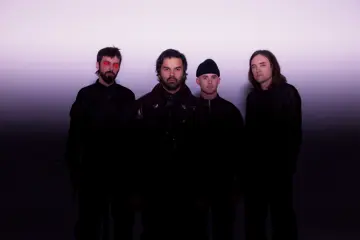
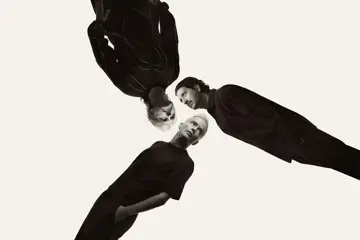
After a short break, the room goes dark. A robotic voice intones “Insert coin. Insert coin,” then the instrumental opening track to their latest album, Mystical Plosives, plays, and Stereolab arrive. Weaving their way onto a stage strewn with amps, synths, guitars, a Rhodes keyboard, foldback wedges, a drum kit and a trombone.
As the short piece fades, the band launches into its successor, Aerial Trouble. There is a sense of soothing joy when a band recreates a studio recording so effectively in concert. For a band like Stereolab, whose music has always been fuelled by a subversive commitment to leftist politics and feminism, a love of the retrofuturist appeal of early analogue synthesisers and the cultural freedom they promised, and an understanding of music as a form of installation art, all of it has been undertaken with sincere intent.
There is a purpose to everything the band have done, and to hear them invoke that intent in the form of new music for these times, is almost moving. The nostalgic power of 1960s optimism, when new technology could allow the creation of a new art form, feels impossibly quaint now, even as it suggests a way forward.
As we begin, we return to their 1990s heyday, when albums like Mars Audiac Quintet and Dots and Loops were sharehouse fixtures. Motoroller Scalatron, Peng! 33 and The Flower Called Nowhere are three of the band’s greatest songs from this era. Even without the harmonies of Mary Hansen or singer Lætitia Sadier’s doubled voice, they still shine. As the set progresses, this lack of a feminine balance becomes more noticeable. The absence of these harmonies changes the emotional character of the songs.
Stereolab have never sounded like a band striving; they’ve always sounded like they’ve reached a destination and are relaying a transmission, so to hear bassist Xavier Muñoz Guimera’s backing vocals, which are straining to reach the effortless, airborne melodies that are so key to these older songs, makes them sound slightly desperate. For a band so devoted to the texture and fidelity of their recordings and with such precise melodies, it stands out.
Several times throughout the night, Sadier speaks to the crowd, expressing her joy at being back in Melbourne, and occasionally referring to an upcoming song as “propaganda”, before flashing a knowing smile. Over half of tonight’s set comes from last year’s album Instant Holograms on Metal Film, and, as good as that album is at showcasing the musicianship and production, with a catalogue as deep as Stereolab’s, it’s hard not to think about the songs left unplayed.
Live, this interplay feels almost like a krautrock jam session with Sadier spending long periods away from the microphone, occasionally opting for trombone, which never fails to inspire members of the crowd to reach for their phones to record the sight, and the tempo rarely shifting from “busy and quick”. One of the band’s best-known singles, Miss Modular, gets a speedy run-through before we get parts one and two of If You Remember I Forgot How to Dream, songs that really allow the band to stretch out. When we return to the older, tighter track, Percolator, the crowd sound thrilled.
As they leave the stage, that joy sounds even louder. A minute later, they return. “We think you’re better than that,” Sadier says with a wide smile. We cheer even louder. “This is a song about freedom, but not the freedom to exploit,’ she says, as the crowd quietens. “There’s a lot of confusion about that nowadays.”
The band dives into album highlight Immortal Hands, which, as strong as it sounds and as much as the band give to it, is dwarfed by its follow-up and their final song, Cybele’s Reverie from their 1996 album, Emperor Tomato Ketchup.
“Remember what we carry here,” says Sadier, introducing the song, holding her hand over her heart. “It is a superpower.” The crowd cheers. One person shouts, “Free Palestine!” “Of course, free Palestine,” Sadier responds. The crowd cheers even louder. Future, past and the eternal struggle all at once.