If there’s one thing that artists, musicians, performers, and creatives can always do with, it’s extra funds in their bank accounts.
Whether that’s for simply making it possible to continue living their lives, or whether it extends to funding their next creative project when it comes to the writing, recording, releasing, or performing side of it, having some dollars in their corner is always helpful.
However, one avenue that can often be forgotten when it comes to generating income via art is that of live performance royalties.
To put it simply, if you’re an APRA AMCOS member who is performing original music in Australian venues, then you could be earning these live performance royalties.
To make it even better, these royalties are on top of the already-existing money derived from ticket sales, merch sales, or band fees.
Of course, if you’re a musician just starting out (or even a veteran muso who has never had to tackle the live performance royalties side of things), this can be something of a daunting prospect, filled with some rather confusing notions or even misinformation.
That’s why it makes more sense to go directly to the source, to cut through the noise, and ask about how it all works.
So, with that in mind, APRA AMCOS spoke to The Music to provide an in-depth explainer on live performance reports, how they work, what’s involved, and how any Aussie musicians who perform original music can be getting what they’re owed.
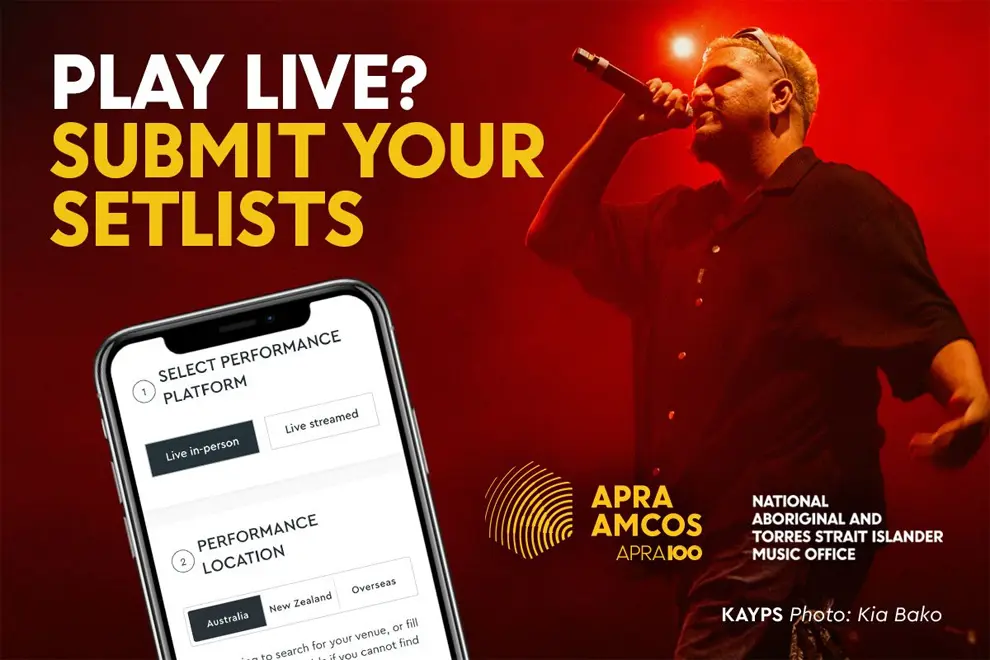
APRA AMCOS Live Performance Reports (Credit: APRA AMCOS/Kia Bako)
The Music: First of all, what are live performance royalties? Why should artists know about them?
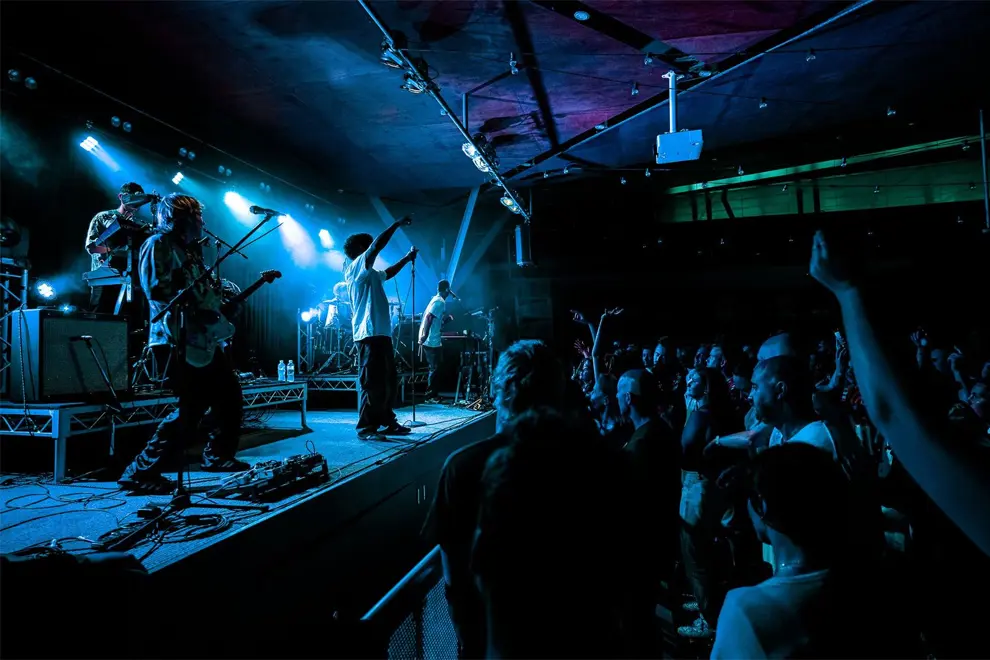
APRA AMCOS: If you’re a musician performing music live at pubs, clubs, cafés, open mics, and venues in Australia or New Zealand, APRA members can be entitled to live performance royalties.
Live performance royalties are collected from licence fees paid by venues to OneMusic – the organisation that licenses venues on behalf of APRA AMCOS.
These royalties are separate from ticket sales, appearance fees, or merch income and can provide an important extra source of revenue for APRA members.
In order to claim your live performance royalties, there are three steps:
Join APRA (learn more here)
Register your songs
Submit your setlists (also known as ‘Performance Reports’) – it's quick and easy to do in the APRA AMCOS app.
Royalties are paid quarterly.
TM: Getting granular, is it correct that royalties are only paid out if the performance is in a venue licensed by OneMusic, and that it relates only to original songs registered with APRA AMCOS?
AA: APRA AMCOS will pay live performance royalties to all gigs that are valid public performances in venues, regardless of whether that venue holds a OneMusic licence.
For example, private or domestic shows (e.g. birthday parties) would not be eligible.
When a member submits their setlists, they need to include any cover songs they’ve performed. APRA AMCOS will pay the songwriters of those covers for the performance of their music. There is a search function in the app where you can find almost every composition.
TM: While most people likely associate live performance royalties with artists and bands on stage, does this also apply to the likes of producers as well?
Absolutely! Performances of music count no matter the genre. There is a dedicated performance report form just for electronic music producers/DJs.
There’s also one just for jazz composers to allow for improvised works to be reported.
TM: Are there any performances that can't be submitted on a live performance report? Or are there any instances in which artists don't need to submit a report?
AA: Great question! In fact, there are. Songs performed when busking are not eligible to earn live performance royalties, nor are songs performed at a private function or worship services. You can see the full list of exceptions here.
Additionally, the fees that APRA AMCOS gets from some types of shows – like big festivals, international touring acts, and major promoted concerts – are handled differently. In these cases, it’s up to the promoter of the event to supply the set lists of all acts to APRA AMCOS – not the artists themselves.
Usually the promoter/event organiser will ask for the set list. If in doubt, members can get in touch with APRA AMCOS.
TM: How is the amount of a live performance royalty calculated? Does it depend on venue size, audience size, or how much the venue pays the artists to perform?
AA: Almost all of these! To determine the royalty amount, calculations are carried out using the total pool of live performance revenue collected across all venues for a period and the number of musical works submitted on live performance reports in the same period.
Licence fees are a percentage of either the amount the venue spends on live music during the year or a percentage earned by the show’s promoter. Even if all performances are free, a minimum annual fee still applies.
So, more venues, drawing bigger audiences and spending more on live music means more royalties going back to songwriters under the live performance report process.
TM: Are there any particular instances under which live performance reports find themselves rejected?
AA: APRA AMCOS will verify any claims that are identified as unusual or suspicious.
To do this we may often, with venues, request that the member submitting the claim provides some additional evidence or sign a statutory declaration.
In the event that a claim is found to have been made in error or inaccurate, then claims can be refused. Similarly, if two or more people enter performance reports for the same show, only one will be paid and duplicates deleted.
TM: Are there any figures out there in relation to the percentage of performers out there compared with those who actually submit performance reports? (That is, how much money are performers missing out on by not submitting reports?)
AA: APRA AMCOS doesn’t track all the performances that take place, so we don’t have access to that data.
The only way we know about live performances is if members tell us they perform.
We know that not all Australian songwriters or composers are APRA members, and not all members who perform submit their Performance Reports. Our Education & Outreach team do a great job of getting the word out, along with campaigns that communicate to musicians who may not necessarily know about APRA AMCOS or live performance royalties.
It’s a really impactful royalty, so it’s important to take just a couple minutes after a gig to submit a Performance Report.
TM: At some point in the past financial year, it was noted that 173,344 setlists were submitted by 8,062 artists, accounting for 3,277,000 individual songs. How does this compare to previous years?
AA: The statistics for the 2026 Financial Year are slightly higher: 176,508 setlists were submitted by 8,235 members, which is 3,368,911 songs.
What are some of the biggest misconceptions, or things that performers overlook, when it comes to live performance reports and the associated royalty payments?
AA: Myth #1: It’s “too much work”.
False. It’s really simple!
Only four pieces of information are needed:
The date of the performance
The performance venue name
The venue address (our form is linked with Google to allow for addresses to auto-fill)
The set list.
To make it even easier, set lists can be pre-saved, so members can simply attach the right one. Members can even edit pre-saved lists after they’re submitted to add or delete songs for specific shows.
Myth #2: There is a deadline for annual submissions.
False. Not anymore. Members can submit gigs anytime throughout the year. Live performance royalties are paid quarterly.
TM: Is there anything worth mentioning when it comes to live performance reports and royalty payments?
AA: Live performance royalties are due to songwriters and composers on top of any money they may be paid by a venue to perform and entertain. If an APRA member writes and performs, they’re entitled to be paid for both.
Members can backdate performance reports. The maximum time frame to historically claim is 3 years (provided they have been a member for all of that time). For claims more than 12 months old, some additional evidence will be required, such as ticket stubs, promotional materials, screenshots of promo on socials etc.
So, can we mention one more time: Members! Don’t delay, submit straight after the gig to earn from your songs.
Brand new APRA AMCOS members can still claim up to 12 months prior to their join date.
For full information relating to live performance reports, head along to the APRA AMCOS website for more details.