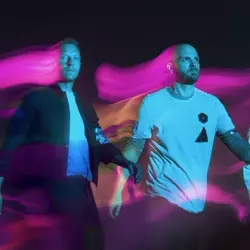
 Coldplay Profile
If you live in Sydney and Melbourne, the chances are you have never been forced to travel outside your city to see an international act.
But it’s a totally different story for those in Darwin or Alice Springs. With the Northern Territory’s small population of 250,000, the expense of moving entourages and freight to such remote locations, and the lack of large enough venues, can be forbidding.
The largest in the NT, the TIO Stadium, only holds 12,215 and is able to stretch out to 15,000.
A new analysis from streetwear and culture brand Culture Kings looked at 70 years of data from the Australian Concert Tour Database covering 29,665 shows across 1,121 artists, 264 cities and towns, and 356 named festivals from 1954 to 2025 (Australian-origin artists excluded).
NSW had 10,207 international concerts since 1954, followed by Victoria with 7,476, and Queensland with 4,655.
Then came Western Australia (3,228), South Australia (2,825), Australian Capital Territory (792), Tasmania (418) and Northern Territory (64).
In terms of cities, Sydney led the way by hosting 7,783 international-artist shows since 1954. Second and third place were Melbourne (6,836) and Brisbane (3,676).
After the capital cities, the drop was sharp. Newcastle, ranking seventh of cities, only had 601 shows, Wollongong has 286, Launceston had just 79, and Darwin had 58.
Culture Kings CEO Justin Hillberg, noted, “The things that stand out to us aren’t just the gaps; it’s how passionate fans are everywhere in this country, including the place tour buses skip.
“Culture Kings exists at the meeting point of music and fashion, and being able to put the gear of the world’s biggest artists in the hands of fans from every state is something we’re genuinely proud of. The love for music is national, even when the touring isn't.”
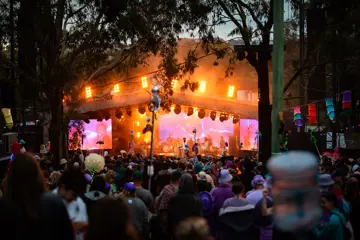
One significant note from these figures is the role festivals play in drawing international names to regional areas.
All international artist appearances in Woodford in Queensland were only through
Woodford Folk Festival. The 49 shows hosted by Busselton, WA were linked to the Southbound Festival.
It noted: “When those festivals are not running, these towns have no recorded international music presence at all.”
Over 70 years, 26% of Tasmania’s shows were linked to festivals. The report went on to say, “With Falls Festival on hiatus in recent years, an already thin pipeline has got even thinner.”
Earlier Reports
Culture Kings’ findings were similar to earlier reports from other sources.
In recent years, among major tours bypassing Adelaide and/or Perth have been Taylor Swift’s Eras tour, Oasis, Green Day, Olivia Rodrigo, Dua Lipa, Paul McCartney, Weezer, The Weeknd, and The Killers.
In 2024, The Music looked at why promoters kept bypassing these two cities.
In the story, Sydney-based prog rock label and agency Bird’s Robe founder Michael Solo explained that of his tours that year, We Lost The Sea, The Dear Hunter (with Closure In Moscow), and sleepmakeswaves had to pull out of these two cities. Another tour, COG, only got to Adelaide.
Solo put rising costs as a main factor, along with the fact some tours sell more in Canberra and Newcastle. Music fans in South Australia and Western Australia also have a reputation for waiting until the very last moment to buy tickets – putting extra pressure on venues, artists, and promoters.
“Many acts are not big enough to sell out a 500-1000 cap room, so for the acts we love who might draw 200-300 in Sydney/Melbourne, that usually translates to 100-150 payers in Perth/Adelaide,” Solo continued.
“Whilst we're lucky that some larger venues will let us have a mid-weeknight with those numbers in order to present a cool show for people, it also means that it's a big risk. Even just 50 people less than expected could mean a gigantic loss.”
For Adelaide promoter Craig Lock of Five Four Entertainment, lack of suitably sized venues is a problem.
“You can play twice in Melbourne, twice in Sydney, once in Brisbane, sell 200,000 tickets in a week-and-a-half and not have to move the show, which saves money,” he told Adelaide Now.
“And when you’re at that level, you know people will travel.
“It just makes more financial sense not to come to Adelaide. We’re just not as big as those markets. If they come here, they’ll sell less tickets and cost them money and time.”
In an investigation by ABC Radio into Perth, locally-based national booking agent and producer Paul Sloan identified huge costs as the problem why international acts don't consider the west coast city when scheduling a tour.
Sloan said 95% of his work is on the east coast due to "difficulties created by the sort of the infrastructure in Perth and how it interfaces with touring budgets".
He thought WA venues needed to set their prices accordingly to attract big-names.
"Realistically, you need to price your arena and make sure you don't have things like crippling ticketing fees and stuff.... to give promoters room to present a financial argument to clients that Perth is worth visiting.”
New Trend
The new trend of governments funding major concerts in the name of tourism dollars could change which cities get them.
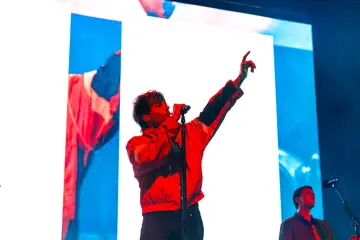
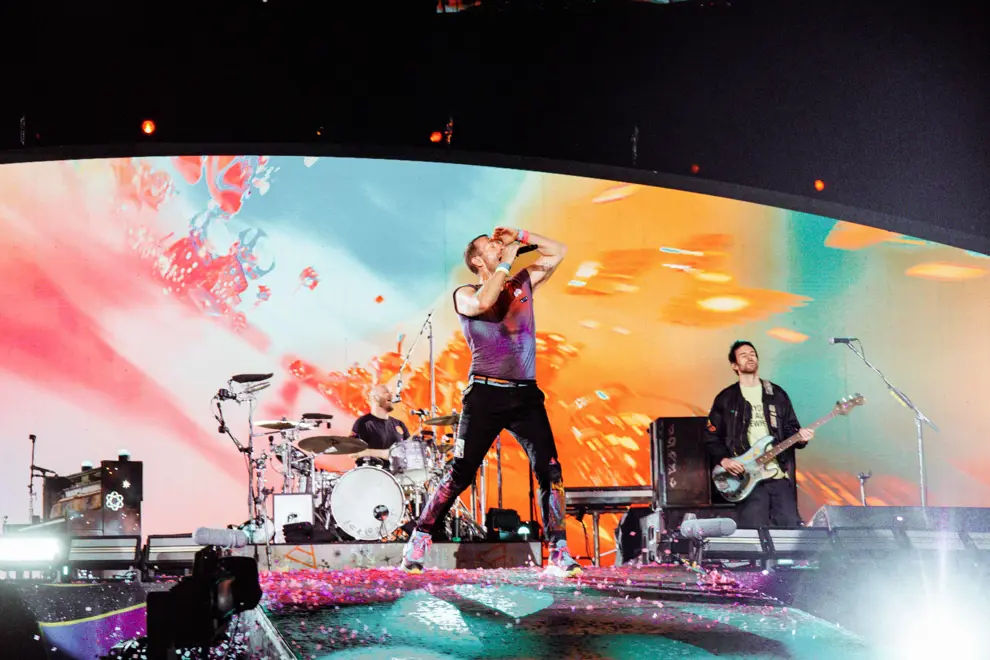
The first real test was Coldplay in late 2023, when the WA Government reportedly paid $8 million for Live Nation to fly the British band from Singapore for two shows at Optus Stadium to 125,000 fans. Of these, 40,000 were from outside WA.
The visit generated $43.3 million for the state – a very healthy payback.
The same year, the South Australian Government through its tourism body paid for Sam Smith to appear exclusively in the vineyard region of McLaren Vale.
Only 300 were invited, mostly influencers and media. It generated 742 million mentions. SA media suggested Smith was paid $1 million, but his promoter Frontier Touring said the actual figure was less.
It’s not known how much the Queensland Government paid for legendary tenor José Carreras’ exclusive Carreras & Friends concert on December 5 at the Gabba in Brisbane.
It was through its $100 million-over-four years Mega And Strategic Events fund under its $446 million Destination 2045 tourism strategy to make the state an events capital.
The concert is expected to make upwards of $11 million for the Queensland economy.
60% of tickets have already sold five months out, with general seating at $95 to $390. Diamond class tickets are at $800, with tourism packages for fans visiting Queensland for the event. A global TV broadcast is mooted, to bring another tourism boost down the track.
This is Queensland's second foray into concert/tourism funding.
The first was for Sting’s to play only Brisbane for his touring musical The Last Ship, at the Queensland Performing Art Centre’s new Glasshouse Theatre.
But according to the AFR, tickets were priced too high. Sales were slow, and discounting followed, causing an $8 million loss.
This piece of content has been assisted by the Australian Government through Music Australia and Creative Australia, its arts funding and advisory body