As Annabelle Herd, the CEO of the Australian Recording Industry Association (ARIA) jumps on a call, it's clear that her finding time for a chat is a bit of a rarity at the moment. "It's a very big year for the ARIA team," she exhales.
Indeed, there is a lot going on right now at ARIA HQ. Most notably, November will see the ARIA Awards hold their 40th edition, with the entirety of the Australian music industry focusing their attention on the organisation's annual event to not just see who takes home the big trophies, but to also see how ARIA celebrates the Awards' ruby anniversary.
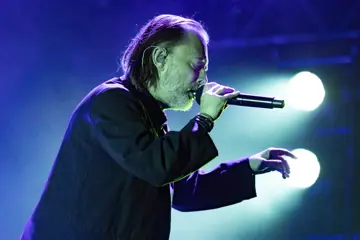
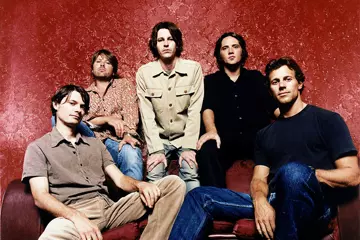
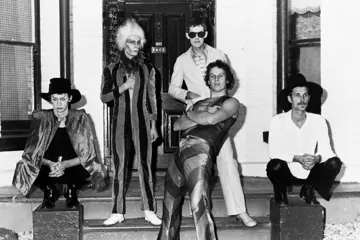
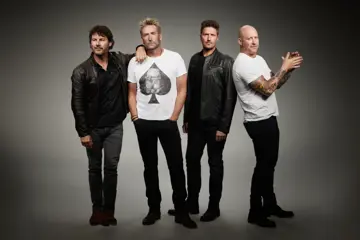
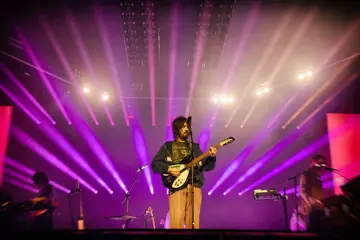
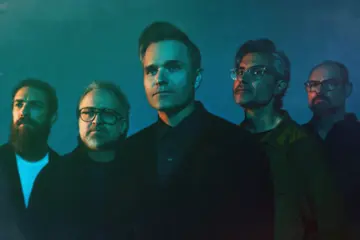
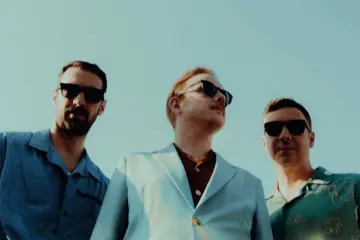
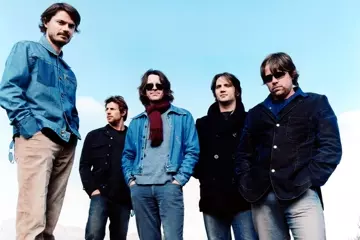
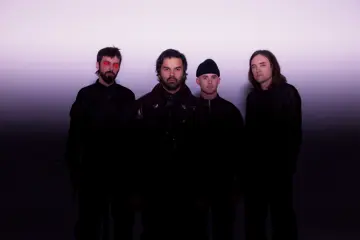
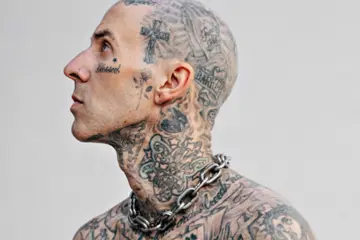
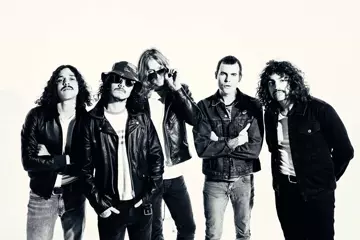
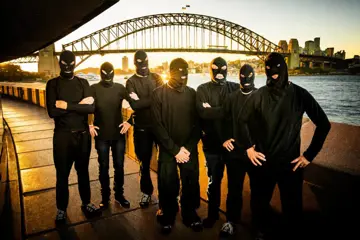
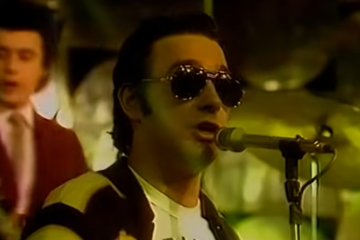
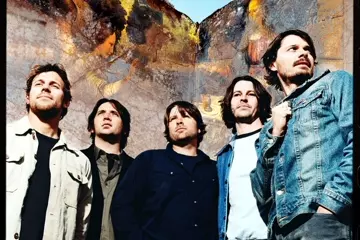
Before that, however, there's the ARIA Hall Of Fame, which takes place on June 11th at Carriageworks in Sydney, and inducts six revered names, including Kate Ceberano, Jenny Morris, Spiderbait, Vika & Linda, The Living End, and the late Gurrumul.
First held as part of the second outing of the ARIA Awards in 1988, the Hall Of Fame seeks to canonise these artists whose "work has defined generations and contributed to the sound of contemporary Australia."
Since the very first induction, a total of 82 individuals and artists have been inducted, while one influential television program and one non-recording artist (Countdown and its host, Molly Meldrum) has been welcomed into the ranks, while one artist has been removed from the honour roll.
Only three years have not featured inductees (2000, 2021, and 2022), and since 2015, it's been a one-inductee-per-year affair. Alongside the induction of You Am I for the 2025 ceremony, it was announced that this year would see a larger list of acts welcomed into the fold part of the 40th edition of the ARIA Awards.
Over its lengthy history, the Hall Of Fame ceremony has ebbed and flowed in terms of being a standalone event and held as part of the larger Awards. Its last standalone event took place in 2010, so after 16 years, why has it now returned to its separate status?
"Since I started this job five years ago, I've had every year people asking me when we were going to bring the Hall Of Fame separate event back," Herd admits. "We've been inducting artists one by one, there are so many artists that really deserve this recognition, and it's actually not really possible to recognise the right artists if you're only doing it one by one – it'd take 100 years.
"With this year being the 40th anniversary of the ARIAs, it is the perfect time to sort of reflect on the industry, how we got here, what's happening right now, but also thinking about charting the course forward for the next 40 years.
"So it felt like the absolute right time to have an event separately this year to induct six incredible artists."
When it comes to the topic of the Hall Of Fame, it's very easy for onlookers to get granular in regards to whether an artist should be eligible, what criteria they meet, and other arbitrary concerns. For the US-based Rock And Roll Hall Of Fame, artists become eligible 25 years after the release of their first studio record, with mind paid to their influence and significance in the world of music.
For the ARIA Hall Of Fame, the artist in question must have "released a record at least 15 years prior to the year of the proposed induction, and subsequently amassed a significant body of widely celebrated recorded work," alongside achieving success in Australia and/or overseas with global reach and impact, notably influencing and/or contributing to the growth and success of other artists, showed a commitment to "strengthening Australian music and the broader industry through impactful community involvement", and also achieving marked success on either the ARIA Charts, Awards, or the global stage.
Additionally, applications for the Hall Of Fame are also required, with either the artist, their team, or their label submitting applications for the artist to be inducted. Ahead of this year's mass induction, Herd notes that ARIA themselves put a call out to their members, alerting them to the special event and 2026’s expanded intake.
Of course, there's also a few other vital criteria that must be adhered to as well. "Probably the most important one is that the artist wants to be inducted," Herd explains.
"For some artists it might not be the right time, they may not be speaking to each other. There are a range of reasons why an artist might not be ready to be inducted or may not be keen at this point in time."
From there, the ARIA Board will take a look at the nominated artists, discuss their cultural impact on the industry, and work out who should be inducted. Much of this discussion is also leveraged in relation to where an artist currently finds themselves, too.
"We don't want the Hall Of Fame to be seen as an end-of-career accolade," Herd notes. "If you look at these last few artists and all, in fact I think all of our artists apart from Gurrumul and Jenny are touring at the moment or they've got records out.
"That's actually fantastic, because for us, that means that not only are we recognising and celebrating them, but we're also making the public more aware of the fact that they're still doing great things, and releasing great music."
This may also explain, for those who annually suggest names like Powderfinger as notable omissions for the Hall Of Fame, why some bands have not yet been inducted: it's not a case of ARIA overlooking them, but rather a number of factors not aligning.
"The artist needs to be ready, the timing has to be right, and all of that sort of stuff," Herd explains. "There are many artists that would be worthy of induction, and it all just has to come together at the right time.
"But I don't think anybody can argue that the six artists that we're inducting this year don't deserve to be there."
While this year's batch of artists represent a diverse and impressive subsection of the Australian music scene (and, in the case of Morris, New Zealand, too), it does raise the question as to whether it was an easy discussion for the ARIA Board when it came to working out who would comprise their class of 2026.
More importantly, how does this selection of artists represent the ARIA Hall Of Fame in 2026?
"It really represents it perfectly," explains Herd. "Every one of these artists has shaped our music industry, and every one of these artists has shaped Australian culture and Australian storytelling.
"And they've all done it in different ways, from the rock sounds of The Living End and Spiderbait – Spiderbait also being the first Australian band or artist to win triple j’s Hottest 100 countdown.
"I've been watching the video packages for each of these artists that we're getting ready for the night, which are unbelievable, and you watch all of these, and you just are reminded of the incredible careers and influence that each of these artists have had in their own way.
"Jenny and Kate, Vika & Linda, these beautiful voices and such long careers in the industry as well," she adds. "And obviously Gurrumul, who we're honouring posthumously, who had an incredible cultural influence, not just for First Nations music, but across all Australian music and Australian storytelling."
Also of note for this year's batch of inducted artists is the amount of women who are making the cut. In fact, with five women (including Spiderbait's Janet English), it's the highest number of female artists inducted at one time in the Hall Of Fame's history.
"Kate Ceberano said in her video interview that we might have popped into the promo trailer when we announced this, that it 'was about fucking time,'" Herd explains.
"We did not go looking for women, but having said that, I – as the CEO of ARIA – am always about ensuring equal platforms for women. Each of these women deserves to be there, and we do have to make sure that we're recognising our female artists as much as our male ones.
"So I'm very happy that the number of women that are there this year, and they all deserve to be there, that's for sure."
The ceremony for the 2026 ARIA Hall Of Fame is set to be an incredibly impressive affair. Alongside performances from most of the inducted artists, there will be special performances scheduled for the likes of Gurrumul, who passed away in 2017, and Morris, who announced her retirement from the world of music in 2015, citing a diagnosis of spasmodic dysphonia – a rare neurological condition which causes involuntary spasms in the larynx.
According to a press release, the ceremony will "include a moving celebration of Gurrumul, where members of his family will dance Djarimirri: sharing living culture with dance and continuing the storytelling traditions carried through Gurrumul’s music alongside special performances from Dan Sultan, Mia Wray and Kate Miller-Heidke celebrating the iconic catalogue of Jenny Morris."
"The way that we approach the Hall Of Fame is that it's an entirely collaborative process with the artist, their team, and their label," Herd explains. "We want them to feel that whatever the performance is reflecting the moments in their career and reflecting them as best to how they want to be represented.
"So we worked really closely with Jenny. We're working very closely with Gurrumul's family and team, and Michael Hohnen [Gurrumul's longtime friend, collaborator, and co-founder of Skinnyfish Music) in particular, to design a performance that they feel reflects them, but also that they're super proud of.
"Jenny's performance with those incredible artists is going to be amazing," she enthuses. "And the Gurrumul performance will also be a very moving, emotional performance, but it beautifully reflects the incredible, unique talent that Gurrumul brought to our music."
While it's a meaningful performance to the viewers, Herd also notes that the artists themselves feel the impact of these performances. "We got Tim Rogers to cry last year, which I'm pretty proud of," she chuckles.
"It's very meaningful to see these video packages, to be in a room with industry where everybody is standing up and applauding you, recognising your impact and all the hard work you've put in over the years, and the blood, sweat, and tears…
"We want to make that moment incredibly special for the artists and their teams, to make them feel that it was all worth it. But we also want the rest of Australia to know why these artists were so incredible."
Given that this year's event is a large-scale affair, and that Herd has noted it's impossible to induct all the artists that need to be inducted with the current one-per-year roster, she's reluctant to give any indication as to whether such an undertaking will be a regular one.
To be fair, given the work involved, it's clear that ARIA would rather focus on the task at hand first and foremost. "This is an event that the industry has been calling for us to do for a very long time," Herd explains.
"It's something the industry wants us to do, and we've invested a lot of time, care, money, and love into making sure the 11th of June is going to be an absolutely memorable, unforgettable night.
"You won't see this line-up of artists performing again any time soon. We're going to have incredibly important and influential people in the room, and we want to make sure that, at a time when there are some really big, important, and future-defining discussions happening around culture policy, around AI and copyright, and around discoverability of Australian music, we want this event to contribute to showing Australians – thanks to broadcasting on the ABC nationally – and important people in Canberra why they should care about Australian music.
"We really need the industry to step up and back it in," she adds. "It's also obviously a chance to celebrate these incredible artists. As to whether we'll do it again, it is a massive commitment to run events like this because my instruction to the team from the very beginning was that I want Australians to know about this induction, to celebrate these artists as much as they would if we were doing them one by one as we have in the past, and the launch and announcement of who were inducting this year was absolutely huge.
"So it's really important for Australian music that we do events like this. It is a big investment of time and resource and care to get it right, and we're doing absolutely everything we can to get it right."
Once the Hall Of Fame celebrations are out of the way, Herd and the rest of the team will be turning their attention to the ARIA Awards, whose 40th edition will take place at the Hordern Pavilion in Sydney on November 18th.
“Reaching 40 years of the ARIA Awards is a powerful moment to reflect on just how deeply Australian music is woven into our story,” Herd said in a statement released in February. “This milestone is about legacy, but it’s also about backing where Australian music is going next.”
With the big anniversary taking place during her tenure, Herd admits that she's feeling a "little bit of pressure" to make sure it ticks all the boxes. "We've put so much into getting the Awards over the last few years to a place that I'm really proud of, and according to what they're telling us, the industry is really proud of it," she explains.
"We've invested a lot. So how do we up that this year for our 40th? That's a big challenge. We've got an incredible team, and in the five years I've been doing this job, I haven't felt the level of industry engagement with the ARIAs in the last 12 months in particular before.
"People are coming to us, everybody wants to be involved, everyone's keen to make it great," she adds. "So we're working on it, and it's going to be a very special night. But, I would also say June 11th is a part of that lead up to that very special night, and the timing is really important as well because there are some big national conversations happening that really will affect the future of our industry.
"And it's moments like this where we remind politicians why they should care about Australian music and Australian artists."
These big national conversations that Herd talks about are the ones that you would expect. Largely, focusing on topics such as the pervasiveness of AI in the creative world (and how artists receive proper compensation for their work in this new environment), along with the topics of radio royalty caps, and more, this is what ARIA will find themselves pointing their attention to in the coming months and years.
"This is all front of mind with all of us writing our National Cultural Policy together," Herd explains. "Industry unity is so important, and it was so effective in the last National Cultural Policy. We ended up getting the creation of Music Australia, which has been incredible to focus policy development and development of our industry, and look at the challenges and work out how to address them.
"It's the challenges for live music and the platforms and stages that our artists need to develop and reach audiences. It's the challenges of prominence of Australian music on radio and on streaming services. It's the challenges of financial viability of our artists. How do they stay in this career? How do they keep earning a living so that they can keep making incredible music?
"And AI, too. If we get AI wrong, none of that matters," she adds. "You may as well not even have a National Cultural Policy if copyright is effectively wiped out to give big AI companies access to all of our music without our consent to do with whatever they want."
Other issues that are in the crosshairs include the likes of ensuring Australian artists are indeed able to keep earning a living wage.
While You Am I was inducted into the ARIA Hall Of Fame last year, frontman Tim Rogers just last month revealed that it's an "irony" to be inducted given that the band are "completely broke".
So if artists such as You Am I are being revered on such a massive scale but still finding it impossible to get by, what can be done to fix this issue?
"One of the things that we'd really love the government to do to assist Tim and others is to remove the radio royalty caps, which are an absolute dampener on their income that prevents PPCA from being able to negotiate fair market rates for when radio plays sound recordings," Herd explains.
"The benefit of doing that is it's zero cost to the government, and anything that PPCA raises for Australian royalties half goes direct to the feature artist, so that feels like an obvious one. We work really closely with our Hall Of Fame artists, not only to make sure that they feel celebrated and recognised in the appropriate way, but also that we can help them leverage this opportunity to benefit their careers and their income streams.
"We try to give them as much notice as we can so that they can line up opportunities around this big event," she adds. "That's not what's driving it, but if it's going to happen, you may as well use that. And certainly you can see that with all of our artists this year touring and all of the other things that they're doing. They're making the absolute best of it, which is wonderful to see.
"But we all have to be doing everything we can to make sure that artists can make a living because there is no industry without artists."
Likewise, this July marks the fifth anniversary of the last time an Australian track ascended to the top of the Singles chart. On July 19th, The Kid LAROI and Justin Bieber hit the top spot with STAY, which would stay atop the charts for a total of 17 non-consecutive weeks, eventually exiting the penthouse position in February 2022.
Since then, there have been no Australian acts to feature atop the charts (not including PNAU's remix work on Elton John and Dua Lipa's Cold Heart, and Glimpse Of Us by Joji, who is labelled Japanese-Australian through his parentage).
Obviously ARIA is not in the business of gaming the charts to help local acts rise to the top, but as someone deep in the trenches, the question needs to be asked: what can we do to bring local content to the pointy end of the charts?
"Streaming more Australian music is obviously a thing, although Australian music is not a genre, as many people point out," Herd notes. "We made changes to the charts last year – the biggest changes in a long time – to take out music that's older than two years, and that is already helping on the main charts – and the Australian charts for that matter – with getting more visibility for new music."
Another promotional tool that ARIA has instituted is the rollout of awards which Australian artists will showcase on social media to celebrate their ascent to the top. Most typically used for the Australian Albums Chart, the most recent artist to do so was Genesis Owusu, who celebrated the high position for his third album, REDSTAR WU & THE WORLDWIDE SCOURGE.
"We've had such great feedback around that because we know that the charts are really important again for recognition, but they're also a really important promotional tool for artists to be able to say, 'Hey guys, my music's really great, a lot of people think so, come and listen to it,'" Herd says. "And artists and their teams need these opportunities to be able to cut through.
"So we've changed that focus to the Australian charts. Things are improving slowly on the main charts, too, but the charts are just a reflection of what people are listening to, and it's just such a competitive environment with international music and catalogue music on streaming, to be honest."
Of course, while it's not a bad thing for younger generations – who are traditionally seen as the biggest drivers of streaming numbers and listening habits – to be listening to catalogue music, it does make it more difficult for Australian artists to compete on the main charts, especially with international acts flooding the top tens too.
Currently, the highest Australian track in the singles chart is Tame Impala's Dracula, which sits at No. 7 following a peak of No. 4. There are no other locals to be found in the top 50, which features 15 Drake tracks – five of them in the top ten.
However, it's not all bad, Herd notes, pointing out some of the "success stories" not reflected in the charts. "You've got Troye Sivan, Dom Dolla, Ninajirachi, and all of those artists – including G Flip, who just got a great sync in the Prime show Off Campus.
"So there is success, and particularly in touring and, and other things," she explains. "It may not get to the chart because it's so competitive to get into the chart, but it's still happening, and that's what we also need to remember."
ARIA will hold its Hall Of Fame event on Thursday, June 11th at Sydney’s Carriageworks with a broadcast taking place on June 13th via the ABC. The 40th anniversary edition of the ARIA Awards will be held on Wednesday, November 18th at Sydney’s Hordern Pavilion. Visit the ARIA website for more information.
This piece of content has been assisted by the Australian Government through Music Australia and Creative Australia, its arts funding and advisory body