 Taylor Swift Profile
Whether you're well-tuned to the logistics of what it takes to get someone to buy something or not, you'd likely appreciate how important a marketing campaign is.
Marketing is the standard method by which anyone – musician or not – gets their focus out into the world. A fast food chain has a new menu item? A marketing campaign gets that message to the consumer. A new movie is coming out? Trailers help to generate excitement.
It's the same for music. Whether it's a new album, a new single, a show, a tour, or something else, marketing is key to spreading the word.
However, there's also something inherently embarrassing about spruiking things so directly. Sure, it's necessary, but the modern age has left us all feeling a little apprehensive about being so blunt, vulnerable, and finding ourselves in a position where we say to the public, "Our efforts are something you should spend time and money on."
That might be the case for smaller artists, which is why it's a little ironic that larger artists with bigger marketing budgets have found themselves obfuscating that process somewhat with the launch of teaser campaigns.
Much like your average marketing campaign, a teaser campaign buries the lede a little bit, and generates curiosity, engagement, and discussion.
It's the difference between an artist like Post Malone bluntly announcing a new album via social media and having murals of the artist showing up in cities around the world.
On one hand, the former is much more direct, it's clear what is happening and what the goal of this message is, but on the other, it generates word-of-mouth discussion, it inspires searches for the artist, and ultimately – by the time the record is announced – it has resulted in a longer conversation than if the simple method has been utilised.
Perhaps this is an indicator of how fickle the modern audience has become and how short attention spans have gotten, but it does raise a question: how effective are teaser campaigns?
There's no hard-and-fast way of actually judging their success (that is, we can't see how well an artist's album performed or how well a tour was attended with a teaser campaign compared to how it performed without one), but we utilising Google Trends data, we can see how interest in specific artists managed to peak around the time of previous campaigns.
In a graph of search interest over a specific time period, Google Trends shows the data on a relative scale from 0 to 100: zero suggests insufficient data, 50 indicates half the popularity, and 100 signifies the peak interest during a time period.
Firstly, it's worth taking an ever-so brief history of teaser campaigns to understand just what's going on.
For the most part, teaser campaigns were largely relegated to the world of film. The idea was to offer a sense of what the finished product would be like, but without giving away too much of the plot.
The idea is to pique interest, increase anticipation, and generate discussion. This is why, often, teaser trailers are offered up well before the 'official' marketing process of the film, or sometimes even before it's done shooting.
A recent example is the forthcoming You Can See Everything documentary, which was announced alongside a secret screening in early September, and complemented with a one-minute teaser which offered barely any information.
Weeks later, and closer to the documentary's official release, a standard-length trailer arrived.
Historical famous examples include the likes of Star Wars: Episode I – The Phantom Menace. Hype was so high for the new Star Wars installment that fans would go ahead to showings of Meet Joe Black in 1998 just to see the teaser before leaving.
However, this was actually a sneak preview of the official trailer instead of what would be dubbed a teaser these days, so it goes to show how eager people were for new Star Wars material.
Another famous example is that of The Da Vinci Code, whose teaser generated hype about the film well before shooting had even begun.
Historically, searches for 'teaser trailer' have been far more common than 'teaser campaign'.
If we look at the latter we can see interest hitting an early peak of 28 in mid-2007, and while it remained consistent and near that over the next two decades, an explosion to 60 would occur in August 2025, hitting a peak of 100 in June 2006.
As a quick comparison, if we overlay searches for 'teaser trailer' we can see a peak of 100 in November 2004, before ebbing and flowing in recent years. The 100 peak of 'teaser campaign' in June 2026 scales to a 1 compared to the 9 of 'teaser trailer' at the same time.
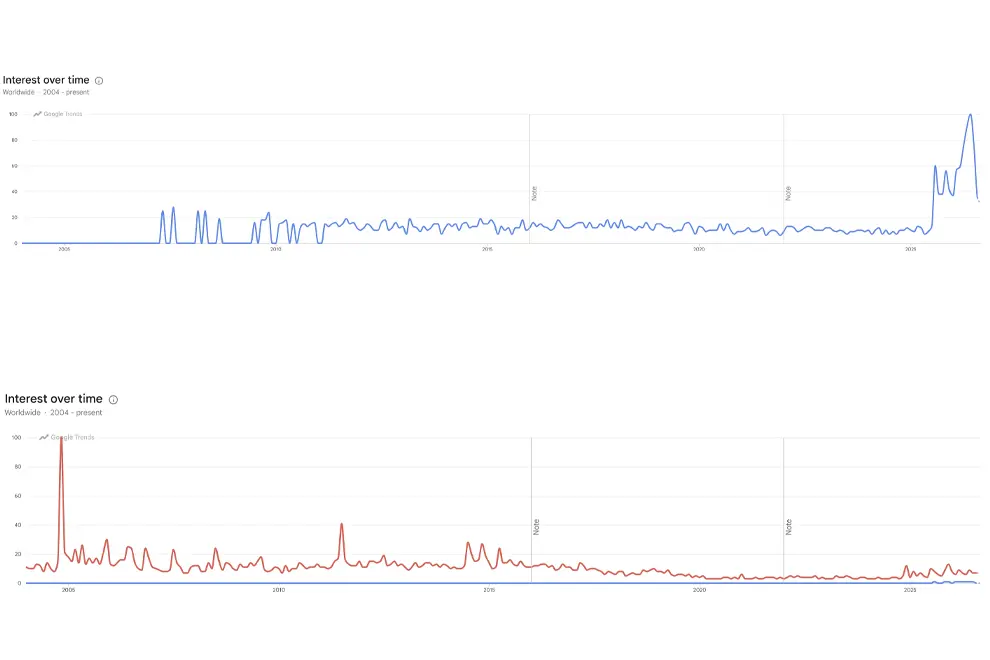
Google Trends searches for "teaser campaign” between 2004 and 2026 (top) and Google Trends searches for "teaser campaign” (blue) and "teaser trailer" (red) between 2004 and 2026 (bottom).
While film is far easier to tease, music had traditionally been relegated to the standard marketing process of releasing singles ahead of a standard album.
By definition, this too is akin to a teaser trailer given that it's teasing the full content of the record. But, it's more like a standard trailer than a teaser, given it's offering actual content which will arrive later, rather than generating hype and offering a sense of what is to come.
Therefore, it's often much more difficult to tease music, though it hasn't stopped artists trying.
In 2000, Radiohead prepared to release their Kid A album, and while it would revolutionise the worlds of indie, electronic, and rock music, so too did it help to generate buzz without official singles.
In fact, while it's their only album without singles, the group decided to take a unique approach. They tightened the process by not offering any photos, interviews, or standard press material, and instead became one of the first acts to utilise the internet for promotion, instead sharing a batch of cryptic music videos dubbed 'blips'.
At five seconds each, these clips were designed to offer some visual context of the record, and – while still being soundtracked by audio of the album – generate hype without giving anything away too early.
Though Google Trends don't go far back enough to capture information from that time, it made Radiohead one of the year's most-talked about artists, and upended the way traditional music promotion was done.
The band would actually go on to upend standard practices again in 2007 when – frustrated that albums like Kid A had been leaked on services such as Napster – they fought back against privacy by offering up their In Rainbows on a pay-what-you-want basis.
Pioneering the process, this was less of a teaser and more of a direct method of promotion, albeit one without a stark financial goal.
However, such a plan worked. To date, In Rainbows' October 2007 release coincides with the peak of interest in Radiohead on Google Trends, with a 100 score recorded for that time.
For comparison, the month prior they were at 15, and 39 the month after. Even now, their highest peak since – 2011's release of their The King Of Limbs album – only saw them reach 43.
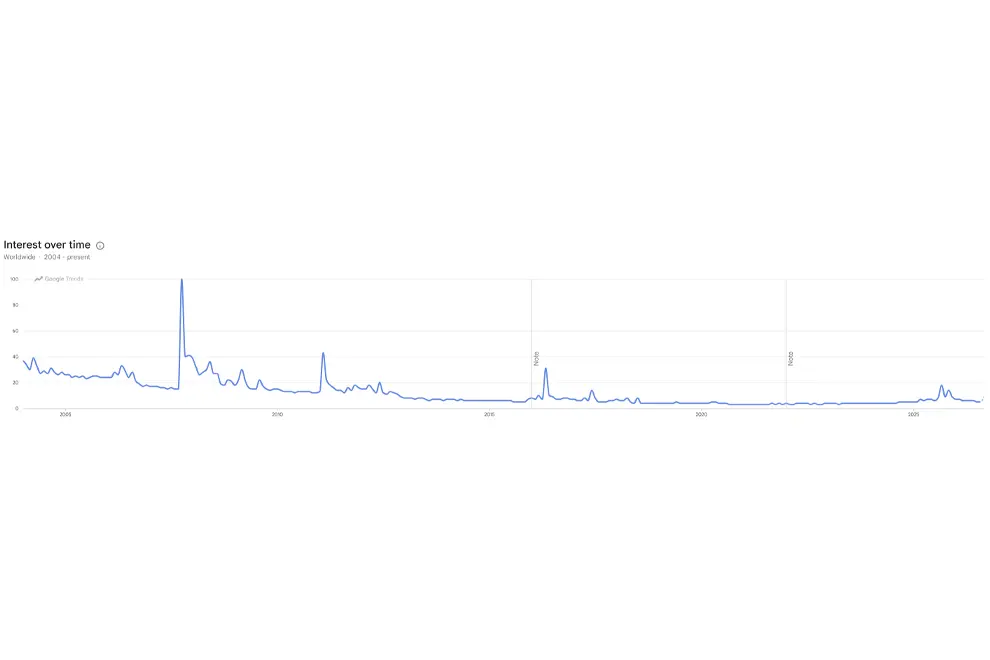
Google Trends searches for "Radiohead” between 2004 and 2026.
The same year that Radiohead took free downloads mainstream, so too did Nine Inch Nails promote their Year Zero album with an 'alternate reality game' – an ARG.
The entire story is worth diving into, but from February 2007, messages soon found themselves appearing on T-shirts, with USBs featuring songs, and myriad websites, forum posts, and more emerging as part of a wider promotional push ahead of the record's arrival in April 2007.
Looking at interest in Nine Inch Nails from the era, the group had reached a then-base level of 22 in August 2006, and by January, this had raised to 25. In February, it rose to 44, 50 in March, and a peak of 60 alongside the album's release in April.
It swiftly fell off after the fact, and while Nine Inch Nails have remained popular in the decades since, they've never since hit a level as high as April 2007.
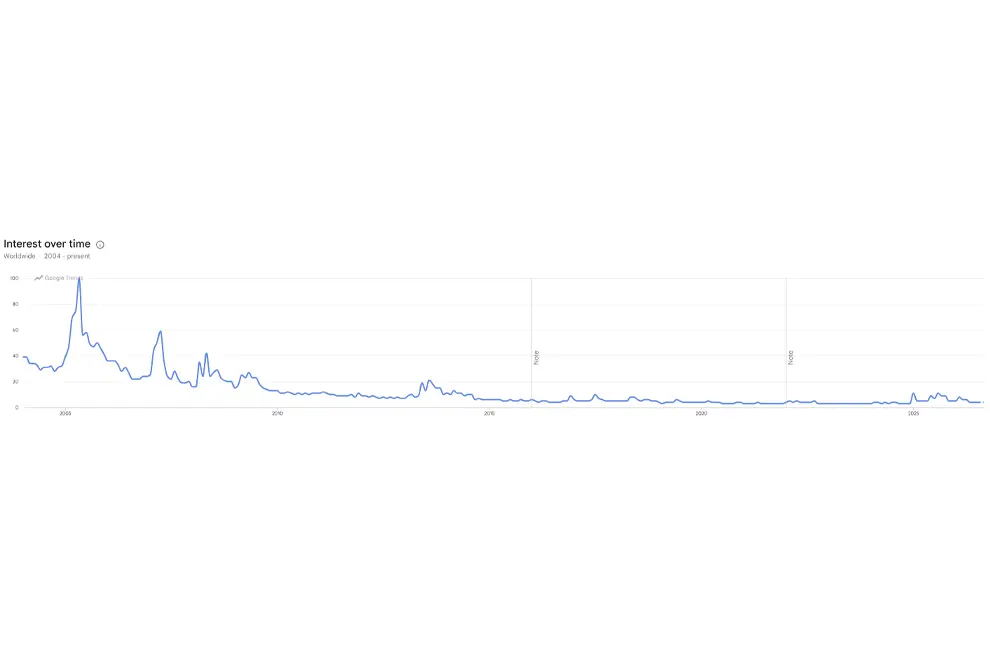
Google Trends searches for "Nine Inch Nails” between 2004 and 2026.
One artist whose music has effectively lived in the world of teaser campaigns is that of Scottish electronic duo Boards Of Canada. As enigmatic as they are impactful, the siblings haven't performed live in 25 years, and they've released just four albums within that period of time.
In 2005, the pair released their Campfire Headphase album, before returning to the shadows until 2013.
In June of that year, they released Tomorrow's Harvest, but had begun to tease the record by – without announcement – sharing a batch of 12" records in April which contained codes which would lead to a website featuring links to the group's new album.
However, this release of records without any context was enough to generate plenty of discussion about the group. Were they back? Was new music on the way?
Fast forward to this year, and a similar undertaking took place. The group had largely gone silent in the years since, but in April, fans began to receive VHS tapes which featured a snippet of the band's music – their first new compositions in 13 years – and a mysterious presence of their logo.
Mass discussion was soon generated, and the pair would release their Inferno album the following month.
Looking at interest in the pair, they reached a peak of 100 back in October of 2005, which coincides with their The Campfire Headphase album. In March 2013, interest sat at 13, before tripling alongside the discovery of the mysterious vinyl records.
Interest again rose to 45 the following month, before hitting a peak of 82 alongside Tomorrow's Harvest release, which they've not matched since.
In 2026, discussion of the band saw them sitting at 13 in March, rising to 40 alongside the VHS tapes being distributed. Ultimately, a period peak of 53 would occur in May alongside the release of Inferno.
In both cases, we can see interest in the band rising as the teasing began, but in each instance, it hasn't been enough to translate to ongoing interest. In 2013, searches for the band returned to a base level and dropped off to below previous levels in the aftermath of the album, and so far, it seems to be trending the same way this year.
So we can see that teaser campaigns are great in generating interest at that period of time – much like the release of any album campaign – though they seem to help serve as a bit of a slow burn in terms of initial interest instead of translating to a higher level that remains after the fact.
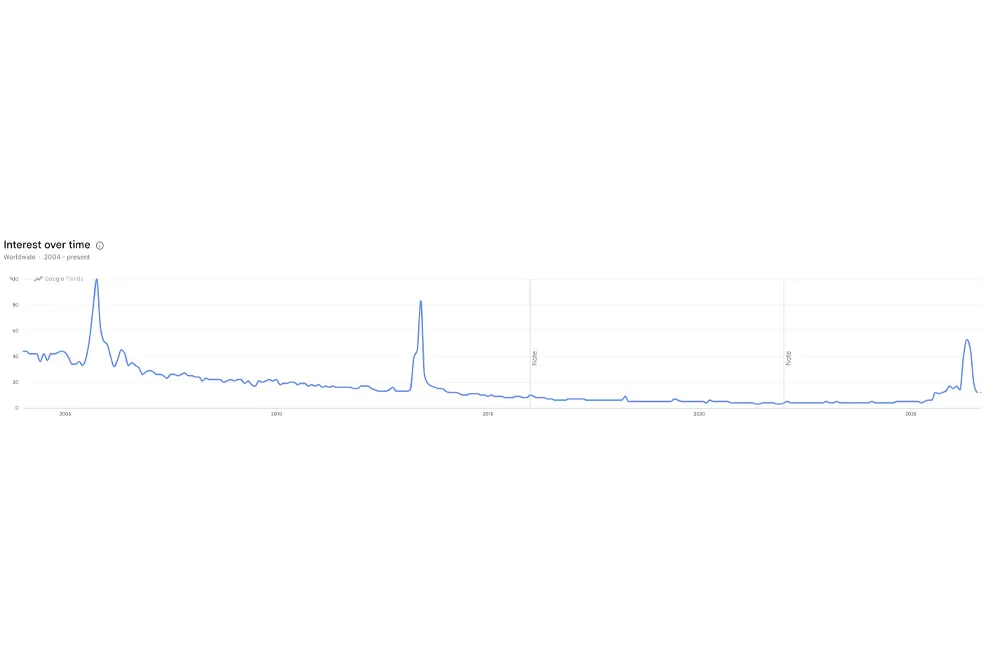
Google Trends searches for "Boards Of Canada” between 2004 and 2026.
Famously, there are actually instances in which marketing campaigns – and not just teaser campaigns – can have negative effects.
In 2014, U2 released their Songs Of Innocence album in a partnership with Apple. Instead of offering it up for free, the album was automatically downloaded to the devices of all Apple consumers.
Got an iPhone? Got a hatred of U2? Too bad, Songs Of Innocence is now yours.
In theory, this is great marketing given there's no need to promote a record that everyone already has, but the issue was that not everyone enjoyed the album, and plenty of people wanted to get rid of the album, only to discover it would keep on showing up in their library.
Focusing in on searches from September 2014, we can see U2 hit a peak of 100 in the second week of September, coinciding with the album's arrival.
However, while that would drop to 85 a week later, that drop coincided with the rise in searches such as 'Remove U2' and 'Remove U2 album' which had grown to 4 and 3, respectively.
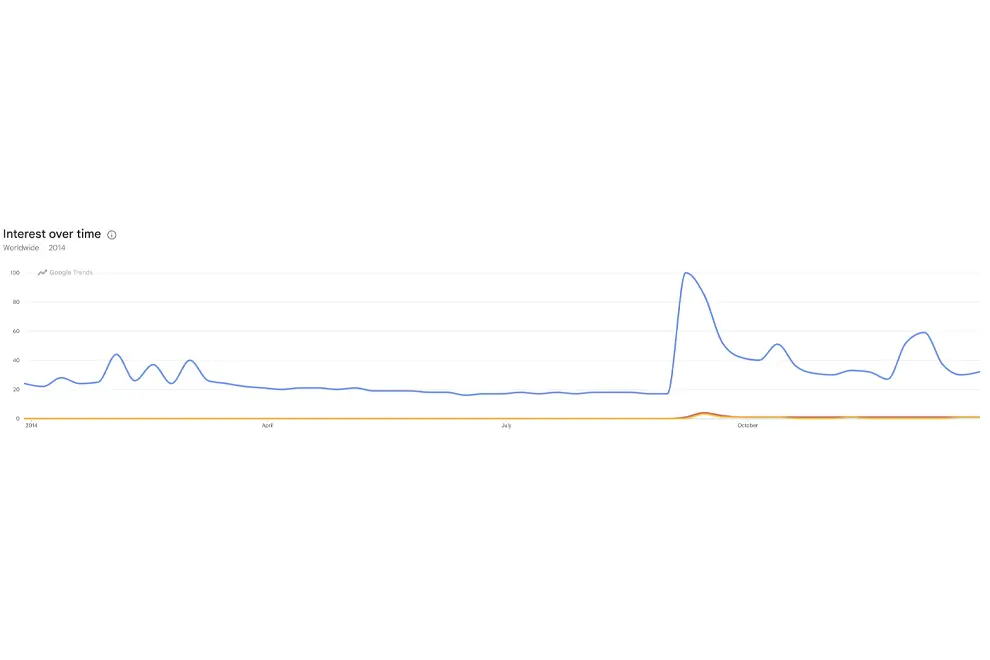
Google Trends searches for "U2” (blue), "remove U2" (red), and "remove U2 album" (yellow) during 2014.
If we scale out though, we can see this 2014 peak for U2 is the highest they've been since. While they hit 100 in February 2005 (just after the release of their How To Dismantle An Atomic Bomb album), they'd hit 58 in March 2009 (aligning with the release of No Line On The Horizon), but since 2014, they've ebbed and flowed and only slowly fallen to a plateau of around 4 to 5 since.
However, searches for removing that 2014 album have also flatlined, so who's the real winner here?
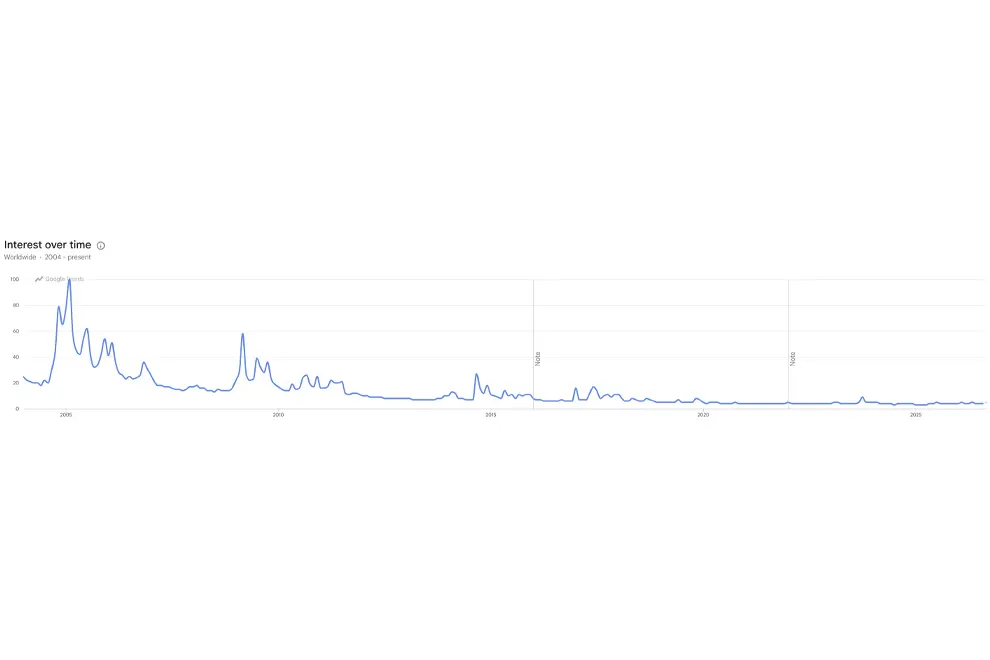
Google Trends searches for "U2” between 2004 and 2026.
Just weeks before U2 foisted their album upon the general public, rumours had begun to swirl that Aphex Twin – one of the most important and enigmatic figures within the world of electronic music – was to be releasing new material.
Though fresh music had arrived over the years, a new Aphex Twin album hadn't arrived in 13 years, so when a blimp adorned the Aphex Twin logo appeared over London, fans began to become a little intrigued.
Soon, graffiti of the logo appeared in New York City, then on Twitter, a dark web address appeared online which detailed the album's title and track listing. An online lottery also took place to give fans the chance to hear the record ahead of its official release, with a solitary single – with the catchy title of minipops 67 [120.2] – arrived just days before Aphex Twin unveiled Syro in mid-September.
At the time, Aphex Twin had been on a downward trend in terms of general interest from the public. His peak of 100 took place way back in 2004, and following a slight bump up to 94 in July 2005, it had been a downward slide to a comparative 15 in July 2015. As interest in an Aphex Twin return emerged in August 2014, searches more than tripled to a score of 15, and by the album's arrival the next month, it had increased to 91.
While interest did dwindle in the aftermath, it's rarely gone below the all-time interest in the producer, with the most recent peak – of 27 – taking place in March 2025.
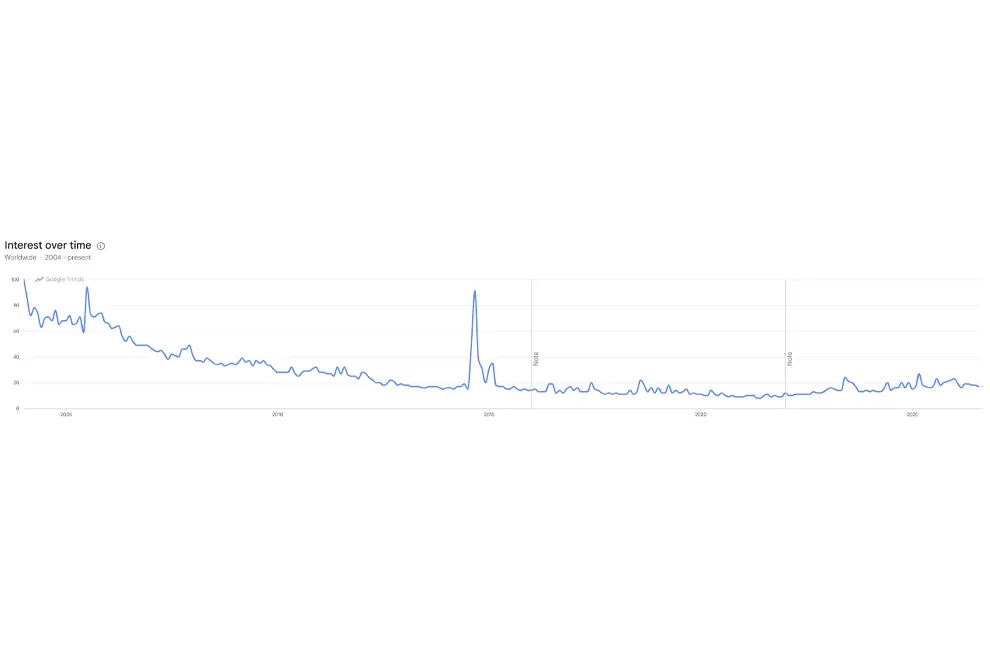
Google Trends searches for "Aphex Twin” between 2004 and 2026.
While we've seen teaser campaigns take place with increasing frequency in recent years, one of the more prominent methods of teasing music was seen by the likes of Drake, who this year turned heads thanks to the promotional aspects of his Iceman album.
It all began back in July of 2025 when Drake shared a YouTube livestream called Iceman: Episode 1. Soon, he was driving a truck around his native Toronto, and further teasers relating to the word 'Iceman' began to arrive.
Before long, it was clear that Drake was clearly going to be releasing a project under the same name, but promotional efforts didn't begin in earnest until April 2026. That's when he turned up to a Toronto Raptors game where his courtside seats were covered in fake ice.
Days later, an explosion on the set of a music video generated headlines, and then a massive ice sculpture appeared in Toronto, with Drake taking to socials to reveal that the release date was hidden within the sculpture. Fire officials had to destroy it after punters became unruly, with some fans even lighting a fire on the sculpture.
While the album was then announced to be arriving on May 15, Drake pulled a bit of a sneaky on us all by releasing not one, not two, but three albums on the same day.
In the US, Iceman topped the charts, while Habibti and Maid Of Honour followed behind at No. 2 and No. 3, respectively.
Given Drake's enduring popularity over the past couple of decades, if we zoom in on interest in the rapper in recent years, we can see that searches for him peaked at 100 in February 2024 and fell to 95 in May, coinciding with his beef with Kendrick Lamar.
However, while interest began to rise from a low of 27 in May 2025, it began to ramp up to 36 in April 2026 alongside the album's teasers. It almost doubled to 65 the following month, when all three records dropped, and since then, Drake had dwindled in terms of popularity, though he's currently trending in a direction that is higher than his average of the past few years.
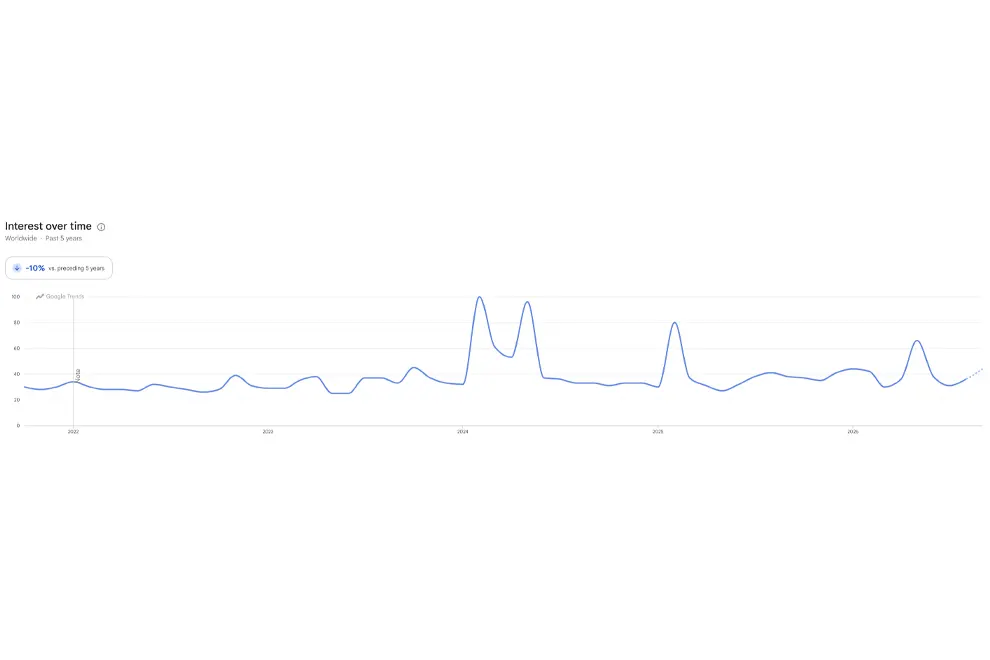
Google Trends searches for "Drake” between 2021 and 2026.
However, when it comes to artists offering up teaser campaigns, it's hard to look past Taylor Swift.
An undeniable queen of the marketing process, Swift's records have ranged from featuring unimaginable amounts of promotion to – in the case of her Folklore record – arriving without any prior fanfare.
Following the release of 2014's 1989, Swift found herself thrown into the public eye on a far grander scale, and she slowly became the target of greater public scrutiny.
Notably, romances with Calvin Harris and Tom Hiddleston were seen as publicity stunts, her feminist identity was viewed as either elitist or performative, and a public feud with Kanye West saw fans and detractors finding themselves somewhat tired of the singer.
In August of 2017, however, she wiped her social media and slowly began to upload videos of snakes, referencing public claims of snake-like behaviour from her. Soon, this hype-generation tactic gave way to the release of Look What You Made Me Do, which broke streaming records and increased anticipation of the release of Reputation in November.
Given how Swift's Eras tour saw interest in her reach a peak of 100 in 2024, if we zoom into this period, cutting off results after 2018, we can see that following a near-constant downward slide of interest since her peak of 100 late 2014, July 2017 saw Swift with an interest scale of 17, rising to 59 alongside the early promotion of the album, which later fell to 49 alongside the album's actual release.
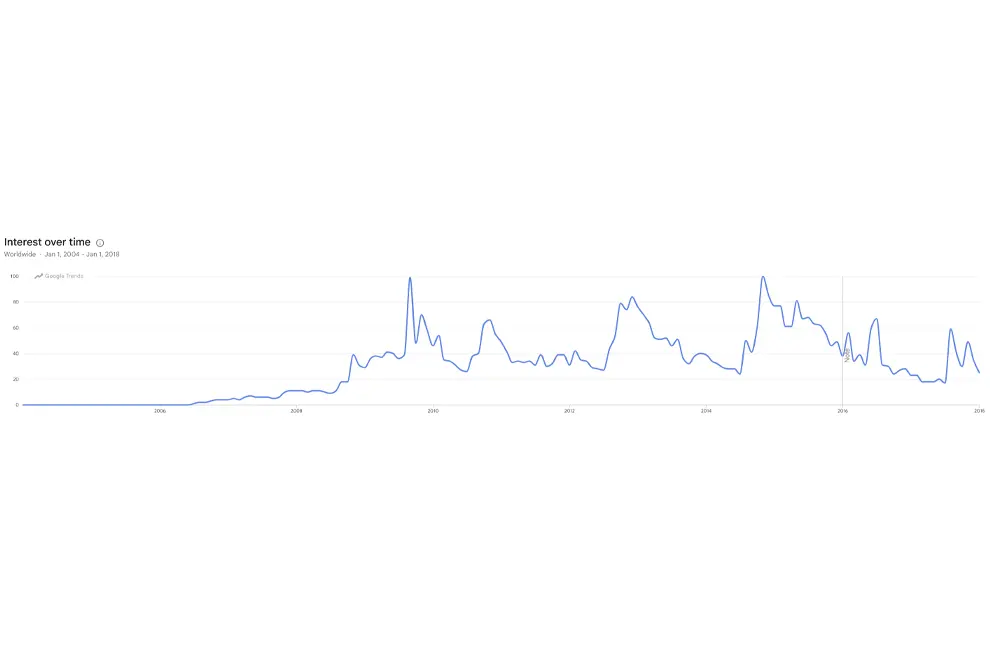
Google Trends searches for "Taylor Swift” between 2004 and 2018.
Once more, Swift found herself achieving a massive spike in interest just last year alongside the announcement of her The Life Of A Showgirl album. Again, interest had been slowly declining since the Eras tour and its peak of 100, and by July 2025, she'd fallen to a low of 15 (on a large scale, the period before Reputation was at 10).
However, August 2025 saw Swift and now-husband Travis Kelce announce the album's title and release date after teasing an appearance on the New Heights podcast.
No singles were released in the lead up to the record, and while the announcement saw interest hitting 58, September dropped down to 28, before the album's launch drove interest back up to 55, indicating that fans were more keen on the hype than searches for the record itself.
The standard drop in interest has since followed, but in July, Swift was back up to 39 – more than double where things were before the announcement of her last record.
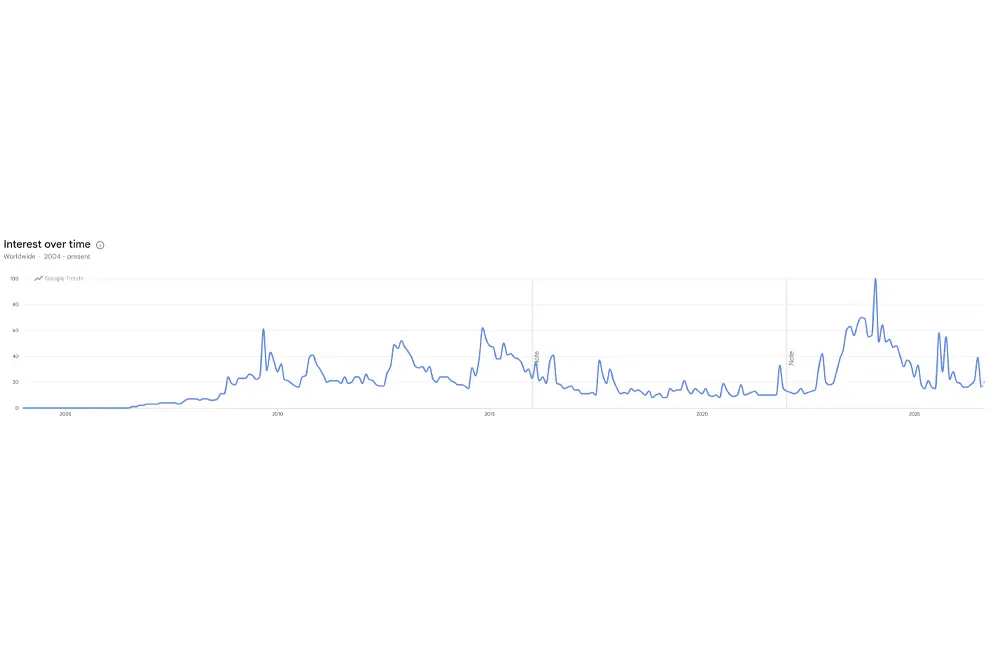
Google Trends searches for "Taylor Swift” between 2004 and 2026.
So does this mean that teaser campaigns are the way to go for all artists? Well, simply teasing the release of new music won't necessarily result in massive interest unless you're an artist with a lot of star power.
However, the fact that it seems to generate a rising period of interest before the full project drops seems to indicate that there's certainly no harm in giving fans a chance to have their interest piqued.