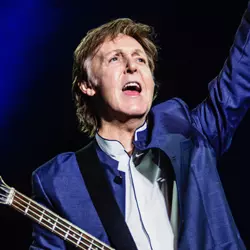
 Paul McCartney Profile
The world of rock and roll has long been one full of rumour, legend, innuendo, and everything in between.
There's the likes of Robert Johnson supposedly selling his soul to the devil, there's Judas Priest purportedly putting reverses satanic messages on their records, there's the legend of Phil Collins writing In The Air Tonight about seeing someone fail to save a drowning man, and the less said about Marilyn Manson's rib the better.
All of that is to say that lovers of rock and roll music love a good story, and rarely are they going to let truth get in the way.
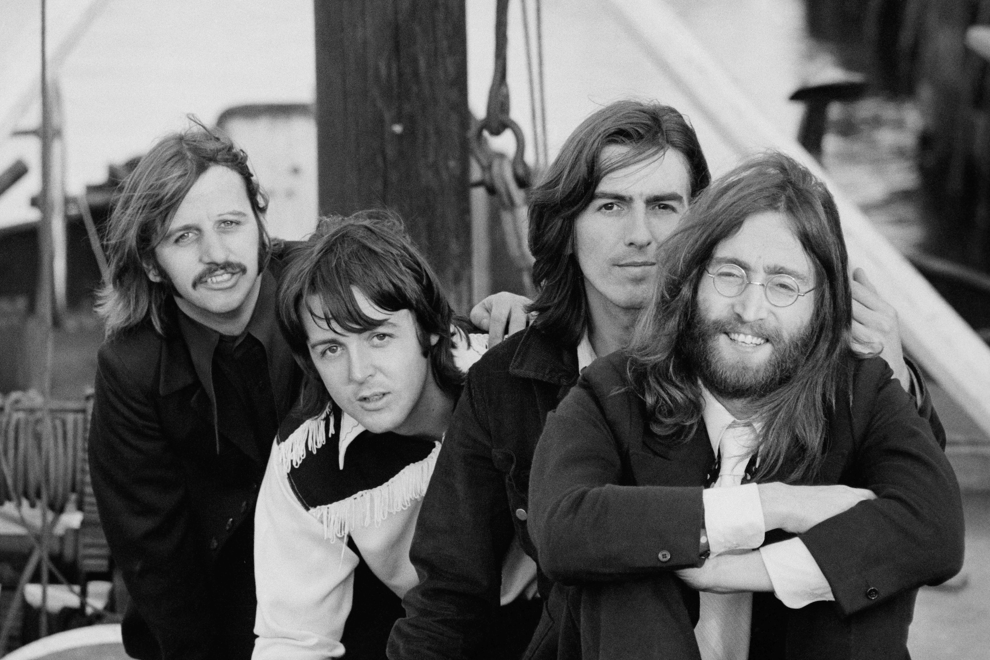
However, 2026 marks 60 years since one of the strangest and most enduring rock legends of all time came about. That is, the apparent death of Paul McCartney and The Beatles' alleged attempts to hide (or at least obfuscate) the fact that 'Paul Is Dead'.
The Origin
Let's start by going back to the period in which this rumour came to be.
By the middle of 1966, The Beatles were nearing the end of the Beatlemania period which had followed them since 1963.
Though no less popular, the hysteria that they attracted on a global scale had begun to wane. With a new album under their belts, and a batch of North American tour dates scheduled for August 1966, the band appeared to be in good stead.
However, the group had managed to attract widespread controversy in the US in late July, after John Lennon's comments that The Beatles were "more popular than Jesus" caught fire.
Radio bans followed, as did protests and onstage incidents, and the group were left exhausted – personally and professionally. American fans almost seemed to have missed the release of Revolver in August, and with the stress of the tour taking a toll on the likes of George Harrison (who had even thought of leaving the band), The Beatles decided to axe any further live shows – claiming it interfered with their studio work – and embarked on a hiatus.
Before all of that happened, however, that same year had also seen a number of reports in the media emerge surrounding the health of McCartney. Notably, the NME ran an interview in June in which the musician spoke about having broken a tooth "not long ago when [he] came off a moped".
“It was quite a serious accident at the time," he told the journalist. "It probably sounds daft, having a serious accident on a motorised bicycle, but I came off hard and I got knocked about a bit. My head and lip were cut and I broke the tooth.
"I was only doing about 30 at the time, but it was dark and I hit a stone and went flyin’ through the air. It was my fault all right. It was a nice night and I was looking at the moon!"
With McCartney having been through the wars, with members considering disbanding, and the stress of the North American tour leaving tensions high, rumours began to abound that The Beatles were no more.
Manager Brian Epstein went so far as to issue statements in October claiming that "The Beatles are NOT splitting up," adding that "They’ll be writing material for their next film in the usual way."
However, it appeared he had been too slow to quieten the rumour mill, because the group's press officer, Tony Barrow, had already begun to receive a number of inquiries from journalists who had gotten wind of claims that The Beatles' silence was due to them officially being down a member.
As he recalled in his book John, Paul, George, Ringo And Me, Barrow had begun to receive an "alarming number of phone calls" asking whether McCartney was in fine health or even if he was actually alive.
Though such phone calls were "not unusual", he was worried to the point that he tracked down McCartney to confirm he was in fact still "alive and rocking," as he would later tell journalists. However, after being given a new number for McCartney and connecting with someone he didn't recognise, Barrow recalled starting to believe the rumours.
"As you do, I feared the worst," he remembered. "Then Paul came on the line sounding as fit as a fiddle and I felt very foolish. I stopped myself saying something like: 'So you're alive then!' Instead, I babbled on like an idiot about something and nothing for a good ten minutes, just chattering away in the hope that I'd think of something sensible to ask the guy or some suitable way of rounding off the call without embarrassing myself.
"At length I paused for breath and there was a moment's silence. Then Paul said blankly: 'Tony, what the fuck have you called me for?'"
Another rumour about McCartney's death occurred just months later when his car was involved in an accident – though he wasn't the one driving.
Apparently, Mohammed Chtaibi, an assistant of McCartney's friend Robert Fraser, was driving one of the Beatle's cars due to McCartney, and The Rolling Stones' Mick Jagger and Keith Richards having crammed into another of his vehicles as part of a drug-fuelled trip.
During the trip down the M1 motorway on January 7th, 1967, Chtaibi crashed McCartney's car, and due to the Beatle's fame, when the police arrived, they did so with a number of outside observers who recognised the vehicle as belonging to the musician.
Though injured, Chtaibi was okay, but the sight of a dark-haired man being pulled from a car belong to McCartney quickly sent the rumour mill into overdrive.
With further rumours of McCartney's demise coming forward, so too did reports that The Beatles had used body doubles to throw off the press during their trips around the world.
However, much of these rumours were forgotten for the most part due to the band effectively changing the face of music thanks to a string of stellar records.
Sgt. Pepper's Lonely Hearts Club Band arrived in May of 1967, with the group's self-titled effort (aka The White Album) arriving over a year later in November 1968.
The soundtrack Yellow Submarine followed just months later, but when Abbey Road dropped in September 1969, the seeds had been sown for a rumour to emerge from the underground and burst into the mainstream.
The Theory
Before we get to that, what is it exactly that fans thought had happened?
Utilising clues from the band's lyrics, songs, and artwork, fans put forward the idea that on Wednesday, November 9th, 1966, McCartney had left a recording session with The Beatles, had gotten into his car and sped off.
Ultimately, he did not notice a changing traffic light, crashed his car, and was decapitated as a result of the accident.
The rest of the band, distraught over the loss of their bandmate, decided to shield fans from the news for fear of causing a Rudolph Valentino-level outpouring of public grief and instead hired a lookalike named William Campbell (or Billy Shears) to take on McCartney's role in the band.
However, they were so wracked with guilt that they attempted to assuage the pain they felt for deceiving fans by leaving a trail of clues behind so that they could discover the real truth.
The Rumour Spreads
Just nine days before the arrival of Abbey Road on September 26th, a newspaper article titled Is Beatle Paul McCartney Dead? was published in the Drake Times-Delphic student newspaper.
In the piece, the author noted a number of evidentiary 'facts' that seem to point toward the fantastical notion being true.
For example:
The cover of Sgt. Pepper's Lonely Hearts Club Band features a "mysterious hand" raised over McCartney's head – "an ancient death symbol of either the Greeks or the American Indians".
A left-handed guitar (with McCartney being the only lefty in the band) leans against a grave near the band's feet on the cover.
The rear artwork sees McCartney with his back turned, indicating he is somewhat out of step with his still-living bandmates.
Harrison can be seen pointing to the lyrics of She's Leaving Home in which it notes an event occurred at "Wednesday morning at five o'clock," ostensibly indicating the time of McCartney's passing.
Meanwhile, McCartney can be seen wearing a black armband which appears to read 'OPD' (Officially Pronounced Dead), though the actual badge reads 'OPP' (standing for Ontario Provincial Police, and disappointing all future Naughty By Nature fans).
Over on Magical Mystery Tour, the cover features one member dressed in black as the Walrus from the song I Am The Walrus. The following year, on The White Album, the track Glass Onion featured the lyric "Well, here's another clue for you all/The walrus was Paul."
The White Album also features the song Revolution 9, and when played backwards, a voice appears to say "Turn me on, dead man."
However, it was a few weeks later, on October 12th, when US radio DJ Russ Gibb hosted a program in which a caller relayed the rumour, offering up further clues, and allowing listeners to chime in with their own thoughts on the matter.
The following week, Gibb's whole program was dedicated to the topic, though it was removed from the air due to breaking the format of the typical program.
By this point, the floodgates had opened, with press officer Derek Taylor forced to respond to the topic on record.
"Recently we’ve been getting a flood of inquiries asking about reports that Paul is dead," Taylor explained. "We’ve been getting questions like that for years, of course, but in the past few weeks we’ve been getting them at the office and home night and day.
"I’m even getting telephone calls from disc jockeys and others in the United States."
"If people are gonna believe it, they’re gonna believe it. I can only say it’s not true," Ringo added at one point.
By now, further clues had been dug up, and even more rumours abounded.
Notably, the cover of Abbey Road showed The Beatles apparently dressed as though they were on their way to a funeral.
In this theory, the white-clad Lennon was a priest, Ringo was a black-dressed undertaker, Harrison the denim-wearing grave-digger, and McCartney was shoeless, out of step with the others, and holding a cigarette in his right hand (despite being left-handed), supposedly taking on the role of the corpse.
Meanwhile, a Volkswagen Beetle sat behind the group, complete with a license plate reading 'LMW 28IF', meaning as Linda McCartney weeps (LMW) or is widowed, McCartney himself would be 28 years old if he hadn't passed. (At the time of the album's release, McCartney was in fact 27, so it's hard to say when this was supposed to be relevant.)
If that wasn't enough, more fans began to listen to their records more closely, with Strawberry Fields Forever featuring some mumbling near the end which – despite sounding a lot like "Cranberry sauce" led some to believe that Lennon was saying "I buried Paul".
Not content with listening to the albums forward, more fans played them backwards, leading to some nonsense in I'm So Tired sounding a lot like the words "Paul is a dead man/Miss him, miss him."
It got even crazier still. The artwork to Rubber Soul was considered by some to be a photo taken from the perspective of a corpse at a funeral, the reissued cover to 1966's Yesterday And Today was said to depict McCartney in a coffin (it was actually a steamer trunk), and Revolver featured McCartney looking away from his bandmates (again, considered out of step with the rest of them).
Given all of these last three were released prior to when McCartney's accident was supposed to have happened, it was even more impressive.
The cover to A Collection Of Beatles Oldies featured an individual with a car driving toward their head (apparently in reference to McCartney's apparent decapitation), and then there was the drum head on the cover of Sgt. Pepper's Lonely Hearts Club Band.
The rumour there contends that if you take a mirror and cover the bottom half, the middle portion reads "1 ONE 1 X HE DIE" with an arrow pointing up towards McCartney. Apparently.
This replacement was further supported by the track With A Little Help From My Friends, in which fans are introduced to an individual named Billy Shears. Though the individual is the persona from which Ringo performs the song, some fans believed they had in fact been introduced formally to McCartney's replacement.
Even more confusing was the fact that while The Beatles' press officer – and Ringo – were on hand to deny the rumour, McCartney himself wasn't.
However, this was all unfolding as The Beatles were quietly splitting, and shortly after McCartney's wife Linda had given birth to their daughter Mary.
Understandably, McCartney wasn't much for talking at the time, and when a reporter from Life found him working in his farm and looking more dishevelled than usual, a scuffle ensued.
To smooth it all over, McCartney agreed to an interview which was printed in November 1969 – complete with the headline Paul Is Still With Us – and saw him respond to the rumours for the first time.
"Perhaps the rumour started because I haven’t been much in the press lately," he explained. "I have done enough press for a lifetime, and I don’t have anything to say these days. I am happy to be with my family and I will work when I work.
"I was switched on for ten years and I never switched off. Now I am switching off whenever I can. I would rather be a little less famous these days."
The Aftermath
As the '70s rolled on, The Beatles officially split, and the rumour began to slowly dissipate, though it was kept alive (if you'll pardon the pun) by fans of the band, conspiracy theorists, and practical jokers alike.
McCartney would go on to launch a solo career in 1970, founding Wings the following year which – like The Beatles – lasted just ten years before their dissolution.
Lennon would pass away in 1980, and Harrison would follow in 2001, somewhat ironically leaving McCartney and Ringo as the two surviving members of the band.
There were some more believable aspects to the rumour, of course. A few fans have contended that McCartney's voice changed around 1966, while some also believe his bass playing got noticeably worse following that year.
But ultimately, there were some far more believable explanations for that than a death hoax.
The most logical explanation for all of this, however, is that The Beatles had actually gotten wind of the rumours early on and decided to have a little bit of fun in some instances.
Sure, not all of the supposed 'clues' were the band leaning into it, and some of them were likely instances of fans reading more into innocuous coincidences than they should have.
However, what's often forgotten is that the rumours of McCartney's death had occurred almost simultaneously with the split of the band.
The first article reporting on the rumour was published only three days before Lennon made his bandmates aware of his decision to quit the band. Even McCartney's interview with Life magazine saw him admit this to the world, claiming "the Beatle thing is over".
It's more than understandable that as a band implodes (news of the split would not be made public until April 1970), the members' absence from the public eye would result in rumours and innuendo.
Paired with an absence from the live stage, previous rumours of health issues, and enough musical non-sequiturs to start raising some questions, it's really no surprise that such a rumour made its way into the world.
However, one of the best footnotes to this whole rumour came about in 1993 when McCartney released the live record, Paul Is Live.
The cover featured McCartney walking his dog across Abbey Road (wearing shoes with his left foot forward, holding a dog leash with his right hand), as a Volkswagen Beetle sat in the background – this time with the license plate 'LMW51IS', to indicate he is (or was) indeed 51 at the time of the release.
Were they always in on the joke? Were they having fun? Or were they covering up one of the best-kept secrets in rock music, foolishly deciding to leave clues in their music along the way?
After all, it does seem awfully suspicious McCartney would deny he had died… that's exactly what someone trying to hide the truth would say.