 Kasey Chambers Profile
The Australian music industry has made a huge advance from a cottage industry with limited ideas on how to break the world market, to a dynamic global operation with ambitious talent.
It was not an easy road – “every chase a steeple”, as the Skyhooks once sang. We look at 12 acts that brought major changes.
The First Rock Record Deal
In the 1950s, Australian rock and rollers like Johnny O’Keefe and Col Joye were seen only as live acts and no competition for internationals. Besides, this rock thing was just a fad, right?
O’Keefe, whose chutzpah far exceeded his vocal range, got a newspaper columnist to report he’d been signed by Festival Records.
This came as a complete surprise to Festival. Intrigued, its head hauled him in for an audition, and he officially became the first Aussie rock signing. He was the first local to hit the Top 40.
His Wild One, Shout!, and She's My Baby singles streaked to the top of the charts and multinational labels sensing there was gold in them thar hills, began to sign their own.
In 1959 O’Keefe was the first to crack the charts in the US, also the first to tour and record there.
His US label Liberty Records dubbed him Boomerang Boy. They held a competition in a New York park where anyone who could throw a boomerang further than O’Keefe would get $5 (close to $55 in today’s money). Alas Liberty had to pay out hundreds of dollars as O’Keefe arrived drunk.
The First Rock And Roll Recordings?
Australian music historians have argued that Johnny O’Keefe might have had the first Top 40 entry with The Wild One in 1958.
But rock and roll recordings, inspired by black American R&B, came before him.
In July 1956, singer/actor Frankie Davidson did US rocker Bill Haley’s Rock-A-Beatin' Boogie.
Jazz blues singer and actor Vic Sabrino was born George Assang on Thursday Island off the Queensland coast, of Aboriginal, Pacific Islander, and Asian descent. He moved to Sydney and cut a rendition of Rock Around The Clock in mid-1955 a month before Bill Haley & The Comets hit version was released locally.
Haley’s was considered by white radio as the first rock and roll record. It symbolised teen rebellion. In Australia, as happened overseas, teenagers brawled and slashed each other when it was played.
Sydney jazz pianist Les Welch cut a version in 1953 of Louis Jordan’s “jump blues” classic Saturday Night Fish Fry, considered in America to be one of the “first” rock and roll records.
Possibly that these three were not given much recognition because they were cover versions.
But it was a different story for the country music act The Schneider Sisters. Mary and Rita were from Rockhampton in Queensland.
On the night before they cut the Rockin' With The Schneider Sisters EP in 1958, they found they needed a fourth track. They wrote Washboard Rock And Roll in an hour – the first of the new genre to be written and recorded by an Australian act.
The Door Deal
Right until the 1970s, a venue agreed on a fee for the act in advance.
In 1976, Dragon had broken through with This Time. The agent for The Oceanic Hotel in Sydney’s Coogee rang their manager Sebastian Chase about booking them.
Chase, who believed perception is more important than reality in the biz, gave him the exaggerated price of $1,000. The agent sniffed, “What? I’d only pay $500 for them.” Insults were exchanged and phones were slammed down.
A few months later, the agent returned to say he would do $1,000. He was told the fee was now $2,000. More telephones were slammed.
Chase offered a deal: no fee but they’d just “take the door”, or what was collected at the entrance.
The agent loved the concept because the band and management were taking all the risks. In a much talked about achievement, Dragon went on to collect $17,000 (close to $130,000 in today’s money) far more substantial than what other big names were making.
The door deal was adopted more aggressively by INXS manager Chris Murphy and the Dirty Pool agency which had Cold Chisel, Icehouse, and The Angels among others, and made a killing.
It shifted the balance of power to acts and managers, and some high profile acts even got away with demanding a share of bar takings.
First Female Entrepreneur
Joy McKean was a true pioneer. A talented singer songwriter who started out with her sister as The McKean Sisters, she was instrumental in the rise of her husband Slim Dusty’s dominance of the country music scene.
She managed him for 50 years and penned many of his most famous tunes including Lights On The Hill, The Biggest Disappointment, Walk A Country Mile, Indian Pacific, Kelly's Offsider, and The Angel Of Goulburn Hill.
She helped form the Country Music Association of Australia (CMAA), won the first Golden Guitar award in 1973 for Lights On The Hill, and chaired the Slim Dusty Foundation which built The Slim Dusty Centre in Kempsey, NSW.
Clocking Over 100,000 Album Sales
It took the Daddy Cool phenomenon in the ‘70s for their debut album Daddy Who? Daddy Cool! to start pushing over the dominoes. Sparked by Eagle Rock and Come Back Again, it sold an unprecedented 60,000 in its first month after its release in July 1971. It then hit the 100,000 mark.
That was toppled by Skyhooks’ first album Living In The ‘70s, which Daddy Cool’s Ross Wilson produced. It immediately doubled DC’s sales achievement, shifting 226,000 units, and ultimately shifting 375,000 copies. Officially, John Farnham’s Whispering Jack leads within the Australian market, moving 1.68 million.
Officially, the biggest selling global album by an Australian act worldwide is AC/DC’s Back In Black which is found in 51 million homes.
Right behind with over 40 million is the Saturday Night Fever soundtrack, a multi-act compilation in which the Bee Gees played a dominant role. But if some sniff it doesn’t fly as a Gibbs record, their Spirits Having Flown sailed past 20 million.
Run Through The Jingle
Like The Beatles, The Rolling Stones, and The Who, Aussie acts such as The Easybeats, The Twilights, and The Seekers were also doing TV jingles for brands.
But the ante was upped when fashion brand Witchery approached manager Glenn Wheatley about Little River Band writing a campaign song for it. Band member Beeb Birtles penned a 60-second piece of music in ten minutes, seated on the steps outside his Melbourne apartment.
Typically the value of such deals remain confidential.
But at a keynote speech at the Fuse conference in Adelaide, Wheatley revealed that when he arrived at the Witchery headquarters for a meeting, he had a specific number in mind.
He took the lift to the floor where the meeting was held. The number of the floor was still in his mind, when discussions began and Witchery asked how much LRB would charge.
Wheatley accidentally blurted out the floor number. When Witchery agreed immediately, Wheatley muttered to himself, “Damn! Wish we met on the penthouse level!”
Recently, Kylie Minogue’s deal with UK luxury line Agent Provocateur, Troye Sivan’s with Cartier watches, car enthusiast Keith Urban’s with Chevrolet, and fast food connoisseur The Kid LAROI’s with McDonalds were worth multi-millions.
Right Grrrls
The first Australian all-female rock band were The Vamps/Peaches. They were first known as The Vamps when put together in 1965 by guitarist Margaret Britt, who was the common factor during 25 lineup changes.
They toured NZ, SE Asia, and Pacific islands. They played military bases in Vietnam, driving themselves in a Volkswagen Kombi van without any military protection, and once having to cut short their set due to a mortar attack.
They moved to the US in 1969 to1975. When they returned, they became Peaches and continued touring until 1980. But at a time in the ‘60s when Australian society would only tolerate pop females, The Vamps opened doors.
Out Here In The Fields
Fifty years before Northlane, Polaris, Lime Cordiale, and Alpha Wolf et al made it common for musicians to curate their own tribal gatherings, the Nutwood Rug Band had done it.
They were hippies from California who escaped to NSW from being drafted to fight in the Vietnam war. They played very loud, and Billy Thorpe famously called them “the stonedest bunch of guys I’ve seen.”
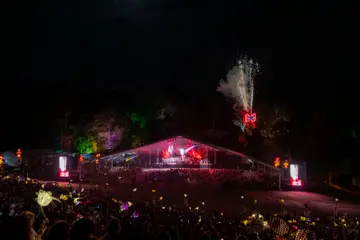
What they introduced to Australia were the fresh ideals of the US counter-culture. They staged the very first open air festival in Australia, on January 24 and 25 in 1970. It was just five months after the famous Woodstock festival.
The festival was officially titled Pilgrimage For Pop. But it’s commonly known as the Ourimbah Festival because it was held in a 600-acre farm in Ourimbah, on the NSW Central Coast, which belonged to a Lieutenant-Colonel in the army.
The festival was a hippie haven, drawing 10,000. Blissful kaftan-wearers checked out stalls selling incense, candles and organic food, finding creative ways to escape the summer heat, and listening to Thorpe & The Aztecs, Tamam Shud, Jeff St. John & The Copperwine, and Tully.
Cops who stood out for being the only ones with short hair and grinned when the Nutwoods’ songs dropped f-bombs. Locals on horses rode the farm’s boundaries to keep fence-jumpers out. One would-be capitalist arrived with 30,000 cans of Coca-Cola to sell.
Nutwood Rug Band and their manager later set up a company which introduced more counter-culture to Australia.
Calling All Nations
58 years separated proud Kamilaroi man The Kid LAROI becoming the inaugural First Nations artist to top the US Billboard charts and proud Yorta Yorta man Jimmy Little reaching a milestone by topping the Australian charts in 1963 with Royal Telephone.
Little had been pushing open doors before then. In 1958 he recorded the first song written by, and about, a community member, Give The Coloured Boy A Chance. Not long after he was the first local black entertainer to be on TV.
In 1962 Georgia Lee upped the ante for First Australians by releasing an album, Georgia Lee Sings The Blues Down Under.
In 1980 No Fixed Address, generally attributed to becoming the first Indigenous rock band to attract white audiences, made a movie Wrong Side Of The Road which featured an all-indigenous lead cast. It was inspired in parts by drummer Bart Willoughby’s time as a street kid.
Another former street kid, Ruby Hunter, became the first Aboriginal woman to sign to a mainstream record label and, in 1994, the first to record a solo rock album Thoughts Within.
Hooked On A Feeling
In the 1970s, top Australian artists complained about one-sided record deals, and how companies were sticking to royalty rates of 5% to 15% but not offering the large advances UK acts were getting.
In 1974, the Skyhooks’ star was definitely in blow-up mode. They knew their worth and, revelling in their brats-out-of-hell image, went out to squeeze the best deal possible.
Their manager, Michael Gudinski, was also their publisher, booking agent and record label. They had to ensure they got top treatment from him.
Gudinski, a tough negotiator himself, groaned that negotiating the Skyhooks deal was the hardest he’d done. Part of the problem was that the band, especially leader Greg Macainsh, loved to create a confrontation for the sake of it.
Gudinski said in Jeff Jenkins’ book Ego Is Not A Dirty Word: The Skyhooks Story, “Greg was genuinely fascinated by the whole thing. He was right into mind manipulation and mind games and power trips and all this sort of thing.”
Their deal included a “Skyhooks Clause” where the label had to inform the act in writing a month before that they were picking up the option. The “Skyhooks Clause” was included in all of Mushroom contracts.
Ironically Mushroom accidentally forgot to pick up the ‘Hooks option in time. They gleefully fibbed to Gudinski they were going elsewhere.
Macainsh told Jenkins: “Playing the options clause ploy was more important than Skyhooks in a way. We had to teach him. And it was real nose-to-nose, toe-to-toe brinkmanship. It said something about the type of people we were.”
The Skyhooks’ approach of being hard-assed in negotiations and refusing to accept “that’s how the industry works” would become handy in the 1980s and 1990s when the next gen started to sell big worldwide and needed to negotiate hard.
Love That Strine Accent
The accepted rule in the Australian music industry is that to crack the world, you needed to live overseas. It makes sense to be in the same time zone as the people who make crucial decisions about your career.
But major exceptions showed it was possible to have success by touring abroad while remaining in Australia. In 1965, The Seekers had two #1 hits in the UK and one in the US.
Between 1976 and 1985, Little River Band had ten Top 20 singles and three Top 20 albums, selling 30 million records. Air Supply had eight consecutive Top 5 hits there. Men At Work’s debut album Business As Usual was the first Aussie-made record to sell 1 million Stateside.
Country Loads
In 1999, there was little crossover between country and rock audiences. Each genre had its own trusted and true way of marketing.
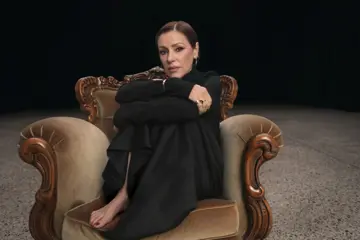
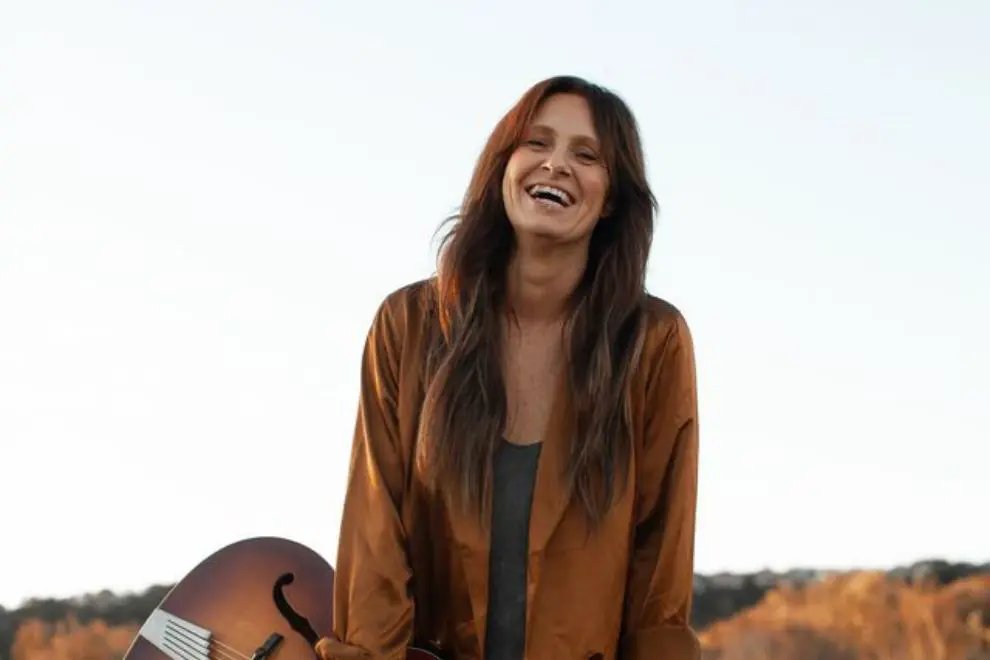
But for Kasey Chambers debut solo album The Captain, the head of EMI Records Australia who came from the UK tried a new tack. It was marketed as a rock record. It sold 200,000 copies, unprecedented for a local country records. Follow up Barricades & Brickwalls shifted close to 500,000.
It opened up the rock market and mainstream radio to a new generation of country singer songwriters.
It also saw young urban music fans reach out to country music’s simplicity and story telling megawatt. Result: by 2025, the Australian country music was valued at $1 billion and no longer a “fringe” genre to city slickers.
This piece of content has been assisted by the Australian Government through Music Australia and Creative Australia, its arts funding and advisory body