 William Crighton Profile
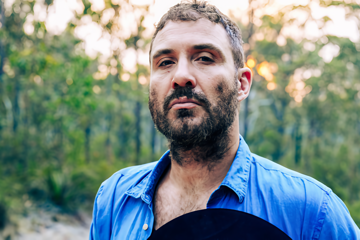
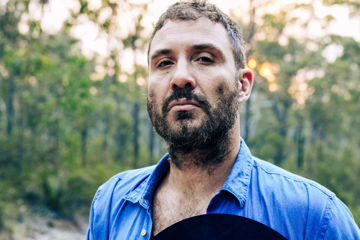
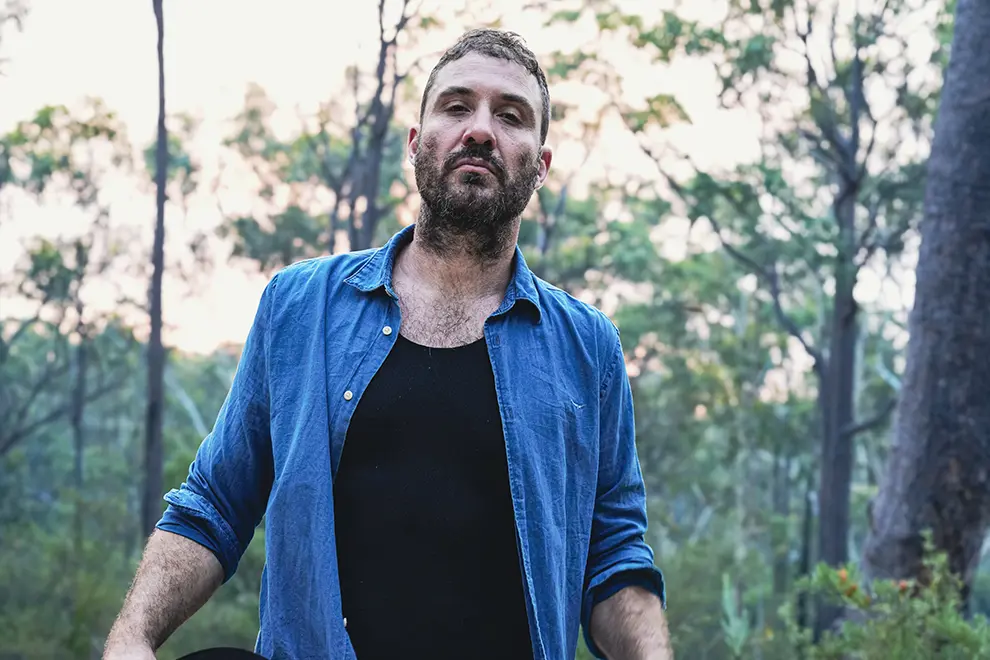
William Crighton Zooms in from his home studio in a semi-rural town in the City of Lake Macquarie, New South Wales. In the background, we see a drop sheet covering what looks like a console and a row of neatly coiled cables nailed vertically to a wall.
“We have the bush just opposite us here,” Crighton says, gesturing over yonder through the windows behind him. “It stretches on for hectares and hectares – hundreds of hectares – so we spend a lot of time in the bush.
“We often ride or go for walks through there. It’s important to connect, but then also trying to remember that no matter where you are, you’re a part of it. Whether you’re in Sydney in a skyscraper or in the middle of the bush, you’re still part of it.”
Colonial Drift, Crighton’s career-defining latest and fourth album, stands for environmental stewardship and honouring First Nations wisdom. The record’s “central idea”, according to Crighton, is as follows: “no matter where you’re from, you can connect to a place if you’re listening to it, and if you have the respect to listen to it.”
“An Uncle that I hang out with a bit says, ‘When you go bush and the place means something to you, you might leave and then start thinking about that place, which means that place is thinking about you, too’,” Crighton continues. “It’s a wonderful way to look at it.
“When you first walk into the bush, you’re kinda like, ‘Oh, there’s not much going on,’ you know? But then if you just look at where you're standing, there’s a whole world going on, under your feet and your skin. And with the grass, with the ants, with all the insects and birds above you. It just [depends on] how much you’re willing to listen and look – that's the spectrum of it. How deep it goes, is up to you.
“There’s a lot of wisdom within Aboriginal culture that potentially wider Australia – we don't listen to enough, you know?” he continues. “But it’s there. And the whole idea of having a relationship with this place is so important and integral to it not destroying us.
“Mother Nature will teach us some hard lessons, but if we're listening – no matter if you're in the city or in the bush – it's the same thing; we're all a part of it. So just having that realisation and moving forward with that mindset is how we wrote a lot of these songs.”
Crighton perfectly captured Colonial Drift’s essence in a recent Instagram post, describing it as “...a swag of songs inspired by my relationship with my big beautiful land. Things like Aboriginal lore and wisdom, colonial and convict history and the continuous fight to keep the bush healthy and the old growth forests off the back of semis and out of wood chippers.”
Throughout his latest set, visual lyrics are infused with a strong sense of place. While listening to Murrumbidgee, you’ll feel like you’re casting a line beside Crighton during a riverside fishing trip, “making damper on coal, drinking billy tea”.
Rolling thunder, ghostgum shadows, emus running, hungry eyes, distant whistling, ancient riverbeds that won’t forget – Further Down The Road, the record’s lead single, awakens all of our senses. “Is anybody out there?/ Further down the road,” Crighton almost-whispers. Then the chorus signals an extreme vibe shift: “Fire in the sky, feet in Maralinga/ If I work another day in this pit I’ll pull the trigger/ I’ll never get a night’s sleep, I gotta find some peace…”
Drift 1, the album’s opening sound collage, sets the scene: cockatoos screeching, “A top of 51 degrees celcius, that’s an all-time record for Australia,” an Indigenous elder’s voice (“shame on you”), surfing radio stations, “We’re all people, we’re all the same… we bleed the same blood, ay?”, a motor engine struggling to spark.
Colonial Drift is broken up by two further interludes (Drift 2 and Drift 3), which encapsulate many of the record’s main themes.
“The way that it's broken up, the groupings of songs sort of paint the picture of the drifts as well, without going too deep into the concept behind it,” Crighton enlightens. “For me, I just wanted to paint those pictures of what was happening during our time living through the making of this album…
“But with a wider lens, more so painting the absurdity of life, you know?”
Crighton says he “certainly enjoyed” creating these “drift elements”: “I’d worked on a few soundscapes before and I kinda got the bug for it, because I love the non-musical storytelling of it. I put a few songs in there from different friends and my daughter Olive, too. And the lyrics to those songs fit the story I was trying to tell.”
Some of the other “little snippets” Crighton incorporated into these drifts preserve milestones from his own life. You’ll hear “a snippet of a speech, or of a poem, that Uncle Jack Thompson read on [Crighton’s] birthday” and “a little musical interlude from John Schumann [Redgum’s lead singer], when he came into the jail – the program that Jules [Crighton, his wife and creative partner] and I run in the jail.”
He’s referring to the music lessons the pair run at The Hunter Correctional Centre, a maximum security prison in Cessnock. Through this program, they mentor inmates who are interested in singing, songwriting, music theory, and band performance.
William and Jules met as teenagers, when they both competed in the same talent quest at Tamworth Country Music Festival. But they didn’t become a couple until just after she turned 18, Crighton confirms.
“Then we had Olive when Jules was 19 and I was 23. And we've got another two kids now. So we've been together for nearly 20 years. Here she comes!”
Julieanne enters through the back door – her ears must’ve been burning! “We were just talking about ya,” Crighton confesses, before making introductions. She pauses to wave before continuing on her way and disappearing out of view.
Since they spent a good part of their twenties living in America, chasing their musical dreams, we can’t help but wonder whether this time spent living abroad intensified the urge to write songs about their homeland.
“Definitely,” Crighton allows, nodding. “And I think we both started out with our music – I know I did – singing about this place [Australia]. And then in my later teens – you sorta get told, ‘You've gotta go to America, you've gotta go suss it out,’ and, ‘That's where all the real stuff's happening,’ and all that sort of garbage.
“So we went over there and we had some awesome experiences, and we got to meet some lifelong friends and be exposed to an incredible level of musicianship, and a way of doing things that definitely went into the fabric of what we do.
“But I remember this moment when we had the choice to stay in America or come home,” he adds. “We didn't want to have our second baby there and raise kids there, either. But it inspired us to come home and tell stories here, you know. And tell stories that we're close to, here, through an Australian lens.”
Julieanne co-wrote many songs on Colonial Drift. “We worked on the lyrics together a lot and so I lose sight of who wrote what,” Crighton shares. “But I remember when we were working on Australia – that came about in a day. I'd had that idea – “the Australia I know” – and the melody and a few lines, and then we wrote the rest of that together.
“And the same with a lot of the songs on there, we’d conceptualise the songs and then go back and forth with the lyrics ‘til we got the ones that told the story the most. We're very lovingly critical of each other’s work, so we find the story is the most important thing. She really stepped it up on this album, too.
“For instance, she wrote most of the lyrics in Warzone’s verses after we conceptualised them. I was leaning more into the production side of it, and melody and things, and so on. That one, I remember her handing me a bit of paper and the first two verses were there. We'd had an idea of what we wanted to write about and had thrown a few lines around, but “I just remember feeling, ‘Wow, that's pretty awesome stuff!’ – worlds in verses,” he notes. “She's a great lyric writer. So between the two of us and Rob Hirst, we were the main lyric writers on this album. Rob worked on Horizon and Warzone with us and the rest were lyrics from Jules and I, pretty much. Except for a couple of songs, they’re all Jules and I.”
One of the record’s most rock’n’roll moments, Horizon features stirring, recurring lyrics: “More money in mud than dust.” Warzone – a standout track – is a rallying call to action (“This is not a warzone, this is my home!”), which timestamps where we’re at right now, culturally: “We got a Woolies on the corner and a KFC/Tiny phones and big TVs/But there’s a part of the sky we can’t get back…”
Crighton recalls, “We heard of [Hirst’s] passing, Jules and I, and we were about to begin recording the Warzone film clip. So that was an emotional time, because we were hearing his voice over and over and over again as we were recording the film clip. He'll always be with us, in one way or another.
“We'd been texting up until a few weeks before that and I last saw him back in November, I think. He was a lovely, lovely man and had a big impact on us, that's for sure. And his contributions to music won't be forgotten, ever, in Australia, I don't think.
“He's been a massive influence on me and I've learnt so much from him, both from a writing perspective and just a general positivity – in the sense that he lights up a room, and he takes control of a room, just because of his positivity and his skill. And so you just want to strap yourself in and enjoy the Rob Hirst experience, you know?”
Crighton smiles fondly – like he’s reminiscing about Hirst’s warm, welcoming presence – before adding, “Yeah, he was a massive loss for Australian music and as a person. I don’t think there’s a person he met that he didn’t inspire. But he’ll live on in spirit.”
When asked how the late, great Hirst first entered his orbit, Crighton recounts, “It was about eight years ago at Woodford [Folk Festival], actually. I'd finished a show that I didn't know he was at, and then I was signing some CDs. And right at the end of the line – he’d waited the whole time – was Rob Hirst! I couldn't believe that he had waited to buy a CD from me.
“So we had a yarn, and then from that point on we were mates. And he was a mentor of mine for that whole time, you know? I’d always send him songs I was working on and he'd give me some good feedback, and then that culminated in us working pretty closely together on a few songs on Water & Dust [Crighton’s previous, ARIA Award-winning record, which dropped in 2022].
“Then he and Jim [Moginie, Midnight Oil’s founding member/lead songwriter/multi-instrumentalist] invited me out to tour with the Oils for their last tour through Europe and whatnot. And over that journey, [Hirst] was saying, ‘It'd be great to write something for your next record.’ So when the tour was done, we got together. He said, ‘I've got these few starts with you in mind,’ and so we went backward and forward to his place over about the length of a year and finished them.”
As well as Crighton’s home studio and The Grove Studios on the NSW Central Coast, Colonial Drift was also recorded in Moginie’s Oceanic Studio in Sydney’s Northern Beaches.
The record’s closing couplet – Beautiful Country and Peaceful Land – both feature William Barton’s vibratory yidaki playing, which resonates like watchful spirits reminding us we’re never alone. “He contributes a huge amount of emotional depth and weight to anything he does,” Crighton praises, “so it’s a big honour to have him on Beautiful Country and Peaceful Land.
“Beautiful Country was recorded in this studio here where I’m sitting. I really wanted to get him on a track. He was hanging out at home and I said, ‘I’ll show you this track, I’d love to get you on it,’ and so we had a listen and he was up for playing on it. We’d looped the track just so we could play and we could get the bits that fit perfectly for the song or whatnot. But he transfixed us so much that we forgot that it was looped and kept going. And he was playing for about 12 minutes,” Crighton trails off laughing before pointing out, “The song’s only four minutes [long]!
“We were all just so taken with what he was playing, you know?” he continues. “We're sitting back listening to him playing in the headphones and whatnot. And then he stops and he puts down the yidaki – and he’s a bit puffed – and he looks at us and he’s like, ‘How long is this track?’ He might’ve thought we were taking the piss out of him, but we were definitely just listening.”
Another album highlight, Poor Ned, is an ode to Australia's most notorious bushranger. During this track’s cooked synth breakdowns, we can totally picture Australia’s most famous bushranger being chased through the bush by cops, bullets pinging off his homemade armour while he returns fire with a rifle.
“I'm glad it painted that picture, ‘cause it would send you wacky, I think,” Crighton smiles, referring to Ned Kelly’s outlaw antics. “We wanted to reflect that. So that sound, it was on a Prophet synthesiser and it was doubled with an old – I can’t remember the name of the organ, and manipulated.
“I think it fits into the bush psych label that's been given [to Crighton’s music]. I guess you could call it roots, too. But then we also use a lot of synths and electronic stuff as well, so that kind of leaves that out. Yeah, bush psych seems to work.”
So how did Crighton’s customised genre classification come about? “People would ask me all the time how to describe the music and I never had an answer for them,” he explains, “and then that name just popped up. I can't remember if I said it or if Jules or someone else said it, but however it came about it stuck. And it just enables us to have as wide a lens as we want to with the soundscape of things. We're not constricted by any one genre or anything, we just wanted to create our own space to live in.”
When asked whether he’s clocked his previous albums filed under unusual categories in record shops – ‘World Music’, perhaps? – Crighton chuckles, before admitting, “Yeah, it's been in World Music before and it's been in Country, it's been in Rock, it's been in Alternative.
“I don't think there'll be a bush psych section in a record store anytime soon, but there might be!”
William Crighton’s Colonial Drift is released on Friday, March 20th. Tickets to his upcoming tour are on sale now.
William Crighton – Colonial Drift Album Tour
Saturday, April 11th – Old Museum, Brisbane, QLD
Friday, April 17th – Lion Arts Factory, Adelaide, SA
Saturday, April 18th – The Rechabite, Perth, WA
Saturday, April 25th – The Gum Ball, Lower Belford, NSW
Thursday, May 7th – Theatre Royal, Castlemaine, VIC
Friday, May 8th – Howler, Brunswick, VIC
Saturday, May 9th – The Sound Doctor, Anglesea, VIC
Wednesday, May 20th – San Fran, Wellington, NZ
Thursday, May 21st – Tuning Fork, Auckland, NZ
Friday, May 29th – La La La's, Wollongong, NSW
Saturday, May 30th – Crowbar, Sydney, NSW
This piece of content has been assisted by the Australian Government through Music Australia and Creative Australia, its arts funding and advisory body