 Olivia Rodrigo Profile
Ever since concerts have existed, there have probably been attendees ruminating on how the behaviour of other audience members has changed over time.
Sure, that may be a little bit silly, but that is to say that the contentious topic of how to act in a live music setting is far from a new one.
In fact, any music fan will likely have their own horror stories of how the behaviour of another audience member ruined their experience, or how it at least affected it in a less-than ideal way.
This could be something small, – as simple as the person next to you talking throughout your favourite songs, or it could be as large as the effects of a night spent on high-priced drinks making itself far too present on you, your shoes, and the already-sticky floor around you.
But there's a crucial set of rules that every punter should abide by when they head to a gig to ensure everyone around them has a good time, and by all accounts, those rules have largely been forgotten in recent years.
They may sound alarmist, especially when you consider the many opinion pieces that have been written claiming that the COVID-19 pandemic resulted in a drop in concert etiquette, but it's actually a proven phenomenon.
Wikipedia itself has an entire article on the topic of concert abuse in the current decade, positing causes such as the rise of parasocial relationships in the social media age and a number of years spent with much of the world in lockdown.
Interestingly, by utilising Google Trends data, we can actually see that the past decade has featured growing interest in how to behave at concerts.
In a graph of search interest over a specific time period, Google Trends shows the data on a relative scale from 0 to 100: zero suggests insufficient data, 50 indicates half the popularity, and 100 signifies the peak interest during a time period.
Looking at certain search terms, we can see recent years showing a noted interest in the rules and behaviours of live shows.
In the past two years, we've seen a broad term such as "how to act at concerts" going from a score of 0 in September 2024 to a peak of 100 in December 2025. It's ebbed and flowed before and since, with the gradual decline rising to 40 back in April.
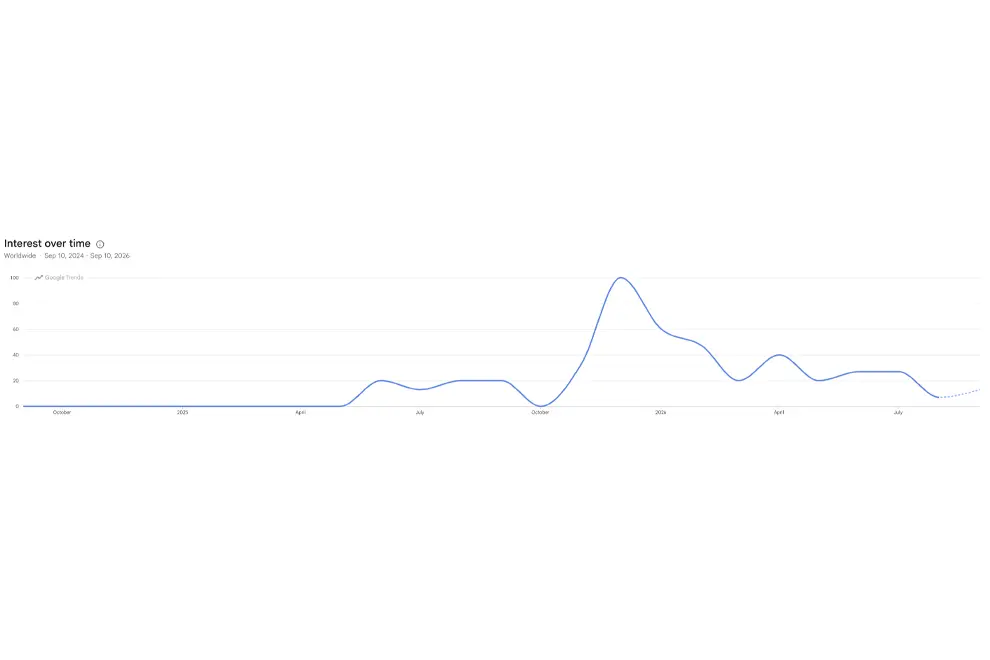
Google Trends searches for "how to act at concerts” between 2021 and 2026.
But it doesn't end there. Let's take a look at an interesting series of search terms from the past five years.
Terms like "bad concert behavior" and "gig etiquette" remained at a baseline of 0 until August 2025 when they both zoomed up to 38.
Both terms would go up and down over the next year, with "bad concert behaviour" hitting a peak of 88 in February 2026, and hitting that same limit again in May.
"Gig etiquette", meanwhile, jumped to 75 in December 2025 before rising to 100 in May 2026.
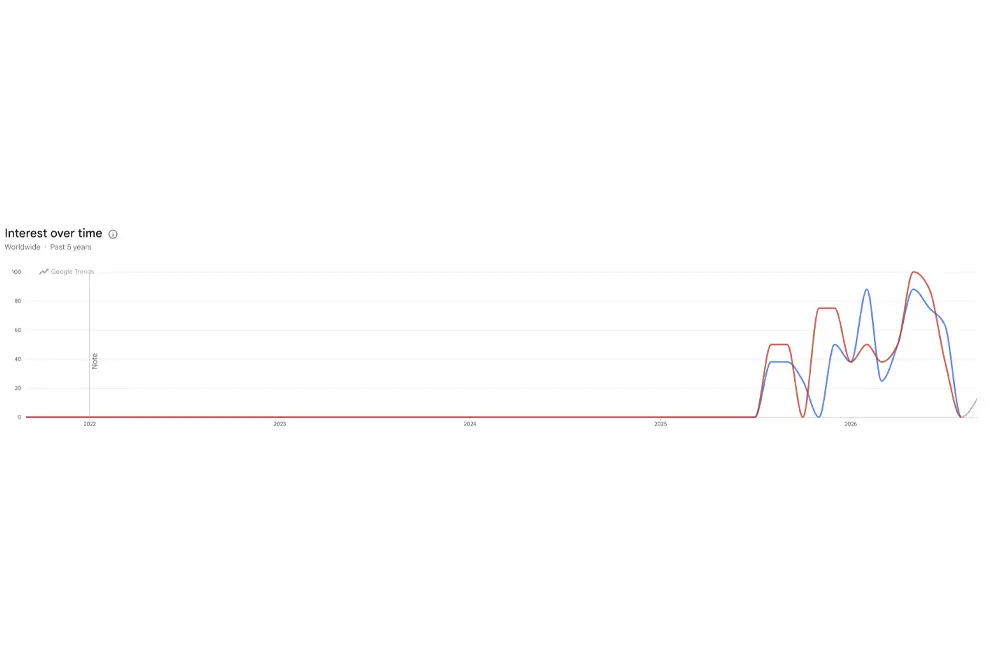
Google Trends searches for "bad concert behaviour” (blue) and “gig etiquette” (red) between 2021 and 2026.
So with this in mind, we've decided to take a look at some of the vital things to remember when it comes to concert etiquette.
But watch what happens when we throw in a term like "concert etiquette" for the same time period. That phrase actually had a relatively stable search presence until July 2025 when it started rising.
It follows a similar trajectory as its comparative phrases, ultimately reaching a peak of 100 in June 2026.
Note that while "bad concert behavior" and "gig etiquette" reached their own peaks around this time, the 100 scale of "concert etiquette" completely overshadows the former terms, bringing them down to a tiny 10 and 12, respectively.
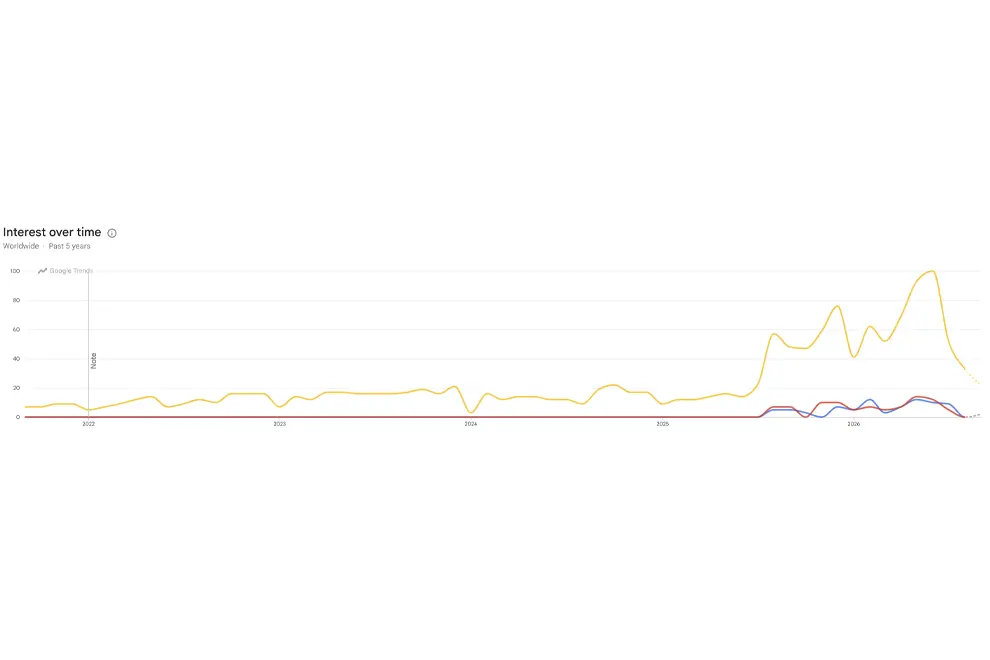
Google Trends searches for "bad concert behaviour” (blue), “gig etiquette” (red), and “concert etiquette” (yellow) between 2021 and 2026.
For more perspective, let's add "concert rules" into the mix. This too features a steady showing until June 2025 when it zooms to a peak of 99 in August, and hitting 100 in December. Another rise up to 95 took place in June 2026 – the same period in which "bad concert behavior", "gig etiquette", and "concert etiquette" reached their own peaks.
By comparison, the former two have a scale of 1, while "concert etiquette" is at 9, indicating just how drastically the desire to learn more about rules for concerts has grown in the last year alone.
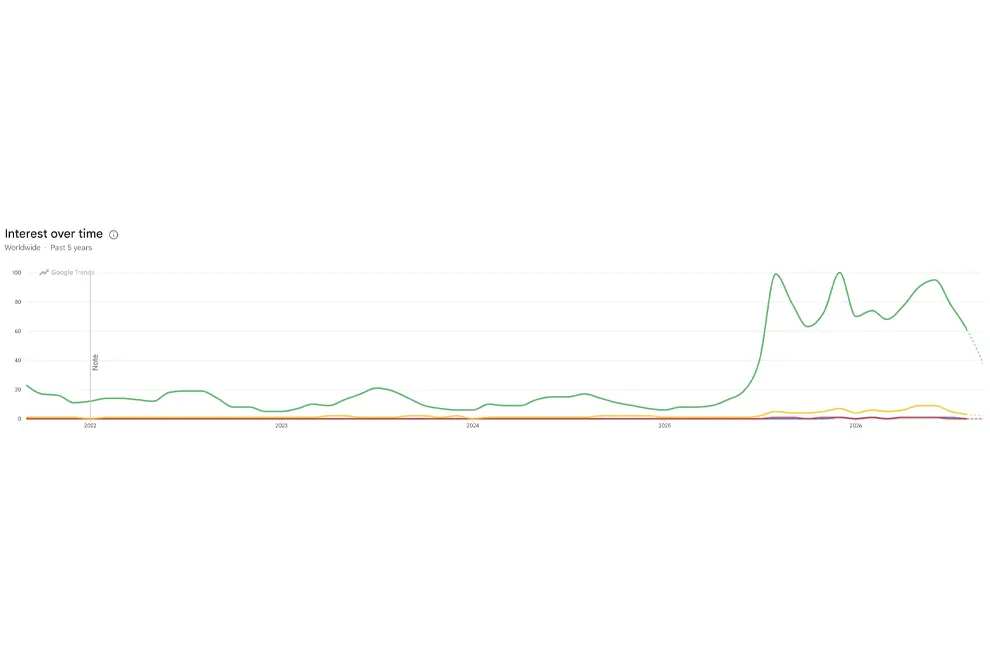
Google Trends searches for "bad concert behaviour” (blue), “gig etiquette” (red), “concert etiquette” (yellow), and “gig rules” (green) between 2021 and 2026.
With this in mind, perhaps it's time to take a look back at some of the rules by which all music lovers should abide by when the lights go down, the crowd surges, and their favourite artists take to the stage?
Pushing To The Front
Any music fan would likely tell you that if they go to a gig, they want to truly be a part of the experience. Often, that means getting as up close and personal with the artist as possible, and to do so, that often necessitates turning up nice and early.
If we're talking about massive international acts like Taylor Swift, you might find folks camping outside for days in hopes of getting a prime spot. If you're heading to a festival, you might find fans of the headliner at the front of the stage as soon as the gates open.
For a lot of mid-level acts, there's probably not a massive need to turn up early, but there's still a desire to shuffle up close when you can.
But that doesn't mean if you turn up five minutes before the headliner takes to the stage that you can simply elbow your way through the folks who have been respectfully waiting since doors opened earlier that night.
Perhaps the better method would be to either turn up early yourself, or simply get as close as you can (in a respectful way) before hoping the general movement of the crowd might filter you closer to the stage throughout the night.
This notion of turning up at the peak time has clearly inspired some fans to do their homework, with the search term "how early do i need to turn up to a show" exploding in popularity over the past year. In fact, it's increased by 5,000% in the past five years, reaching a peak scale of 100 in August (the typical time in which US summer gigs would be held), and having a few new rises since.
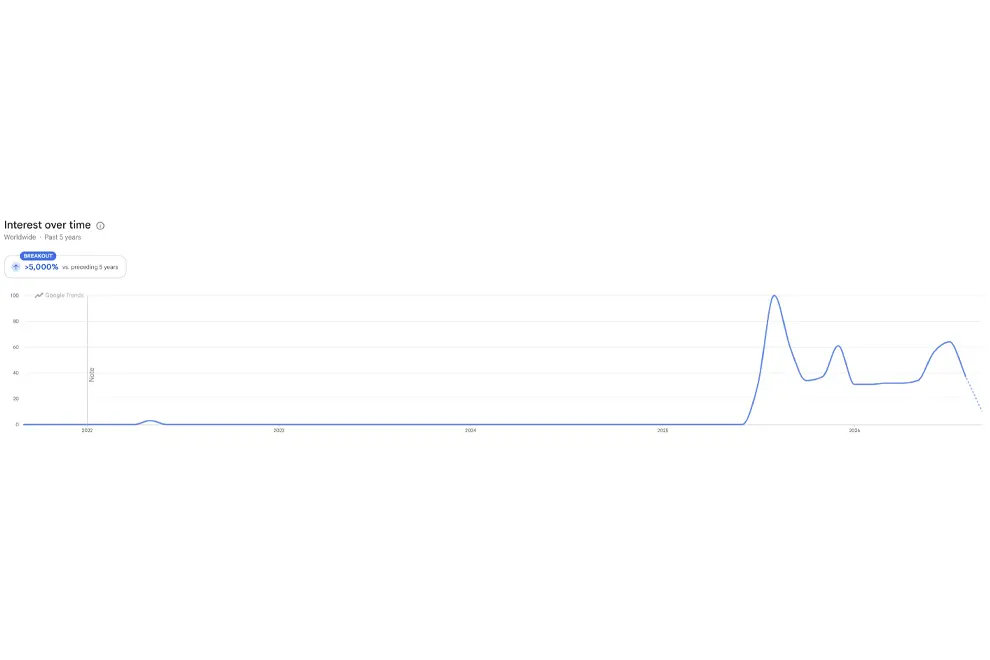
Google Trends searches for "concert arrival time” between 2021 and 2026.
Standing In Front Of Others
On the topic of pushing your way to the front, it's imperative to show some spatial awareness.
Sure, you might be aware that jostling for prime position isn't ideal, but that doesn't mean you should just stand anywhere else in the crowd. After all, there are others in the audience you need to be respectful of, and this also means ensuring you're aware of the space you're taking up.
For example, if you're over six feet tall, being aware of audience members shorter than you is crucial. So wherever you might find yourself, perhaps a quick look over the shoulder should precede you setting up camp just because you've scored a sweet view?
This also extends to seated shows, too. While being seated might cramp your style a bit when you just want to get up and dance, it's vital to remember who you're in front of.
The seats aren't always occupied by able-bodied audience members, and standing up can impede the view of someone who can't respond in kind.
However, it does become a little bit of a gray area when the artist in question requests you stand up, or if waves of attendees find themselves standing up. At the end of the day, just remember to look around to who is next to you, who is behind you, and how your vertical presence may affect their enjoyment of the night.
Looking at Google Trends again, we can see that searches for "standing at concerts" have been relatively up and down over the past five years, but they recently reached a new peak of 100 in December 2025, indicating it's become a bit of a hot topic of late.
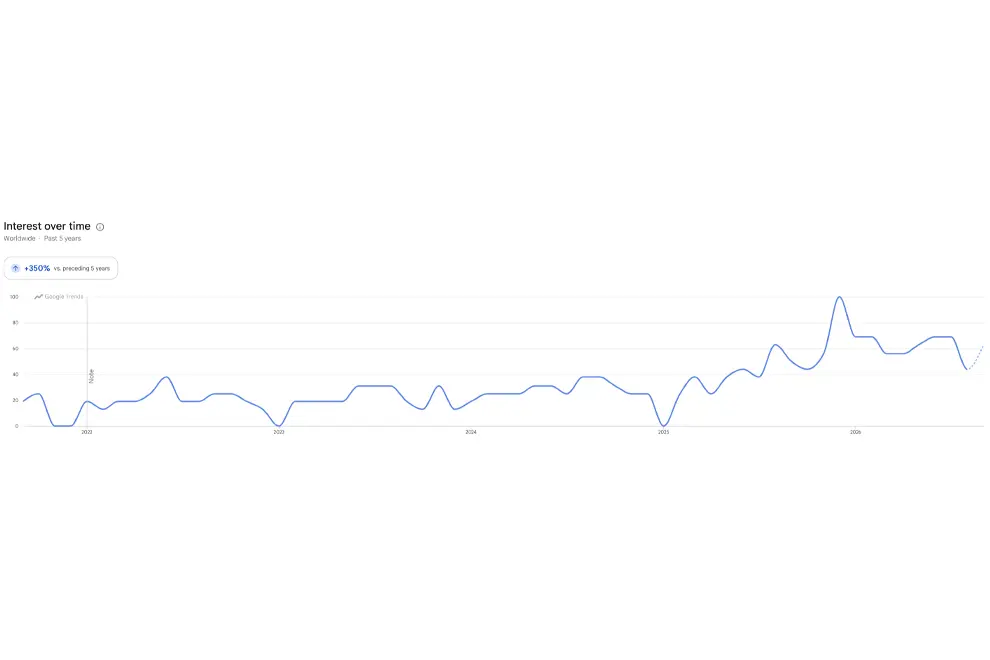
Google Trends searches for "standing at concerts” between 2021 and 2026.
Moshpit Etiquette
If you do find yourself right in the action of a live show, you may just be right in the moshpit.
Arguably the most hectic part of a concert, the mosh is typically found directly in front of the stage, and is usually more popular at heavier gigs, like metal, punk, or rock – though some moshes can show up elsewhere.
But, with so many bodies moving about in close proximity, it's important to remember just how to act. For one thing, personal space isn't quite a concept that is easy to adhere to, but that doesn't mean you shouldn't be respecting boundaries and keeping your limbs where they belong.
Similarly, moshpits operate on a level of communal understanding. Look after each other, pick someone up if they fall down, and call out any bad behaviour that you may witness.
The mosh is also somewhere that is prone to crowd surfing, wherein audience members may vault off the stage onto the crowd, or find themselves lifted by fellow attendees.
While this now means you have to be aware of what's happening above you in addition to beneath and beside you, the rules are the same. Keep an eye out for your fellow punter, support them so they don't fall, and if you see any wayward limbs heading for folks' faces, try and redirect them if you can.
Of course, some venues may also have rules on moshing and crowd-surfing, so if a member of the security plucks you out, be sure to be respectful in order to keep things running smoothly.
This is a very interesting one as well, because over the past five years, there have been noted instances of fans searching for phrases like "mosh rules" and "mosh etiquette" on Google.
There were a bunch of ups and downs for the topics between 2022 and 2024, but in August 2025, the former rose drastically, joined by the likes of "mosh behavior".
"Rules" and "etiquette" reached respective peaks of 80 and 30 in May 2026, while "behaviour" was slightly ahead of the curve, hitting its peak of 50 the month prior.
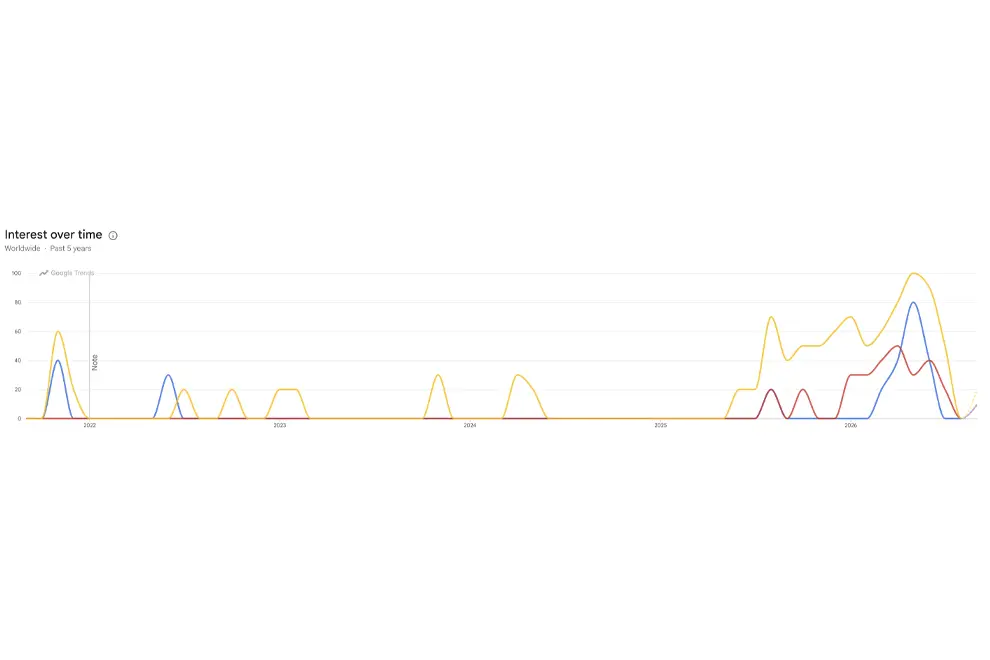
Google Trends searches for "mosh etiquette” (blue), “mosh behaviour“ (red), and “mosh rules“ (yellow) between 2021 and 2026.
Plan Your Bathroom Breaks
We're not going to dwell on this one too much, but related to mosh behaviour, if you need to go to the bathroom, well, a prime spot in the crowd isn't worth what could happen if you don't excuse yourself to a private stall.
We've seen stories of acts like Devilskin and Morgan Wallen wherein their fans decided that relieving themselves in public was better than the alternative.
Artists like Olivia Rodrigo and Noah Kahan have since gone on record to ask fans to keep that behaviour private, and frankly, they shouldn't even have to ask.
Don't Be A Nuisance
Ensuring the safety, view, and general respect of other patrons' bodies at a gig is something that should be at the top of every concertgoer's list, but equally important is ensuring you're not bringing down the vibe of the night.
This extends to simple things such as not talking too loudly. Remember, when a concert is underway, the audience is there to see and hear the artist, not you.
This means that if a song is being played, you shouldn't be louder than the music, and if an artist is talking, you shouldn't be.
Of course, extenuating circumstances do exist, and if an artist asks you to make some noise, well, you better believe there's an expectation to raise your voice. But perhaps the middle of an emotional acoustic number isn't the best time to start asking your friend about their day?
Similarly, this sort of loud or unruly behaviour can also be exacerbated by the consumption of alcohol at a gig. Remember that while you're there to have a good time, so is everyone else, so it's important to know your limits, to not drink too much, and to ensure that your decision to knock a few back doesn't impede the experience of your fellow punter.
This too is a perennial topic of discussion, with Google Trends showing it's been up and down in terms of popularity across these past five years. In June 2025, it hit a peak of 100, and interestingly, its lowest periods since are only slightly less than its peaks prior to 2025.
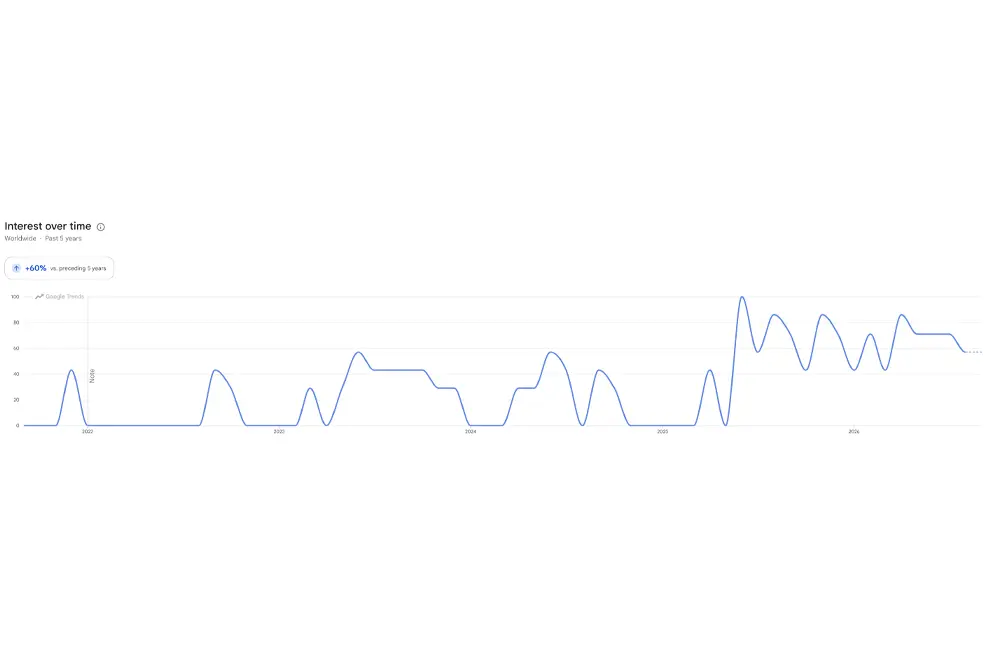
Google Trends searches for "talking at concerts” between 2021 and 2026.
Throwing Things
On the topic of not being a nuisance, something we thought we'd never have to say is "don't throw things onstage".
Sure, there are some relatively inoffensive instances in which this is somewhat okay, but when it comes to large, heavy objects, we can't believe this has to be said.
Famously, David Bowie once took a lollipop to the eye, and since then, it's only gotten worse. In fact, this year alone, we saw Riley Green and Oli Sykes of Bring Me The Horizon hit with phones thrown by fans (resulting in bleeding and a concussion, respectively), and one fan also recently threw a folding chair into the audience of a Treaty Oak Revival show.
It probably goes without saying that when something is thrown, it'll land somewhere, and if you're chucking it toward your favourite artist, the chances are good they might be injured. So perhaps keep this sort of behaviour for a more appropriate venue?
Of course, Axl Rose is also guilty of this, so perhaps it's not just fans who need to heed this advice?
Calling Out Requests
This one might also fall into the category of not being a nuisance, but it's such a frequent occurrence that it deserves a special mention.
As an audience member, it's important to remember that the floor is not yours. So when it comes to the gap between songs, you don't need to be using it to call out your requests.
For one thing, the chances are good that the artist cannot hear you anyway. Secondly, a lot of setlists are planned in advance meaning that it can be difficult to deviate from a planned batch of songs – especially if there's lighting involved.
Thirdly, just because you love the last track on their first EP from 30 years ago, doesn't mean the band wants to play it.
And also, if it's their biggest hit, the chances are good they're going to play it anyway, and if they do, it'll be in the encore section.
This, of course, changes if it's an all-request show, if there's a bit of fun being had, or if the vibe is right.
But this is all to say that if you're heading to a gig and thinking about how hilarious you'll seem when you call out "Freebird!", maybe reconsider? (Or save it for the encore section of a Lynyrd Skynyrd gig, because they might just oblige… regardless of if they hear you or not.)
Calling Out For Shoeys
Like them or loathe them, the shoey – that is, the practice of drinking alcohol out of a shoe – appears to be here to stay.
It might be a novel concept, and one that can unite the crowd together in some bizarre sense of national pride (however disgusting and unhygienic it may be).
There's not much to say here, largely because it'll likely be the artist on stage doing the shoey, but if you're a punter, perhaps it's best to not yell out a request for the musician to do a shoey if they don't seem into it.
Call us old-fashioned, but very rarely has someone who seems disinterested in drinking liquor from their walkin' gear been convinced by a loud Australian in the middle of the mosh.
Of course, it can happen, but this again is a solid case of reading the room, and the interests of the performing act.
Using Your Phone
In theory, this one could potentially have been included in a prior category, but it's such a large one that we may need to give it its own focus.
There's no denying that phones are a ubiquitous part of our collective lives, but that doesn't mean they have to be the star of the show.
Firstly, phones are most frequently used at shows for taking photos or video of the event in question. And that's perfectly fine – no one is going to fault you for ensuring some memories of the night are kept.
But moderation is crucial. A few snaps here and there are great, and the same with video. But filming entire songs might not be the best move, and this harkens back to our topic of respect for those around you.
Remember that while you might have a great vantage point with which to take some videos, the person behind you might now be forced to experience the show solely through your phone screen.
Even more egregious is when we start seeing folks turning the camera towards the action, not to film, but to share video for their friends on a video call. Suddenly, the person behind is forced to watch the excited reactions of someone they don't know while they themselves are unable to witness the action.
When it comes to taking lengthier videos of a live show, always ask yourself one important question beforehand: will you actually watch it back at some point?
Similarly, if you're taking photos or videos in moderation, that's completely fine, but reading the room is also important. Perhaps turning down the brightness of your screen so you don't blind the person behind you could be a good move?
Or, if you're sitting in a darkened venue, keep in mind that your screen may be far brighter than your surrounds. Sure, you might have a great, well-lit view of what's going on in the world of Facebook, but the sudden beam of light emitted by your phone now means your gig neighbours are now able to join you in reading your private messages.
Folks have clearly had strong thoughts on phones at gigs for some time however, with once again, the topic of "phones at concerts" being quite popular until June 2025, when a new peak of 50 emerged. It would hit a peak of 100 in January 2026, just a month after the relatively nascent topic of "filming at concerts" shot up to 50.
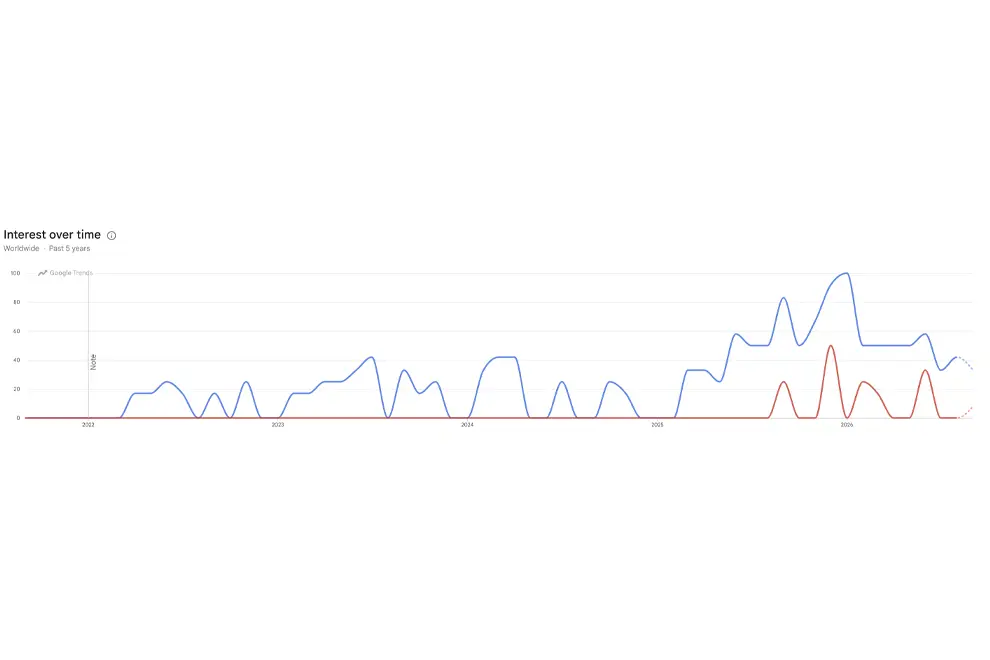
Google Trends searches for "phones at concerts” (blue), and “filming at concerts“ (red) between 2021 and 2026.
Lastly, we've noted a rise in the popularity of setlists being shared online. That's not a problem, but if you're checking the setlist during the show to either know what's next or when you should plan your bathroom break, don't be quite so obvious.
This isn't necessarily a major faux pas, but it's important to remember that if you're looking up a setlist in the open, your fellow punter might also be able to see it when they've actively been trying to avoid it. Imagine if you went to a movie and found your seatmate looking up how it ends.
Sure, it's not quite the same, but a little respect goes a long way. Plus everyone already knows Limp Bizkit will close with Break Stuff – after all, they opened with it, too.