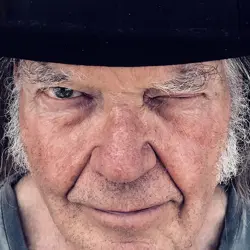
 Neil Young Profile
In 2010, this writer was studying a Bachelor of Commerce (International Business) at Adelaide University when their Microeconomics tutor burst into a Tuesday morning class with a novel way of teaching his students about the law of diminishing returns.
Armed with a pack of Tim Tams (regular flavoured, for those interested), he asked for a volunteer, and swiftly requested the forthcoming student to start eating the whole packet.
As that student gradually went from hungry to satiated, and then onto visibly uncomfortable, the tutor sat back and reflected on what he'd effectively demonstrated: too much of a good thing can soon become a bad thing.
While this was – for most students gathered there that morning – a rather inconsequential (and novel) lesson, it would be a moment that this writer kept revisiting, long after Adelaide University faded in the rear-view, and concert reviews (thankfully) became the main focus.
Why, you may ask? Well it was here when the strange tradition of artists double-dipping in their live sets became a strangely common occurrence.
Let's back up for a second. Firstly, the vast majority of music fans have gone to at least one (or multiple) live performance in their lives. Therefore, it's probably common knowledge how a live show goes.
Typically, the artist in question will deliver a performance leaning heavily on their back catalogue, with a bit of a focus on their recent output. It might change depending on the stage of the artist's career, if they're revisiting a classic album, trying out new material, or myriad other factors.
However, the chances are pretty good that these performances will typically include only one run-through of each track. This might change occasionally, depending on whether there was a false start, a musical malfunction, or someone forgetting lyrics – it happens.
But normally, you aren't going to hear the same song played a few times in the same night.
Well, 'normally' is doing some heavy lifting there, because under rare circumstances, you might find these artists offering multiple renditions of the same song on the same night.
In fact, there's a few times when such an undertaking has actually made the news.
Back in May 2017, Travis Scott was out on his Birds Eye View tour when he dipped into The Criterion in Oklahoma City. After 18 songs, fans likely figured the show was about to come to an end given that most stops on that tour lasted 20 songs on average.
However, after Scott played goosebumps, he decided to play it again... and again... and again, until the track was performed a total of 14 times.
A week later, Scott played Cleveland's Jacobs Pavilion where he played the song 15 times, setting what he claimed was a world record.
At the time, Scott's fans had believed it was an attempt to better a showing from Jay-Z and Kanye West, whose collaborative album Watch The Throne had spawned the enduring hip hop classic, Ni**as In Paris.
In June of 2012, the pair's touring took them to France three times, where – on June 1st – they played the Palais Omnisports de Paris-Bercy and wrapped up their main set with an encore of that same song.
The following night, they did the same, and then weeks later on June 18th, they returned to the venue, where they played the song 12 times in a row. For those counting, that's 34 performances of the song across three live shows.
More recently, in October 2024, Mk.gee played Minneapolis' Uptown Theater where he closed his main set by playing his song DNM ten times, before offering some respite with the song Are You Looking Up. Returning for an encore, he treated fans to Alesis before playing DNM twice more for a total of 12 times.
However, these are small potatoes compared to one famous show from The National in May 2013, where they performed at New York's Moma PS1 gallery in collaboration with artist Ragnar Kjartansson.
This was, of course, an artist exhibition, so it's not surprising that the event (dubbed A Lot Of Sorrow) consisted of The National performing their track Sorrow 105 times over the course of six hours.
For those wondering, they did play an encore. No points for guessing which song was played.
Needless to say, this sort of behaviour might be a little weird to the average punter. After all, imagine this was your first live experience and you heard these songs repeated ad nauseam. Would you be eager to return to a live show, just in case you believed it normal for sets to be conducted in this manner?
Likewise, what if you're a diehard fan? You might consider yourself lucky to be part of this musical outlier, but likewise, you may feel a little bit hard done by.
You might wish you'd spent your hard-earned money on a live show in which more musical diversity was on display, or you might even be taken in by the atmosphere of the experience, revelling in the in-joke of it all and growing to love the song in some sort of sonic Stockholm syndrome.
Or, it could go the other way and result in some purgatorial, Sisyphean experience. After all, how are you going to feel after 12 performances of Travis Scott’s goosebumps, unaware of when this experience may finally come to an end? Are you walking out? Toughing it out in hopes of something better on the horizon?
Perhaps it's worth asking why artists have done this before, too. In that case, the answer is a little harder to pin down.
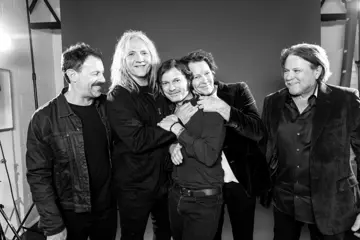
There's a famous example of the great Neil Young partaking in the experience back in 1973. At the time, Young – who is rather noted for taking a seat-of-his-pants approach to setlists and the live format – was riding high on the success of his Harvest album from the year prior, which has since been considered one of the greatest records of all time.
In mid 1973, he'd just wrapped recording of his Tonight's The Night album (which, it's worth noting, opens and closes with two versions of its title track), and he was hitting the road with his backing band, the Santa Monica Flyers.
During the tour, the massed crowds, who were likely eager to hear Harvest, were instead treated to a performance of the then-unreleased Tonight's The Night album. As they applauded for the songs they'd never heard before, Young would then tease them by saying "Here's a song you know," before playing Tonight's The Night all over again.
On average, the song was played two to three times a night, and the record itself didn't see the light of day for another 18 months, by which point Young was presumably terrorising crowds with multiple renditions of a different song.
Just a year prior, Led Zeppelin's 1972 North American tour saw them play the Seattle Center Coliseum for two consecutive nights. On the second show, they debuted Dancing Days, which would open Side B of their 1973 record Houses Of The Holy.
Apparently pleased with how it went down in the main set, the band decided to close their nine-song encore by giving the track its second airing.
That same set saw Led Zeppelin following the debut performance of Dancing Days with Moby Dick, the classic drum solo performed by the late John Bonham.
Years later, in July 2000, famed jam band Phish offered six separate performances of Moby Dick at their show in Indiana's Deer Creek Music Center. That same set also featured three covers of Argent's Hold Your Head Up.
Similarly, veteran rockers NRBQ were noted for playing a lengthy rendition of Gordon Lightfoot's The Wreck Of The Edmund Fitzgerald to close their sets. After taking their leave from the stage, they would return minutes later, only to play it once again.
In 2018, Vampire Weekend took to Chicago's Grant Park to play the Lollapalooza festival, which – after walking onto the stage to the sounds of AC/DC's Back In Black – opened with the group playing their 2008 single A-Punk three times.
Meanwhile, New York indietronica outfit Joywave have made a habit out of playing their 2015 single Destruction at the end of their set for some time now. It's not uncommon for them to play it twice in a row at sold-out gigs however, with fans referring to such an event as the rather apt Double Destruction.
Of course, there are some times when the reasoning behind playing the song multiple times makes some semblance of sense.
For example, those who have witnessed alternative rock legends the Pixies playing live (such as one their recent Australian tour) might have seen the band performing their classic 1989 track Wave Of Mutilation.
The same year it was released, the group began performing a different version of the song which showcased their surf rock tendencies. With both renditions of the track becoming popular with fans, the original version and the since-dubbed UK Surf Version have often featured in the band's sets on the same night.
Meanwhile, some musical scholars are likely complaining that the term ‘reprise’ hasn’t been mentioned, which is where – in the simplest terms in a musical sense – some material that occurs at the start of a performance is revisited later on, usually toward the end as a way of tying it all together and making it come full circle.
However, this typically refers more to performances which are often more structured, grander, or thematic than your average pub or stadium gig, such as the opera, live theatre, and musicals.
This is why you’ll see the likes of the Trans-Siberian Orchestra closing with a reprise of Christmas Eve (Sarajevo 12/24) despite featuring it earlier in the sets, or jam bands like the aforementioned Phish, or Australia’s own King Gizzard & The Lizard Wizard returning to musical themes throughout their sets, with musical fluidity being a key component.
Elsewhere, full album performances are an instance in which songs being repeated might happen with greater frequency.
In this situation, often bands will be performing their more famous albums in their full, recorded running order. When a song usually reserved for the encore makes its appearance earlier in the set, the vibe is shifted, and it becomes necessary to play their biggest hit near the start of the show, and later again to close it out.
Panic! At The Disco made a return to the live stage last year for the When We Were Young festival, performing their 2005 debut A Fever You Can't Sweat Out in full. For years, however, I Write Sins Not Tragedies was the only song from that album to still be played by the band, usually as a closer of sorts.
Therefore, it made two appearances in those 2025 shows – once as part of the record's play-through, and again near the end of the encore.
Rarely, some acts will be mindful of this and actually skip over the big hits so they can avoid repeating them at the end. An example of this came about last year when The Juliana Theory returned to Australia, performing their Emotion Is Dead album in full.
Rather than playing We’re At The Top Of The World (their most-played song on streaming services) as the fourth song in the set, they held it back for the encore section, ruining the flow of the record, but ensuring the flow of the night was maintained.
Some bands – such as They Might Be Giants – also managed to avoid this trap when performing play-throughs of their typically front-stacked records. In 2015, the prolific pair released the live album Flood Live In Australia, a recording of their 2013 performance at Sydney's Beresford Hotel.
The main set closes with a full play through of their beloved 1990 album Flood, albeit in reverse order, thus keeping the bigger hits towards the end of the set, and offering up the lesser-known (potentially skippable) songs near the start of proceedings. More like, 'They Might Be Geniuses', right?
Sometimes too, there's the occasion when a band decides to pull a similar move of opening and closing with their current hit. U2 were known to do so back in 2004 when Vertigo was their current single, and – though there's no documented proof to back it up – this writer saw The Living End play Wake Up near the start and end of their 2006 Coffs Harbour Showgrounds show.
Then again, there's also some outliers which are usually rooted in a sense of humour. In June 2024, Kendrick Lamar took to Los Angeles' Kia Forum for his The Pop Out: Ken & Friends performance which featured the likes of ScHoolboy Q, Dr. Dre, Jay Rock, and more. At the end of the show, his infamous Drake diss Not Like Us received an airing.
Then it happened again, and again, for a total of five times, with fans enjoying the pop culture-defining anthem as they welcomed special guests for each performance (screaming out the "A minor!" line in the process. To underline its repeat airings, the set even finished with an instrumental version of the song as the crowd departed.
Years earlier, pop punk legends Blink-182 hit up Melbourne's Sidney Myer Music Bowl as part of their visit to Australia for the Soundwave Festival in early 2013.
After treating fans to a rendition of their live favourite Blow Job, the brief showcase of juvenility caught fire, and the group began playing it more and more, even going so far as to rename it Wristy in accordance with the Australian vernacular. All told, it featured five times, including once as a solo version from Mark Hoppus to close out the show's second encore.
More recently though, the tradition of repeating a track has become standard practice for none other than Limp Bizkit, who have managed to harness the power of repetition for perfect vibe curation.
After opening their sets with 1999's Break Stuff, the group have somewhat self-deprecatingly acknowledged that some folks at their shows might not have recognised all the tracks they played. So, to ensure the gig starts and ends with a high, Break Stuff gets a second airing.
“What’s better than uno?” frontman Fred Durst asked the crowd at the band’s Lollapalooza Chile performance in 2024. “Dos, baby!”
Of course, one could also be really cynical and claim that for any person attending a show of an artist they're not familiar with, well, they might as well be playing the same song for the whole set.
There's a famous quote attributed to AC/DC's Angus Young (though it's unclear if he actually said it), which sums up this experience in a sense: "I’m sick to death of people saying we’ve made 11 albums that sound exactly the same," the guitarist reportedly said.
"In fact, we’ve made 12 albums that sound exactly the same."
Sure, repeating songs might be a contentious topic amongst some fans, who could argue that this slot on the setlist could be used for a different song, but when it's done right, or for the right reasons, sometimes repeating a track in the setlist can be a prime example of double happiness.