Australian artist Tori Forsyth eloquently explains that social media can never fill the hole that’s left when a live venue closes.
“Live music is where you’re adding that dimension to music,” she says. “It’s where you’re gathering people together. You’re creating the community; you are able to connect with people.”
Music. You can stream it. Download it. Listen to it on the radio. Or play it on your favourite device. But nothing beats experiencing music live.
A good buddy of mine, James “Tiger” Power, books the Prince in St Kilda. He captures the essence of seeing a live gig. “It’s spiritual, as in people coming together. I know more people who have had a religious experience at a gig than at a church. These venues are our churches.”
Or as Neil Young succinctly put it, “Live music is better.”
We often say, “If only those walls could talk.”
Well, maybe they can.
Liz Giuffre and Gregory Ferris have written a book called Spirits Of The Hoey, a celebration of The Hopetoun Hotel in Surry Hills in Sydney.
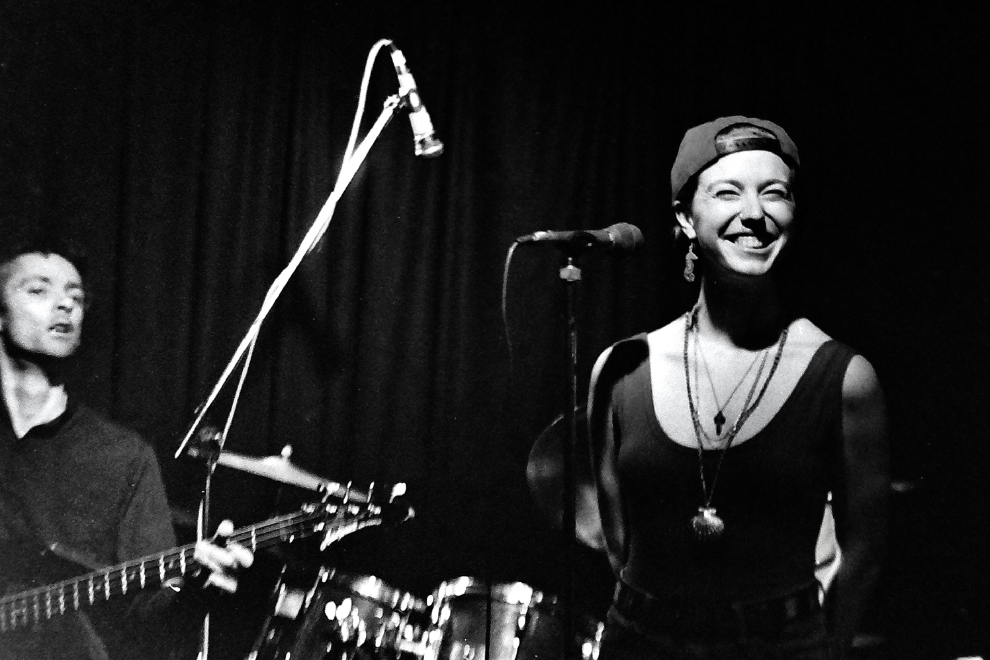
Vividly illustrated by the evocative photos of Bryan “Cookie” Cook, the book takes us inside the belly of the beast.
“We’ve chosen The Hoey,” the authors note, “but really this could be the story of any venue. Places where audiences and artists learned to perform for each other.”
Built in the 1830s, the hotel became a music mecca in the 1980s when it was run by Peter Morris and Peter Hearne, and booked by Tim McLean, aka Sharkie.
Greg Manson, punter/muso/writer, loved the Hoey. “Any pub that counts 16 bass players amongst its regulars has to be a special place for a beer,” he points out in the book.
“If you were an aspiring muso in the ’80s, or just a fan, there was one pub in inner-city Sydney that was a must to be seen at. The Hopetoun Hotel loomed large over not only the corner of Bourke and Fitzroy Streets, but the whole independent music world of the time.”
“You could just go there on pretty much any night of the week, on your own, and be guaranteed that you wouldn’t be alone as soon as you walked in because you knew everybody,” recalls Nick Kennedy from Big Heavy Stuff.
“It literally was like the show Cheers.”
Mention the Hoey to anyone who was there and they will mention three words: Rock Against Work.
In keeping with the pub’s indie spirit, the Hoodoo Gurus’ original drummer, James Baker, created the concept of a weekday gig – in the middle of the day.
Acts such as the Gurus, Beasts of Bourbon, Box The Jesuit, X, The Johnnys, and Front End Loader did the RAW show.
“It was a revolutionary idea, going to the pub in the middle of the day and having a gig,” recalls Tex Perkins.
Hoey regular Mick Thomas loved Rock Against Work so much, he brought it back to Melbourne, where it became part of Fitzroy’s Punters Club.
It was at a Rock Against Work show that Tim Rogers fell in love with Rusty Hopkinson, who was playing with Nursery Crimes.
“First of all, they were a great aggressive pop-punk band, but I was so in love with Russell Hopkinson,” Rogers reveals. “My partner at the time, Tracy, said, ‘What is it with you and that guy?’
“And I said, ‘He’s perfect. He’s got the best hair in the building. He’s a magnificent drummer …’”
Tim got to meet many of his heroes at the venue. “I guess the thing about the Hoey was that you’d be rubbing shoulders with people,” he says, highlighting The Hellmenn, Massappeal, and the Hard-Ons.
He also met music mogul Michael Gudinski – in the Hoey toilets. “It was a hell of a way to introduce yourself to somebody, at a urinal, with your ridiculousness hanging out.”
Lo Carmen says the Hoey “felt like the kind of spiritual home of rock ’n’ roll in Sydney. Lots of other venues would come and go, but the Hoey was the place where everybody had played.”
It was the location for Mental As Anything’s 20th birthday party, the Hoodoo Gurus played there under the name Dork Stick, while You Am I did a gig as Question Fruit.
Spirits Of The Hoey includes interviews with a stack of artists, including Tex Perkins, Tim Rogers, Sarah Blasko, Mick Thomas, Frente! (who blew the PA!), Bernie Hayes, Lo Carmen, Cathy Green, Brendan Gallagher, Fiona Horne, and Murray Cook (who served as Chad Morgan’s sound guy at his Hoey gig).
“The Hopetoun at some point was definitely our sort of headquarters,” Tex Perkins says. “I mean, we could cash our dole cheques at the Hopetoun.”
The book takes the reader on a terrific trip back to the glory days of the ’80s and ’90s, reproducing street press ads from On The Street and Drum Media. There’s a sadness at the heart of the story, though the authors are adamant “they’re not ghosts … the spirits are sparks, waiting to reignite memories and the next generation of artists and audiences”.
David Byrne had this to say about live music: “It gets people out of their houses and gets them hanging together.”
Above the pool table at the Hoey was the sign, “Nod off at Home!”
Former Sydney Morning Herald journalist Sacha Molitorisz lost his virginity at the Hoey. “The details remain sketchy, as with so many of my memories of the Hoey.”
“We buried a few too,” notes Greg Manson. “It was hard living around the Hills then, and the toll was taken.”
But connections forged at the Hoey live on to this day.
Paul Kelly says the pubs provided his education – they were his university.
Many musicians, including Paul’s Coloured Girls – Steve Connolly, Michael Barclay, and Jon Schofield – had stints living upstairs at the Hoey.
And Paul’s now-manager, Bill Cullen, started as a barman at the pub when he was 18. Bill’s band played at the Hoey, and their manager was a bloke who used to drink there.
The book is also a celebration of the punters, including Tony Young (the brother of renowned conductor Simone Young), known as Dangermouse, who was “usually right up the front and more than occasionally onstage”, playing air guitar.
“I’d say getting to number one on the national charts and having Dangermouse as a fan – that’s when you really made it in Sydney,” says artist Edwin Garland (who compiled the 1991 Hoey compilation album, Big Hope Little Town).
The Hopetoun was sold in 1993, and it looked like last drinks for the music crowd. The inner-city was changing, rents were rising, and some neighbours were complaining about the noise.
Hoodoo Gurus bass player and Hoey regular Clyde Bramley was just one of the many punters who souvenired a brick from the hotel’s wall. The next day, the owners put out a call – please bring back the bricks. “We’ve sold the pub with everything intact.”
X played what was believed to be the Hoey’s swansong, and Michael Smith wrote in Drum Media that “for a while, something of the heart of Surry Hills” was lost.
But the venue returned a few years later, and one of its bookers in the early 2000s was Millie Millgate, who is now the director of Music Australia.
From a sonic and viewing perspective, the Hoey was not the perfect venue. “In any physical sense, it was all kinds of wrong,” Mick Thomas believes. “The band was sort of pushed back in the corner; there was a pillar right in front of the stage.
“So, you know, on any physical level, if you were designing it, it really didn’t stack up.”
But it was the vibe – and the people.
“To me, it was the inner-city pub,” Murray Cook says. “Nothing was ever as good. It was so small and so atmospheric.”
Clyde Bramley sums it up nicely. “At a bigger gig, you’ve got lights in your eyes. Pretty much all you can see is a blur, you can’t make out the faces.
“Those smaller shows, you can definitely see everybody there and focus on individuals … it’s just the intimacy and the rawness and the sweat of the small venue that you can’t get away from.”
Brendan Gallagher remembers playing at the Hoey with the great Jimmy Little. “And even though we played lots of other places, he would always compare it to the Hoey. ‘Almost as good as the Hoey,’ he’d say.”
“Of course, like all good things, they can never last,” observes writer and broadcaster Tracee Hutchison. “But I still think of the Hoey’s impact on Sydney’s live music scene and cultural life in Sydney and its legacy.”
Liz Giuffre and Gregory Ferris note that the Hoey is still standing, but it is “literally falling apart”.
It closed its doors in 2009.
“It looks both sad and lonely – maybe a metaphor for Sydney’s current music scene,” the authors conclude.
Though as one punter remarks, “At least we have a reminder of what was once there. Imagine how sad it would have been if it was replaced by hideous fucking apartments.”
Spirits Of The Hoey by Liz Giuffre, Gregory Ferris & Bryan Cook is published by Melbourne Books, with copies available now.
This piece of content has been assisted by the Australian Government through Music Australia and Creative Australia, its arts funding and advisory body