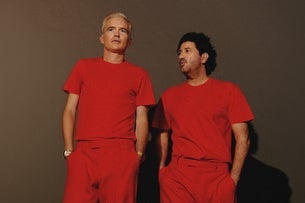
 The Avalanches Profile
In the pantheon of Australian electronic musicians, it's easy to look at the ever-growing list of local producers and venerate them for what they've brought to the world.
Dom Dolla is selling out stadiums, Ninajirachi is quickly becoming one of the country's most awarded acts, Flume has won a Grammy, and so too have RÜFÜS DU SOL, alongside delivering the highest-selling electronic tour of all time.
But before the modern wave of electronic acts emerged onto the scene, there was one Melbourne group who were showing just how far local music could go in the genre: The Avalanches.
Hailing from the Victorian capital, The Avalanches story is one that's well-known by now. Emerging out of the local punk scene, the group came together in the mid-to-late '90s, offering a sound more akin to future tourmates the Beastie Boys.
Before long, sampling became their main focus, and in 2000, the world was graced with Since I Left You – an album so rich and kaleidoscopic in its creation (including samples often reported to number above 3,500) that it has not only been labelled one of the greatest Australian albums of all time, but one of the greatest albums period.
How you follow up a record like that was a major point of contention for many years. The Avalanches continued to perform (including helping to launch the inaugural Laneway Festival), and to create, and eventually in 2016, they managed to live up the hype when they released Wildflower.
By then, the group had pared down to a trio, comprising founders Robbie Chater and Tony Di Blasi, along with James Dela Cruz. The latter would depart shortly after, and a surprisingly-short wait gave way to 2020's We Will Always Love You.
Now after almost six years, The Avalanches have returned once more, this time with No Bad Memories, an album which is as frenetic as it is nostalgic.
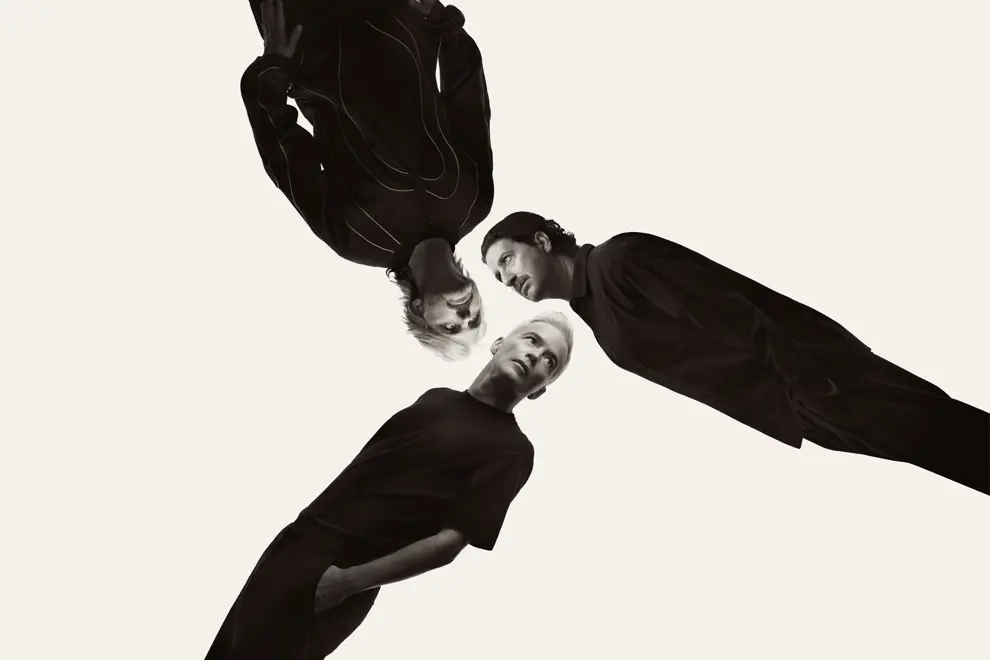
A trio once more thanks to the addition of former Midnight Juggernauts co-founder Andy Szekeres, it's an album which couldn't be made by anyone else.
Boasting an impressive cast of collaborators (including Jamie xx, Mike Patton, Karen O, Panda Bear, Carly Simon, Haley Joel Osment, Rivers Cuomo, and much more), No Bad Memories is said to be inspired by the simultaneously magical and insidious ways in which both advertising and name-brand technology can attach itself to our memories.
If Since I Left You was a masterclass in sampling, and Wildflower amped up the energy before We Will Always Love You became the comedown, No Bad Memories is the nostalgic sheen of it all, half-remembered and blended with memories of a youth spent in front of television screens.
It's a record which urges the listener to try and work out which of these recollections were the precious memories, and which of them were designed to be forgotten.
As the trio speak to The Music in September 2026, they've just flown in from their current home base of London. They're back in Melbourne as part of a whistle-stop series of events around the country, including DJ sets, album previews, and more.
It's an exhausting schedule, and one that's left Chater attempting to trace the trail of bread crumbs which led to this record.
"We're always writing," he admits, trying to pin down when the production of No Bad Memories officially began. "I guess the last two years got more intense before we realised we're pulling it together and the plan's coming together.
"It's like we have a period of 'play' after finishing a record where it's a clean slate. Then it's all about creativity again before it gets a bit more intense and we're like, 'Okay, what is this record?'"
Thanks to We Will Always Love You arriving in the midst of COVID, the band's touring plans didn't properly wrap until later than they'd planned, meaning the process was far more prolonged than they would have preferred.
However, their tendency to always be working meant that this interim period resulted in new material "always bubbling around", before the streamlined vision of how it would present as a cohesive album began to become clearer roughly 18 months ago.
Given that We Will Always Love You presented itself as being a record which was more reflective, and perhaps even more existential, the sound of No Bad Memories would make listeners assume there was a concerted effort this time around to go in the opposite direction.
As Chater recalls, that's not too far off.
"I remember Tony saying, 'No more big concepts, we're just gonna make a fun, party record,'" he notes. "I think that was the spirit we started with, and the music reflects life and what's going on, so we're all just in that sort of mode and making more naturally uptempo stuff.
"It was definitely something that was talked about through the process post-We Will Always Love You," Szekeres adds. "Just to try some new kind of feeling.
"But in the end, you can't really force anything. So if it turns out that everything becomes somber, it does, but there was definitely a sense that we wanted to make something more uptempo and summery.
"It did feel more Since I Left You-y," Chater contends. "Not that it sounds like it, but making it – more in terms of how it just flowed, it was more joyous, and it was sort of more spontaneous."
This spontaneity has long been a key to The Avalanches' approach. It was part of what made Since I Left You feel so free and vibrant, and it's the sort of thing that – when utilised to its full extent – results in a record which shows the trio having the time of their lives.
However, it comes at a bit of a cost.
Listening to No Bad Memories, it's easy to see just how much effort goes into each and every track. In fact, try and dissect each and every piece of the record and you could go crazy imagining how it all came together.
Indeed, it's a time-consuming process. Chater recalls how the group had recorded vocals from Jessy Lanza, which would ultimately appear on the record's first single, Together.
However, those vocals had been recorded years earlier for an entirely separate song, but it wasn't until Szekeres sampled those vocals in a "completely different context" that it became clear where they should be used.
"That's what I still love about sampling," Chater admits. "It's up to the universe when the right piece of the jigsaw appears and you can finish that song."
Even the most accomplished music makers would likely agree that sounds like a bit of a headache. It's almost bizarre to think about the initial plans the group had for what their songs could be, only for them to become repurposed along the way and the resulting work effectively coming out in the wash.
"It's just mysterious and strange, isn't it?" Chater muses. "That way songs will just one day be finished. But they're always kind of open-ended with us – they are never finished. They always can be tinkered with.
"It's not like a band from the past going to the studio and going, 'We're going to write 12 songs over the next three months,' and you've got two weeks to record it," says Szekeres.
"So many amazing records were made like that, and I know sometimes that Rob will have some idea from five years ago which suddenly reappears, and it's like 'Oh this could go here. It may be forgotten, but it's never forgotten.
"Things can happen just before the record's finished, so an idea may only be two months old, but then there's stuff that's from four or five years ago. I don't know how that actually happens," he laughs.
Chater also admits that the band's archival process is one that is slightly overwhelming. Even as we speak, he has hard drives in his backpack which contain the sole copy of No Bad Memories, with intent to get them backed up before moving on to anything else.
"The next record will have something from seven years ago," he says with a chuckle.
With so much material to draw from in the archives, and so much more material still to go through, it does make one wonder when exactly a track is deemed 'complete' – if at all.
"I think we learned after Wildflower – the 16 year one – that we need a deadline," Chater contends. "So that's sort of what we do. When there's this [piece of music] there, but it's messy and we're not sure what it is, but it's close-ish, we kind of have to pull the trigger."
"Most things keep getting worked on up until mastering," Di Blasi adds. "We'll still be playing around with things the day before."
"It's that deadline moment," Chater agrees. "It's like, 'Alright, can't touch it now,' and I guess that's when it's finished."
Of course, even that isn't exactly the end of things. Some might recall how Kanye West kept making edits to his long-delayed 2016 album The Life Of Pablo album well after its release, blurring the very concept of a completed record.
However, if edits keep getting made after its release, it can almost become a philosophical question tantamount to a Ship Of Theseus situation: if the entirety of the original record is edited away after its release, is it still the same album?
"The record company has told us that that's impossible," Di Blasi says, ignoring the philosophical concepts. "But I think it's just to stop us from doing it. Just for the sake of the sound guy, otherwise we'd never stop."
On the topic of philosophical discussions, talk turns to Szekeres' now-permanent role in the band. Though he'd previously added production and instrumentation to We Will Always Love You, the group's fourth album is the first time he's described as an official member.
In fact, as he speaks to The Music, he admits it's his first time being interviewed as a fully-fledged Avalanche. So what is it that made him resonate with Chater and Di Blasi to join the esteemed ranks of the group?
As Szekeres tells it, the trio's relationship "grew pretty organically", having initially been asked to offer up some ideas prior to We Will Always Love You. Soon, chord progressions turned into "lots of little things together", and before long, it all snowballed.
"Andy's use of chords and chord structures is just absolutely brilliant," Chater explains. "Even just using samples and then building chords around all that, it's genius."
Citing his "technical proficiency" and his versatility in the world of sample-based pop music, Chater and Di Blasi also note that part of the reason he fits so well is the ability to speak the same musical language they do.
"It's such a unique musical language, I don't think we ever thought we would find anyone," Chater confirms. "We just tried with one song, and then we did a few more, and here we are 10 years now or something."
"And it's just all worked so well," adds Di Blasi. "I think being in bands with people is hard, and with Andy, it's just a breeze."
"I'm a breeze," confirms a smiling Szekeres.
When recalling the origins of the record, there was talk of Di Blasi wanting "no more big concepts".
However, those who have listened to No Bad Memories (or listened to how The Avalanches describe it) would be aware that this exploration of advertising's simultaneously magical and insidious way of impacting memory is actually a rather lofty concept.
So, how did this end up presenting itself?
Chater pipes up sheepishly. "It's probably all my fault." Di Blasi agrees, "I'm not looking at anyone, but yeah…"
"When you're sampling, you're dealing with a kind of time travel and memory," Chater explains. "Every old sample comes with all this meaning already. We're always sort of interrogating memory; who we are and where we come from.
"So I think we were talking a lot about the devices we used to store our memories on and from our childhood. And when you've gone down that rabbit hole, you rediscover the advertising from that era, which was just so vibrant and incredible."
Naturally, they began to make their own ads for fake products, which left them far more sidetracked than they'd planned to be.
"There was definitely a period of time when we were just on YouTube, looking at ads for a period of time, and also the intros to movies and all the taglines," Szekeres remembers.
"That was a tangent that's kind of separate from the creation of songs, but I think that's one thing I've learned working with these guys is that things can splinter off in so many directions. It's so fun."
This fun is something Chater describes as central to their music-making process. Of course, he recognises it's still a job which pays the rent, though it doesn't stop him from "feeling like a kid" from time to time.
"I get to explore the history of advertising and sound design and audio logos, and it gives you the energy to get up and do it," he notes. "Having the conceptual framework to commit to and to do the project, you finish it because you're excited."
The creation of No Bad Memories in this sense is a rather intriguing one. While The Avalanches harnessed the element of nostalgia through rediscovering old advertisements and the like, they first-hand witnessed these artifacts of media as they put together the audio puzzle that is their record.
Of course, when the listener experiences it, they're listening without the first-hand exposure to the source material. The result is a strange concoction of feelings surrounding memories which don't necessarily exist for the listener, though they're no less visceral and affecting.
It's easy to get a similar experience from watching old ads on the likes of YouTube, but the curation of No Bad Memories is one that evokes feelings unlike anything you may have had previously.
But the sense of familiarity that comes alongside the record speaks to the time travel nature of the album, and the insidious way in which advertising worked its magic upon the audience.
"Those ads from all those years ago just take you back to that time you were in your life," reasons Chater. "And I think the purpose of them was to just get into your brain, and it was just to make you buy that product.
"But now they serve a different purpose of taking you back to that time and where you were and everything like that."
It also raises the question of whether an album like this could be made by musicians whose experience with advertising comes from the modern age.
Previously, TV and radio were the main methods of advertising, along with physical and written media, but the audience was captive. They couldn't fast-forward the ads, there was no ad-blocking software.
Now, the current landscape presents an entirely different experience. Could this therefore be an album which slowly loses relevance as generations grow older and lose touch with the era which No Bad Memories attempts to immortalise?
"I guess kids these days wouldn't have the same experience of advertising that we do, where it was just so much in your face, and there was an innocence to it too," Chater muses.
"And, of course, a non-innocence to it where it was just like capitalism just trying to get you to hypnotise you to buy products, but in a way which was innocent, where they were selling a dream."
Another aspect of the jigsaw puzzle-like presentation of No Bad Memories is the impressively-stacked list of collaborators the band have snared for the album.
To put it to them simply, how does an impressive roster come together? Is it inspired by the concept? Is it a case of working with who is available? Or is it something else entirely?
"It's messy, isn't it?" Chater muses. "I remember thinking at one point, 'We could choose this batch of songs and it would be this kind of record, or we could choose this batch and it would have a completely different feeling.' So it is sort of messy until quite late, I think.
"We met Mike Patton when we were really young in Melbourne. It was a Mr. Bungle show or something, and he was like, 'You guys are doing that crazy sampling thing, I want to meet you guys.' He bought us dinner, we went and watched his show, and then you sort of stay in touch.
"All these years later we're doing this album, and I know that he's obsessed with old gaming consoles and that," he adds. "So we were like, 'Well, he will get that insane sort of console wars era,' when Sega and Nintendo were so loud in the way they were doing everything – just yelling 'Sega' at you."
It's one of those things where Patton feels like an odd choice to read on the track listing of an Avalanches LP, though given his chameleonic voice, it has the potential to make sense. Listening to it in context, it works perfectly.
It's this concept of ensuring things working perfectly which also complements the way in The Avalanches operate. There's no 'dream list' of collaborators they keep, rather, it's about the three members listening to the music they've created and suggesting names which may work best to serve the song.
"Often it's a left field idea, because you can hear a song differently to each other, and someone may hear a song with a blues voice, a rock voice, or a hip hop vocal, and you're like, 'I never thought of that,'" Chater explains.
"But that's only part of it. Then you have to somehow try and contact them, and they have to be interested. And if they are, they have to have time…"
"We don't kind of get together and hang, have a hit list and say, 'Oh, can we have Charli XCX?' Di Blasi laughs. "It is so much like the feeling of the song that will lead us to who we approach."
There's also the fact that so many songs are created at different periods of time, and even then – as they explained – vocals could end up somewhere completely different.
"That's a good way to do it," Chater notes. "It's more organic than just wanting people to be on your record and somehow fitting them stylistically."
With the new record out in the world, The Avalanches will also be returning to local shores in early 2027 for an Australian tour.
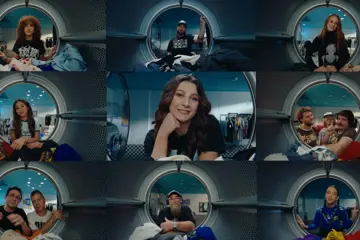
There's also plans for a film to be arriving next year, with fans having already received a sneak peek by way of the visuals the group have shared for the record so far.
"We tried to do one with We Will Always Love You, and the funding kept falling through," Chater remembers. "We'd spend six months making a proposal, and it was going to get made, and then it wouldn't.
"So this time we were like, 'Let's just make it ourselves and not rely on trying to get funding or anything to make this film.'"
"Everyone's always excited at the start," Di Blasi adds. "And then when it comes to the final push, they always drop out."
"That's where the whole visual world came from," Chater continues. "We were able to pull little bits of development stuff from the film to use to start teasing the album. And because we've got lots of invented products on the album – we actually made each product – that was really good stuff to start teasing the project."
As The Avalanches have continued over the years, they've clearly never lost their love of sampling. While We Will Always Love You didn't have the same sort of kaleidoscopic approach as its predecessors, No Bad Memories once more puts the sampling vibe at the forefront once again.
That also means that the group's diehard community of fans will be firing up their record collections as they once more dive into the musical trenches in search of the source samples.
Communities like Reddit offer a vibrant group of sample-searchers, but there are times at which the search for these original grabs almost seems to be more important than the music itself.
That isn't to say that those tracking down the samples don't enjoy the music, but often it feels like they're discounting the wood for the trees.
"When I was younger I used to wonder why people are so focused on the process," Chater notes. "But I guess it's a beautiful, human handmade process. And I'm interested in it when it comes to other arts, even in other mediums. So I get it.
"I love stumbling across a sample that J Dilla might have used or something, going 'Oh my God,' then figuring out how he did it, and learning from it."
"It's a real subculture to be interested in that," Szekeres adds, "But to break down the understanding of how a song works… When you listen to a song, then 30 seconds in you hear the original sample, it's a magical feeling when you go, 'Oh, it's that!'"
"It's a crazy feeling, it's beautiful," Chater returns. "And that's what's magical about sampling."
"I can't believe some of the ones they find that are so obscure," Di Blasi adds. "Ones that I don't know about anymore. I'm like, 'How did you…?'"
This search even helps The Avalanches themselves at times, as they recall certain samples that only emerged because they wanted them to be used in their live show.
One track on No Bad Memories – dubbed Our Love Is Alive – actually encapsulates this sample-heavy vibe of the group.
It features composer Suzanne Ciani appearing on the US television program 3-2-1 Contact in the '80s as she showcases a synthesiser. "I have a sound in here," Ciani says to her co-presenter. "You have to tell me what it is."
"You don't actually hear them, these separate sounds. They all blend into the first sound and change the way you feel."
When it comes to the music they've made this time return, how does it make The Avalanches feel? What do they feel No Bad Memories says about them in the current era?
"It's hard for artists and musicians to carve out long careers," Di Blasi notes. "To still be making records, to still be doing it, to still be relevant, and to still have people care about it is amazing.
"It's quite rare to be 30 years in and still have someone like Portraits Of Tracy know us and wanting to work with us. To be in people's faces and still feeling like we're doing music that's fresh and not just what we did many years ago, and still riding off the back of that.
"We're still trying to kind of push ourselves into the world doing unique stuff that's relevant."
"We're just always kind of looking forward," adds Chater, "and trying to stay excited and do something new."
If the difference between We Will Always Love You and No Bad Memories is stark to some, that's largely because The Avalanches are able to keep it fresh. They're not necessarily keeping fans guessing as to what comes next, but keeping them interested by ensuring it's not the same product every time.
"We don't kind of want to be like, 'Oh, this is just very expected from them,'" admits Di Blasi. "But then you sometimes get pressure of, 'Oh yeah, but this is what you do' from external forces.
"It's like, 'Yeah, but we don't want to just keep doing that,' where it's all going to be predictable and that gets boring, I guess."
"I guess Wildflower and Since I Left You were similar in terms of how they were worked out and constructed, and then We Will Always Love You was a bit of a detour into that more melancholy thing," Chater concludes. "And I think there's people whose initial reaction was like, 'Well, I love Since I Left You and I want that.'
"I don't want to tell people what they want, but I kind of think, do you really? If we just did that again, you'd kind of be unimpressed. Why would you want it again?"
For The Avalanches, it's always fresh, it's ever-changing, and despite a new album rooted in nostalgia and memory, there's no fear of simply repeating the past.
The Avalanches' No Bad Memories is out now. Tickets to their Australian tour are also on sale now.
THE AVALANCHES – AUSTRALIAN TOUR DATES
FEBRUARY & MARCH 2027
Saturday, February 27th, 2027 – Perth Festival, East Perth Power Station, Perth, WA (NEW SHOW)
Sunday, February 28th, 2027 – Perth Festival, East Perth Power Station, Perth, WA (SOLD OUT)
Thursday, March 4th, 2027 – Hindley Street Music Hall, Adelaide, SA
Friday, March 5th, 2027 – Live at the Gardens at Royal Botanic Gardens, Melbourne, VIC
Saturday, March 6th, 2027 – On the Banks at Cultural Forecourt, South Bank, Brisbane, QLD
Sunday, March 7th, 2027 – Sydney Opera House Forecourt, Sydney, NSW
This piece of content has been assisted by the Australian Government through Music Australia and Creative Australia, its arts funding and advisory body