 Sydney Gay and Lesbian Mardi Gras Profile
The 49th Sydney Gay & Lesbian Mardi Gras has unveiled this year’s program with “four outrageous weekends” of entertainment, including the return of the Allianz Stadium party as well as over 50 community-powered events and performances.
This year’s theme, HYPERBLOOM, is punctuated by an official theme song written and produced by Aussie electronic act KUČKA especially for the event.
After not going ahead in 2026, the much-loved stadium party will return, with Mardi Gras CEO Jesse Matheson explaining the comeback of the cornerstone celebration, which this year transforms the tunnels under Allianz Stadium into an “immersive celebration” with international DJs, multi-room party spaces, and dance floors.
“The Mardi Gras Party, for generations, has been an event where friendships are formed, people found their community and unforgettable memories were made,” Matheson said. “I know how much you missed it last year, and I missed it too. And I promised that if we brought it back, we would do it properly. We’d give it the future it deserves.”
The stacked schedule of queer celebrations doesn’t stop with the signature party. Fair Day returns on Sunday, 14 February at Victoria Park, featuring Rogue Traders and Zipporta; Ultraviolet lights up Carriageworks headlined by KUČKA; and the iconic Mardi Gras Parade takes over Oxford Street on Saturday, 6 March.
Other program highlights include the new Rainbow Road Street Fair bringing live music and drag to Darlinghurst, the Laugh Out Proud comedy gala headlined by Josh Thomas, the Laneway Closing Party headlined by Clementine Douglas, alongside pool parties and community showcases across the city.
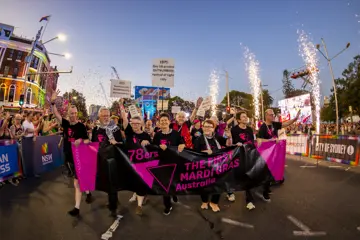
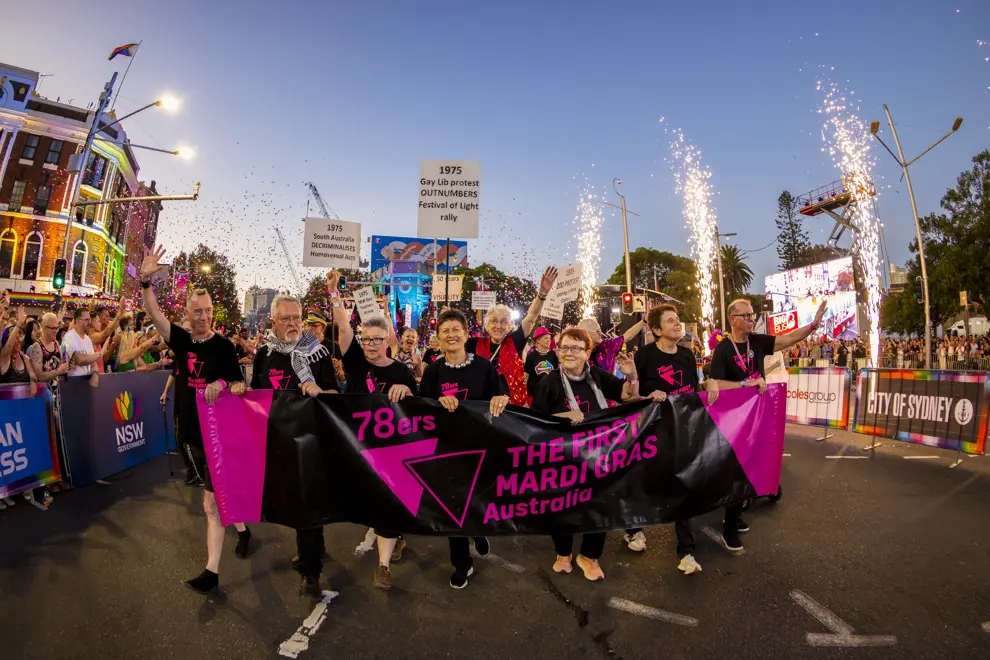
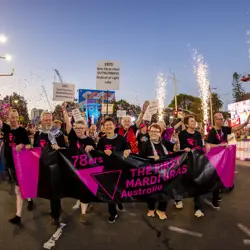
The Sydney Gay and Lesbian Mardi Gras originated on 24 June 1978 as a street march commemorating New York’s 1969 Stonewall riots and protesting laws criminalising homosexuality in New South Wales. After beginning as a music-filled parade down Oxford Street, the march met heavy police resistance near Kings Cross, resulting in the violent arrest of 53 people, now revered as “the 78ers”.
Community defiance saw the event return as an annual protest, moving in the early 1980s to the warmer month of February as theatrical floats and post-parade parties shifted from raw protest into public celebration as hard-fought legal rights and societal respect for the LGBTQIA+ community were won.
Throughout the 1980s and 1990s, Mardi Gras became an essential anchor of solidarity and community fundraising, particularly as the HIV/AIDS epidemic took hold. Public spectacles—including the legendary Dykes on Bikes, glamorous floats, and visible solidarity from straight allies—turned the gathering into a cherished cultural institution. The parade was broadcast on the ABC for the first time in 1994, expanding its reach across Australia. In 2016, both the New South Wales Parliament and The Sydney Morning Herald issued formal apologies to the 78ers for their historical mistreatment.
While the party format has evolved across five decades, the cultural resonance of the gathering remains a vital beacon of support for the queer community and a vibrant celebration of diversity within Australia's cultural fabric.
The Mardi Gras presale opens this Monday, 9 November, with general tickets slated for Thursday, 12 November.
If this is what’s in store for the 49th festival, expectations will be sky-high for the milestone 50th anniversary celebrations in 2028.