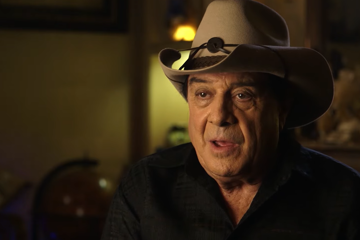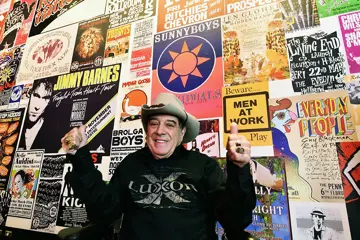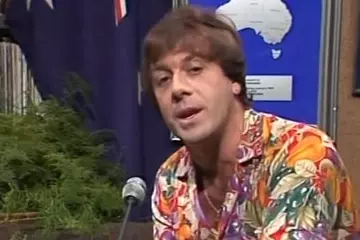
Ian ‘Molly’ Meldrum spent well over 60 years in the public eye, juggling a lucrative career as a media personality on different channels, and record producer.
There was a stream of brand endorsements, and regular club DJs stints sometimes earned him $10,000 a night.
He had a good business brain, setting up record labels as Melodian and Body Beat in association with Mushroom (his biggest discovery, Peter Andre, broke through in the UK and amassed a fortune estimated at £16 million).
He is said to have run a jeans company in Bangkok, where his long time partner Yan Wongmgam helmed a courier business.
At the time of his death, he was worth $5 million, according to Celebrity Net Worth.
He was certainly making far more than that during his peak. But Meldrum’s lifestyle certainly went through the money, including legendary and excessive parties.
His house in Richmond, Melbourne, called Luxor, is estimated to be worth a few million dollars, and that doesn’t include the massive ancient Egyptian artefacts which he built up from 70 visits to that country. His record and music and sports memorabilia collection was impressive.
He also had an eye for cars, although he was a crap driver and vanity let him drive without glasses.
He totaled a green MG convertible after a night clubbing, returning home to park in his garage without remembering to open the roller door first.
Another expense was a black Rolls Royce for which he got a chauffeur after pleas from concerned friends.
One of his smartest business deals was taking his own film crew to Tokyo in 1987 to do the only Michael Jackson interview granted in the world at that time.
Jackson, who'd met Meldrum in mid-1973 during a Jackson 5 tour of Australia, has specifically asked for Meldrum because he felt safe with him.
The deal was for an interview with five questions. When Jackson’s manager tried to stop the interview after the allocated time, the star intervened. “I don’t mind talking to Molly!”
The Tokyo session went on for 45 minutes. Meldrum could sell it independently to different broadcasters in different regions of the globe.
An exclusive interview with Madonna aired on MTV US in 1986. The 24-episode The Meldrum Tapes was broadcast on ABC-TV, and on MTV in the US, Asia, and Japan.
Any discussion of Meldrum numbers can’t go past the cost of the production of Russell Morris’ The Real Thing (Parts I And II).
As is popularly known, during the session in Melbourne, Meldrum suddenly decided to extend the record to 6 minutes and 20 seconds.
He added on effects and did countless mixes. He and Morris exchanged punches as stress levels rose in the studio.
EMI executives in Sydney were meanwhile getting a steady stream of invoices from Armstrong Studios. The bill came to $10,000. To put it in perspective, a family car cost $2,000 in those days and a house about $15,000.
Concern turned into panic when EMI discovered the $10,000 was not for a full album but just a single. And just one side of a single, at that.
The decision was made to send two EMI persons to Melbourne to seize the tapes and throw Meldrum off the project. There are two versions of what happened after.
Meldrum’s account was that when EMI execs arrived, “I grabbed the tape and tried to jump over the back fence. But I got caught in the barbed wire, and they grabbed me, and I fell over the fence into the park.” But they said they’d give him a second chance.
Russell Morris’ recollection is that after being told that EMI execs were flying down that day, a traumatised Meldrum doused himself with brandy. When they arrived, he grabbed the tape and rushed into the park.
Dusk was falling, and Morris and engineer John Sayers had to go out with torches. They found him cowering under a bush, clinging to the tape for dear life.
To cover costs, EMI planned to release The Real Thing in Melbourne only. To counteract, Meldrum and Morris got into the latter’s old car and drove up the Hume Highway, stopping at every radio station.
Jocks played it instantly, and EMI had to release it nationally. It went to No. 1 and stayed in the charts for half a year, selling 160,000 copies.
It also topped charts in Chicago, Houston, and New York. Bad business decisions stopped it from being a US hit.
Molly’s early career plan was to do law at the University of Melbourne. He bought the books, but it went nowhere. Years later, he talked of finishing off the course.
A radio DJ training program stopped after six days when lecturers suggested he think of something else.
His entry point into music was as a roadie, hanging out with surfing buddies The Groop and helping them carry their gear.
He was managing Melbourne band Somebody’s Image (which Russell Morris fronted) and invariably produced their hits Hush and Hide & Seek. The day Hush went to No. 1 was a turning point in his life, Meldrum would say.
He went on to produce some big sellers. Morris’ follow up Part 3 Into Paper Walls reached #1 and sold 50,000 copies. Ronnie Burns’ Smiley peaked at #2 and sold 100,000 copies.
Colleen Hewitt’s Day By Day, from the Godspell musical, sold 50,000 units, hitting #1 on the Go-Set charts and #2 on the Kent Music Report.
He also worked on records by Zoot and Masters Apprentices.
But Meldrum took no fee for these. His argument was that it was morally wrong to be paid for making records by artists that he would be plugging as Features Writer and columnist with Go-Set (at its peak, 120,000 copies a week) and his spots on TV shows as Uptight and the Happening series.
The same deal applied when Meldrum joined the ABC in 1974.
He told this writer: “When Countdown started, I had an agreement with (the show’s executive producer) Michael Shrimpton.
“I could continue to produce records but I would not be paid for them. And these records would not be played on Countdown until they made the Top 20.”
This covered Supernaut and The Ferrets. Supernaut came to Meldrum’s attention after he met up with Paul McCartney in Perth. McCartney told him Supernaut was the most impressive Australian band he’d heard.
Meldrum got them over to Melbourne, and produced their debut single I Like It Both Ways from 1976. The young band’s inexperience in the studio showed: they needed 20 takes to nail it.
Initially some radio stations had a problem with the bisexual connotations. Meldrum and Countdown then started giving it a push, thrusting it up to #16 on the Kent Music Report.
With The Ferrets, Meldrum got them a deal with Mushroom Records. Don’t Fall In Love made it to #2.
Molly was also involved in their album Dream Of A Love, which went gold. Sessions took place in between Meldrum’s many commitments, to such an extent that he is listed in the producer credit as Willie Everfinish.
It’s ironic that for one of the most recognised figures on Australian TV, Molly Meldrum claimed he never wanted to be on TV in the first place.
In 1967 when some of the cast on music show Kommotion quit, the editor of Go-Set told him to apply. “It’ll be good publicity for the magazine.”
Meldrum then migrated to Uptight and the Happening series.
He was paid about $10 a week (about $165 today) for his involvement in those shows.
How much he collected as host on Countdown remains a secret. But as a rough indication, voiceover man Gavin Wood was initially on $60 a week (around $620 today).
The combination of music journalism and record production gave him a clout no other Australian music executive had.
After the success of Somebody’s Image, Meldrum journeyed to London to work as a junior record producer and junior publicist at The Beatles’ Apple Records.
Meldrum related to this writer of the time he met Paul McCartney who dropped by when he was having a steak dinner with friends. As Meldrum reached out to shake his hand, he discovered to his horror he still had his steak knife in his hand.
He met John Lennon at a club — and promptly fainted. As he fell, he hit a woman, whose glass tumbled from her hand and onto Lennon’s head. “If that’s a fan, I’d hate to see someone who doesn’t like me,” the Beatle is supposed to have muttered.
Meldrum was one of those on the rooftop of the Apple building when The Beatles played their famous farewell show.
Through the relationship, Meldrum got one of the biggest scoops in global music journalism at the time – Lennon revealed to Go-Set the “marriage” of The Beatles was over, six months before the split was announced.
Meldrum, awed at being in Lennon’s presence, missed the proclamation. But when the interview cassette was sent back to Go-Set’s office in Melbourne and the editor started to transcribe it, the penny dropped.
It was this kind of profile which was to give him iconic status at the ABC.
In 1974, the head of ABC complained that the broadcaster had a viewer age problem. It had them until they turned 10 through kiddies shows. Then there was dead air and 50 year olds returned for gardening episodes.
What they needed was a music show to draw in the teenagers.
ABC lieutenants Rob Weekes and Michael Shrimpton were having drinks at the Botanical Hotel in South Yarra throwing ideas around the new show.
Neither knew about pop music, and neither wanted to scour darkened nightclubs looking for the next music big thing. They needed someone with contacts and knowledge to book the acts.
As luck would have it, a white Toyota Celica drove up the footpath and parked illegally while its driver clambered out to get booze at the bottle shop. It was Meldrum, newly unemployed after Go-Set finished its run.
“That’s the little prick that we need!” crowed Weekes, who knew him from Kommotion.
Originally, the format was to have a revolving door of pop stars as hosts. But Weekes and Shrimpton decided they needed a friend-of-the-stars to present a segment on news and gossip, and ultimately Meldrum became the host.
Being on the ABC, Countdown reached regional towns no other music show did.
The combined ratings for the Sunday and Saturday shows were between 2.5 million to 3 million. Even producers didn't know the figures.
But record companies would find a track showcased on the show would sell 4,000 to 5,000 copies the week after.
There was a huge pressure from record company bosses and major artist managers to get their clients on Countdown. Entire promotional visits by international acts would be cancelled if the schedule couldn’t include Countdown.
The show broke Blondie, Madonna, The Motels, and ABBA – among many others – before their international success, and gave John Cougar Mellencamp a hit just as his US record label was thinking of dropping him.
Meldrum summed up: “Because it was a national show, regional centres were part of the reach, as well as parts of New Guinea. We had a fantastic time slot, 6pm on Sunday.
“Until Countdown came along, an Australian album would generally sell 30,000 or 40,000. Once Countdown hit, those Skyhooks, Sherbet, and John Paul Young albums were doing 100,000… 200,000.”
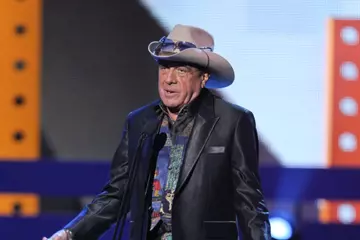
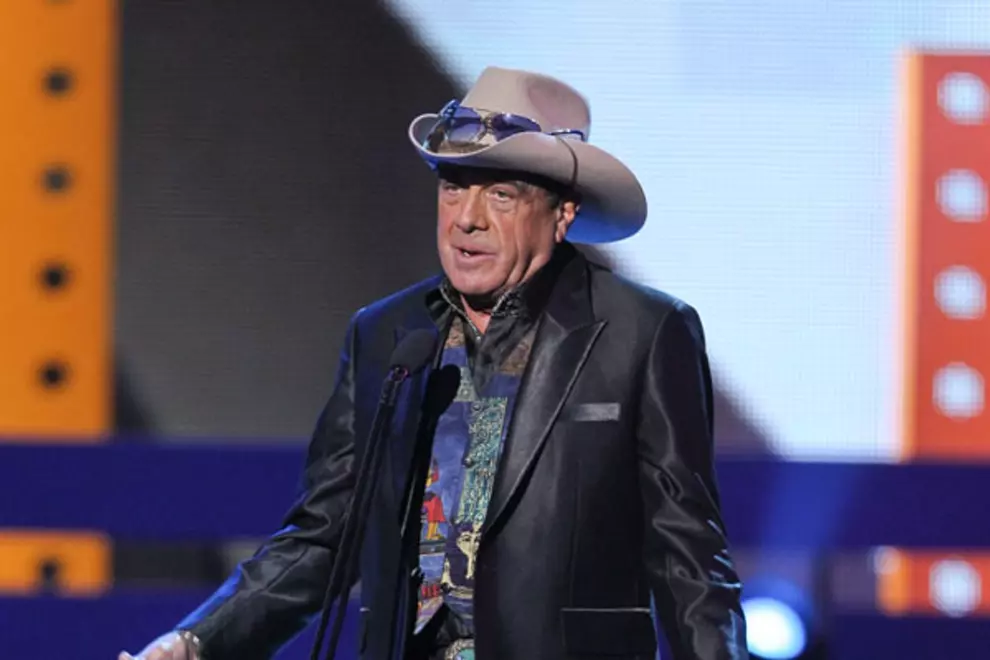
The branding of Ian Meldrum came through the signature “Molly” nickname and cowboy hat and his easy way of social networking with all levels of society.
He was given corporate opportunities because of close personal ties with top business dynasties. When advertising agencies wanted to run a product campaign, he was the first call.
Political parties courted him to run for seats.
“Yes, from both sides,” he confirmed to this writer. “The first time was during the Countdown era.
“I fell on the floor laughing. It’s never entered my mind. I told them that when it came to making my first speech (in Parliament), I’d be umming and arring ten years later.”
Just where the name “Molly” came from has different explanations.
One was that he grew up in Victoria’s Mallee region. His school nickname and email call sign was Mallee Root.
During the Go-Set days, Meldrum and radio legend Stan Rofe used to take friendly potshots at each other in their relative columns.
Meldrum’s biographer Jeff Jenkins suggested that Rofe wanted to christen him “Mildred” and the typist, Ian Buckland, inadvertently entered “Molly” instead and it stuck.
It’s also possible that the word came from “bandmoll” because of Meldrum’s penchant for hanging around musicians.
This piece of content has been assisted by the Australian Government through Music Australia and Creative Australia, its arts funding and advisory body