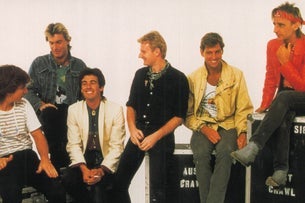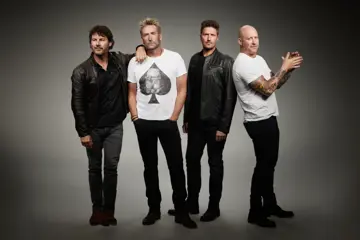
 Men At Work Profile
You may not know his name but there have been over half a billion views of his work on YouTube.
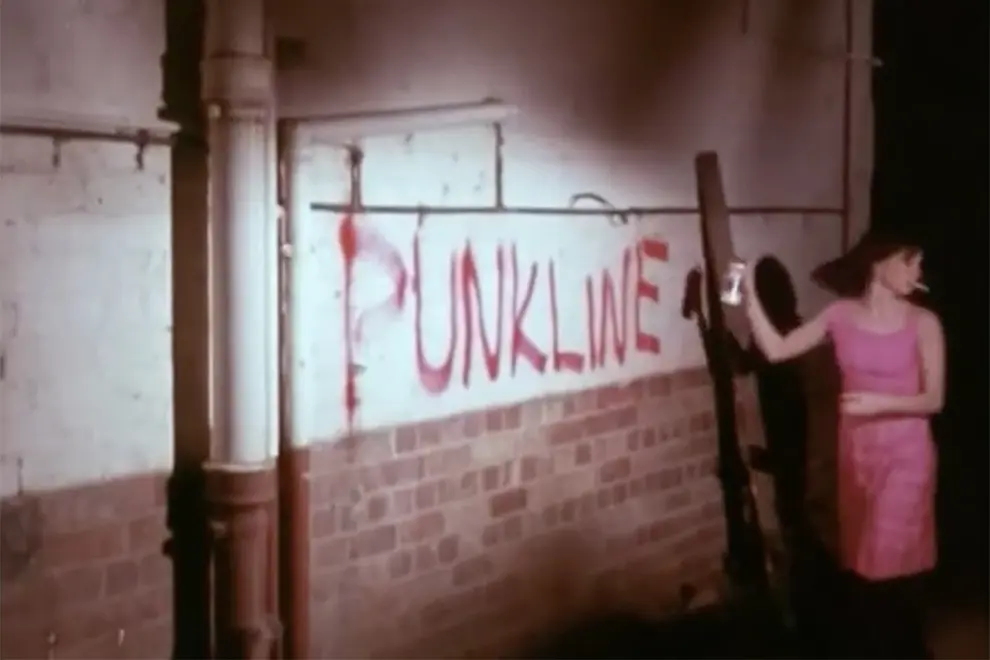
Melbourne filmmaker Tony Stevens will have his 1980 experimental short Punkline screened at this year’s St Kilda Film Festival, it was that work that led to him directing Men At Work’s iconic Down Under video – currently sitting at 507 million views after a decade on YouTube.
Melbourne-based Stevens has a storied career in Australian cinema. Having learnt his skills working in the hallowed halls of Crawford Productions (the 20th century’s leading producer of local TV drama) in the ’70s, followed by stints at the ABC and Kestrel Films, Stevens went on to become a prolific music video maker and go-to documentary editor.
He was awarded for his work on 2016’s Remembering The Man documentary and he directed The Last Stand, the famous 1984 Cold Chisel concert film that was certified double platinum when released on VHS.
Steven’s Punkline will screen alongside Kate Morrow’s Last Drinks; both films a snapshot of St Kilda’s bustling music scene in the 1980s. While Last Drinks captures the end of that decade as Fitzroy Street’s Prince Of Wales closed down for major renovations, just up the road Punkline cruises through a chaotic crowd in the Crystal Ballroom at the start of the ‘80s.
Co-directed with Sue Davis, Punkline is five minutes of youthful faces exploring a burgeoning underground music scene at a time when punk was mutating into myriad new wave and post-punk subcultures.
Footage was recorded during gigs by The Cure and local band La Femme with additional scenes of new wave dancefloor action filmed during a Festival Hall gig by The B-52s. Viewers don’t see or hear the bands, just the fans.
Stevens recalls clearly why he and Davis decided to make Punkline, “I said, ‘Wouldn't it be great to make a film about what's going on in Melbourne at the moment?’ This was in late ’79. Punk was still a word that was used a lot, it wasn't post-punk, they used the word punk’.
“And people were just looking fabulous in Melbourne. And it really seemed to suit the Melbourne scene, you know, overcast, cold, raining. And people were able to wear interesting clothes because of the cold climate. And they were turning up to venues all around Melbourne and it was so exciting.
“And we were very much into the bands that were around, which were just extraordinary. And Sue was also working at Macy's on Toorak Road in South Yarra [a pivotal band venue in the late ‘70s and early ‘80s]. And she had great contacts with the music scene. And so it felt like a really natural thing… I was a filmmaker and I knew how to shoot a 16mm camera. So we loaded up the Arriflex and we went to these venues.
“We just turned up and Sue was really good at talking to everyone there, saying, look, we know we can't film the bands because we won't get copyright clearance,” he continues. “But all we want to do is film the audiences. And they all said, yeah, ’As long as you don't film the bands, we're fine about that.’
“So can you imagine like at Festival Hall, The B-52's management agreed to us coming in and say, [affects American accent] ‘Yes, as long as you don't film the band’. And we said, yep, no way. And we didn't. We never did because the audiences were actually more interesting than the bands.”
What makes Punkline so important is that it captures an under-recorded movement that happened amidst a culture that thumbed its nose at social photography and, of course, was way before every person had a mobile phone camera in their pockets. Punkline captures not just punks but also mods and a hint of the burgeoning new romantic scene that was soon to dominate ‘80s club culture.
Stevens explains, “The whole sort of fashion at that time really was punk. Everyone called it punk. I mean, there was the new romantics, the new wave and stuff, which was coming in about five minutes later. And it was probably already there. But everyone at the time talked punk. And they kept talking about punk for the next three years, even after it finished.
“So that's why we called it Punkline. And it was called Punkline because I was very much influenced by David Bradbury's film called Front Line [1979 Australian documentary about war photography]. And when we go in and do this shoot, we actually had to take a security guy we paid to come with us. And he would make sure that he would clear a path for us. You actually see him a couple of times in the film. He's got ‘New Breed Security’ on his t-shirt.
“And Patrick, he was a huge mountain of a man, would make sure that no one messed with us,” he adds. ”And it really felt like we were on some frontline going into mayhem. So we said, ‘this is like a frontline’… and Punkline voila!”
And, in the DIY spirit, Stevens admits Punkline was filmed with just a three-person crew, “A very good friend of Susan Davis, Christine Melios, we gave her a sun gun, which was a battery operated professional light and had, you know, a big mother of a battery. And so she lugged that around. We'd go, ‘Okay, turn it on,’ – boomp – and just illuminate.
“And everyone would go, ‘What the? What is this?’ You can sometimes see people sort of squinting. And we just sort of worked like that. So it was rarely available light because it was, you know, the film stock was 64 ASA, so you're not going to get a lot of help available. It would be just like mud. But with the sun gun, we were able to actually get exposures.”
The finished product is soundtracked by a rare-as-hens-teeth instrumental track by Melbourne minimalist art funksters Equal Local – getting to hear that through a cinema sound system is worth the price of admission alone – and wildlife sound effects that give Punkline an unexpected darkly humorous edge.
“I used to work at the ABC,” says Stevens, “and and I managed to get hold of some sound effects – not from the ABC, but I knew the sort of stuff that they would be dealing with. I was working in natural history and I thought if I can get something like that, that I've been working on, this will work really well.
“And I found these sound effects of these birds called the light-mantled sooty albatross. And they made this particular sound. I thought this is just so nuts it seems to work really well with these young people going up and down the stairs and doing their little spin arounds and stuff like that. And also some penguin sounds as well.”
Stevens is very proud that his decades-old project is receiving another public airing, “We've had it screened a couple of times in the recent past. We've had it screened at MIFF, probably about eight or nine years ago, and then it's screened at St Kilda Film Festival another time. But this one screening at the Astor is like really prestigious that they're actually screening it there.”
Stevens is doubly honoured to be included at the St Kilda Film Festival again, “I mean it's fantastic that there's a shorts festival and the St Kilda Film festival is so prestigious. If anyone gets their film into that you think ‘oh, that's amazing that you've got in because it is so iconic.’ It’s so well respected and I think in some ways it's certainly on a par with MIFF. You know, it's a great celebration of the short film culture.”
Post-Punkline
Stevens describes the reaction to Punkline’s initial release as “huge,” adding, “it was a really big launching pad.”
The first approach came from Models manager Adrian Barker which led to Stevens directing the band’s Two People Per Sq. Km. clip in 1980. It’s a seminal new wave video filmed in St Kilda’s Memo Music Hall with legendary filmmaker Ray Argall as cinematographer.
Alongside his business partner John Whitteron, Stevens went on to make music videos “right through the ‘80s.” He admits to being “really pleasantly pleased” when his Down Under clip went global.
He laughs thinking back on its success, “I wager that that piece of Australian film at the time in 1982/83 was the most seen piece of Australian film ever – at the time. It preceded Crocodile Dundee. At the time there was no other piece of Australian film that had been seen around the world screened so continuously as that video.”
He also remembers the shoot as not going entirely smoothly, “The first time we tried to shoot it we got rained out, we had to cancel and that was expensive because the entire crew turned up. Then we went back about two days later to the Cronulla sand dunes and it was howling wind. If you look closely you can see that there's this fine layer of sand just being blown, like a sandstorm, along the ground. It was blowing into Colin’s eyes and he hated it, it was it was quite a tough shoot.
“And, then when I came to edit it we had really great coverage for them doing their little antics, you know doing their juggling and doing their little routines and shuffling sand and stuff like that. That little thing you see them doing which is the instrumental part. And we had all this really great coverage and I was cutting them all together at 2am in the morning and I thought ‘this ain't working.’ I'm gonna get rid of it all and I'm just gonna put in one long shot because it looks amazing.
“Talk about an epiphany. I had this moment of absolute crystal clear clarity. ‘This is it! This is a clarion call I'm getting.’ Because [at the time] music videos are all fast editing and I said no, it's gotta go long this one because it's all about what they're doing. It's a beautiful composition. John Whitteron who was doing the cinematography, did a fantastic job. And they all just do kangaroo hops into the distance. It's so silly.”
Stevens also directed another iconic and culturally important music video of the era – Midnight Oil’s US Forces in 1982. Although he remembers that shoot as “a bit terrifying”. “It was it was very ambitious,” he says, “and as you can see, it's just pre-CGI, so everything is real and I was working with the with [band] manager Gary Morris, who's a complete crazy guy.”
Stevens laughs remembering having to say, “No I cannot launch a nuclear weapon. No, I cannot do that.” Stevens continues, “And he said ‘What about a flamethrower?’ ‘No, we can't use a flamethrower.’ Would you just settle for a night shoot in the Newcastle coal mines. So he said ‘Okay, we'll do that.’
“And the band were great. Amazing. Peter Garrett just loved it. I said, ‘Okay, we're going to have a big Euclid [earth-moving truck] chasing you now.’ ‘Okay, let's do it.’ It is a really great performance by him. And he had a great time doing it. We all had a great time doing it and it was very ambitious and it cost quite a bit of money at the time to do it because we had to have a big crew of lighting gaffers, people who had to come up from Sydney. And it was a long shoot and it was overtime.”
Stevens points out that another of his Men At Work videos makes an interesting companion piece to Punkline. Where Punkline features only an interior location of St Kilda, 1983’s Overkill is a look at St Kilda’s exteriors. “If you want to see some great street stuff that we shot,” Stevens says, “one of the Men At Work videos we did called Overkill,1983, a lot of it is shot around Fitzroy Street, St Kilda. And I think if you look at that you will see St Kilda as it was back then. We shot it at 5-5.30 am during summer.
“Anyone who wants to look at what St Kilda was like, look at that video and that will show you because it really showcases Fitzroy Street really well. And it's all on film, it looks a million bucks.”
But despite all the views his music videos now have on YouTube, Stevens’ work in that field is often uncredited. Unlike today’s performers who tend to feature video-making credits either in the video or in the accompanying YouTube descriptions, in the ‘80s the names of video makers were very rarely known outside the industry – sometimes even folks within the industry didn’t know who they were.
“It was a really big problem at the time,” recalls Stevens. “We were, all of us, really struggling in the music video industry. It was a really big issue and we had a big meeting of all the music video makers. Once in Sydney and certainly in Melbourne and Richard Lowenstein [director of INXS videos at the time] came and we all had to talk about it. Getting some kind of, well, not just recognition, but some kind of recompense if our art has been exploited by the record companies.
“At the end of the day there was nothing really we could do about it. We were artists doing great work, all of us, but at the end of the day we were hired hands and we were contractors. So if you agree to work for this record company or this band and they're paying for it, you are a contractor and that's as far as we could get.
“We were hoping that we'd be able to get some kind of royalties,” he continues. ”Because they were talking about [how] there's going to be video jukeboxes that were supposed to come in the mid-‘80s. Nothing really came of it but we thought that it was going to happen and then they would be exploited and people’d be paying to see the videos that we made.
“And so we had this sort of loose association which totally freaked out one of the record companies, CBS Records in Sydney. And I was hauled over the coals, ‘What's this? You're gonna be a fucking union? Don’t want fucking unions around here, mate.’ Yeah, and it was like CBS actually didn't want to work with me for about a year when they heard that we were getting involved with this association which they called ‘union’. Anyway, nothing came of it and to this day you're lucky to find out who made the video.
“But, you know, I'm still above ground so I can tell you what I know.”
Making A Stand
Stevens’ directed and edited the iconic 1984 Cold Chisel Last Stand concert film, he was nominated by the AFI [now known as the AACTAs] for his editing work on the project. “I’m enormously proud of that film,” muses Stevens.
“I think it has stood up well. I was very pleased with it when it was released. It had a really great cinema release. It was blown up to 35mm. It had a major release around the country with Village Roadshow. They extended the season which was amazing. And then it went to VHS. Which was great. They just sold so many units. It was incredibly successful. And it was a really great film to work on in many ways.
“People were very affectionate. They really enjoyed it and people still to this day love watching it. I think it really caught the time. We had some great archive to work with and great photos to deal with. And a really great Last Stand concert. Like, how great was that? It just went off. It was incredible.”
Since then, Stevens has concentrated on editing. He has worked on feature films such as Road To Nihil and has edited over 80 documentaries, including the acclaimed David McComb (of The Triffids) documentary Love In Bright Landscapes. Because of his expertise Stevens now consults for documentary makers, recently consulting on The Birthday Party documentary Mutiny In Heaven (currently streaming on SBS On Demand).
The move away from music video was a natural progression. Stevens remembers seeing the writing on the wall, “By the end of the ‘80s… we knew that the days of the music video were over. You know, the guitar bands were not in favour anymore. It was all electronic. There was dance music that had come in. And it was all different. And I just went back to editing.”
And, in June, some of his photographs will be on display as a part of a group exhibition at Red Gallery. This is Stevens’ current passion.
“My big thing now is film photography,” he explains. ”I shoot 35mm film. I pretty much specialise in black and white film photography. And I do a lot of streetscape, you know, people in the street, stuff happening in the street… I've always got a bunch of cameras with me.”
Steven's Punkline will be screened alongside Morrow’s Last Drinks at the Astor Theatre, Melbourne on June 5th as part of the St Kilda Film Festival. Tickets are on sale now.
This piece of content has been assisted by the Australian Government through Music Australia and Creative Australia, its arts funding and advisory body