 Charli XCX Profile
As humans, we're passionate creatures. That's just the way our nature goes. We're quick to enjoy something, and often, it's very easy to become obsessed with it.
When it comes to music, that passion is no different.
Intense fan loyalty is well documented. Fans of Hungarian pianist and composer Franz Liszt kicked off a period of Lisztomania back in the 1830s, and The Beatles inspired bouts of Beatlemania between 1963 and 1966.
We've seen iconic musicians such as Elvis Presley, Michael Jackson, and the Spice Girls all launch varying degrees of pop culture fanaticism, too.
In 2000, Eminem released his song Stan which focuses on an obsessive fan of the same name. The song's title has since been adopted into popular culture to describe any zealous supporter of an artist, and was even welcomed into the Oxford English Dictionary back in 2017.
Needless to say, music lovers are passionate, and when it comes to supporting their musical heroes, they'll often stop at nothing to do so. As a result, it's often a little dangerous to put things such as public-voted music polls in the hands of the populace lest these stans come on board and exert their influence.
Perhaps it's a worst-case scenario, but maybe it could be time to ask whether stan culture has the potential to ruin the Hottest 100?
For those unaware, triple j have been running their Hottest 100 countdown since the late '80s. Initially, it kicked off as something of an 'all-time' poll, in which listeners would be asked to vote for their favourite songs from any time period.
After Joy Division topped the countdown with Love Will Tear Us Apart for two years, and Nirvana pipped them at the post with the then-nascent Smells Like Teen Spirit, the poll was put on hiatus for a year, and then brought back in late 1993.
This time, its format was changed, and the idea was to determine the best song of the preceding year.
While the discussion surrounding the changing of the countdown often focuses on how there was shaping up to be a sense of sameness in the results each year, one thing that rarely gets discussed is how one artist was already dominating the poll in those formative years.
In February of 1992, the station held its third 'Hot 100' countdown. This was the poll that saw Nirvana emerge victorious by storming the results with two songs in the top three (the other being Lithium), which had been released only four months earlier.
On one hand, this cultural phenomenon that Nirvana brought on could be considered something of stans at work – diehard fans influencing the results with nascent songs that overtook classics by the likes of the Hunters & Collectors, The Smiths, and The Stone Roses.
However, the bigger stan story belongs to The Cure. In the first poll in 1989, the English goth rockers scored four tracks. In 1990, they achieved seven. By the third poll's occurrence in early 1992, they took out nine positions – ranging from A Forest at No. 8 to The Love Cats at No. 74.
Though the metaphorical voting doors had been swung wide open for these formative countdowns, The Cure taking up a full 9% of the positions is a result that has never been matched in any subsequent polls. Heck, even their prior seven songs was a record which stood for decades.
In early 1995, the second annual Hottest 100 countdown took place. This time, the perceived wrongs of Denis Leary beating out Radiohead's Creep to hit No. 1 with Asshole the year prior were somewhat corrected when The Cranberries reached a well-deserved place at the top with Zombie.
Further down the chart, however, is the largely forgotten band Pale, who, at No. 62 – just between the Gin Blossoms' enduring Hey Jealousy and Blur's Parklife – charted with their song Lemon Sparked.
The opening track from the Brisbane outfit's 1994 EP Fade Buzz, the chances of contemporary music fans being able to hum a few bars of Lemon Sparked are probably slim, and there's good reason for this.
See, in those early days of the Hottest 100, voting was done by two methods – either writing in or phoning in, with the latter being the most preferred by music lovers. Realising this, Pale had launched something of a campaign amongst family and friends, asking them to call in and vote for the song en masse.
Remember, in 1994, the Hottest 100 wasn't the cultural behemoth it is today, so the voting pool was far smaller than most modern admirers of the countdown would be familiar with. As a result, Pale were able to sway the results somewhat in their favour.
"People could vote for the song by ringing in and dialling the pin number, and there was no limit to how many times you could vote," Pale explained in 2014. "Friends of the band were voting multiple times, and so it kind of grew from there.
"But no one really expected it to make it into the top 100, let alone number 62."
In those early years of the annual Hottest 100, it was in no way uncommon for artists to have multiple songs in the list.
In fact, Soundgarden scored four tracks in the 1994 list, which was a record that stood until Regurgitator achieved the same feat in 1998 – the same year that frontman Quan Yeomans appeared six times thanks to two additional entries with Happyland.
(It’s important to note that records like Yeomans' are considered somewhat unofficial due to the fact that he's solely a member of these bands, as opposed to the main artist himself.)
In these aforementioned cases, however, their domination made sense. Soundgarden's Superunknown album was a force, and so was Regurgitator's ARIA Award-winning Unit. Powderfinger and Silverchair also ruled the roost in 1999 with their Internationalist and Neon Ballroom albums.
In 2002, there was something of a shift in terms of domination for artists, and for this, you can thank (or blame, your choice) Dave Grohl.
While Grinspoon, The Vines, and Grohl's Foo Fighters all nabbed four tracks apiece in the countdown, Grohl wasn't done yet.
Alongside Nirvana's unearthed You Know You're Right single making it in, Grohl had that year served as drummer for Queens Of The Stone Age, who – along with Silverchair – managed to make it in five times, including in the No. 1 spot with No One Knows. That’s ten tracks featuring Grohl, for those counting.
At this point, the floodgates for music domination seemed to be somewhat opened. Gone were the days of the 1997 countdown in which no artist appeared more than twice, and suddenly four to five appearances seemed de rigeur.
In 2003, both Powderfinger and The White Stripes scored five tracks each (both beaten to the top spot by some fresh-faced youngsters named Jet, who had a comparably laughable two tracks in the poll), and in 2004, the John Butler Trio and the Scissor Sisters both made up 4% of the list.
Then we get to 2005. This was the year that things changed.
See, logically, when an artist made it into the countdown multiple times, it meant that their music must be really good. After all, with so much music out there in a year, fans would often diversify their voting lists as much as possible to represent it all – unless they were big fans (or stans, in the modern vernacular) of an artist and voted for every song of theirs they could.
But even then, having a large number of impressive songs has the potential to split the vote. It wasn't uncommon for fans to expect a strong showing of an act in an annual countdown, only to realise their absence meant that having four impressive singles instead of just one resulted in four tracks each potentially receiving 25% of the votes that one track could have garnered.
That's why it was immensely impressive when Wolfmother set a new record for the annual countdown when they appeared for a then-record six times in 2005.
The strength of their self-titled 2005 debut album was well-documented. Following on from its October 31st release, it took out the inaugural J Award in early December and would see six of its tracks released as singles.
Indeed, six tracks would make the Hottest 100 countdown, ranging from Mind's Eye at No. 6 to White Unicorn at No. 84. Impressively, only Mind's Eye had been released as a single at the time of the countdown in early 2006, indicating that it was the strength of the full album itself (and likely a bit of recency bias) that contributed to Wolfmother's massive success.
Was this a case of Wolfmother stans coming out in full force? Or was it simply a testament to their impact on the local music scene at the tail-end of 2005?
Whatever the case, for a few years after, we lost that musical domination. No artist even got close to Wolfmother's record for over a decade, instead providing an opportunity for one of the countdown's most infamous moments to take over.
By 2014, Taylor Swift had become one of the most famous artists in the music game. Notwithstanding everything that would follow, her fifth album, 1989, was – to put it mildly – a bit of a success.
While pop music has always been part of the Hottest 100 from its earliest days (remember, the 1993 poll featured the likes of Salt-N-Pepa, Ace Of Base, 4 Non Blondes, and Apache Indian), few could have expected Swift to actually impact the poll. In fact, despite the popularity of her single Shake It Off, Swift was absent from that year's voting list.
(Notably, Shake It Off was considered to be absent from the voting list since it wasn't played on the station that year, but that didn't stop Sia's Chandelier reaching No. 9 despite the same lack of airplay.)
This egregious oversight was noticed by Buzzfeed Australia's Mark Di Stefano, who subsequently asked the question, "Why Isn't Everyone Voting For 'Shake It Off' In The Hottest 100?" on January 13th, 2015 – just days before voting closed.
Urging fans to vote for the song in the countdown by manually adding it, the concept took hold, and an online hashtag campaign dubbed #Tay4Hottest100 gained steam. Think-pieces abounded, and pearl-clutching music purists became slightly worried that Swift and her legion of followers could impact the poll.
There's every chance she may have, too, had it not been for KFC, which joked by offering a voucher for $19.89 to anyone who voted for the song. As triple j said in a statement, this was a big no-no.
"triple j reserves the right to remove artists from the list who have benefited from competitions or commercial campaigns that incentivise fans to vote for them," the station said at the time.
Interestingly, the impact of this last-minute voting surge was notable, and triple j themselves said that had the song not been disqualified thanks to KFC's involvement, the #Tay4Hottest100 might just have worked.
"Even after all the tweets, the think-pieces, the hipster lulz, the corporate intervention and heavy gif usage, Shake it Off still didn't get nearly enough votes to be at the top of the Hottest 100," triple j claimed.
"Had the campaign not been invalid, the Buzzfeed clickbait-fest would have trolled enough votes to be number 12."
This outside involvement – whether it was from Swift’s immense fanbase, cynical Hottest 100 critics, or musical troublemakers – was enough for triple j to add in a voting clause going forward that simply said "don't troll the poll." While fair enough, they might have wanted to enact it a few years earlier.
Back in 2002, Breakfast co-hosts Adam Spencer and Wil Anderson's offhand jokes about fictional Adelaide "fish metal" Salmon Hater were enough to not only inspire a real song being created, but the presenters' efforts to campaign for the song to make the countdown.
This impromptu campaign worked, and Salmon Hater's 6.66 managed to reach No. 26 in that year's poll – going to show how easily the Hottest 100 can be influenced if enough fans put their minds to a unified cause.
The ill-fated #Tay4Hottest100 campaign was undeniably one that could not have had the same effect 20 years earlier when Pale managed to ring their way into the countdown.
Not only had voting numbers skyrocketed (the 2014 poll brought in more than two million votes in total, while 1994 attracted “thousands upon thousands”), but social media had taken hold, and with it, so too had voracious fan communities sprung up.
This, in part, may be why we've since seen a sense of musical domination return to the polls in recent years in an unprecedented way.
Sure, more music is being made today than ever before, and it's easier for songs to be released, promoted, and to go viral as a result, but fan communities and social media have received a massive boost as a result of this technological evolution.
Likewise, so too is there more of a dedicated goal to boost the artists whose existence spawns these fan communities. After all, it’s one thing to be a Taylor Swift fan, but it’s another thing to see her tick off new achievements – especially when your direct involvement could be a factor.
While Wolfmother broke a record when they hit six entries in 2005, it wasn't until Violent Soho in 2016 that another artist even got close. Their five songs were matched by Billie Eilish in 2019, Lime Cordiale in 2020, and both Olivia Rodrigo and Doja Cat in 2021.
Eventually, in 2022, Spacey Jane matched Wolfmother's long-standing record when they too scored six tracks. But this was just an indicator of what was to come.
In 2023, G Flip would break new ground when they scored seven songs in the countdown – ranging from The Worst Person Alive at No. 2 to 7 Days at No. 80.
Surely at this point, it would be a case of listeners saying, "Pack it in, there's no way this record is being beaten any time soon." Especially when one considers the 17 years it took for the record to be matched, and 18 for it to be broken.
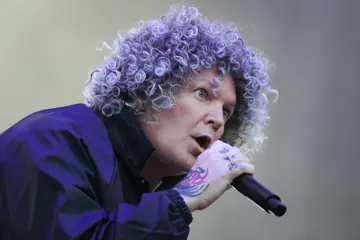
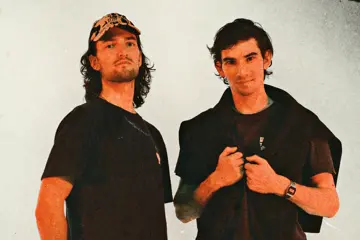
Well, in 2024, the record was swiftly broken again. This time, not just by one artist, but by two. With Billie Eilish releasing her Hit Me Hard And Soft album in May 2024 and Charli XCX following with Brat just one month later, the pair were an unstoppable cultural force.
So much so that the pair both scored eight tracks in the countdown apiece – both featuring solo seven times, and fittingly, once together on the song Guess.
While both of these artists boast strong, passionate, and vast fan communities, it’s a little hard to say whether their massive impact on the charts is due to their legions of stans voting in kind or whether they were simply the performers of 15 of the hottest songs of 2024.
So, let's return to the original question posed by this feature: Could stan culture ruin the Hottest 100?
What exactly are we asking here? Well, given how much a sense of musical domination has taken place over the years in the countdown, and how it's apparently ramped up in recent years, are we at risk of seeing devoted fans overtaking the poll and voting in their favourite artists just because they're on the voting list?
Perhaps, but is that really a bad thing? For years, there have been cynical claims that the Hottest 100 is a shadow of its former self, kept alive by momentum alone while its alternative rock origins are forgotten by its listeners.
Again, this is pure cynicism, especially given that triple j is a youth radio station and the tastes of youth in the '90s are probably not going to align with the tastes of the youth of the '20s.
So, would that simply not mean that artists being well represented in a countdown – especially in an age in which music is far more accessible than it used to be, even just 10 or 20 years ago – is representative of the current tastes of youth radio's audiences?
It might be one thing to say that Swifties attempted to ruin the Hottest 100 in 2014 when they voted for Shake It Off, but it's another thing to say that fans of G Flip, Billie Eilish, and Charli XCX stuffed the ballot boxes because they blindly followed their favourite artists. (Let’s also not forget the sexism that is apparent in claims that the domination by these artists could be ‘ruining’ the countdown.)
After all, G Flip's Drummer was a stellar album, and so too was Billie Eilish's Hit Me Hard And Soft and Charli XCX's Brat. With that in mind, it makes perfect sense that they would be so well represented in these annual countdowns.
Could stan culture ruin the Hottest 100? Maybe it's notoriously difficult to predict musical trends. But even then, how is the countdown 'ruined'? Is it ten artists each scoring ten tracks in the countdown each year? Or is it one breakout artist managing to have their works voted in accordingly by a technologically-connected fanbase?
It's a cynical approach to suggest the former, but we'd probably all be happy with the latter.
triple j’s Hottest 100 of 2025 takes place on Saturday, January 24th. Full details of the countdown and the station’s broadcasting plans are available here.
This piece of content has been assisted by the Australian Government through Music Australia and Creative Australia, its arts funding and advisory body