 Splendour In The Grass Profile
Everyone enjoys the music, and there's always unexpected moments – a new band that you might see or an epic performance by one of the bands that you did want to see – but I do think the art is the thing that changes every year quite considerably,” says Craig Walsh. He'd know, he's been at the job for nigh on a decade after presenting an artwork at the inaugural Splendour In The Grass.
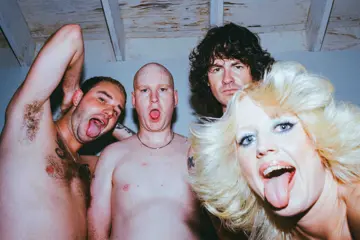
And he's right. Even the kind of zany theatrical spectacle put on by the likes of The Flaming Lips or Gwar is essentially a gig with a few extra props (and bigger budget) that can be dropped in just about any venue. Though Walsh is far from dismissing the musical side of his job. He corrects me when I use the title 'curator' – “I see myself more as a programmer, I like to use the terminology that exists in the festival because it's very similar to doing the bands or anything else” – and acknowledges the symbiotic relationship of the different art forms, musical and otherwise, at the festival. Works like Julia Drouhin's Disco Ghost, in which the music of dead musicians is pressed to chocolate records, listened to and eaten, are the perfect halfway point; art and music in participatory union.
Elsewhere in the program, though, are works that are intrinsically linked to Splendour's location. “That's something that I've become interested in with the options, now that it's a permanent site, because obviously that can now accommodate evolving work, not only during the festival, but over years,” Walsh explains.
The festival was hosted at Belongil Fields from 2001 to 2009. In 2010 and 2011 it was temporarily relocated to Woodfordia, near Woodford Qld, but in 2012 it returned Belongil Fields and has now found a more permanent home at North Byron Parklands.
Walsh says that securing a permanent site for the festival also allowed increased consideration of the longevity of the works programmed: “It's a commitment that's just more than your seeing an artist's work somewhere and paying them to come and show it for three days.” Barnraiser, a performance and installation by Bennet Miller (the brains behind Dachshund UN) that involves an Amish-ish people erecting a barn, is a prime example.
“It's durational, but the duration is unclear. It's almost as though the work existed prior to the festival arriving and it will still be there after the festival disappears – and it would have evolved into something new for the next festival. As opposed to the festival environment, which is dedicated to these three days. For those who are regular visitors to Splendour, they'll go on this journey of an evolving landscape and evolving works which do just really identify Splendour; it's a very specific environment.
“And I think that's quite interesting, as far as audience interaction, to think about art as durational and the idea that this slow narrative may play out over four to five years; it's the sort of opportunity we can explore at this site.”
The three old-school Adelaide Bus Shelters first painted at last year's festival by artist James Dodd will also become part of that evolving landscape. Moving to the new site, they will be reinterpreted and repainted by Vans The Omega this time around.