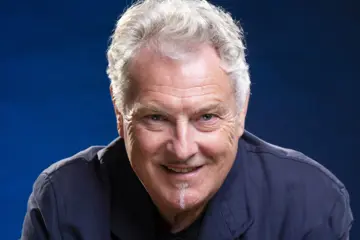
James 'Midge' Ure's first Australian tour since 2020 is all about delayed gratification. The frontman of Ultravox's 'classic' line-up postponed 2025's run, citing "a health issue".
But, launching the Catalogue: The Hits Tour with a sold-out mid-week show in Boorloo/Perth, he's in good form – even celebrating his 73rd birthday. And Ure's gig in Naarm/Melbourne is the final stop, the musician flying from Eora/Sydney where he played the evening prior.
This go, Ure leads the five-piece Band Electronica with three keyboards on stage and longtime drummer Russell Field as anchor.
Ure headlining The Palais Theatre is felicitous. Ultravox only visited once in early 1982 – their inaugural date at the same historic St Kilda venue; the band then identified with the flamboyant New Romantic movement. But, beginning in 2013, Ure has returned regularly as a solo artist.
Alas, though Ultravox reunited in 2008 for a concert tour, eventually presenting a credible comeback in BRILL!ANT, they never came back here. Ure's last appearance in Naarm/Melbourne was at The Forum as the COVID-19 pandemic closed borders and centred on Ultravox's 1980 opus Vienna. He has called live performance his "first love".
The prodigious Scot has been a transformative presence in music for over 50 years. Indeed, he was a pivotal member of the bands Slik ('70s glam rock), Rich Kids (a London punk group ex-Sex Pistols Glen Matlock initiated), Visage (a synth-pop studio project fronted by the beguiling Steve Strange, host and co-founder of London's New Romantic nightclub The Blitz) and, famously, Ultravox (succeeding John Foxx).
Ironically, Ure has now released more albums than he did with Ultravox. This year, Ure re-emerged with the double-LP, A Man Of Two Worlds. But, surprisingly, he isn't tempted to perform any material from it – rather, the most recent track in his repertoire is the (heavy metal!) interlude Monster off 2000's outing Move Me+.
Ure's New Wave output continues to shape pop – and is influential in techno. In 2021 he aired the electro bop Das Beat with Band Electronica – remixed by German house hipsters Âme and subsequently reformulated alongside Kraftwerk's Wolfgang Flür for 2022's Magazine 1 (another album guest is Detroit's Juan Atkins, the 'Godfather Of Techno'). However, Ultravox are still critically underrated compared to New Order and Depeche Mode.
Ure's support is Cole Stacey, also the bassist in his band since 2015. He hails from Honiton, Devonshire, in South West England and has a profile as an indie-folkie in the vein of Ben Howard, a fellow Devon native.
Clasping a mandolin, Stacey notes the incongruity of warming up for a synth-popster but, considering that Ure is himself a musical changeling, it works. The troubadour plays fare off his current album, Postcards From Lost Places, including an a cappella take on the old American parlour song Hard Times (Come Again No More). Besides, he wins over the audience with his self-effacing charm – and stirring vocals. Stacey closes with the Antipodean sea shanty Across The Line/The Sailor's Way.
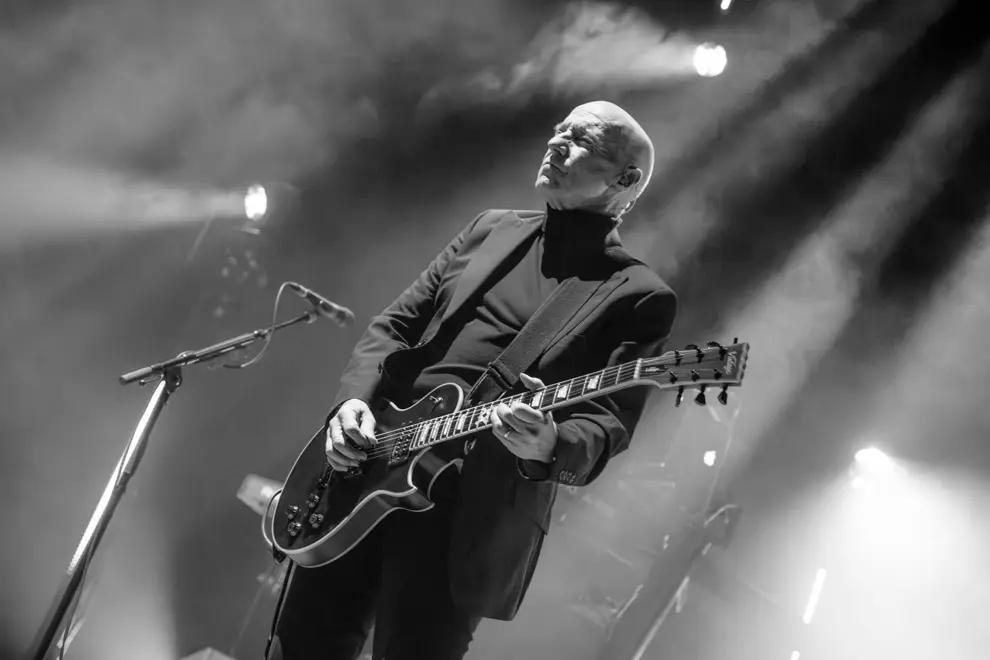
Dapper in all black and, yes, donning guitar, Ure opens with Dear God, which, protesting religious violence, veers into Celtic fusion – a tinge Peter Gabriel. The single, lifted from 1988's second album, Answers To Nothing, was his sole chart success Stateside.
Ure doesn't perform strictly hits – and actually jokes about intentionally choosing the word "catalogue" over "greatest hits" for the tour poster. In fact, he selects many a favourite deep cut, making the show intriguingly idiosyncratic. In the age of curation, Ure's approach is personal – and oriented to day one fans.
And, while equated with '80s synth-pop, live, Ure is quintessentially a rock 'n' roller, often favouring guitar. After all, between balancing Visage and Ultravox, he did temporarily step into Phil Lynott's hard rock Thin Lizzy as tour guitarist when Gary Moore quit.
Despite his theatrical image, David Bowie wasn't aloof on stage and, similarly, Ure banters affably – that Glaswegian brogue distinctive.
The '80s nostalgia arrives early but unexpectedly as Ure revives a Visage obscurity in the rhythmic Again We Love from the band's second LP The Anvil. Ure will play 1980's Fade To Grey later, but it's curious that he should privilege a Visage non-single over Mind Of A Toy, The Damned Don't Cry or Night Train, let alone the cult proto-techno Frequency 7. As it happens, Again We Love is magical – the ambient tune, plausibly a lost classic, coming into its own.
The night's first Ultravox song is Passing Strangers, the second single from the band's reincarnation after Sleepwalk. Passing Strangers bears a harder edge with Ure's amplified guitar – yet the lyrics reveal a new pathos as he sings, "Time goes/Time goes by too soon." If I Was, the UK #1 hit heralding Ure's 1985 solo debut The Gift, is another peak.
Referring to his setlist as a "time machine", Ure follows with more Ultravox deep cuts. A cinematic rendering of the haunting I Remember (Death In The Afternoon), from 1981's Rage In Eden (like Vienna, co-produced by German Kosmische pioneer Konrad "Conny" Plank), is spectacular. Your Name (Has Slipped My Mind), again off Rage In Eden, is experimental, spare and drum-led. Ure, now on keys, then shifts into Astradyne, Vienna's seven-minute overture. Joseph O'Keefe, coincidentally Stacey's cohort in the acoustic folk duo India Electric Co, adds violin. Ure archly recollects how the coldwave instrumental bewildered US label execs.
Ure's solo premiere was in 1982 with a synthy remake of US singer/songwriter Tom Rush's bluesy '60s evergreen No Regrets (he'd been impressed by Scott Walker's '70s version). It's the epitome of retro-futurism but also allows Ure to exhibit his expressive vocals.
Ure saves the most iconic hits for last – and it's to his credit that they sound so vital. Ultravox's signature ballad Vienna, contender for the '80s' best song, is as compelling as ever with its memorable line "The feeling has gone… This means nothing to me. Oh Vienna!" and gunshots.
With Ure playing piano, tonight's rendition has an understated, intimate elegance. Conceivably, a Gen Z act like sombr might cover the timeless Vienna at Coachella for some calculated virality. Ure heightens the mood with the anthem Reap The Wild Wind, from 1982's Quartet (helmed by George Martin), inviting the crowd to dance. The Voice, avant-pop, has punters singing along – and may even eclipse Vienna.
The low-key innovator typically reimagines Fade To Grey (which he latterly re-recorded for the anthology Chapters: The Best Of Midge Ure) as more driving – or urgent – than Visage's transcendent original. But at The Palais Ure recreates it faithfully, synthwave-style.
Switching back to guitar, the energetic Ure throws himself into Ultravox's other smash, Dancing With Tears In My Eyes, off 1984's rock-leaning Lament – a fave of Robyn's (additionally, the banger was a highlight at Live Aid).
Ure's encore is again eccentric as he returns to the stage for an instrumental interpretation of Lynott's synth-rock Yellow Pearl – which he co-wrote. Lastly, in a clever bookend to Dear God, Ure delivers Ultravox's Hymn, from Quartet, before declaring to the assembly, "See you soon!"
Ure's catalogue is so vast that inevitably he misses a few stellar singles – among them Ultravox's Sleepwalk, The Thin Wall, Visions In Blue and We Came To Dance. The septuagenarian could pull off an Eras Tour.
If anything, Ure has delivered his best-ever show in Australia. He harmoniously integrates synthesisers and guitar into a dynamic electronic rock paradigm that represents his myriad facets.
In 2026, the humble Brit is claiming and chronicling his legacy in the same way as Madonna: musically. Catalogue: The Hits Tour is a statement of his ultimate omnipresence as a pop prophet.