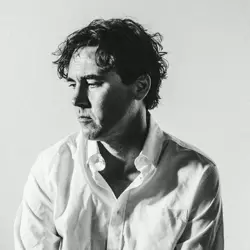
 Cass McCombs Profile
At first, it seemed like a disaster. Halfway through Bodies of Divine Infinite Eternal Spirit’s electrifying support set, the room was still only half full. The bar outside the bandroom was at a polite murmur, and it seemed like this long-awaited return of Cass McCombs might be a misfire.
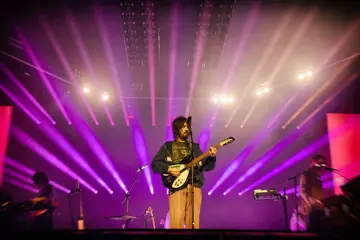
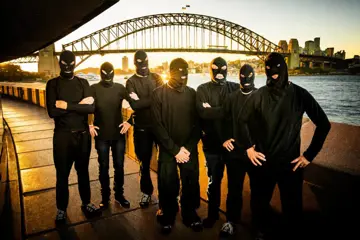
Almost immediately assuaging my doubts, Daniel Ward, the lead corraller of the collective Bodies of Divine Infinite Eternal Spirit, ambles centrestage and takes a seat with an easy grace. Their songs are a meandering stream of poetry over two or sometimes three cycling chords. Ward strums as they build collages of feelings with image upon image, almost all from a first-person perspective.
Their vocal dynamics are so great, and the guitar so consistent, that it almost sounds like a 78 RPM record brought into the present day. Ward sits at a table by their knee that holds a mug of beer and a bottle of water. “This next song is called We’ll Always Be Around,” Ward says, a long braid gently tapping the top of their teal guitar. “It’s a love song in a pansexual-polyamory kind of way. It’s about the way we hold back love because we fear the way it manifests.”
Ward’s songs exist in a kind of liminal space, a soundtrack to the sunrise end of a sharehouse party, when some people are quietly staring at a fire in the backyard, and others are sleeping by open windows. Next week, Ward tells us their band will perform as a 37-strong ensemble, playing a single 48-minute song. We can barely imagine what that will be like before they introduce their set’s closing track, Rough Gay Life, with the caveat “...it’s for everyone”. It is, but it is also unlike anything else.
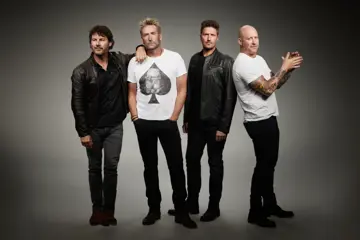
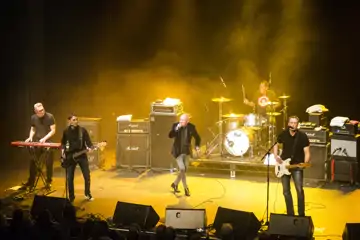
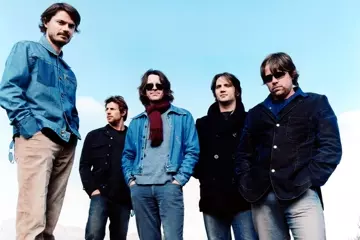
Within the 15 minutes between the end of Ward’s set and the arrival of Cass McCombs, the room almost instantly fills with bearded men and couples, many nursing plastic pints of beer. Within seconds of the music and lights fading down, four men who look as though they could have come from the audience arrive on stage, share shy waves and take up their instruments.
Without a word to the crowd, the band launches into the opening track from McCombs’ latest album, the 2025 release Interior Live Oak, Priestess, his ode to Ella Fitzgerald.
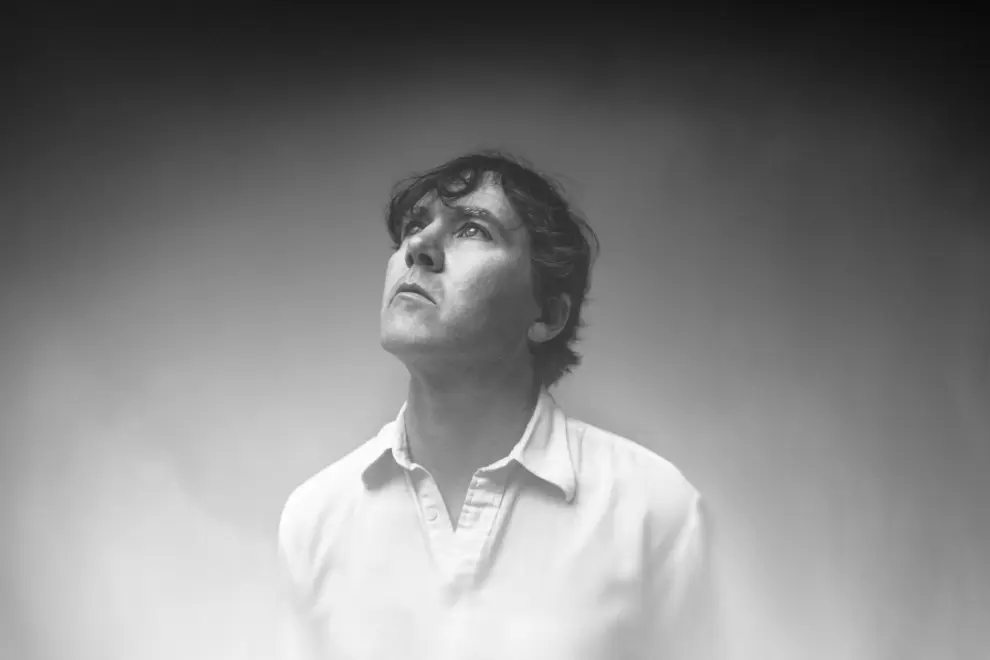
The interplay between drummer Austin Vaughn, bassist Brian Betancourt and guitarist Mike Bones is so fraternal that the name Cass McCombs could almost refer to a band rather than a lanky Californian singer-songwriter. McCombs drags his thumb across the strings of his Telecaster, his fringe in his eyes, and sings: “You saw that each one of us / Are opaque as woven air / Your dark humour no one could touch / From experience no one could bear”.
The band moves as one to the Velvets’ chug of Asphodel, another song sung with tenderness, one that, like all of the songs played tonight, earns the often overused term “crafted”. When McCombs later moves to his acoustic guitar, an instrument from which he draws a remarkable range of sounds, the songs become more intimate and his true talents, rather than the band’s, become apparent.
Home at Last is borne along on twinkling reverb-laden arpeggios and snapped chords. Missionary Bell, a highlight from Interior Live Oak, glows with its delicately constructed mood and McCombs’ arboreal imagery: “Summer's vine is knotted / Twisting in the ground / Wild fennel in the wetlands / Nightfall hurling down / Hear them in the valley / They called me when you fell”. The song, quiet in its telling and almost Elliott Smith-like in its intimacy, gets the biggest applause of the night so far, a response that elicits a sliver of banter.
“It’s great to be back in Melbourne,” McCombs says.
“We like your new album,” yells a fan.
“Thanks, man,” he replies, with a flicker of a smile.
After a blistering rendition of Peace, with its twin lead guitar parts and a chorus that pulls the audience into a singalong, the set comes to a sudden halt. The band huddles, backs to the audience, before McCombs returns to the microphone. “Uh, does anyone have a snare drum?” he asks.
No one does. Drummer Austin Vaughn disappears for around 15 minutes while the rest of the band play what McCombs calls “some real old songs”, his 2002 song Opium Flower and Bobby, King of Boys Town, from his 2003 album A, a hazy adolescent memory of a song with its lyrics like, “where did you learn to smoke? / You’re doing it all wrong.”
Vaughn returns with a shiny snare drum and the band leans into Juvenile, I Never Dream About Trains and the searing I’m Not Ashamed. As their set progresses, the songs grow longer and looser, and the band almost takes over the personality McCombs invests in his song. With a band like this, it’s no bad thing.
As the set reaches its zenith, with Bum Bum Bum, Medusa’s Outhouse and Sleeping Volcanoes, it’s almost as though Phish have replaced them, with textures and solos almost subsuming the songs entirely. It’s a journey the audience is willing to take, and one that McCombs is obviously relishing. The band leaves the stage to a resounding, sustained roar of appreciation. Within minutes, they return for a version of McCombs’ best-known song, County Line.
Far from the Rhodes-driven spectral ode to longing and absence found on his 2011 record Wit’s End, it becomes something Neil Young and Crazy Horse might have played. It’s a stunning reinterpretation that satisfies in a way that only the most ardent fan could have predicted. As the punters pour out into the night, the merch desk is overrun with gleeful fans; what seemed like a tenuous situation has become an unquestionable triumph.