 Michael McMartin Profile
In the last weeks, big Australian names got career boosts as main opening acts for international tours.
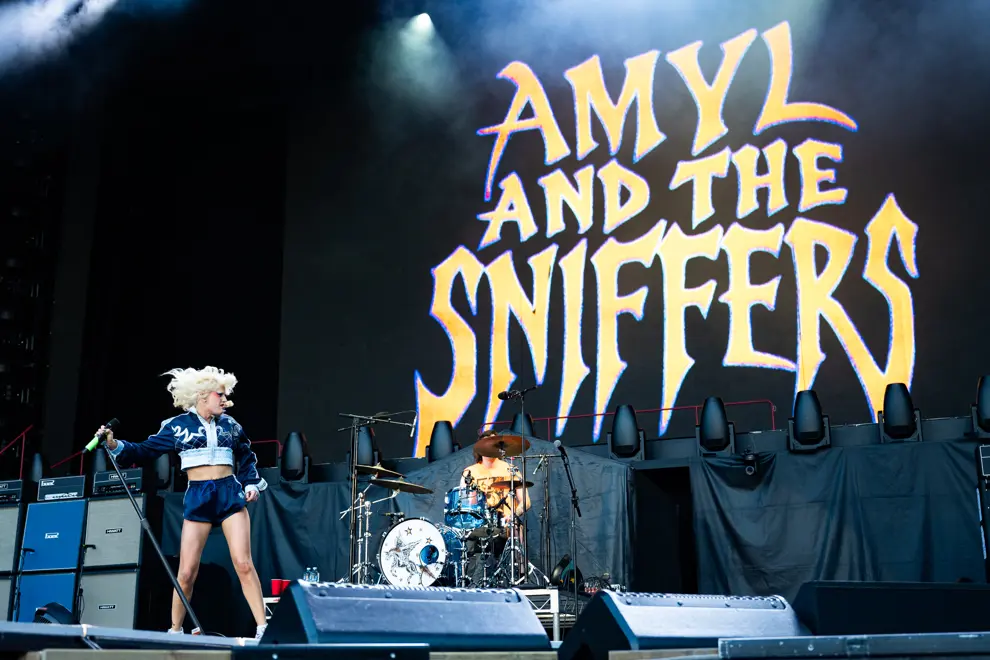
Amyl & The Sniffers faced 565,000 AC/DC fans around the country. Ball Park Music were seen by the 320,000 who attended Oasis’ five shows in Melbourne and Sydney. Jet opened for Lenny Kravitz.
RÜFÜS DU SOL who played to 180,000 around the country included on their international legs Australian-linked Glass Beams and Neil Frances.
AC/DC’s run also included supports in various cities acts as The Southern River Band (“We just hassled the promoter until they said yes to get rid of us!”), The Casanovas, Large Mirage, Oscar The Wild, and Headsend.
It is these acts that will gain the most benefit out of Michael’s Rule, the voluntary code reintroduced by the music industry – and spearheaded by The Association of Artist Managers (AAM) – this year to push promoters to ensure that international tours include local supports.
Designed to offset the dismal presence of domestic acts on streaming playlists, radio spins, and chart performance, the code is specific.
Every international tour is to have a local opening act, that they appear on the same stage as the headliner, be given reasonable sound and lights, and that the act(s) be announced at the same time as the tour so they benefit from all marketing and promotion.
Irritant
The issue has been an irritant with the music industry for decades. It hasn’t been helped by some well-known tactics of bypassing full exposure to Australian musicians by putting them in the carpark, using a string quartet to play in the lobby, or booking a comedian.
An earlier code in the ‘90s by the Managers Music Forum Australia covered the same pillars of AAM’s policy but went a step further.
Documents show it held discussions with the Government about changing international visa rules to reject tours without a local support. It struck an understanding with triple j, Austereo, and the Entertainment Industry Employers Association to ghost such tours.
It also offered to supply promoters support acts from its membership pool.
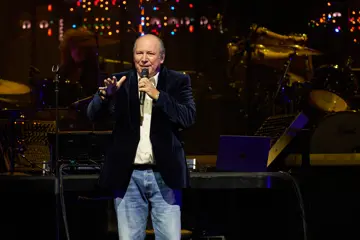
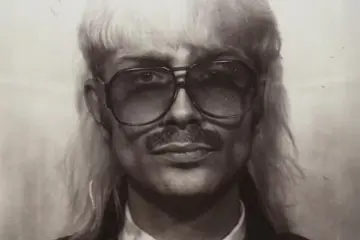
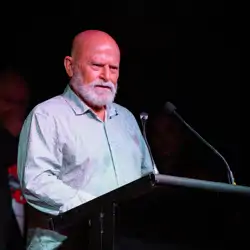
The response to Michael’s Rule – named after the late veteran manager and AAM co-founder Michael McMartin who spearheaded the recent push – was enthusiastic.
“Untitled Group were the first promoter to throw their support behind Michael’s Rule when it was proposed back in May 2024,” co-founder and Managing Partner Nicholas Greco told The Music. “We’re wholeheartedly committed to the rule, and rally the broader live music sector to get behind it too.
“Michael’s Rule formalises an approach we’ve long believed in: Australia needs a thriving grassroots scene for the whole industry to flourish. Fostering local artists isn’t optional — it’s our collective responsibility as promoters. The rule plays a vital role in the discovery and visibility of emerging Aussie acts, and that’s important.”
Greco went on to say: “Michael’s Rule has created a cultural shift and has prompted promoters to think more intentionally about showcasing local artists. The strong industry support behind the initiative suggests we will see more tours featuring Australian supports, announced earlier and given stronger production standards.
“For Untitled Group specifically, we expect growth because this aligns with what we already believe in: giving Australian artists meaningful pathways to larger audiences. As the rule gains traction, it is likely to become a standard practice rather than an occasional gesture.”
Untitled has seen first-hand how Dom Dolla and RUFUS DU SOL started out on their festivals and tours, went on to significant global success.
Complicated
Frontier Touring CEO Dion Brant states, “It’s a complicated topic but we are very supportive of it. We were born in that whole Mushroom environment of Michael Gudinski’s and support for Australian music. It’s a big part of our DNA. It’s what we do.
“So we’re really supportive of the whole principle of Michael’s Rule and what it’s designed to create. We’ve had some really good engagement with managers, artists and Government about it.
“We see it as part of the puzzle to improve the take-up and support of Australian music.”
For TEG’s Global Head of Touring, Tim McGregor, the code “aligns with how we already operate, by championing local talent and strengthening the Australian live music ecosystem.
“We will continue in this way wherever possible in 2026 and remain committed to expanding opportunities for Australian artists across tours, festivals and showcases.
“Our work with AC/DC on the Power Up tour is a strong example, with an all-Australian support bill appearing across stadium shows nationally.”
Over at Destroy All Lines, General Manager of Touring Chris O’Brien stresses, “We’ve been champions of Australian music since the inception of the company.
“We have a booking agency alongside the touring arm and we manage acts. So what we can do to convince artists to give them more scope and get more eyes on them.”
Problems
But Michael’s Rule is not without its problems, say at least two promoters contacted by The Music.
Dion Brant points out that 85% of Frontier’s tours include local acts. But the actual implementation can be challenging.
“‘Rule’ is almost a bad word because when you start to make something look mandatory. But there are numerous circumstances where it makes it hard.
“It’s not our role as promoter in any way to prescribe to artists who they put on the stage. It’s their stage, it’s their creative vision. We can encourage, we can present strong arguments, and we can champion Australian music as part of the mix.
“We continue to do that. But it’s not our job – or our place – in any way to dictate to them what to do in any way or what their creative vision should be.”
For example, “Paul McCartney curates the entire experience for his fans. From the second that gates open, with music over the PA and video (footage), leading to Paul walking on stage. To try and put in an Aussie act for 30 minutes is affecting that vision.”
What can be tricky, notes Chris O’Brien, is not only getting the right act but ensuring their availability at least a year or two in advance when the tour is locked in.
“It’s not that the headliners don't want support acts but they’re particular about the style of acts they want.
“If your tour is in the (5,500-seat) Hordern Pavilion league, you want someone who’s professional and a tour act, and who knows their way around the stage.”
Figures
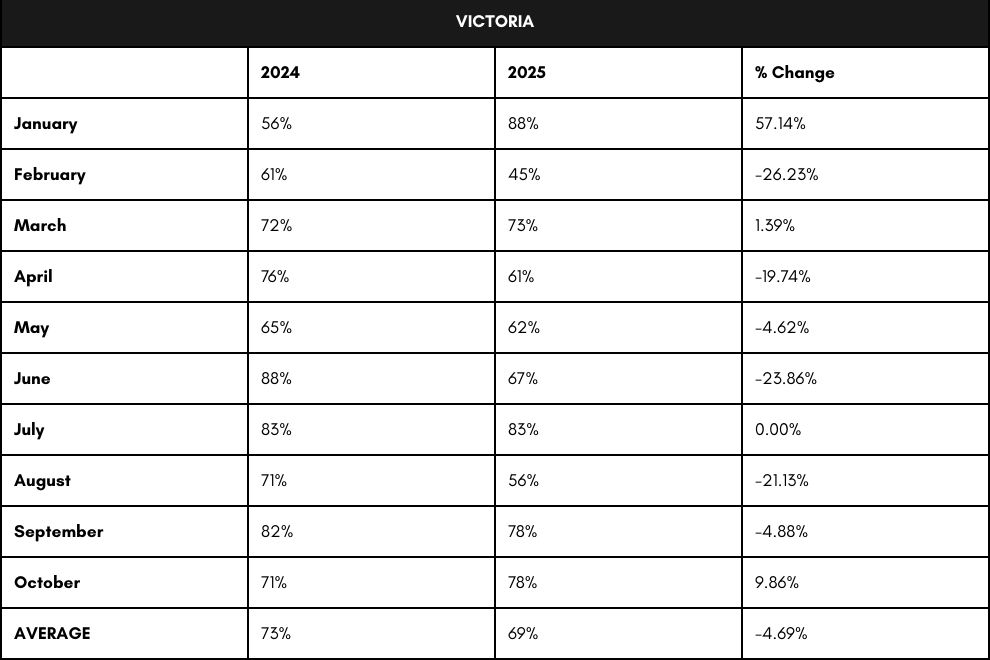
Figures below supplied exclusively to The Music by APRA AMCOS of the percentage of international tours including Australian supports show that figures are relatively steady but that New South Wales, who came early to the party, offering its venues at a cheaper rate to tours that endorsed the policy are showing better results that others.
It’s early days for the policy however, with industry figures pointing to the very long lead time involved in booking international tours. The numbers do give us a report card of where the industry is at for future years.
Percentage Of Aussie Support Acts Used On Tours


But the Ed Sheeran run in ANZ in mid-summer by Frontier and MG Live, has Vance Joy and Mia Wray at all shows, with Ireland’s BIIRD and Aaron Rowe on selected dates.
For them, it’s not just the prospect of playing to Sheeran’s massive crowds (over 1 million last time around; 243,513 in Sydney alone) and possibly translate some to their own fan base.
According to Wray, “I saw Ed Sheeran play in Brisbane 2013 and it blew my mind. The first cover I ever uploaded to YouTube was A Team, so it’s such a huge honour to be asked to support him.”
Laneway
TEG is off to a strong start in the new year. Tim McGregor reveals, “Laneway Festival, which recently won the inaugural ARIA Award for Best Festival, continues to be a launchpad for emerging Australian talent.
“In 2026, its partnership with triple j Unearthed will once again spotlight rising artists from across the country, including Mid Drift (QLD), Charli Lucas (NSW), sleepazoid (VIC), PASH (SA) and Ullah (WA).
“SXSW Sydney also provides significant exposure for homegrown talent to global audiences.”
Greco says, “Supporting Australian talent has always been part of Untitled Group’s DNA. Across festivals, tours and club shows, we consistently feature local artists alongside major international names.
“This year’s Beyond The Valley lineup is over 50% Australian – 44 out of 84 acts.”
In the next few months, Untitled has Kisschasy supporting Good Charlotte, Holiday Sidewinder for Sophie Ellis Bextor, Mothafunk for Chris Stussy, and Hanna D and Mikalag Watego for I Hate Models.
Claire O'Brien, CaucasianOpportunities, DAWS, and Shake Daddy were the lineup with Marlon Hoffstadt last week.
“We’re continuing to embed the principles of Michael’s Rule more formally across our events. This includes early announcement timelines, consistent production standards for support acts, and making sure Australian artists receive the full marketing uplift of a tour.”
Destroy All Lines has been working with Northlane through its tours and festivals, to the point where the metalcore act sold out nine of its 14 winter tour dates and will play to 5,000 fans a show on their next Australian run, and do 14 shows in North America in May.
Another DAL build-up, working with the band and their business team, has been with Make Them Suffer, from 500-capacity to 2,500-capacity rooms, via opening for Bring Me The Horizon and sets on the recent Good Things festival, before the deathcorists go on to becoming part of the Tool juggernaut.
Message
For Frontier, the importance of Michael’s Rule is the strong message it sends to the international music community.
Brant expands: “The publicity around Michael’s Rule signalled to managers and agents of artists overseas, and artists themselves, that in Australia we care about domestic music and Australian artists.
“We have a thriving scene and it’s worth them thinking about that in context of their local tour, and of the benefits of supporting it.
“It’s a fantastic positioning tool that allows us to have the conversations that we’ve always had, for international acts to put on Australian artists.”
With openings for young heavy rock acts and a greater spotlight on them, with DAL and other promoters, can Michael’s Rule help a heavy rock boom in this country?
“We’ve already seen a steady increase in the best part of five years,” says O’Brien. “We’re seeing a lot of growth in that area, but it’s hard to put a figure on that growth.
“It’s up to the acts too, to work on their music, work hard, get on the right tours, and get to those fans.”
A similar boost could also come for the EDM scene.
“Absolutely,” Greco affirms. “Spotify Wrapped found (last) week that there were 409 million streams of Australian dance music this year on Spotify.
“Australia is producing some of the world’s most exciting rising electronic artists, and the global success of acts like Torren Foot, Sonny Fodera, and Odd Mob shows that our scene can thrive on the world stage.
“Their achievements lift the profile of Australian dance music as a whole, and that momentum genuinely elevates emerging producers and DJs.
“We are already seeing increased demand for Australian electronic artists at both local and international levels. With strong domestic festivals, a flourishing club culture, and more opportunities to perform alongside global headliners, the conditions are ideal for continued growth.
“Whether it becomes a major boom or a steady long-term rise, the future of Australian electronic music looks incredibly strong. Initiatives such as Michael’s Rule will only accelerate that trajectory by putting more local artists in front of larger audiences.”
This piece of content has been assisted by the Australian Government through Music Australia and Creative Australia, its arts funding and advisory body