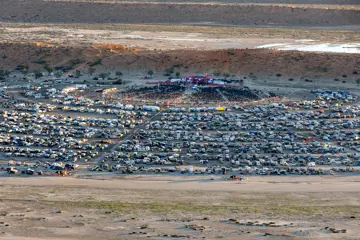
When Beyond The Valley sold out entirely during its pre-sale window this month, it sparked a new debate across the industry: Should shows even be allowed to sell out before general on-sale?
It is the wrong question. It assumes the traditional general on-sale is still a functional, necessary part of the modern live ecosystem. It is not.
The general on-sale is an operational relic from a time when fans literally stood in line outside a physical box office. The ticketing industry took that physical queue, digitised it, and presented it as modern infrastructure.
We updated the interface, but we never questioned the core mechanism: forcing thousands of people to converge on a single URL at the exact same minute to race for inventory.
Pre-sales emerged for a different reason. They gave promoters a way to clear a portion of inventory to a smaller, more targeted audience before tickets were released to the wider public.
Fan clubs, mailing lists, sponsors, and credit card partners could be given early access, allowing a promoter to enter the general on-sale with meaningful sales already on the board rather than starting from zero.
Over time, however, the definition of a pre-sale changed. What was once genuinely restricted access became progressively easier to obtain.
Today, registering for most pre-sales can be as simple as entering an email address or joining a mailing list. For any fan actively interested in an event, access is rarely difficult to find.
The result is that the distinction between ‘pre-sale’ and ‘general on-sale’ has become increasingly artificial. What we call pre-sale today is simply how a large proportion of fans actually buy tickets.
For promoters, it has evolved from a tactical early-access window into a central engine of event strategy. Yet our terminology, marketing frameworks, and technical infrastructure remain stuck in a two-stage drop model designed decades ago.
The Economic Reality
Promoters do not drive early-access strategies to create artificial hysteria; they do so out of clear financial necessity.
Carrying the immense upfront risk of a major show or festival means managing a ticket sales campaign that typically follows a sharp U-curve: a large burst of initial volume, a quiet mid-campaign lull, and a final push close to show day.
In an environment defined by escalating artist fees, rising production overheads, and broader economic pressure on consumer discretionary spending, waiting for that final late spike is a dangerous proposition. Securing early volume is the primary mechanism to de-risk an event.
As pre-sale access has broadened, consumer behaviour has shifted with it. The most motivated buyers increasingly act during the earliest available window, while more casual buyers follow later in the campaign.
By the time a traditional general on-sale arrives, it is often no longer the defining commercial moment. In many campaigns, it is simply the next stage of an on-sale that has already been underway for days or weeks.
An Operational Blindspot
While the media often focuses on the fan friction caused by 9am queue drops: time off work, payment timeouts, and site congestion, the single-moment model creates equal, if subtle, operational strain for promoters.
Concentrating all demand into a high-pressure 15-minute window forces promoters to make blind inventory allocations.
You are effectively forced to guess price elasticity, tier demand, and VIP-to-general-admission ratios weeks or months in advance, with only one high-stakes moment to test whether those assumptions were right.
If you miscalculate demand or price a tier incorrectly, the drop moves so fast that you have virtually no window to analyse consumer behaviour or reallocate inventory dynamically.
In addition, compressing tens of thousands of concurrent checkouts into a single minute strains payment gateways, triggers aggressive bank anti-fraud flags, and leaves zero room for transaction recovery.
If a buyer's bank blocks a legitimate payment in a 9am frenzy, that inventory is instantly lost to the queue, creating customer support backlogs and unnecessary friction for a committed customer.
Stretching The Window
There is a structural alternative to the frantic 9am drop. Rather than treating an on-sale as a single compressed point in time, technology now allows us to separate a fan’s decision to buy from the moment the transaction itself is processed.
That means the access window can stretch over days or weeks. Fans can signal genuine purchase intent, promoters can observe demand as it develops, and payment can occur late through a structured process rather than thousands of people racing through checkout simultaneously.
This approach was demonstrated during recent campaigns for festivals like Lost Paradise, where over 90% of total capacity was committed through Megatix Reserve – before a pre-sale or general on-sale was even scheduled.
Fans could pre-register like normal, but also optionally select their exact ticket tier, and commit payment details well ahead of line-up announcements, with the freedom to opt out at any point before processing.
Crucially, stretching the access window turns the opening phase of an on-sale into a source of actionable market intelligence.
Instead of making pricing and inventory decisions before demand is visible, promoters can observe how interest develops across ticket types over days or weeks. That creates an opportunity to adjust pricing, inventory allocations, and VIP yields while there is still time to act, rather than discover those signals after a 15-minute rush has already ended.
When payments are processed in structured batches rather than a chaotic queue, automated grace periods give buyers the space to resolve flagged cards or update details independently – drastically reducing lost conversions and support overhead.
At the same time, fans get to secure their tickets on their own timeline without reorganising their workday around a countdown timer, shifting the initial access experience from anxious competition to calm anticipation.
A New Blueprint For Live Access
A major on-sale can still be an important cultural and marketing moment.
Urgency, scarcity and excitement have genuine value. But none of those things require every committed buyer to fight through the same checkout flow at precisely the same minute. The industry can preserve the energy of an on-sale without manufacturing unnecessary operational and customer friction.
The traditional general on-sale does not need to disappear entirely. But it should no longer be the default architecture around which every ticketing campaign is built.
Technology now gives promoters more intelligent ways to understand, manage and convert demand before thousands of buyers are forced into the same checkout window.
Reservation models give promoters earlier visibility over demand and more time to make informed commercial decisions, while giving fans a clearer and less stressful path to securing tickets.
We stopped asking fans to line up outside the box office decades ago. It makes little sense to keep recreating that same queue online.
Roshan Odhavji is the Co-Founder & Managing Director at Megatix.