 Primal Scream Profile
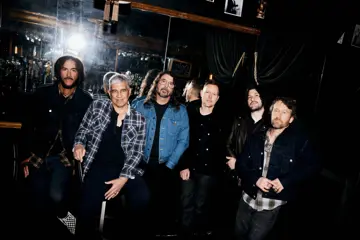
Brandishing metric tons of euphoria and overflowing bravado, Bobby Gillespie and his Primal Scream cohorts have eternally burnt themselves onto the retina of modern rock music; such is the strength of their seminal Screamadelica album of 1991. In a career littered with genre-defining moments, and an unquenchable thirst to find new ways to rock and/or roll, they remain a force to be reckoned with. Now prepping their tenth album, Gillespie remains affable, exuberant and cocky.
“The album is done, and we're in the process of working out a release with a record label,” Gillespie explains. “It's in the hands of the lawyers now. We're hoping for an Easter release – you know, resurrection and all that.”
Such a wry comment isn't wholly unfounded. It hasn't been all smooth sailing for Primal Scream in the past few years – in amongst the seemingly perpetual highs has been the departure of Mani to work with The Stone Roses. This shift has also seen the injection of a female presence in the band, firstly with Debbie Googe (My Bloody Valentine) and now Simone Butler taking up bass duties. Gillespie is quick to assert that Mani's exit was nothing but amicable, and that the change in line-up hasn't changed their aesthetic one iota.
“I'm not comparing us to James Brown or George Clinton and Funkadelic, but like James and George had different line-ups over the years, their music remained the same, held the same essence throughout; that's what Primal Scream is. Me and Andrew [Innes, guitar] make the music, and whoever else is involved brings their own take to it, but the way we write, we make people play in a particular style. Losing Mani, that was sad because he's a great friend and the experiences with him in the band have been amazing – he's a real character, a great bass player and a fantastic guy – but it hasn't changed the band at all. Kevin Shields [My Bloody Valentine] plays guitar on [the album], and I guarantee that you won't see where his parts end and Andrew's begin.”
Armed with the new songs, it'll be interesting to see how they nestle alongside their various sonic shifts throughout the years. Work on Primal Scream's forthcoming album commenced almost three years ago and the process brought about unexpected dividends. “We worked with David Holmes,” Gillespie explains. “Me and Andrew write the songs, and we did two exploratory trips to Belfast to work in David's studio around 2009, 2010, just to see whether this relationship was going to work or not. I mean, we've known him since the '90s, we had both played on some of his solo albums, but working with people and them working with you are two completely different ideas. So he would play us these really obscure, abstract pieces of music, and Andrew and I would respond to that, which I tend to think was David's way of creatively provoking us. And it worked, because we started writing songs because of that.”
Holmes' confrontational style of production helped Gillespie and Innes to push the boundaries of what they saw Primal Scream to be which, for a band continually stretching boundaries, created a unique atmosphere for the pair to open up new avenues to explore.
“He is great at developing an atmosphere and mood, and he'll throw in different samples or loops just to get a reaction. The songs came quickly, the ideas and atmosphere and riffs. He would also listen to things we had written and just go, 'No, I've already heard that. C'mon, we're making a classic here, guys.' And his instincts were right – when he pointed to something we did that was strange or differently paced, we knew that that was what we needed to work on. When Andrew and I write, the best songs tend to write themselves, it's pretty fucking instant. It didn't happen that way; we went back to our London studio and worked on these songs, adding bits and taking bits away, but out of this mess and confusion came these songs. We've been doing this for a long time, so we are confident in what we have created – truth is, we've never been happier.”
The band's writing process has never been a conventional one, however, with a heavier focus on how rhythm develops within the framework of a song. “It's hard talking about the process; we have never been ones to write songs on an acoustic guitar,” Gillespie stresses. “A lot of our writing is rhythm-based, rather than focusing on melody. We love rhythm music like funk or soul, reggae even. We are a rhythmic band, and I think we make music that people can dance to. And I mean that not as in dance music today, but as in rock'n'roll. Like the origin of music is rhythm and blues, rockabilly – it was dance music for people on a Saturday night, heading into a juke joint and boogie on down.”
This idea of rock as dance music is something Gillespie feels is becoming further and further from the norm in the 21st century, and he's not happy about it. “I think the idea of dancing to rock music has been lost along the way somewhere. When it became labelled as 'rock', it ceased to be dance music. You can't dance to it, and I really think it's because there is a lack of rhythm guitar. I don't want to sound like an old git moaning about the state of modern rock music, because there is so much out there that I do like, but I honestly think that the further you get away from the source, the less genuine rock is. The older guys grew up playing blues; no one can play blues anymore, the way Howlin' Wolf and Muddy Waters played it, because that came out of a culture born in Mississippi, born in the South, born in oppressive times. But the guys from the '60s, they try to play it but can't really because they are of a different culture, so they play rock music. Then another culture comes along, listens to the '60s rock, and it becomes heavy metal. All of these types of music are fine in themselves, but eventually it becomes a hand-me-down, which is never as good. Metallica are probably the biggest rock band in the world, and good for them, but you can't dance to that the way you could to Led Zeppelin, their idols. And then you can't dance to Led Zeppelin the way you could to Jerry Lee Lewis or Gene Vincent or Elvis, who were their idols… Your culture and what you're exposed to affects the way you play, and we are getting further and further from that rhythm, that rock music that you can dance to.”
Nevertheless, it's clear that Gillespie will always attempt to rectify that – even if it means being the last bastion, the last island in the sea – and will always endeavour to create and spread the love. Many of these new creative outlets will get their first airing when Primal Scream touch down in Australia. Nonetheless, there's more to look forward to than rock/dance shows.
“I can't fucking wait,” Gillespie enthuses. “We are ready to play these songs, with this band. I honestly believe that this album is up there with our best. Plus it's two weeks in the sunshine. Here right now it's a typical sunny London winter day – it's ashen grey. We're a depressing and depressed country – can you believe we won the Second World War?”
Primal Scream will be playing the following shows:
Monday 3 December - The Tivoli, Brisbane QLD
Wednesday 5 December - Enmore Theatre, Sydney NSW
Friday 7 December - Palace, Melbourne VIC
Saturday 8 December - Meredith Music Festival, Supernatural Amphitheatre, Meredith VIC
Tuesday 11 December - Astor Theatre, Perth WA