 Kesha Profile
As Kesha jumps on a Zoom call from Los Angeles, it's an exciting day for the pop icon.
We're chatting 15 years to the day since she released her Cannibal EP – the companion piece to her debut album Animal, which had arrived just 11 months earlier and swiftly topped the US charts.
Bolstered by the success of its lead single We R Who We R, the EP was the culmination of a massive year for Kesha, who had burst onto the scene the year prior with the chart-topping TiK ToK.
"It's really fun to look back on everything that I've done, and where I came from,” she gushes. "I was just looking at pictures of me at my first photo shoot, and I was so excited and so happy to just be [experiencing a] total full expression of self."
When it comes to where she's come from, Kesha acknowledges that a lot has changed in those years, ranging from the mundane to the fact that TiK ToK has a totally different meaning 15 years later.
But whereas many of us may look at photos from that same time period and cringe, she embraces everything about who she was and who she is now.
"Oh my God, the cringing is like, the best part," she explains. "The name of my current tour is called Tits Out, and I've just always been a tits out kind of girl, and I love that about myself. When I look back at the girl that I was, I feel very protective over her 'cause she was such a free spirit and so naïve, but so full of life, creativity, and optimism.
"There's a lot of that still inside of me, it's just 15 years later. So I have a lot of wisdom, and I've learned a lot of things."
The strangest part about looking back to that formative period in the spotlight, however, is the tangible personification of the passage of time. "It does not feel like 15 years have passed," she admits.
"When I'm looking at these photos, it's so weird. 15 years is a long time. I don't have children yet, so Animal was my first child, and for Animal + Cannibal, it's like the combination child. They're kind of twins, they're 15 years old today, and that's just crazy – in a year they could be driving."
Back in 2010, Kesha was just beginning her professional musical career, which had begun just a few years earlier, when she was known to most as Kesha Rose Sebert, cutting her teeth in the industry as an uncredited backing vocalist for Paris Hilton and co-writing songs for artists like The Veronicas.
However, a lot has changed in the past 15 years. While she's experienced massive highs with chart-topping records such as 2010's Animal and 2017's Rainbow, she's also seen the darker side of the industry.
That dark side was underlined by a near-decade-long series of lawsuits between Kesha and former producer Dr Luke, with the pop star alleging physical, sexual, and emotional abuse.
While her 2023 album Eat The Acid was heavily influenced by the then-ongoing lawsuit (which reached a settlement one month before it was to go to trial, and one month after the record's release), her latest era has been one underlined by a sense of freedom and reclamation of self.
"It felt like I was in The Matrix when I got a call on December 6th, 2023," she remembers. "That was from my lawyer, and he had said to me, while I was cooking breakfast, 'In three months' time, you will get the freedom you've been fighting for.' In that moment, everything changed, and I feel like the colour came back to the whole world.
"I felt like I really had just put my life on pause for almost a decade, and I'd been waiting for this day to come for me to really have autonomy over my mind, body, and spirit, and all of my faculties.
"From that moment on, I just felt like I had more energy than I've ever had in my entire life."
That energy manifested itself as an overwhelming, almost kaleidoscopic exploration of what it means to be free. By her own admission, Kesha explains this time was spent with friends, on vacation, and writing copious amounts of music in the studio – often staying until 5 am before repeating the whole process.
"I didn't want to just sit in Burbank in a vocal booth," she explains. "I was like, 'I want to capture the sound of what it sounds like to become a free woman for the first time in your adult life.'
"I signed that deal when I was 18 years old, so this is the sound of true freedom and coming home to oneself, and it was so much fun, there was so much exploration, and I really just allowed myself to try everything, including an accordion, which ended up being the iconic part of Joyride."
Fans received the first taste of Kesha as a free woman in July 2024 when she released the aforementioned Joyride. The first taste from her sixth studio album, . (stylised as a full-stop and pronounced as Period), it was followed by cuts such as Delusional, Yippee-Ki-Yay, and Boy Crazy ahead of the record's official release in July.
Her first release on her newly minted Kesha Records label was a fresh start, and one that was dripping with the palpable sound of liberation for the artist at the heart of it all. "It's the sound of me stepping into freedom," she notes.
However, one of the most unique aspects of Period is the fact that it has granted Kesha the rare opportunity to have a second chance at her career. Underlined by a sense of autonomy and self-assuredness, she does admit that it comes with a mixture of joy and intimidation in equal measure.
"It feels like for the first time in my life, I'm really allowed to contractually, spiritually step into my own power and really embody the leadership role that I know I'm capable of standing in," she explains.
"Energetically and spiritually, it just always felt like I was previously under the thumb of someone or something because I was in a system, and now I am building the type of system that I believe is fair. And from the perspective of a CEO and record label executive, a founder of an app, a songwriter, an artist – all of these perspectives are where I come from when I'm building the infrastructure of the music business I would like to see, and I know what feels fair from both sides.
"I'm simply just trying to build a business around music that feels fair and just and sustainable," she adds.
Given the history that Kesha has had within the music industry and the opportunities presented to her over these past two years, it makes sense that Period is an album that serves as something of an auditory safe space.
After all, Kesha has long been considered a queer icon, creating music that speaks to her legions of fans and the wider LGBTQIA+ community and offering the chance to experience their true selves through music.
However, she's long been denied the opportunity to experience her own true self, so this time, she was not simply curating music for her extensive fanbase; she was both creating music and constructing a safe space for herself as well.
So how does one go about creating an atmosphere in which they can thrive, not just personally, but creatively and spiritually?
"I've been really looking at what is a safe space for me and what I require to feel safe," she explains. "What comes of that is safety and for me to feel safe is basic human needs. Obviously, there's food, water, and sunlight, but you can't really be surrounded with hate and judgment. You can't be starving; you can't be in excruciating amounts of pain.
"So for both me and my future artists, I just want them to feel really not judged, really safe in expressing all the parts of them that they need to exorcise out of their body, because that's why we make music. Even songs like TiK ToK. Like, that is a stupid fucking song, and we love it for being a stupid fucking song. It's so much fun, it's so silly, and we all love that song.
"For that reason, I want to create a safe space for people to go really, really stupid or really, really sad, or really, really mad, and really exorcise these feelings out of your body," she explains.
The importance of a safe space was underlined by Kesha's experience in making her previous record with veteran producer Rick Rubin.
Initially released under the title Gag Order but now known as Eat The Acid, the culmination of years spent dealing with the ongoing lawsuit resulted in a record that was difficult to make, but one whose process was aided by Rubin's presence and his role in not just promoting vulnerability, but actively creating a safe space for Kesha to flourish.
"I felt so safe, and I felt like I could actually get out so much of the pain I'd been holding in my body," she explains. "In other rooms I would walk into, I would almost become a caricature of what people expected of me sometimes.
"I want to bring people joy, and I want to write joyful songs, but the safe space that Rick created for me was so important for my nervous system to be able to settle and really get to the truth of what I was experiencing.
"I could not have made Period if I didn't make the album before, because to get to real true joy, I had to give space, and give the pain and sadness a voice," she continues. "And I feel happier than I've felt my entire life right now because after working with Rick and him creating that safe space, I would like to create that kind of safe space for other artists, especially in this business for women."
Indeed, it's her own lived experiences and knowing what is now possible for other artists to experience when it comes to the music industry that informs how Kesha wants to lead by example, bringing a sense of possibility, purity, and liberation into her role as an executive.
But still, it's important for her to remember to put herself first sometimes.
"Another way that I feel safe in my life is that I've got really strong boundaries about who I let into my life and who I don't any more," she explains. "It used to be that we're having a great time and everybody's invited, but then once you get kind of taken advantage of enough times, you start to realise that who you give your energy to and what you give your energy to is so important.
"So I spend a lot of time by myself, I spend a lot of time making music with people that I love, and I spend a lot of time meditating, taking care of my body, and I spend a lot of time in nature. And then I fucking love spending time on stage with my fans.
"My fans are one of the most healing forces in the universe. The love that they've given me this year has been so genuinely healing for my heart. I literally felt my heart ripping open when I was on stage at Madison Square Garden. It's such an amazing experience to sort of have that sort of love given back to you, especially when you put so much into something like this."
"I hope that my shows and my label and my app – everything that I'm creating – I just want it to be a safe place to play and express yourself," she continues. "So for my fans to also give that back to me was just so beautiful."
This theme of self-love and self-expression is paramount to the experience of Period, but it's also underlined by a deep sense of self-reliance and self-acceptance. Nowhere more is this seen than on the album cut THE ONE., which sees Kesha specifically asserting, "I'm the one I've waited for."
It's this level of self-love which goes back into the safe space mentality of the album, with Kesha noting that much of the reason for these aspects comes from an "internalised shame" that she wasn't living her life in the "perfect" manner.
"Everybody out there knows I'm not known to be the most perfect and polished human being that walks the planet," she admits. "I was just carrying around this really mean voice inside of myself – towards myself – and the beautiful part about the Animal + Cannibal anniversary and preparing for my tour that I'm bringing to Australia is that I made it.
"My intention was to really embody the self-love that I talk about at my shows, and I've always really been striving for. But from the moment I got that phone call on December 6th, 2023, I said to myself, 'I'm going to heal as fast as humanly possible because I cannot walk around with this pain and this shame inside of my body when I know that I've been doing my best.'
"I've always been trying to do my best, and it has not always been perfect," she continues. "I went on a really intense spiritual healing journey this past year-and-a-half, and I've made everything part of my spiritual practice to bring love, not only to others, but really, I had to start with myself."
The bringing of this spirituality to others has been underlined by the high-profile launch of Kesha Records. Officially launched in September 2024, the label provides an opportunity for its namesake to not only promote themselves independently but also work with other artists to offer the sort of guidance and support that she wishes she had received years ago.
"I'm proud of who I am, and I'm proud of what I've come through, and I'm really proud of the person that I am on the other side of everything that I've gone through," she explains.
"That's why I wanted to call my label Kesha Records, I want my name to be synonymous with integrity and transparency, and that's what I'm committed to."
So what makes a Kesha Records artist? Well, while its first release is Period, it will also host the release of a long-lost album by her mother, chart-topping songwriter Pebe Sebert.
"It is some of the most unique, authentic music you've ever heard, and I cannot wait for the world to hear it," Kesha enthuses. "It's like Kate Bush and Talking Heads. It's very one of a kind."
As for the artist selection process, it's all about authenticity and honesty. Apart from that, it's something of a 'know it when she sees it' approach, but you can be sure the artists will be representative of Kesha’s wider vision for a more equal, welcoming, and supportive industry.
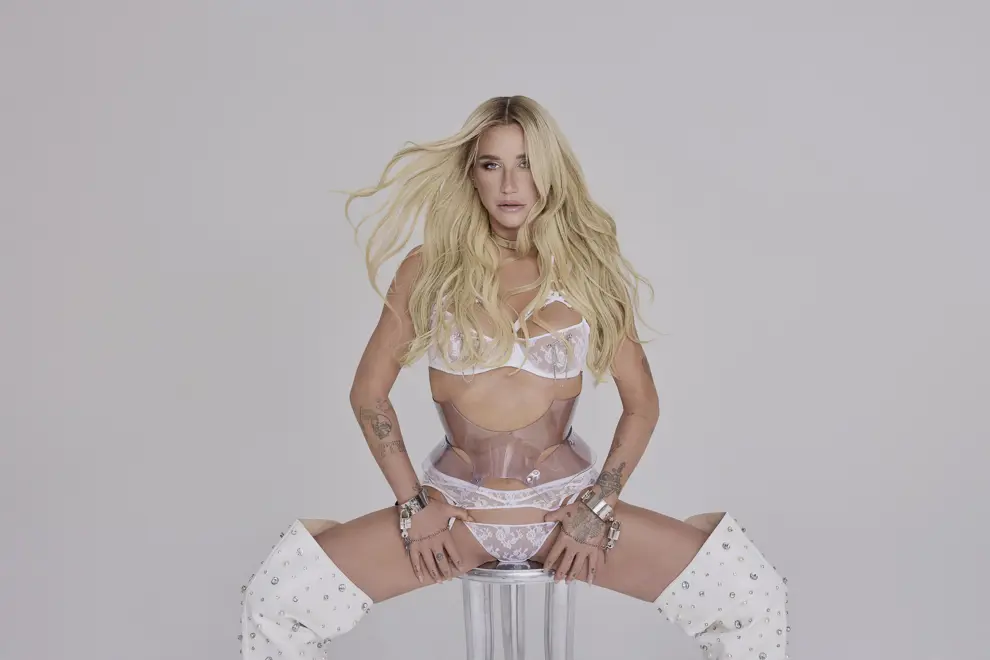
Apart from the massive moves in terms of releasing new music in 2025, Kesha has also spent a large portion of the year touring North America as part of her extensive Tits Out Tour.
Describing the tour as equally amazing and healing, the audience response to the shows has been incredible as well. Following a July performance in Detroit, crowds began responding to a performance of Praying with extended periods of applause.
By the time the shows reached New York City just under a fortnight later, the Madison Square Garden crowd's applause lasted to the point where Kesha almost had to pay overage fees of $80,000 a minute to facilitate the extended response. "It was fucking insane," she admits.
"The shows have honestly been the most healing experience of my life," she adds, warning that this area of discussion will soon make her emotional. "To go from being a girl that felt so weird, questioning your sexuality, totally alone, eating lunch in the bathroom by yourself, to becoming a pop star.
“Then, going through the 10-year litigation process, I went through and once again feeling so cut off from the world and alone, to getting on stage in front of 25,000 people that are just clapping for you…
"Just standing there has just reminded me that I'm not alone, that I never have been, and that I'm never going to be alone," she explains. "I think that message is really important because it isn't just for me; for anybody who's ever survived anything they shouldn't have had to survive, you're not alone even in the moments that you feel so fucking alone."
It's this sort of energy and healing mantra that Kesha will bring to Australia when she visits in February. Having visited Australia briefly for a pair of dates in January and prior to that, for Sydney Mardi Gras in 2020, her most recent headline tour took place back in October 2018.
This time, she'll be visiting Brisbane, Sydney, Melbourne, Adelaide, and Perth, and though extended periods of overtime clapping can't be promised by her fans, she admits that she's eagerly looking forward to the shows, with fond memories of her formative visits still fresh in her mind.
"I remember playing Future Music [in 2011], and the after parties for that were just out of control," she remembers. "I've had so much fun in Australia and the crowds and the fans. I feel like part of my DNA must be Australian because I really do feel like I'm part Australian.
"Like, y'all go hard," she adds. "You're so much fun, and I feel like you're just always down for a good time. I feel like you really live by the words of Die Young."
Indeed, while the majority of her Australian fans will indeed "make the most of the night like we're gonna die young," Kesha promises that the shows are going to not only be some of the best that fans have experienced, but that she's delivered.
"You're about to see the best show of my life," she notes. "I really try to create community and a safe place for everyone to completely be themselves. I want you to go fucking crazy with your outfit and get ready to dance and make thousands and thousands and thousands of friends.
"That's my favourite part of my shows – I feel like people always leave with more friends than they came with. And I love that.
"I also set an intentional journey to tell my life story in the name of self-love, not only for myself, but for everyone else," she adds. "And I reprogram all of the songs that are hard for me to listen to because of the personal things I've gone through. I reproduce them, and we reprogram them together in the audience."
That's exactly where we find Kesha in 2025. It's not just about using art to overcome, but it's about using her station and her influence to ensure that no one is left behind as she continues to thrive.
She's an artist making full use of a rare second chance, and the music industry is about to be all the better for it.
Kesha's Period is out now, while tickets to her 2026 Australian tour are on sale now.
This article mentions assault and trauma. If you or someone you know is affected by these experiences and needs to contact someone, please get in touch with 1800RESPECT on 1800 737 732 or visit 1800RESPECT.org.au.