Now in its 11th year, the Human Rights Arts & Film Festival remains one of the stand-outs on the local cinematic calendar, both for its social impetus and its artistic quality.
As popcorn pictures keeping selling us grander fantasies, HRAFF shines a light on reality; its films dealing with social issues, often exploring the dark underpinnings of late-period capitalism. For those in the grips of MCU fatigue, diving deep into the HRAFF slate is always a welcome tonic.
AFTER THE APOLOGY

HRAFF’s opening-night film is a Melbourne-made documentary shining a light on a contemporary phenomenon with unsettling echoes of the Stolen Generation: the exceedingly-high rate of Aboriginal children taken from their families, by the Department of Child Safety, and placed in white communities. Director Larissa Behrendt gets to know the group Grandmothers Against Removal, a crew of pissed-off, foul-mouthed matriarchs who see institutionalised racism and call bullshit; her film taking the tone of a polemic. “What a dickhead!” spits one of them, midway into a talkback-radio rant from Alan Jones, switching the blowhard-relic off midway into a monologue about the need for stolen generations, both then and now.
ANOTHER NEWS STORY

Film festivals —like HRAFF itself— are filled with documentaries chronicling the migrant crisis, which is effectively the definitive subject of this century so far. Orban Wallace’s documentary is a pointed study of what this all means: not just the migration of people or the politics that deny them their humanity, but of this being a ‘story’, something chronicled as it happens. Wallace camps out on the frontlines of the refugee influx into the EU, but turns his camera onto the journalists and media members who are there. What does it mean to ‘cover’ this crisis? To have this be a job? The resulting kept-scenes and collated-sound-bytes range from depressing to enlightening; and, in turn, Another News Story is at once wry and horrifying. Its simple premise births a complex conversation about media, narrative, empathy, and inhumanity.
BORDER POLITICS
Australia’s great cultural shame —the treatment of refugees; horrifying human-rights violations being staged in our name— impels this talking-heads-filled travelogue, directed by Judy Rymer (maker of recent HRAFF opening-nighter I Will Not Be Silenced). She follows Melbourne human-rights barrister Julian Burnside —first drawn into this realm by the Tampa case— around the world as he explores immigration laws, and how they reflect on the societies that make them. It begins in Australia, but radiates outwards, inevitably ending on the US/Mexico border, with Trumpian hate-speech duly playing out. There’s nothing striking about the filmmaking, and the subject is a familiar one, but Burnside is an eloquent host —our politicians, he says, are “inducing us to tolerate what is intolerable”— and the humanity, throughout, is palpable.
BREXITANNIA

Brexitannia’s banal presentation —a parade of uncut to-camera testimonies, shot in B&W in old-fashioned-TV aspect-ratio— belies the complexity and mischief at play in this documentary. Timothy George Kelly’s film is told in two parts. In the first, the common man —from all across the UK, in different countries and socio-economic climates— gives their opinions on Brexit, detailing why they voted the way they did. In that nought-as-queer-as-folk fashion, they’re a cast of characters, ranging from eloquent to idiotic, enlightened to small-minded (one old-timer really, truly spouts a paranoid conspiracy theory about the influx of immigrants being part of a sinister ISIS plot). In the second half, Kelly turns it over to the ‘experts’; figures who were, indeed, demeaned by Leavers during Brexit campaign politicking. These talking-heads —who include Noam Chomsky— see things in a far-bigger picture than the regular-folk, talking about grand social forces, systems of power, late-period capitalism. The result is an absurdist tragicomedy about the insane range of individual opinions, plurality existing at odds with clarity.
FOOD FIGHTER

The food-waste issue is tackled through a ‘cult of personality’ documentary, Dan Goldberg following Ronni Kahn, the founder of OzHarvest and the ‘local face’ of food waste. Kahn is a magnetic figure: garrulous, energetic, charismatic, colourful; she’s compared, herein, to a “Jack-in-the-box”. The camera is drawn to her, magnetised by her can-do spirit and ambition. Just as, Kahn hopes, donors, politicians, and policy-makers will be drawn to her, too. Food Fighter takes its cues from Kahn: it’s short and sweet, bright and breezy; made with an ultra-accessible, TV-ish aesthetic, not to mention an absence of cynicism and sense of aspirational inspirationalism.
FREEDOM FOR THE WOLF
Rupert Russell’s searing, incisive documentary looks at the rise of ‘illiberal democracies’, places where the illusion of democracy remains, whilst the rights of the individual are being stripped away. It starts out far away: in Hong Kong, where the handover meant local elections were now merely a choice between Beijing-approved candidates; then Tunisia, where the brushfire of the Arab Spring has allowed political-Islam to rapidly grow; then India, where anti-Muslim Hindu-first parties are pushing a populist form of economic nationalism. But, Freedom For The Wolf slowly inches closer to home. Eventually, it arrives at the US, with its militarised police-force, its abuses of citizens rights, a political system controlled by the wealthy elite who bankroll candidates, and, yes, a Cheeto-coloured demagogue ready to repeal so many hard-fought freedoms. It’s a sad reminder that even the most entrenched liberal democracies aren’t guaranteed to remain that way; the powers-that-be hoping citizens are too distracted by consumer choice to care about the erosion of their civil liberties.
HER SOUND, HER STORY
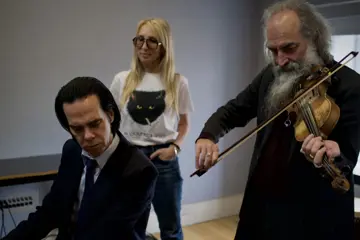
After a show at Melbourne Music Week in 2016 —celebrating women in the Australian music industry— Her Sound, Her Story is now a documentary of the same name. Claudia Sangiorgi Dalimore sits down a host of local musicians: Clare Bowditch, Jen Cloher, Stella Donnelly, Banoffee, Ecca Vandal, Okenyo, Ngaiire, etc. The conversation is wide-ranging, from soft sexism to sexual assaults, industry politics, sexuality, creativity. The angriest are the music-biz elders —Deborah Conway, Tina Arena, a very-pissed-off Kate Ceberano— who suffered through the grotesque machismo of the bad-old-days. But the film itself is more celebratory than salty, its ultimate goal echoed in the words of the ever-eloquent Mama Kin: to “gently, subversively challenge the status quo”.
LAST MEN IN ALEPPO

“We’re going to die like everyone else here,” says one of the White Helmets in Feras Fayyad and Steen Johannessen’s remarkable documentary. In the war-ravaged Syrian city, this handful of activists go out on the wake of bombings to dig out survivors —and the dead— from the rubble; Last Men In Aleppo built from astonishing on-the-ground footage. Its most profound moments come when the daily domestic turns from quotidian to terror-struck, coffee preparation or playground trips with the kids becoming harried, harrowing when bombers are heard in the air. It’s a portrait of life —and death— in a city under siege.
PIRIPKURA
There are only three of the Piripkura people left alive. Two of them still live in their native lands, in the remote wilds of the Brazilian Amazon. Whilst they’re still alive, it offers environmental protection for those lands, so local foresters must periodically head out in search of them, taking the third Piripkura person —who no longer lives the traditional life— with them for translation. Filmmakers Renata Terra, Bruno Jorge, and Mariana Oliva tag along, Piripkura essentially heading out into a real journey into the wilderness, the unknown of the jungle. When we eventually meet these last two tribesmen —Pakyî and Tamandua— there’s echoes of first contact, feelings of wonder, and the slow, uncomfortable dread of tragedy. As the last members of an ethnic group, they’re avatars of environmental destruction, the wave of extinctions, the erasure of traditional cultures, and the scourge of colonialist racism.
SILAS
Anjali Nayar and Hawa Essuman’s on-the-ground documentary views Liberia through the prism of its titular environmental activist, Silas Siakor. He tackles entrenched corruption in the West African nation by chronicling it at its roots: Siakor and a network of local activists using phone technology —pictures, videos, centralised apps— to catalogue minor incidents of illegal logging on a local level, in their communities. From there, they trace this up through the chain-of-command, finding, as always, that corruption stems from the top, with Ellen Johnson Sirleaf tangled up in webs of nepotism, cronyism, and internationalist corporate racketry. Its most horrifying scenes come during the breakout of ebola, where millions of dollars of international aid vanishes, Liberian citizens suffering, dying, due to endemic corruption.
THE SONG KEEPERS
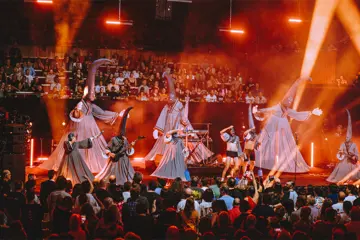
The Central Australian Aboriginal Women’s Choir, made up of people from Western Areyonga in the NT, sing traditional hymns taught to their community by German Lutheran missionaries 140 years ago, translated into Pitjantjatjara and Arrernte. Their music is a fascinating study in cultural —and musical— exchange; the foreign turned wholly local, the imposed made one’s own. When the Choir tour Germany, performing in a run of churches, that theme is turned into narrative. Where most on-tour documentaries struggle to find anything profound to say, Naina Sen’s film is thick with ideas about heritage, oral tradition, the passage of culture, and Australia’s troubled history.
THIS IS CONGO
“Congo will stagnate in misery forever,” a Congolese military higher-up —speaking under the cloak of anonymity— offers early in this grim, unwavering, vividly-photographed documentary. It’s a portrait of the African nation that seeks to understand how a country so rich in natural resources and mineral wealth remains mired in poverty, trapped in cycles of armed conflicts that create a state of perpetual civil war. The most astounding images in Daniel McCabe’s documentary come when he tags along with military troops: sees them in training, then in conflict; the cameraperson witness to history and horror, ducking to avoid firefights, then chronicling the dead bodies left in the wake of the skirmish. This Is Congo balances such on-the-ground, experiential images with bigger-picture political views. Modern-day evils are traced back through extractive economic systems and rampant corruption, through the CIA backing of Mobutu and execution of Lumumba, eventually arriving at the history of colonialism and slavery, seemingly-distant horrors whose effects still linger, open wounds that’ve yet to heal.
A WOMAN CAPTURED
It’s a tale of “modern-day slavery”: in an unnamed Hungarian town, 53-year-old Marish —toothless, cigarette hanging from her mouth, every line on her face wearing the weight of a hard life— toils as a live-in servant, unpaid help who tends to all housework, at the beck and call of an abusive matriarch and her sons. Marish also works a factory job, but all her salary is taken from her by her standover boss-back-home. Director Bernadett Tuza-Ritter gains access to her subject by paying the lady of the house 300 Euros a month, watching on with fly-on-the-wall observationism at Marish’s thankless, indentured life. Eventually, the presence of the filmmaker emboldens the subject, and, as Marish (who reveals, late in the film, that this is only her ‘servant’ name) starts plotting her escape, the lines between impartial observationism and active participation are blurred. I don’t know if it’s ‘spoiling’ things to say that escape is eventually found; but, in a festival where the subjects and themes can be impossibly heavy, grim, oft guilt-inducing, the joy felt in A Woman Captured’s final reel is a blessed relief, and genuinely celebratory.