International Day of People With Disability (IDPwD), celebrated on December 3rd, seeks to amplify the voices of people with disabilities.
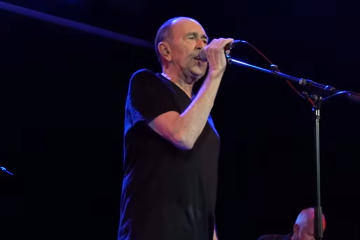
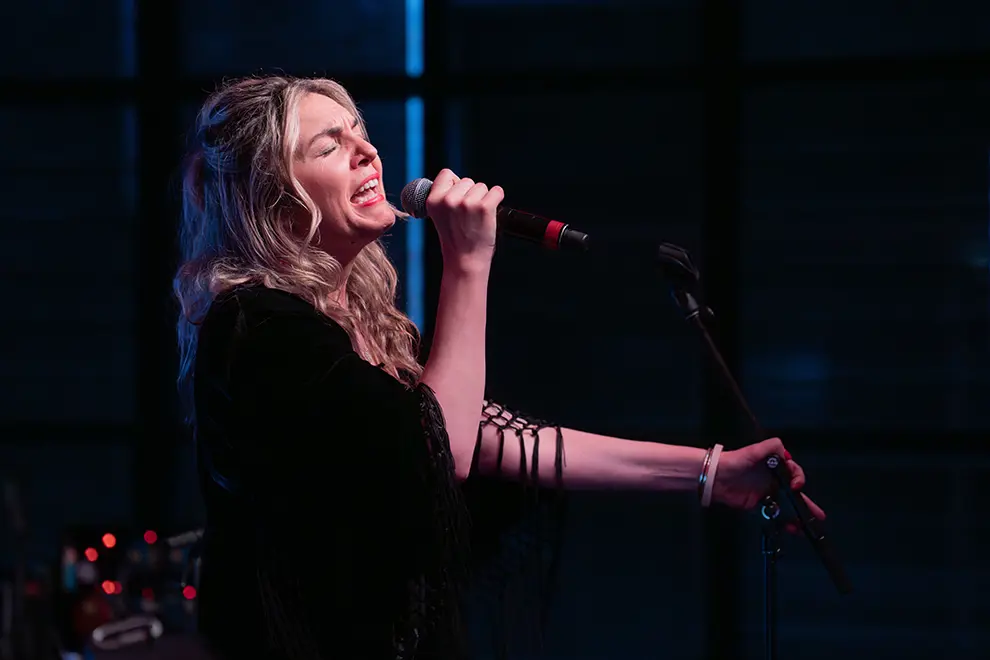
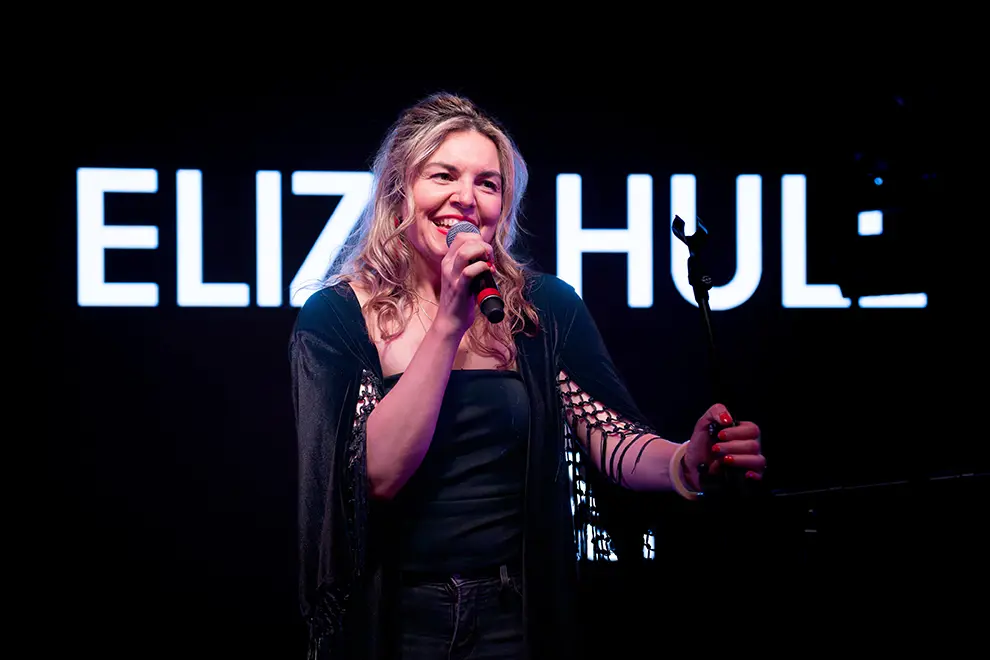
To mark this United Nations-observed day, Live Nation hosted the final instalment of 2025’s Ones To Watch series on November 26th, shining a spotlight on three emerging artists with disability: Mathilde Anne, Cooper Smith, and r.em.edy.
Just prior to the showcase, we caught up with the event’s curator/host, Eliza Hull, and the opening performer, Mathilde Anne – at Live Nation’s Australian headquarters in Collingwood – and discovered the overarching goal is to adapt existing spaces so that they cater for the needs of every artist with lived experience.
Curation Strategy
“I wanted to make sure that we showcased the fact that disability doesn't just look like a wheelchair user – disability looks like all different things,” Eliza points out.
“For me, I have a physical disability – so it means I walk differently – and I've had that since I was five. And then Cooper [Smith, DJ/producer], who's performing tonight, is somebody that has cerebral palsy.”
Invisible disabilities are represented in this Ones To Watch showcase as well: Mathilde is autistic and also has ADHD and OCD, while r.em.edy suffers from chronic fatigue and temporomandibular joint dysfunction (TMJ).
“I definitely want to highlight that there's just so much great talent out there; I can't believe how many artists with disabilities exist, and yet we are still seeing quite a lack of representation of those artists.
“For too long we haven't seen these artists that are often marginalised, often left behind and often can't get up on the stages.”
Finalising this particular Ones To Watch lineup “wasn't easy” for Eliza, who was keen to showcase not only a “cross-section of disabilities”, but also “a cross-section of different [musical] styles”.
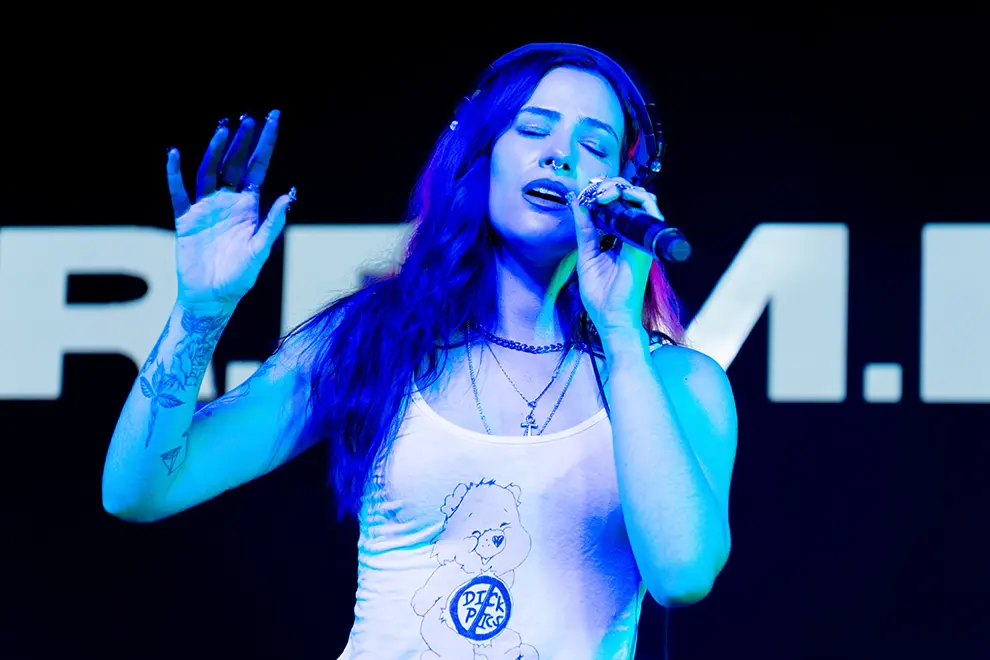
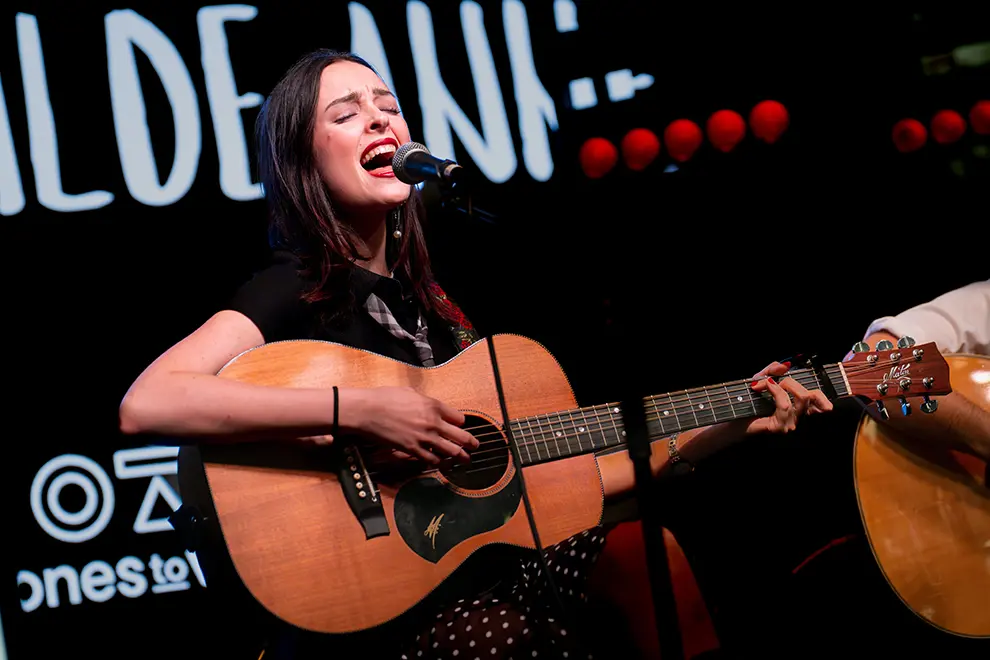
“We have an acoustic, kind of Billie Eilish-sounding artist in Mathilde,” she notes. “r.em.edy's more of a sassy soul/R&B singer and then Cooper is an electronic artist.”
“These Are The Changes That I Truly Wish Were Happening When I Was A Young Person”
“We are 20% of the population and this feels like a very, very positive step towards change,” Eliza – an award-winning Victorian musical artist, writer, journalist and disability advocate – says optimistically. “I never thought a major music company like Live Nation would do an event like this.
“As a young person growing up, I never saw an artist that moved like me, that had a different body, that had a different brain, that had a disability. And it really changed the narrative of my life, I guess, because without that representation – without celebrating artists with disability – we are left feeling like we are different and that's a bad thing. But actually it is the thing that sets us apart; it's the thing that we need.
“And tonight, I feel like, is a first step towards being more inclusive,” she adds. “Having a night where we not only get to hear the stories – share the songs of artists with disability – but also a ramp is up on the stage! They're the changes I've been really wanting. And having an Auslan interpreter here and a space that people can go to if they need a break – these are the steps that matter.
“If I had been 16, 17 right now – and I guess the change is starting to shift – it would have made a huge difference. And I feel like these are the changes that I truly wish were happening when I was a young person.”
“Better Than Mine!”: Daniel Johns On Eliza’s Tomorrow Cover
During last month’s Melbourne edition of Daniel Johns’ In Conversation: What If The Future Never Happened?, the man of the hour wholeheartedly endorsed Eliza’s stunning version of Silverchair’s Tomorrow – which features in the TV series, Playing Gracie Darling – extolling, “I thought it was better than mine!”
When I mention Johns’ rave review, Eliza, who was in the audience that night, smiles before responding, “I mean, that's a lie, right? That was very unexpected – I didn't know that was going to happen. The only word I can think of is ‘wild’, and kind of surreal, actually, because he's an artist that I've always admired so much. And then for him to use that moment, that is really his moment to be in the public – because, you know, he's not often on the stage – to speak about my version of the song was like, ‘Wow!’
“It just shows who he is, though. Daniel Johns has had chronic illness [reactive arthritis] before. He was using a walking stick for a while.
“And actually before I did that Tomorrow cover, I put a song out called Running Underwater that I'll perform tonight. I'm only gonna perform one song at the end. There's a clip that I put out with a dancer with one leg – she's an incredible dancer called Roya The Destroyer – and when I put that out, [Johns] shared that all over his social media and then wrote to me and said, ‘Never change’. And, again, I was like, ‘Wow, I can't believe it!’ I feel like he embraces difference.”
“My Producer Said, ‘Don’t Ever Walk In Your Music Video, Because Nobody Will Ever Listen To Your Music’”
Later, while introducing her closing performance, Eliza explains Running Underwater is “very dear to [her] heart”. “I wrote this song about living with my disability [Charcot-Marie-Tooth],” she continues, “which is a neurological condition. And I was told by my producer, very early on – I never worked with this guy again, but he said, ‘Don’t ever walk in your music video, because nobody will ever listen to your music.’
“So when I decided to put this song out, I did that – I walked in my music video. And I also had an incredible dancer called Roya The Destroyer, who has one leg, and she fully embodied this song in the most incredible way. And I feel like this, to me, is kind of my step forward of trying not to hide a part of me that has existed for so long that I was really afraid of, because people do stare, people do hold assumptions about what it is to be a disabled artist and this song is really pushing against that, it’s celebrating who we are.”
There’s not a dry eye in the house when Eliza sings Running Underwater’s closing lyrics: “Take the weight off me/Show my bones for you to see.”
Although Charcot-Marie-Tooth is a degenerative disorder, Eliza truly believes that she has “almost pushed back on the feeling of its progression” through being a “busy human”. “I'm constantly moving and I think that's been a really good thing,” she contemplates. “I literally had people say, ‘Don't exercise,’ but it's the opposite.”
Introducing Mathilde Anne: “The Next Billie Eilish”
“I first saw Mathilde many years ago,” Eliza recalls, “and she made an incredible record [2024’s Normal] with an artist called Feelds, who is a producer called James Seymour. And one of her songs – you have to listen to it – it's called Haunt You (When I’m Gone).
“It's so evocative and the way that she sings – I feel like she's the next Billie Eilish,” she adds. “She's got this really beautiful, vulnerable sound that I adore and I can't wait for you to hear her.”
“Some People Ask For Ovalteenies On Their Rider And Some People Ask For A Quiet Space”
When asked whether she felt inspired by anyone on the spectrum who was smashing it in the Australian music scene, Mathilde replies without hesitation: “Alex The Astronaut is an incredible artist, really strong with advocacy. I listened to – I think it was their booking agent or their manager – give a talk [Great Minds Think Differently – Neurodiversity In Music] at BIGSOUND two years ago that completely changed my perception of being on the spectrum in the industry. Because, for ages, I was really ashamed of who I was.
“I think even a couple of years ago, there was so much stigma around what it meant to be autistic – and a woman – that I just didn't feel comfortable even sharing that with my close friends. Then I went to a show and I couldn't imagine myself being in those spaces, and having my needs not being seen as overwhelming.
“And then Alex's manager or booking agent was talking about the things that they have in place on their rider to make sure that they have a good show and to help reduce burnout, which is something that happens a lot to people who are on the spectrum. And to have a quiet space. And after tours I think they have a rest period where they were allowed to go do something else so that they could have downtime. And it wasn't talked about in this way that was over the top or like a diva experience, or too hard to accommodate. It was like, ‘This is on the rider.’
“Some people ask for Ovalteenies on their rider and some people ask for a quiet space. So seeing that just completely changed my perception and really opened me up to starting to ask as well. And I noticed that when I started asking, people started saying yes.”
Eliza believes that if venues requested the artist’s access and rider requirements simultaneously it would be “a real game-changer”.
“Fuck Normal”
While introducing Mr Bystander, her song about “calling out bad behaviour”, Mathilde shared some real talk: “Whenever you see something and you can say something, and it’s safe to do so, and you choose not to – excuse my language – then you’re a dick.
“This is a show where we’re talking a little bit about disability as well. Women on the spectrum are – I don’t know the exact statistic – but very much more likely to get into a domestic violence relationship than neurotypical women. It’s because we can’t read the signs, we take everything for face value even if that’s not necessarily what’s happening.
“And there’s not a lot of conversation about that,” Mathilde adds. “So a lot of women on the spectrum get into these positions and we don’t know, and people around us don’t say anything because I guess the norm is to not say anything. But once again, excuse my language, ‘Fuck normal’.”
“Dreaming About A Time Where We Can Be Loved Just To Be Loved”
Mathilde’s preamble before Sleep With Me Tonight also hit home: “I think as women, it happens to women and men a lot, but I think this is, unfortunately, a universal experience for women, is being in situations where our no is turned into a yes, because someone else decides so. And that can happen in very violent ways, and that can also happen in ways that you don't realise until months or weeks or years later, or until you have a conversation with a friend. And unfortunately, I personally do not know a single woman that doesn't have a story. So that means that a change needs to happen within the community of people that are quite often perpetuating this.
“I wrote this song not about calling that out, because I feel like we call it out all the time and I'm kinda sick of it. But I wrote this about kind of wanting to reflect, and I hold a different space for my friends and I, of dreaming about a time where we can be loved just to be loved, and kissed just to be kissed, and it can mean nothing more than hello. So this is a song I wrote about that, and it's called Sleep With Me Tonight. I hope it can mean to you what it means to me.”
“These Stories Are So Important”
“Disability is a part of the world, we are 20% of the population,” Eliza notes. “And actually I read a stat recently that said we're twice as likely to make art, and I think this is why these nights are so important, because we need diversity in the music industry.
“These stories are so important and not only from the perspective of being an artist with a disability, but also it’s just incredible music.”
“We Don't See Enough Artists Like Cooper”
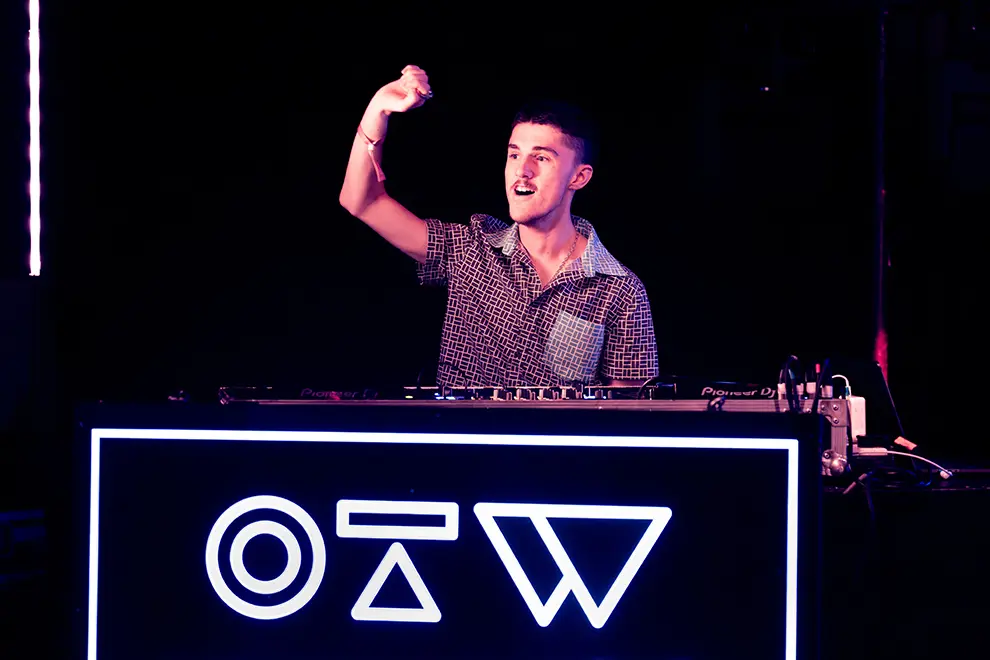
“I first saw Cooper Smith at Ability Fest and was completely blown away by his stage presence, but also his music,” Eliza remembers of her introduction to this evening’s joyous, charismatic interstitial DJ. “I fell in love with him and his story as well, as somebody that has a disability and is pushing up against those boundaries. We don't see enough artists like Cooper.
“If you are keen to hear his music, he actually put out a brand new song just this week. It's called Gunshy and it premiered on triple j – it’s a tune, a really good tune. He's worked with incredible producers like Carl Cox and continues to push himself musically and artistically. So I truly think Cooper is one to watch.”
r.em.edy “Is Completely Full Of Sass”
Eliza discovered r.em.edy via a BIGSOUND showcase “and absolutely fell in love”. “This incredible artist is going to blow your mind. She is completely full of sass,” Eliza gushes while introducing r.em.edy at the Ones To Watch showcase.
“She is neurodiverse, she has chronic illness, she writes incredible songs that get stuck in your head all day long – I know this from experience – and she just exudes confidence. I said to her backstage, ‘I feel like you're really in your body.’ An artist with a disability that is showing up, she is, in my opinion, one to watch.”
“We've Seen Some Massive Shifts”
“For a major music company to be doing an event that is actually thinking about disability is not something I've ever seen,” Eliza admits, commending Live Nation for giving these artists a platform. “To me, this feels like quite a big statement and a sign of the times. So we've seen some massive shifts.
“I think it's important to mention the big spaces that we can change, because I think venues are up against [recovering from the impact of] COVID and financial difficulties, and also a lot of buildings actually can't change because of regulations. So I think about the bigger spaces that can make change – the big companies.”
“Government Funding Would Really Help To Make Venues Accessible”
“I think government funding would really help to make venues accessible,” Mathilde proposes, “because a lot of Melbourne venues – they want to be accessible, but they're in old buildings that are heritage-listed or, you know, they don't have the funds because they can barely stay open and the government isn't even helping fund them as an establishment in general, let alone an accessible establishment.
“So I think that's something I've found as an artist going to shows where there aren't spaces for artists without lived experience, let alone artists with lived experience, and that can deter a lot of artists. It can also deter us from having the audience that we want to bring in: if you don't have accessible spaces, it's harder for us to book shows that are accessible and I think that's something everyone here really wants to do. So having government funding would really help that.”
“How Do We Make Live Shows More Accessible?”
“I'm definitely always thinking about the audience,” Eliza acknowledges, “so how do we make live shows more accessible? Obviously physical spaces, having Auslan interpreters on stage for people who are deaf or hard of hearing, quiet spaces for autistic people or people that have sensory sensitivities.
“The Grammys were really great recently. They had people doing image descriptions on stage – saying what people were wearing – so that people who were blind, or had low vision, got a sense of that. And we've seen [Auslan interpreters] – it's called American Sign Language – on stage with artists like Pink at the Grammys.”
Making Auslan Interpreters The Norm At Live Music Events
Some old rock dogs may be experiencing Auslan interpreters at a live music event for the first time during the Australian leg of AC/DC’s current Power Up tour.
“It’s so important that we have Auslan interpreters at our live music events,” Eliza stresses. “I think there’s still so much stigma when it comes to our deaf community and even being an artist that is deaf. There are incredible artists that exist all across the world that are deaf or hard of hearing.
“One in particular is James Holt. He sounds like the new Beatles and he is deaf, and really pushing that narrative of what it means to be a deaf musician. Because deaf and disabled musicians exist and nights like this remind us of the positivity and the unique storytelling that we bring to the music industry.”
Ramp It Up
“I think it's a small gesture to get a ramp up onto the stage, and we've seen that happen at the Grammy Awards, Eliza explains. “I very vividly remember watching the ARIA Awards when I was 15, literally seeing rows of stairs to get up to the stage and just thinking to myself, ‘Well, that won't ever be possible’.
“For me, the hardest thing has been getting up onto a stage. If there's no railing with stairs, then I literally have to fall because I have low muscle. So for me to get up on stage with stairs, it's really hard. I've had to have my band sometimes literally piggyback and lift me up onto stages. Sometimes I'll go to a venue, and you think that the stage is accessible and then you realise it's not. Or you can get onto the stage, but there’s 50 stairs to get backstage so you can't get there – those kinds of things.
“I know it's a small gesture to get a ramp up onto the ARIA stage, but when an artist that has a physical disability is watching those awards and also they have presenters like Dylan [Alcott, a wheelchair user who presented the inaugural Global Impact Award at this year’s ARIA Award ceremony], who needs a ramp to get up onto that stage anyway, they should have one, you know? Why can't we have a ramp up onto that stage that is lit with beautiful fairy lights and looks great?”
Launching Australia’s Live Events Access Charter
“It was great to tour in England last year,” Eliza acknowledges. “I did a five-week tour, and they've got a Live Events Access Charter, where you can go onto a site and see what the venue's rated – in terms of gold, silver or bronze standards – with accessibility.
“As an artist, that was a game-changer, because I could look up a venue and go, “Oh, well, this venue’s [rated] gold so the stage will be accessible. And not only that, predominantly a lot of my audience have a disability. So I want to make sure that it's accessible to the audience as well.
Any chance of Australia following suit and launching a Live Events Access Charter? “They are going to bring it here,” Eliza confirms. “It's going to launch next year. I think it's got a pilot program starting in New South Wales to begin with, and then nationwide eventually. But it's going to take time.”
“A Lack Of Empathy When It Comes To Invisible Disorders”
“I think there's a little bit of a lack of empathy when it comes to invisible disorders or illnesses,” Mathilde says. “I understand, but it's like, I'm autistic, so sometimes I only see in black and white – so sometimes I can't wrap my head around stuff – but I still try to.”
“I'm Still Not Really Seeing Enough Artists Getting Opportunities”
“I always think, ‘How do we really make some change?’ I think that that has to come from the top and, for me, it's representation. Often I will look at festival lineups – or major touring artists coming to this country – and rarely, if ever, have I seen an artist with a disability on those lineups.
“And disability looks like different things. So it's possible that artists might have a disability and not maybe identify with the word, or have a chronic illness, or might not disclose that they have a disability. But, from what I can tell, I'm still not really seeing enough artists getting opportunities.”
“Imagine If We Had More Coldplays?”
“We have seen Coldplay being artists that have really amplified people,” Eliza extols. “They had Emanuel Kelly support their show at Melbourne Stadium, and I got to sing with him.
“At Glastonbury, they had Victoria Canal perform [during their 2024 set] and she has one arm. She's an incredible singer. I feel like they always book artists with disabilities. So imagine if we had more Coldplays?”
“If We Had Accessibility, I Personally Don't Believe We Would Be In A Ticketing Crisis”
“We're in a ticketing crisis at the moment,” Mathilde points out. “So a lot of artist shows are getting cancelled, which means that the live venues can't fund themselves and they can't fund accessibility. But if we had accessibility, I personally don't believe we would be in a ticketing crisis because there is an entire group of people that want to be going to shows, and there are just no shows that they can attend where they feel like everybody else in the crowd.
“Even if you take certain festivals, and I won't say what they are, but there are some where they have accessible spaces. And I have friends who have gone to those accessible spaces, and they were designed by people that don't have lived experience; they were designed by people assuming what people with lived experience would need. And so, at one of them – they were at a festival – they couldn't get into the accessible stage zone. So they couldn't get their wheelchair through, the crowd wouldn't part and security wasn't worded-up to let people with special needs get onto the platforms.
“You need passage through the crowd, you need security to know what's going on, and it can't just be these small spaces, ‘cause if you advertise an event as accessible, then we're all going to show up because we can actually attend this event. If you can't cater for a large number of people that have different needs, then it's not an accessible event.”
“We're Artists That Have Disability, Not Disabled Artists”
“Tibbi booking agency, who I'm with, are really pushing to make accessibility just an everyday thing,” Mathilde enlightens, “not something you really have to talk about.
“The goal is to get to a point where we're not having to have ‘disability day’, ‘lived experience day', where we don't have to pressure [the gatekeepers] for artists with disability to get on the bill. And those artists aren't being defined as disabled artists, they're artists with disability. That's a very big thing that we all want to join together and advertise, is we're artists that have disability, not disabled artists.
“So your spot on the bill, your spot in a show, shouldn't be because you're ticking a disability box, it should be because the stage is accessible and we were just as good as everybody else so we got there. I think that's what we're pushing for. So you have to start by doing something good, so you have ‘disability day’, but eventually it'd be nicer to be on a lineup that would just be integrated naturally.”
“I'd love to see more awards for artists with disability,” Eliza adds, “but also just more awards that are given to an artist with a disability – that isn't a disability award.”
“I Had Lost My Love For Music, Actually”
“I know the importance of talking about it [being a musician living with a disability], it feels purposeful,” Eliza considers. “And I had got to a point where I had lost my love for music, actually, because it is a bit of a tricky industry – as we know – and I kind of needed to find my purpose within it.
“So actually, the world was starting to shift – I was starting to shift – and I was like, ‘Okay, I want to really advocate for it’. Now, I spend time with lots of organisations – like the ARIAs and Music Victoria and APRA – talking to them and telling my story.
“The next record I'm about to make just doesn't even talk about it. And I feel like I'm making my best record [yet]. I went to London and I worked with some great writers. I guess [my genetic condition] will always be part of who I am and I think that's why I sing the way I sing, because I have that emotion and human experience of living in a different body. But I also feel pretty burnt out by it. I think mainly because I've spoken about it for so long and sometimes the shifts don't happen quick enough, or they say they're going to change and then they don't.
“But also, I've got a lot to talk about, you know? I've got relationships I want to talk about, or experiences with family or the state of the world or the shifts that we're seeing – like, the internal shifts that I'm feeling as a woman.
“So, I don't know, I just feel like it's not for any reason of, like, I'm afraid of it or I want to hide it – quite the opposite. More like I've got other things to talk about.
“I also want to make sure that I'm not a gatekeeper and that's where I'm at now, where opportunities come to me and I'm trying to move them on to other people.”
Nat Luna Supporting A Big International Artist: “That's The Change I Want To See”
“There's one artist that I wish was on this [One To Watch] lineup and her name’s Nat Luna,” Hull reveals. “And what's so interesting about her music, I guess, is that she is talking about relationships and love and sex, and she's a wheelchair user. Her lyrics are really sexual and we have not seen that in Australia. She's getting a lot of love from triple j. She’s an R&B artist and she really would love to support a big international R&B artist – why don't we see her on a stage like that? That's the change I want to see.
“Even sometimes over the last couple of years, the moment that I say, ‘Oh, yeah, I walk differently, I've got a disability,’ you can kind of see people in the industry – their faces just change slightly. So I feel like there's still a little bit of stigma, but we are seeing some shifts in that attitudinal change.
“Mathilde said it perfectly when she said, ‘Fuck normal,’ and I think that is what tonight is all about.”
This piece of content has been assisted by the Australian Government through Music Australia and Creative Australia, its arts funding and advisory body