 Willie Nelson Profile
“I hate taxes!” Robert Cray snapped in 1040 Blues (1994) although he hastily clarified it was just filling out the 1040 forms paperwork involved he had a gripe with,
But US country singer Johnny Paycheck who had a hit with Take This Job And Shove It, knew exactly where the papers should be shoved in his song Me And The IRS (1978).
Cheap Trick pulled no punches on Taxman, Mr. Thief (1977) and neither were Sharon Jones & The Dap-Kings on What If We All Stopped Paying Taxes? (2011).
The best known song on the subject was the George Harrison-penned Taxman from The Beatles’ Revolver. In it, the taxman character sniggers:
“If you drive a car, I'll tax the street/If you try to sit I'll tax your seat/If you get too cold I'll tax the heat/If you take a walk I'll tax your feet/Taxman! “
The song’s opening line, “There’s one for you, 19 for me,” was how at the time, Brits earning over £1,115,000 were on a tax rate of 93%. It led to major entertainment stars forced to live abroad.
In the ‘70s and ‘80s when Australian-based acts were earning overseas royalties and finding ways to minimise their tax, it was said that Australian Tax Office (ATO) staffers subscribed to music magazines such as Juke, Smash Hits, and Rolling Stone Australia.
The idea was to monitor their news feeds for items about their new-found wealth including yachts, expensive cars, and property acquisitions. These would be checked with what was admitted in their tax forms.
In 2013, mainstream media revealed how the ATO used its power to obtain details of royalty payments by APRA AMCOS for three years to June 30.
An initial sample of 1,000 musicians, composers and artist management, among others, uncovered $512,000 worth of breaches.
As a result, the search expanded to 15,000 individuals and 1,000 companies, and the ATO forecast it would find up to $8 million in undeclared income.
Here are eight examples of Australian and international music names who found they had a tax to grind.
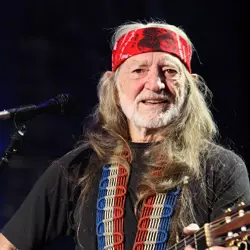
Willie Nelson
The country outlaw wasn’t anti-tax. After his arrest for possession of marijuana in 2010, he created the TeaPot Party with the motto “Tax it, regulate it and legalize it!”
But in 1990, the IRS (Internal Revenue Service) hit him with a $16.7 million bill for unpaid back taxes. His financial advisors Price Waterhouse had recommended he invest in tax shelters. These were flops, and the IRS refused to accept his deductions for 1980, 1981, and 1982.
Forced to sell his assets to stay out of prison, Nelson highlighted his plight to the world by putting out a double album which he titled The IRS Tapes: Who Will Buy My Memories?
Not only did the album’s royalties help pay off the debt but loyal fans responded by buying his items and then giving them back to him.
His attorney organised a deal with the IRS to bring the bill down to $6 million, and by 1993, he paid off the debt. All that was left to do was to sue Price Waterhouse for their financial advice and, in 2004, writing the song Tired about the episode.
Ja Rule
Hungry and bright, by the early 2000s Ja Rule had built a fortune of $4 million to $6 million. This was through selling 30 million albums worldwide, films as The Fast And The Furious, Half Past Dead, and Once Upon A Time In Brooklyn, and business ventures, including partnerships in technology and media.
The tech achievements included The Painted House which showcased Black NFT artists, and the Icon Live music streaming content from Musiq Soulchild, Rakim, and KRS-One.
But the IRS whacked him for not declaring income between 2004 and 2008, mostly from concerts and appearance fees.
In 2011, Ja Rule pleaded guilty and was sentenced to 28 months in jail. The term was extended due to another charge related to weapon possession hidden in his luxury car after he was pulled over for a traffic stop. In 2024 he signed a new record deal worth $100 million.
Tones And I
As reported by The Music late last week, citing sources Seven Network and The Herald Sun, Tones And I is being sued for over $400,000 ($432,797.27) by the ATO, relating to “BAS provisions and administrative penalties.”
She is also “liable to pay the general interest charge for each day at the end of which there was an RBA deficit debt”.
Court documents filed in Victoria’s County Court on April 23 named the singer by her real name, Toni Elizabeth Watson, and her Johnny Run Away Investments company which has been effectively buying multiple properties.
By her 30th birthday, Tones and I entered the Australian Financial Review’s Young Rich List in 2022 with an estimated fortune of $35 million.
Tracks as Dance Monkey and Fly Away not only broke streaming and chart records – Dance Monkey with two billion streams on Spotify reportedly earned her $12 million – but also used extensively on third party TikTok videos.
James Brown
James Brown was the “godfather of soul”, “hardest working man in show business” and “the most sampled man in hip hop”.
At his peak he was pulling $80 million a year ($18 million from gigs alone) and had royalties from a catalogue of 750 songs.
But by the time he died on Christmas Day 2006, his business was a mess.
The IRA wanted millions in back taxes, loans defaulted, there were royalty disputes with band members, rumours of suitcases filled with cash buried in his backyard, and older children who’d locked out his last wife from his 60-acre home with eight padlocks, were calling their lawyers to get a share of the estate, making up 14 known and unknowns claiming Brown as their father.
There were reports that some of those appointed by Brown to run his finances robbed him of millions of dollars and threatened with jail.
In this mess, the IRS had much to chase him and his estate for.
In 1999, for instance, he struck a deal where he mortgaged his royalties for $20 million. But in his tax returns, he was claiming just $100,000 earnings a year.
“Without an education, you might as well be dead,” James Brown blared away on Don’t Be A Dropout.
In it the soul godfather argued that growing up in poverty picking cotton, with minimal schooling and civil programs, he should be excused from paying any taxes at all.
Sigur Rós
Iceland has one of the most aggressive tax regimes in the world, and Sigur Rós found out the hard way in 2018 when the directorate of Internal Revenue (RSK) accused them of tax evasion of 146 million ISK (AU$1.39 million).
Their former accountant had missed out on filing tax between 2011 and 2014. Thirteen properties, two cars, two motorcycles and shares were frozen. The band argued the case was more negligence than evasion, and repaid 200% of the money.
The RSK dragged it on for five years. But the National Court stepped in, dismissing the case for most of the band in 2021, and the one against singer Jónsi and his accountant in 2023.
Jónsi complained that despite years promoting the country, Iceland is “now treating [them] like criminals.”
Ms. Lauryn Hill
In July 2013, Ms. Lauryn Hill started jail time after pleading guilty to not declaring over $1.8 million in income earned between 2005 and 2007.
Before the case in New Jersey, she’d paid back nearly $1 million in taxes and penalties.
The sentence included a $50,000 fine and three months in a minimum-security prison in Danbury, Connecticut. After her release in October, there was an additional three months of home confinement.
Hill’s post-Fugees career included her 1998 debut solo album The Miseducation Of Lauryn Hill which won five Grammy awards and sold more than 19 million copies worldwide.
She told the judge she meant to pay her taxes but had put her career on hold while she looked after her six children (five with Bob Marley’s son Rohan).
"I am a child of former slaves who had a system imposed on them. I had an economic system imposed on me."
Glenn Wheatley
At the suggestion of a solicitor, Glenn Wheatley tried to avoid paying tax on $650,000+ in earnings from managing John Farnham in 1994 and 1995 and promoting a boxing match with then world champion Kostya Tszyu in Melbourne in 2003.
The scheme was simple: if the $650,000+ was left in Australia, he’d have to pay 47% tax. The option was to send it to a bank in Switzerland, where the rate was 11%, and bring it back into Australia as a loan.
This was the time the ATO set up Operation Wickenby to catch the wealthy using tax havens.
Wheatley was its first celebrity scalp. He pleaded guilty, cooperated with the Australian Crime Commission, and believed the Director of Public Prosecutions (DPP)’s promised to support a suspended sentence.
He later told ABC’s Australian Story, "The morning of the 19th July 2007, the day of my sentencing (at the Victorian Supreme Court), my heart was pounding. I was trembling. There is no doubt that I felt that I was the tax office poster boy.
"And when the judge finally said to me, 'two-and-a-half years, with a 15-month minimum', it just took my breath away. Fifteen months, 15 months."
The sentence was actually for dodging $318,000 in tax, which he repaid. The last five months of his sentence was served in home detention.
Wheatley believed his celebrity status got in the way with the justice system. "Operation Wickenby were looking for $300 million in offshore money that they felt was due to the tax office. My $318,000 didn't touch the sides.”
The Rolling Stones
In March 1970, The Rolling Stones had a sober meeting with their financial adviser, aristocratic banker Prince Rupert Loewenstein.
Three months before, Mick Jagger had brought him in to save the mess their financial setup had become. This was due to two issues.
First, the tough negotiating New York manager Allan Klein (also The Beatles’ manager) was hired to to renegotiate their deal with Decca Records that he blustered would make them richer than The Beatles.
But in getting his mitts on their business, Klein ended up owning the publishing rights to The Stones’ entire ‘60s classics. He also ensured he got a cut in every aspect of their revenue streams.
Secondly, stuck with Britain’s 93% tax rate, the band owed £750,000 in back taxes, or $15 million today.
In 1969 their American tour was a sell-out, grossing $1.5 million ($12 million today). But after the British tax office and Klein took their cuts, the band was left with just $100,000 to split between the five of them.
At the March 1970 meeting, Prince Rupert gave them two options.
One was to remain in the UK, pay huge taxes, be stuck in the treadmill of owning more than they earned, have their assets seized because they were unable to pay their tax obligations, and ultimately go bankrupt.
Or they could get out of England for good and base themselves abroad. But they had to exit in 72 hours, before the British tax extension deadline ended.
The Stones escaped to the south of France where they cut Exile On Main Street in the sweaty basement of Keith Richards’ rented Villa Nellcôte surrounded by mythical tales of debauchery, all-day parties, frequent raids by French police and wall-to-wall drug dealers and gangsters. Only they could make being a tax exile cool and glamorous.
For bassist Bill Wyman it was a depressive time for himself, drummer Charlie Watts, and guitarist Mick Taylor to cut ties with England.
More so, there were comments in Parliament and in the media that The Stones’ encampment was “betrayal” to their homeland.
After that, the band used the Prince’s strategy of setting up private foundations in Holland.
All royalties and fees from records, concerts, merchandising and radio & TV airplay were funnelled through their Amsterdam-based company Promogroup. Their tax rate was now about 1.5 to 1.6%.
In 1975, the band made $35 million from touring alone – almost as much as what they made throughout the ‘60s. The stakes grew higher. Between 1986 and 2006, some £240 million went through that company. They paid less than £4 million.
It was perfectly legal. The idea was adopted by the likes of Pink Floyd, Led Zeppelin, and David Bowie, and today, elite sportspersons, media figures and influencers.