 Lynyrd Skynyrd Profile
Any music fan would be willing to admit that the shifting line-up of a band is as natural as the changing of the tides.
As bands grow, evolve, mature, and make it big, this often brings with it members changing their priorities, exploring new horizons, or deciding that the music business simply isn't for them.
As a result, many groups find themselves looking far different to how they did when things first kicked off. But in some cases, things can look so different that fans may wonder if it's even the same band.
This is what's known as the Ship Of Theseus, a concept related to Greek mythology in which one wonders whether an item is the same once its components have been entirely replaced over time.
As it extends to the world of music, it raises a philosophical question that is hard to answer. While you might have seen a band perform live 25 years ago, if you saw them today and every member was different, is it indeed the same band? Or have you simply just watched a cover band by the same name?
It can also go deeper than this, however. When does a band become a band? Are the early membership shuffles before solidifying their line-up simply part of the formative period, or have they been a group since day one?
With this in mind, we've curated a list of some of the great examples of Ship Of Theseus groups to help inspire some philosophical questions about what it is exactly that makes a band.
The Drifters
Formed: 1953
No Original Members Since: 1955
Anyone trying to trace the membership of The Drifters is likely going to have an incredibly difficult time. By late 1955 – just two-and-a-half years after they first formed, the group bore no resemblance to the one that first launched proceedings, kicking off a precedent that would continue for decades.
As podcaster Andrew Hickey once pointed out, "an old version of the band’s website, before someone realised that it might be counterproductive to show how little connection there was between the people on stage and the people on their famous records, lists fifty-two different lineups between 1953 and 2004."
So confusing is the band's makeup that when they were inducted into the Rock And Roll Hall Of Fame, the varied musicians selected were from the three separate 'golden eras' of the group, with those who performed at different times in the '50s, '60s, and '70s never once sharing a stage with some of their fellow inductees.
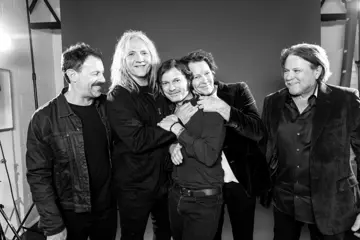
Lynyrd Skynyrd
Formed: 1964
No Original Members Since: 2023
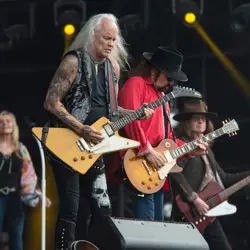
First formed in 1964, it's hard to predict what the world of rock music (and the band itself) would have looked like had a 1977 plane crash not halted the momentum of Lynyrd Skynyrd.
Resulting in the passing of vocalist Ronnie Van Zant, guitarist Steve Gaines, and his sister, backing vocalist Cassie Gaines, it also resulted in a decade-long period of inactivity for the band.
Reformed by Van Zant's younger brother Johnny in 1987, Lynyrd Skynyrd have been active ever since, though the membership looks quite different. Only guitarist Gary Rossington would return to the latter-period version of the band, and upon his passing in 2023, no original members of the group remain.
Heart
Formed: 1967
No Original Members Since: 1982
While many of the bands on this list are good examples of bands evolving over time, Heart is a great example of defining when exactly a band becomes a band. For all intents and purposes, the group began as Heart in 1973, though this in itself came after six years of evolution under various names, including The Army, Hocus Pocus, and White Heart.
These early line-ups all featured bassist Steve Fossen and guitarist Roger Fisher, who were joined by Ann Wilson in 1971, and her sister Nancy in 1974. Heart's debut album, Dreamboat Annie, arrived in 1975, at which time they were complemented by drummer Michael Derosier and multi-instrumentalist Howard Leese.
Fisher would depart in 1979, and both Fossen and Derosier would quit the band in 1982, with the former being the last member from those earliest days to leave. Leese lasted until the group's 1998 break-up, leaving only the Wilson sisters as the core members of the band for any future iterations.
Tangerine Dream
Formed: 1967
No Original Members Since: 2015.
Arguably one of the most influential electronic groups of all time, Germany's Tangerine Dream has featured dozens of members over its almost 60-year history, with only guitarist Edgar Froese surviving the band's tumultuous formative period.
By the time they released their Electronic Meditation debut in 1970, things were getting a bit more stable, and by 1971, the group's famous lineup of Froese, Christopher Franke, and Peter Baumann had been established. This line-up couldn't last for too long, however, and Baumann would wave goodbye in 1977, with Franke following in 1987.
Froese would remain with the band until his passing in 2015, with Thorsten Quaeschning serving as the group's de facto leader since.
Yes
Formed: 1968
No Original Members Since: 2018
A revered progressive rock outfit, Yes were first formed in 1968, and their intricate membership list across their career is enough to send you crosseyed. However, with only seven years on the sidelines throughout their almost 60-year career, Yes have remained a constant on the global music scene.
Formed by vocalist Jon Anderson, guitarist Peter Banks, keyboardist Tony Kaye, drummer Bill Bruford, and bassist Chris Squire, numerous members have come and gone over the years. While Anderson would come and go as vocalist, he last departed the group in 2018, three years after Squire passed away, ending his run as longest-serving original member.
Currently, Steve Howe boasts the earliest join date, having first become a member back in 1970 – two years after their formation.
Thin Lizzy
Formed: 1969
No Original Members Between: 1998-2010 and 2013-2019.
When Thin Lizzy bassist and vocalist Phil Lynott passed away in 1986, the group had split almost two-and-a-half years earlier. For most, that's where the band's story ends – a tragic closing to one of Ireland's most influential rock bands.
However, the group would once again become active in 1996, with guitarists Scott Gorham (who joined in 1974) and John Sykes (who joined in 1982) helming the project, alongside founding drummer Brian Downey. Though they agreed new music wouldn't be recorded in its latter iteration, fans felt as though it certainly wasn't the same without Lynott at the helm.
As the years have continued, the line-up has shifted considerably, and the current status of the band is somewhat unclear. Sykes would depart in 2009 (later passing away in 2024), and Gorham would serve as the de facto leader until their latest shows in 2019. However, Downey would depart the nascent version of the group in 1998, and after rejoining in 2010, would leave in 2013 – once more leaving the group with no founding members.
Little River Band
Formed: 1975
No Original Members Since: 1998
When it comes to Australian bands making solid inroads on the international stage, it's hard to look past the Little River Band. However, for decades, they've also been an Australian band with a decidedly international line-up.
Originally forming in 1975 while still going by the name Mississippi, the founding line-up of Glenn Shorrock, Ric Formosa, Beeb Birtles, Graeham Goble, Roger McLachlan, and Derek Pellicci only lasted a year before things started to shift.
While Shorrock would leave in 1982 (to be replaced by John Farnham), the dwindling list of original members ran out in the late '90s, when Shorrock departed in 1996 and Pellicci followed two years later.
The rights of the band then reverted to Stephen Housden, who had joined the group in 1981, with his departure in 2006 leaving American-born Wayne Nelson the longest-serving remaining member.
A number of legal battles have taken place over the years regarding the band's name, and controversy has continued as well, with the current all-American iteration of the group even blocking Australian fans from viewing their website at one point.
Molly Hatchet
Formed: 1976
No Original Members Since: 1995
Much like Heart before them, the story of when Molly Hatchet actually first becomes the band we know is a difficult one to pin down. Officially, you'll find both 1971 and 1976 listed as the years of formation for the band with somewhat similar line-ups at play.
In 1971, the group comprised bassist Tim Lindsey and guitarists Dave Hlubek and Steve Holland. By the time the band had solidified a starting line in 1976, Lindsey was out, and the Florida rockers were joined by vocalist Danny Joe Brown, guitarist Duane Roland, bassist Banner Thomas, and drummer Bruce Crump.
The years would see this line-up change, and by the time Brown left for the second time in 1995, no original members remained. Lindsey would rejoin the group in 2003, however, and Hlubek would return for 12 years in 2005, but since August 2020, no original members of the band's 1976 line-up were left alive.
Pantera
Formed: 1981
No Original Members Since: 1982
By the time Pantera split in 2003, the group were already far different than what had come before. Formed in 1981 as a glam metal band, three albums arrived before vocalist Phil Anselmo took over, with 1988's Power Metal preceding their 1990 breakthrough with Cowboys From Hell.
Anselmo had taken over from a batch of singers, while guitarist Dimebag Darrell and his brother, drummer Vinnie Paul, remained the only founding members of the group. Bassist Rex Brown had joined in 1982, taking over from founding member Tommy Bradford.
Following Dimebag's murder in 2004, and Paul's death in 2018, few expected a reunion to ever take place. However, with Zakk Wylde taking over on guitar and Charlie Benante on drums, Anselmo and Brown remain the only members from Pantera's 'classic' line-up, though neither were there since the earliest days.
Napalm Death
Formed: 1981
No Original Members Since: 1986
By the time that English grindcore outfit Napalm Death released their debut album, Scum, in 1987, the band had almost gone through two complete line-up shifts. Formed by Nicholas Bullen and Miles Ratledge when the pair were just 13 and 14, the group
lasted just a few months before they welcomed a guitarist into the mix, and recorded their first songs in 1982 when they expanded to a four-piece. By late 1985, Ratledge had departed, and by early 1987, Bullen had followed.
The group's line-up was effectively cemented by the release of Scum, and it's remained relatively consistent since. Though bassist Shane Embury is the longest-serving member to date, he only joined in time to record 1988's From Enslavement To Obliteration.
Both vocalist Mark Greenway and guitarist Mitch Harris joined in 1989, and drummer Danny Herrera has been in the mix since 1991, with their latest full-time addition being that of guitarist John Cooke in 2022, who was granted tenure after close to a decade as a touring member.
Opeth
Formed: 1990
No Original Members Since: 1990
We'll be the first to admit that the inclusion of Opeth is something of a sneaky one, given that the line-up has been the same since almost the very beginning that few may consider them suitable for this category.
However, when the group was formed in 1990 by David Isberg, he was joined by guitarists Mikael "Micke" Bergström and Dan Nilsson, bassist Martin Persson, and drummer Amirion "Rille" Evén. That same year, Isberg fired the rest of the group and brought in multi-instrumentalist Mikael Åkerfeldt. Isberg would remain in the band until 1992, when creative differences necessitated his exit.
By the time Opeth released their Orchid debut in 1995, the band's line-up was established, and few remember that Åkerfeldt was not a founding member.
Sugababes
Formed: 1998
No Original Members Between: 2009 – 2011
English girl group Sugababes were likely one of the best and most high-profile examples of a group whose original line-up had been altered beyond recognition, but now serve as one of the greatest success stories when it comes to this topic.
Originally formed in 1998 by Mutya Buena, Keisha Buchanan, and Siobhán Donaghy, the trio found widespread success throughout the '00s, though by 2001, Donaghy was out of the group, with Heidi Range taking her place. This gradual exodus continued, and in 2005, Buena was replaced by Amelle Berrabah, and in 2009, Jade Ewen took over from Buchanan.
After two years, the group split in 2011, with the original members reforming under the name Mutya Keisha Siobhán. By 2019, it was announced that the founding trio had won the rights to the Sugababes name back, and they had once again returned to their former glory.
A new album, dubbed The Lost Tapes, also arrived in 2022, marking the first album with the original line-up since their debut in 2000, and they’ve continued to release new music since.
Lorna Shore
Formed: 2009
No Original Members Since: 2012
A far more recent example for this list, US deathcore outfit Lorna Shore may have only made their Australian debut last year (with a second visit seeing them close out the Good Things festival), though the line-up looks far different from their first shows.
Formed in New Jersey in 2009, the first iteration of the group featured John Hawkins on vocals, Aaron Brown and Jeff Moskovciak on guitar, Mike Flannery on bass, and Scott Cooper on drums. Prior to the recording of their first EP, Hawkins and Flannery departed, with Tom Barber becoming the band's third vocalist in the space of a year.
By the time their Bone Kingdom EP was issued in 2012, no founding members remained, though it marked the first recorded appearance of guitarist Adam De Micco, who is the longest-tenured member of the band, having joined in 2010.