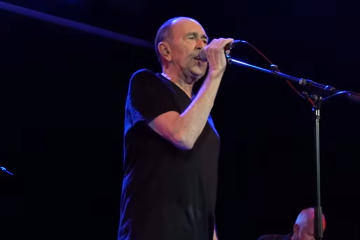
Philip Glass (born January 31, 1937) is an American composer and pianist. He is widely regarded as one of the most influential composers of the late 20th century. Glass's work has been associated with minimalism, being built up from repetitive phrases and shifting layers. Glass describes himself as a composer of "music with repetitive structures", which he has helped to evolve stylistically.Glass founded the Philip Glass Ensemble, which is still in existence, but Glass no longer performs with the ensemble. He has written fifteen operas, numerous chamber operas and musical theatre works, fourteen symphonies, twelve concertos, nine string quartets, various other chamber music pieces, and many film scores. Three of his film scores have been nominated for Academy Awards.

Albums
1971Music With Changing Parts
1974Music in Twelve Parts, Parts 1 & 2
1980Dance nos. 1 & 3
1982Glassworks
1983The Photographer
1986Songs From Liquid Days
1988Dance nos. 1-5
19891000 Airplanes on the Roof
1989Solo Piano
1990Music in Twelve Parts
1993Introduced by Philip Glass
1993“Low” Symphony
1996Music in Twelve Parts
1997“Heroes” Symphony: From the Music of David Bowie & Brian Eno
1998Koyaanisqatsi
1999Minimal Piano Works, Volume I (Piano: Jeroen van Veen)
1999Piano Music
2000Symphony no. 5: Requiem, Bardo, Nirmanakaya
2000Symphony no. 3
2002Early Voice
2003Glassworks
2005Glassworks Vol. 2
2005Symphony No. 6 "Plutonian Ode"
2005Orion
2005Les Enfants Terribles
2006The Voyage
2006Analog
2006The Concerto Project, Volume II
2006The Witches of Venice
2006Metamorphosis (piano: Branka Parlić)
2007Monsters of Grace
2007Music with Changing Parts (Icebreaker)
2007Theater Music, Volume 1
2008Waiting for the Barbarians
2008Another Look at Harmony, Part IV
2008The Concerto Project, Volume III
2009A Madrigal Opera. Cameo. A Symphonic Poem
2009In the Upper Room
2010Itaipu and Three Songs
2011Phædra, Modern Love Waltz and 21 Robert Moran Orchestrations